EU: counter-terrorism laws must comply with human rights obligations

EU: counter-terrorism laws must comply with human rights obligations

Four years after the EU Directive on Combating Terrorism came into force, more effort is needed to ensure it is implemented in accordance with human rights law obligations, Amnesty International, the International Commission of Jurists (ICJ), the International Federation for Human Rights (FIDH), the European Centre for Not-for-Profit Law (ECNL) and the European Network against Racism (ENAR) said today. The organizations called for the European Commission’s review of the Directive’s implementation to prioritize scrutiny of its impact on human rights.

In assessing the value of the Directive on Combating Terrorism (Directive 2017/541) in the Member States, the European Commission must scrutinize how it has affected the human rights of victims, suspects, as well as the wider community and civil society, the organizations said.

The Directive, enacted in 2017 after an expedited legislative process, criminalizes a wide range of conduct related to terrorism. The Directive establishes an overly broad definition of terrorism and requires states to include in their criminal law offences that are often not closely linked to the perpetration of a terrorist act. These include offences of travel for the purpose of terrorism, participation in a terrorist group, and public provocation to commit acts of terrorism. Because the terms of the offences are so widely drawn, safeguards in national law and practice are essential to ensure that they are not applied where there is no clear link to a principal offence of terrorism and/or no intent to contribute to such a principal offence, to prevent arbitrary application, including action based on racial prejudices of perceived dangerousness.

However, the organizations are concerned that EU member states are applying national laws on counter-terrorism in ways that unnecessarily or disproportionately limit the exercise of human rights, including freedom of expression and association, and freedom of religion or belief, and that discriminate against some ethnic or religious groups, in particular Muslims.

The implementation of the Directive by member states is now being reviewed by the European Commission, including through a consultation process, which concludes today.

As the review of the Directive is taken forward, the organizations urge the European Commission to consider in particular:

  • Whether and how the Directive can help to ensure effective accountability for internationally recognized crimes and the right to effective remedy and reparation for victims of terrorism, both within and outside of the EU;
  • To what extent national authorities have applied international, EU, as well as domestic human rights law in their transposition and implementation of the Directive;
  • What safeguards have been or should be introduced to prevent human rights violations in practice in the implementation of the Directive, in particular regarding freedom of expression, association, peaceful assembly, rights to respect for private and family life, freedom of religion or belief, freedom of movement and rights to political participation;
  • How the right to a fair trial and the right to liberty are being upheld in the implementation of the Directive’s offences within the member states’ justice systems, and what measures are needed to strengthen protection for these rights;
  • What safeguards have been or should be introduced to protect against the discriminatory application or impact of the Directive;
  • Whether civil society, including those representing victims of terrorism and groups affected by counter-terrorism measures, have been meaningfully consulted in the implementation of the Directive.

Background

The EU Directive on Combating Terrorism (Directive 2017/541) came into force in April 2017 and was required to be transposed into member state law by September 2018.

The Commission is due to report to the European Parliament on the added value of the Directive, and whether it is fit for purpose, including on its impact on fundamental rights in October 2021.

Several of the NGOs have made submissions to the EU Consultation as part of its review.

The Fundamental Rights Agency is currently also working on a report on the impact of the EU Counter-terrorism Directive on human rights across the EU.

For further commentary on the Directive and on counter-terrorism and human rights in Europe, see:

ICJ, Counter-Terrorism and human rights in the courts: guidance for judges, prosecutors and lawyers on the application of EU Directive 2017/541 on Combatting Terrorism https://www.icj.org/eu-guidance-on-judicial-application-of-the-eu-counter-terrorism-directive/

ENAR, research on the impact of counter-terrorism and counter-radicalisation policies and measures: https://www.enar-eu.org/ENAR-research-on-the-impact-of-counter-terrorism-and-counter-radicalisation

ECNL, Civic space in the era of securitized Covid-19 responses, https://ecnl.org/publications/civic-space-era-securitised-covid-19-responses

Download the statement here: EU combating directive statement_160621_ENG-2021


ICJ concerned that the MultiChoice Group claims it is “not in the position to take actions” against Emmanuel TV for discriminatory ‘Conversion Therapy’ Clips

ICJ concerned that the MultiChoice Group claims it is “not in the position to take actions” against Emmanuel TV for discriminatory ‘Conversion Therapy’ Clips

In May 2021 the ICJ wrote to The MultiChoice Group in South Africa urging it to suspend Emmanuel TV on any of the DSTV platforms for broadcasting  televangelist Pastor TB Joshua’s multiple video clips ostensibly depicting  violent ‘conversion therapy’ and hate speech against LGBT persons amounting to discrimination and human rights abuses. MultiChoice responded  that it has “no editorial control or oversight” over Emmanuel TV as it is a “third-party channel” and therefore MultiChoice cannot investigate the incident further or take any remedial action.

MultiChoice claims on their website to “entertain, inform and empower African communities”. In addition to this, their entertainment platforms are a hub for approximately 14 million people across 50 countries. MultiChoice has a huge reach into African countries and in the homes of millions of people living in Africa. As a result, they have a responsibility to act in a way which does not promote harmful practises.

In response to ICJ’s letter, MultiChoice stated that it does not review the content broadcast on third-party channels such as Emmanuel TV prior to its broadcast. In place of a thorough investigation, the entertainment group said that it contacted Emmanuel TV and the latter stated that the ‘conversion therapy’ clips were not broadcast in April 2021. It is significant to note that Emmanuel TV did not deny that the clips were aired at all. Rather, MultiChoice alleged that it was simply “unable” to independently verify that the clip was broadcasted in April 2021 or at all.

Contrary to the impression given in its letter to the ICJ, MultiChoice is not limited to investigating offensive broadcasts that are aired within  a specific time period. Additionally, while the ICJ notes  MultiChoice’s assertion that Emmanuel TV is a third-party channel and consequently MultiChoice has no editorial control or oversight over the content of the channel, the ICJ believes that MultiChoice has a duty to not broadcast material that is discriminatory and in contravention of the South African Constitution.

MultiChoice has a responsibility to conduct a serious investigation into this matter  and take the necessary remedial action. Consequently, we do not find that Emmanuel TV’s confirmation to MultiChoice,  that the clip was not broadcast during April 2021 is sufficient; and MultiChoice’s inability to verify whether this program was broadcast at all, is unsatisfactory.

The UN Independent Expert on protection against violence and discrimination based on sexual orientation and gender identity, under the umbrella of the United Nations Human Rights Commission, has concluded in May 2020, that conversion therapy amounts to torture and ill-treatment and has called for a global ban on such practices.

In light of this, the ICJ is of the view that MultiChoice has a greater responsibility to the African audience to refrain from participating in the broadcast of such harmful practices, and must publicly take a stance against facilitating the airing of such broadcasts. The ICJ believes that MultiChoice’s responsibility as Africa’s “leading entertainment company” is not to pay “lip service” to the values of the South African Constitution, but rather to hold itself to higher thresholds of accountability. 

ICJ has consequently urged MultiChoice to:

  1. Independently investigate this and other discriminatory and potentially unlawful broadcasts by Emmanuel TV and take appropriate remedial measures.
  2. Undertake to exclude Emmanuel TV as part of MultiChoice’s package to the public, or alternatively, to heavily condition its contract with Emmanuel TV to disallow the broadcast of offensive materials; should the investigation lead to the conclusion that the clip was broadcasted by them.
  3. Ensure that such offensive materials are not broadcast on any MultiChoice channels, irrespective of their status as third-party channels.
  4. Offer an apology from Multichoice Group to the LGBT persons, unless MultiChoice is able to demonstrate independently that the clip was not broadcast at all on their platform, neither by Emmanuel TV nor by any other third-party channel.
  5. Undertake an updating of the MultiChoice Group’s internal policies to bring them in line with human rights standards, the South African Constitution, and local laws on non-discrimination. This includes contractual arrangements with third party channels like Emmanuel TV which may broadcast discriminatory content.


Contact

Kaajal Ramjathan-Keogh, ICJ Africa Director, Kaajal.Keogh(a)icj.org

Tanveer Jeewa, Legal and Communications Officer, Tanveer.Jeewa(a)icj.org

OPT/Israel: Crimes under international law must immediately be investigated (UN Special Session)

OPT/Israel: Crimes under international law must immediately be investigated (UN Special Session)

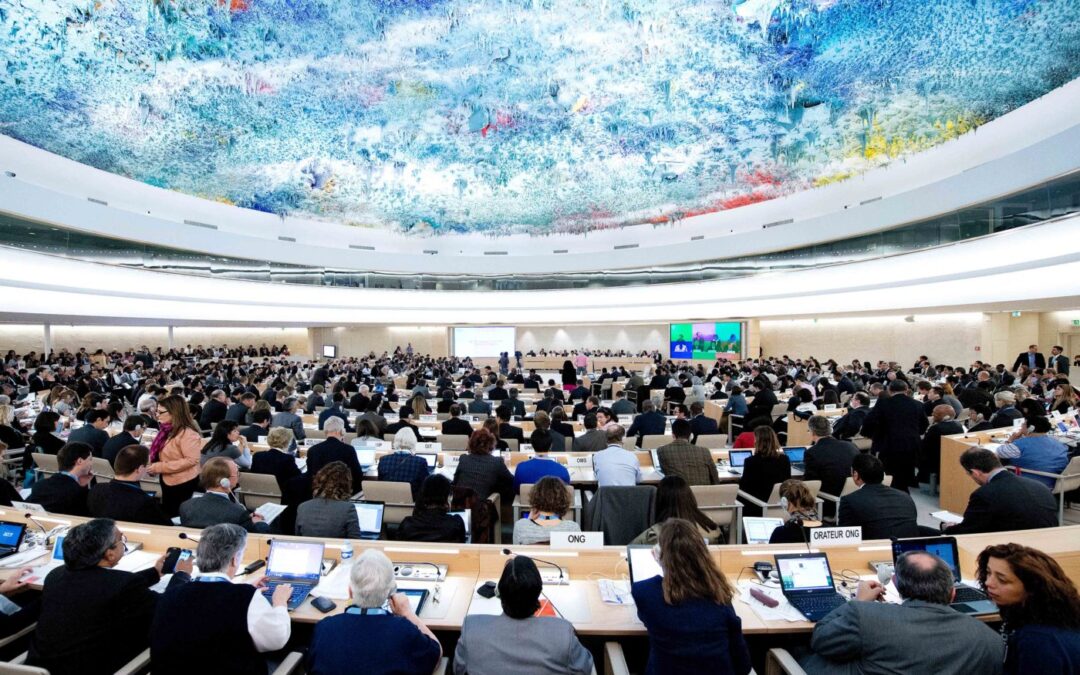
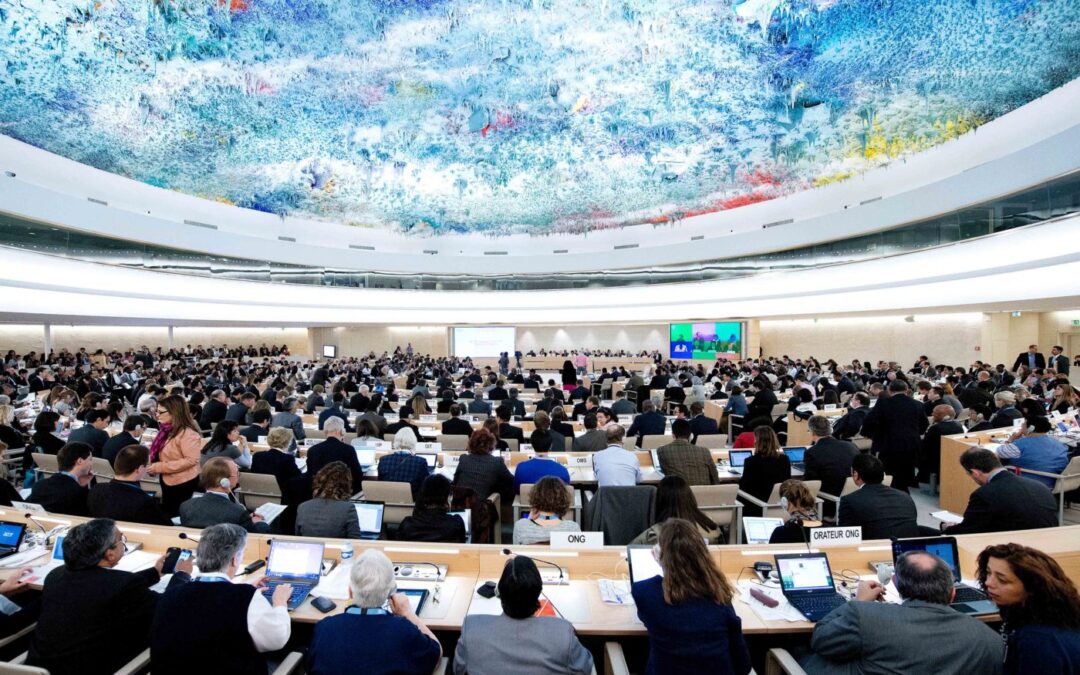
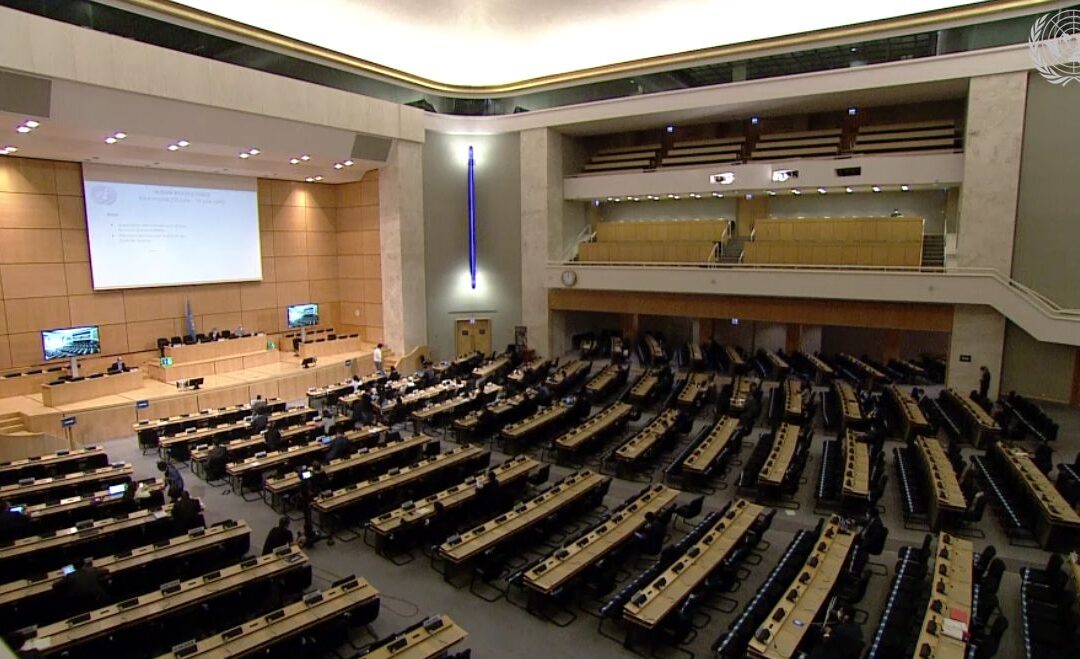
The ICJ today addressed an emergency Special Session of the UN Human Rights Council on the Occupied Palestinean Territories and Israel, calling for accountability for the serious violations of international humanitarian law and international human rights law committed by all parties.

The Special Session is expected to adopt a resolution to address this situation.

The ICJ statement read as follows:

“Madame President,

May 2021 has witnessed the commission of serious crimes under international law by Israel in occupied East Jerusalem and the West Bank, and by Israel and Palestinian armed groups in the context of the recent round of hostilities in the Gaza Strip. As in the past, the conflict exacted a heavy toll on civilians taking no part in hostilities, including more than 65 slain Palestinian children. Unlike the past, those responsible must be held criminally accountable for these crimes.

The International Commission of Jurists calls on the Council to establish a Commission of Inquiry to investigate serious violations of international humanitarian law and international human rights law committed by all parties with a view to:

  • Establishing the facts, documenting, and reporting on alleged violations and abuses of international humanitarian law and international human rights law;
  • Collecting and preserving evidence of crimes under international law committed in the West Bank, including East Jerusalem, Israel and in the context of the Gaza hostilities; and
  • Identifying all those responsible for such crimes.

This Council should call on all States to cooperate with the ongoing investigation of the International Criminal Court. All States, and any mechanisms of this Council, should cooperate and share relevant information with the Commission of Inquiry.

Thank you.”

Contact:

Massimo Frigo, ICJ UN Representative, e: massimo.frigo(a)icj.org, t: +41797499949

UN: human rights are essential to an effective counter-terrorism strategy (ICJ Statement)

UN: human rights are essential to an effective counter-terrorism strategy (ICJ Statement)

At a UN dialogue on counter-terrorism, the ICJ warned States and UN institutions against the use of overbroad and ill-defined concepts in the 7th revision of the UN Global Counter-Terrorism Strategy, because they could breach the principle of legality and undermine protections under international human rights law.

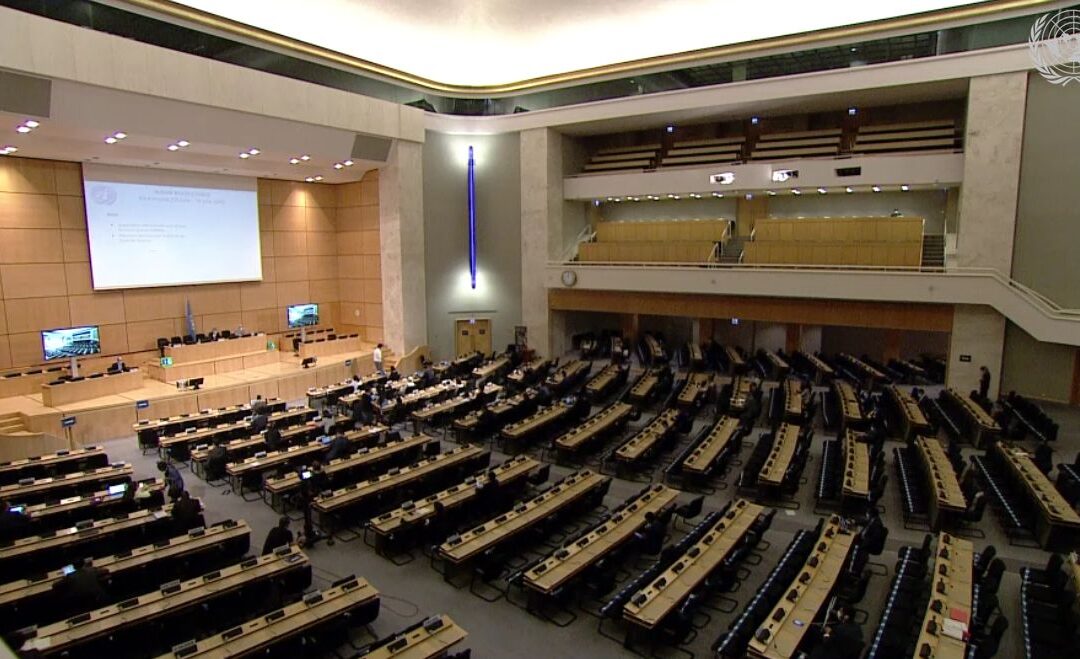
The ICJ intervened today in the virtual two-day dialogue with human rights and civil society partners on the theme of “Building a Better Paradigm to Prevent and Counter Terrorism,” organised by the United Nations Office of Counter-Terrorism (UNOCT) and the Permanent Mission of Spain to the United Nations.

The Dialogue brings together Member States, UN entities, human rights representatives, women groups, youth and civil society actors, as well as experts and other stakeholders for a practical exchange of views on how to address terrorism and violent extremism while safeguarding and promoting human rights, in particular the rights of women, children and victims of terrorism.

The ICJ Statement reads as follows:

“Madam Special Rapporteur, Your Excellencies, Colleagues,

Thank you very much for the organizing this consultation.

The International Commission of Jurists has been working for decades to ensure that counter-terrorism measures are compliant with, and do not lead to violations and abuses of human rights and the rule of law.

The ICJ has produced authoritative guidance, such as the ICJ Berlin Declaration on Upholding Human Rights and the Rule of Law in Combating Terrorism of 2004 and a four-year study concluded in 2009 by the ICJ Eminent Jurists Panel on Terrorism, Counter-Terrorism and Human Rights, the result of 16 hearings across the globe.

That Panel concluded that the approach many States had taken in short-circuiting foundational rule of law and human rights principles caused “enduring long term harm.”

The ICJ has been insistent that countering terrorism and protecting human rights are important objectives that not only are not in conflict, but are part of a single shield of protection that States must provide for.

This finding is as valid today as it was then, as the Global Counter-Terrorism Strategy itself recognizes that “when counter-terrorism efforts neglect the rule of law … and violate international law … they not only betray the values that they seek to uphold, but they may also further fuel violent extremism that can be conducive to terrorism.”

In this regard, we are concerned at the possible use in the UN Global Counter-Terrorism Strategy of undefined concepts and terms, like “violent extremism”, “violent nationalism”, political concepts of “far right” and “far left” or “extremism”.

The abusive invocation of these terms carries risks for the protection of freedom of expression, freedom of religion and belief, freedom of association and the right to political participation, all protected under international human rights law.

Critically, from a rule of law perspective, legal certainty is a key principle of human rights law that informs the requirement that any legitimate restrictions of human rights including when countering terrorism must be prescribed by law.

Any undefined or widely defined concept of terrorism or extremism should not be promoted or applied in international instruments, standards or strategies, that, where incorporated into national laws and practice, would lead to violations of this international human rights law violations.

In this regard, we share the assessment by the Special Rapporteur on the promotion and protection of human rights while countering terrorism in her 2020 report to the UN Human Rights Council (A/HRC/43/46) and by the OHCHR in its Report on best practices on countering violent extremism (A/HRC/33/29, para. 19).

Concepts like “violent extremism”, nationalism, political opinions and other forms of religious, ethnic, or other belief or opinion, however extreme, cannot be part of the GCTS, as they are otherwise protected by international human rights law guarantees to protect the rights to freedoms of expression, religion or belief, and/or of association.

Furthermore, their insertion would water down the anti-terrorism focus of the strategy and lead the way to the application of very pervasive measures clearly restrictive of human rights for conduct that is not linked to terrorism.

The Global Strategy should focus exclusively on countering terrorism. Any more expansive approach will risk leading to measures in breach of human rights law and, therefore, of the founding values of the UN under article 2 of the Charter.

I thank you.”


(The ICJ Statement is at minute 2:48:21)

ICJStatement-OCTSpainVirtualDialogue-SessionI-final (download the statement)


Contact:

Massimo Frigo, ICJ UN Representative, e: massimo.frigo(a)icj.org, t: +41797499949

Translate »