Dec 13, 2017
Today, the ICJ and other human rights groups urged changes to a new law in Lao PDR that would enable violations of freedom of association and other human rights.
The groups sent an open letter to the Lao PDR Government calling for the repeal of or for significant amendments to be made to the Decree on Associations that came into force in Lao PDR in November 2017. A legal brief detailing analysis of the new law was attached to the open letter.
The letter emphasized that repeal or amendments to the new law needed to be part of fundamental reform of the framework of regulation of associations in Lao PDR, in line with international human rights law and standards.
The new law supersedes the 2009 Decree on Associations, which had already included imprecise and overly broad terms leading to arbitrary restrictions on the rights to freedom of association, freedom of opinion and expression and privacy.
“The 2009 law had already imposed restrictions on fundamental freedoms which were clearly in contravention of Lao PDR’s obligations under international human rights law,” said Frederick Rawski, the ICJ’s Regional Director for Asia and the Pacific. “The new law makes things worse.”
In the attached legal brief, the ICJ and other human rights groups analyzed provisions in the decree which arbitrarily restrict or deny fundamental rights by giving government authorities in Lao PDR sweeping powers to, among other things,
- unreasonably control and/or prohibit the formation of associations;
- arbitrarily inspect, monitor and curtail the activities and finances of associations;
- order the dissolution of associations on arbitrary grounds and without right of appeal;
- discipline associations and individual members on arbitrary grounds and
- criminalize unregistered associations and allow for prosecution of their members.
The letter concluded by urging the Lao PDR Government to respect its obligations under international human rights law by removing arbitrary, overbroad and discriminatory elements from its framework of regulation of associations.
Any regulation regime should make clear that individuals are free to form private unincorporated associations without needing to notify or register with the State.
The letter further urged that for associations wishing to acquire legal personality, the law should at most provide for automatic registration upon notification and fulfillment of simple administrative requirements, rather than a system requiring prior permission of State officials.
“The rights to form and participate in associations, to freely express one’s opinions and to lead a private life are fundamental freedoms, which the Lao PDR Government has a duty to protect, promote and fulfill,” said Rawski.
Background
The Decree on Associations, dated 11 August 2017, came into force on 15 November 2017. Pursuant to its article 81, the new law supersedes the Decree on Associations (No. 115 of 2009) dated 29 April 2009 (‘2009 Decree’).
The new law only applies to local non-profit associations (NPAs) and does not govern international non-governmental organizations (INGOs) in Lao PDR, which are instead regulated by the Decree on International Non-Governmental Organizations (INGO) (No. 013 of 2010).
As a party to the International Covenant on Civil and Political Rights (ICCPR), Lao PDR has a legal obligation to respect, protect and guarantee, among others, the rights to privacy (article 17), freedom of opinion and expression (article 19), and freedom of association (article 22), which includes the right to form and join associations, subject only to narrow restrictions.
The ICCPR also requires States to implement necessary legislative, administrative or other measures for effective promotion and protection of these freedoms.
Contact
Frederick Rawski, ICJ Regional Director for Asia and the Pacific (Bangkok), e: frederick.rawski(a)icj.org
Kingsley Abbott, ICJ Senior International Legal Adviser (Bangkok), e: kingsley.abbott(a)icj.org
Lao-Decree Associations-Advocacy-open letters-2017-ENG (open letter + briefing paper, in PDF)
Nov 20, 2017
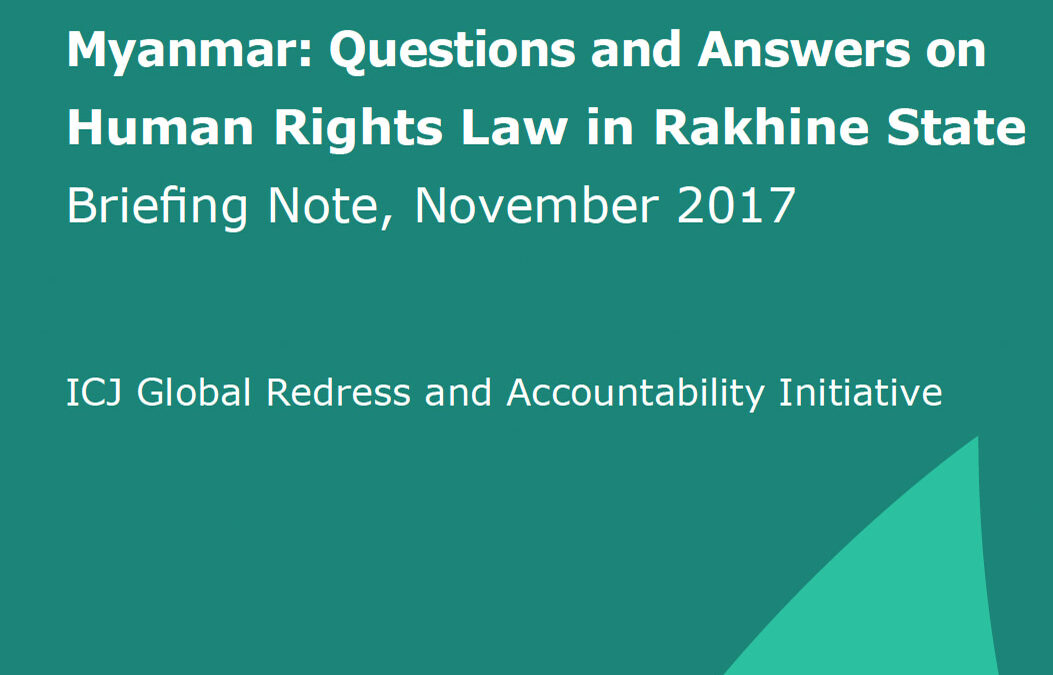
Responses to the devastating human rights crisis in Rakhine State must be driven by respect for the rule of law, protection of human rights of all people without discrimination, and greater accountability and justice, the ICJ states in a briefing note published today in a Questions & Answers format.
More than 600,000 people, the vast majority of whom are Rohingya Muslims, have been displaced as a result of security operations commanded by the Myanmar military (Tatmadaw), following attacks on police posts by the Arakan Rohingya Salvation Army on 25 August.
“Credible allegations of crimes against humanity, including widespread and systematic killings, rape, and forced evictions demand a robust and immediate response from the Myanmar government, with full assistance from the international community,” said Sam Zarifi, ICJ’s Secretary General.
“The Myanmar government has so far not responded in a manner commensurate with the gravity of the situation or its obligations under international law, and the country’s military continues to enjoy de facto and de jure impunity for its actions,” he added.
Entitled Questions & Answers on Human Rights Law in Rakhine State, the 23-page (31 in Burmese) note details how members of Myanmar’s military, the Tatmadaw are largely shielded from prosecutions for human rights violations owing to provisions of constitutional and national law that codify the Tatmadaw’s dominance.
In law and in practice the Tatmadaw remains the most powerful institution in the country, largely outside the control of the civilian government.
“Constitutional arrangements in Myanmar are incompatible with the rule of law principle that security forces must be accountable to civilian authorities,” Zarifi said.
“The Tatmadaw must be held accountable for its conduct in Rakhine state, as well as its well-documented violations against other ethnic groups in the country,” he added.
The ICJ found no legal basis for the “area clearance operations” associated with widespread reports of arson, murder, rape and forcible transfer.
A lawful response to ARSA’s attacks would consist of independent and impartial investigations and public criminal prosecutions in accordance with national laws and fair trial rights standards – protections commonly violated throughout the country, the ICJ says.
“Recognizing the limitations on civilian authority over security operations, the NLD-led government remains bound to do everything in its power to respect and to protect human rights,” Zarifi added.
Measures available to the NLD include reforming laws that enable impunity for gross human rights violations, particularly the 1959 Defence Services Act and the 1995 Maintenance of Police Discipline Law, allowing full humanitarian access to protect the right to life; and supporting dignified, safe and voluntary return of displaced persons to their places or origin without discrimination.
The 2008 Constitution and provisions of national laws enable impunity for human rights violations, including by shielding security forces from public criminal prosecutions.
Myanmar lacks a mechanism to independently and impartially investigate allegations of serious human rights violations, the ICJ notes.
“The United Nations, as well as ASEAN and Myanmar’s other neighbors, such as China and India, should be clear that they expect, and will assist, a proper response to the Rakhine crisis in line with international law and respect for the rights of all people there, in particular, the Rohingya community,” Zarifi said.
Government cooperation with the UN-mandated Fact Finding Mission would also assist to independently establish facts and provide a factual basis to consider proper policy responses to human rights violations and humanitarian crises in Rakhine State and also in Shan and Kachin States, which remain embroiled in a state of conflict replete with human rights violations.
“Cooperation with the Fact Finding Mission would signal that the NLD is serious about its stated commitment to investigate allegations of human rights violations and to cooperate with the international community in doing so,” Zarifi said.
“Allowing this Mission to carry out its mandate would complement the work of the government’s Rakhine Advisory Commission,” he added.
The ICJ said that Myanmar’s neighbors and other States in the region must ensure that Rohingya refugees under their jurisdiction are offered full protection under international human rights and refugee law.
Any return of refugees to Myanmar must be dignified and voluntary to their places of origin without discrimination.
All refugee-receiving countries have an obligation to provide protection, including, in particular, against refoulement.
Contact
Sam Zarifi, ICJ Secretary General (Geneva)t: +41 22 979 38 25 ; e: sam.zarifi(a)icj.org
Background
The ICJ has observed that statements and reports on the crisis have sometimes conflated the use of legal and non-legal terms to assess and describe the situation.
The ICJ briefing note clarifies some of the applicable national and international law and standards.
The ICJ’s independent legal research and analysis covers areas of law, including rules governing the conduct of security operations, protection of affected communities, justice and accountability for domestic offences and crimes under international law, and responsibilities and obligations relating to displaced persons.
Myanmar-QA Rakhine-Advocacy-Briefing Paper-2017-ENG (full report in English, pdf)
Myanmar-QA Rakhine-Advocacy-Briefing Paper-2017-BUR (full report in Burmese, pdf)
Aug 16, 2017
The dismissal of Luisa Ortega was a politically motivated act that violates international standards, removes one of the last remaining institutional checks on executive authority and further entrenches impunity for gross human rights violations in the country, the ICJ says in a Briefing Paper.
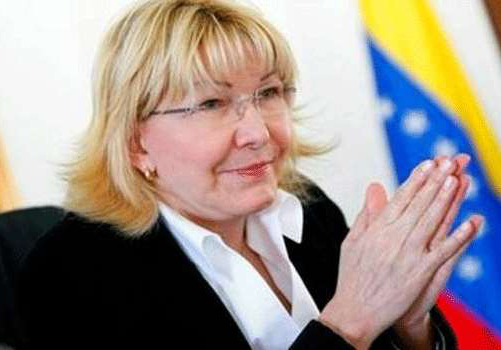
The dismissal of the Attorney General Dr Luisa Ortega Díaz (photo) was undertaken by a body not competent or empowered by Venezuelan law to do so, nor in observance of the established procedure and grounds defined in the law, the ICJ concluded in the Briefing Paper.
The dismissal also violated international standards regarding the independence of prosecutors.
“The dismissal of Attorney General Ortega Díaz appears to have been a measure taken in retaliation to her increasing challenges to Government initiatives and its expanded control over the legislature and judiciary, as well as her demands for accountability for gross human rights violations in the country,” said Alex Conte, ICJ’s Global Accountability coordinator.
“Her dismissal removes one of the last institutional checks on executive authority and destroys one of the few glimmers of hope for an end to impunity for gross human rights violations in the country,” Conte addedd.
“She must be reinstated and the independence of the Office of Public Prosecutions respected.”
Under Venezuela’s Organic Law of the Office of Public Prosecutions, which remains in force, removal of the Attorney General can only be on account of ‘serious misconduct’ (as defined by the law) and as a result of an absolute majority vote in the National Assembly, after confirmation by the Supreme Court of Justice.
“The purported grounds of misconduct by the Attorney General fall well short of the prescribed definition of serious misconduct under the Organic Law,” Conte said.
Ortega Díaz has at least in recent times been an outspoken critic of the Government led by President Nicolás Maduro.
She has been replaced by Tareck William Saab, a close political ally of President Maduro.
She has initiated several investigations and brought charges against State officials for the death of persons killed during public demonstrations; challenged decisions of the Supreme Court of Justice suspending the constitutional powers of the former National Assembly; challenged the appointment and conduct of Supreme Court judges; and challenged the convening of elections for the new Constituent National Assembly.
Since she began to criticize Government initiatives and take legal action to re-establish the rule of law, the Attorney General and her family have been the targets of multiple attacks, threats, harassment and campaigns of denigration and stigmatization by Government officials.
“This is not a question of the Attorney General’s politics but, rather, a significant assault on the effective administration of justice in Venezuela at a time when the rule of law is near collapse,” Conte added.
Contact:
Alex Conte, ICJ Global Redress and Accountability Initiative, t: +41 79 957 2733; email: alex.conte(a)icj.org
Federico Andreu Guzman, ICJ Senior Legal Adviser, Americas, email: Federico.andreu(a)icj.org
Venezuela-AG dismissal-Advocacy-Analysis Brief-2017-ENG (briefing paper in PDF)
Aug 8, 2017
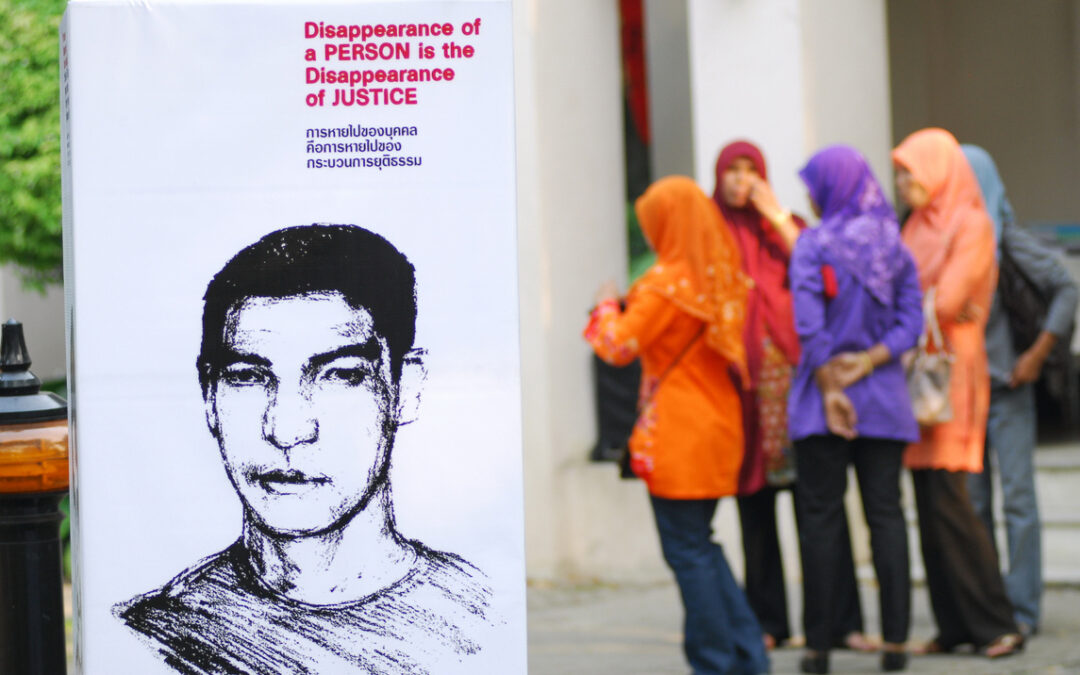
Transitional justice mechanisms must undergo serious reform in line with international human rights standards and the directives of Nepal’s Supreme Court in order to provide justice for victims of conflict-era human rights violations and abuses, the ICJ said in a discussion paper released today.
ICJ’s discussion paper Nepal’s Transitional Justice Process: Challenges and Future Strategy summarizes the key challenges faced by Nepal’s transitional justice process as identified by conflict victims, representatives of human rights organizations, lawyers and other stakeholders during consultations held in Pokhara, Biratnagar and Nepalgunj and a national roundtable meeting in Kathmandu in May and June 2017.
The discussion paper concludes with the identification of the strategies for civil society organizations and victims’ representatives to address the challenges of Nepal’s transitional justice process.
“The voices heard in our consultations provide a stark reminder that more than ten years after the end of the conflict and over two years since the Commissions of Inquiry were established, victims of serious human rights violations and abuses are still searching for justice,” said Frederick Rawski, ICJ’s Director for Asia and the Pacific.
The discussions reaffirm ICJ’s own assessment that the transitional justice mechanisms, the Truth and Reconciliation Commission (TRC) and the Commission on Investigation of Disappeared Persons (CoID), have fallen short of international standards, both in constitution and operation, despite the repeated reinforcement of such standards by the Supreme Court of Nepal.
The Commissions have a deeply flawed legal mandate, which, among other problems, allows them to recommend amnesties for serious human rights violations and abuses.
In addition, their non-consultative, uncoordinated and opaque approach to their work has also created distrust with all major stakeholders, including conflict victims and members of civil society.
The key challenges identified by the participants include:
- Lack of political will to address past human rights violations and abuses;
- Inadequate legislative framework to address conflict-era human rights violations and abuses;
- Lack of adequate human, financial and technical resources for the TRC and COID;
- Failure of the TRC and COID to take measures to gain confidence of conflict victims and other stakeholders;
- Inadequate procedures to ensure confidentiality and security for victims and witnesses;
- Lack of coordination among the Commissions and other state institutions responsible for addressing conflict-era human rights violations and abuses; and
- The failure of the Commissions to adopt credible and transparent processes for their work.
As of July 2017, the TRC has received 58052 complaints of human rights violations, and the CoID has received 2874 complaints of alleged enforced disappearances.
Since the ICJ held its consultations on the operation of the transitional justice mechanisms, the Commissions have started preliminary investigations in some of the cases.
However, according to information received by the ICJ, these investigations also suffer from the flaws described above: the investigation teams have inadequate human and financial resources to handle the large number of cases; there are concerns about the opacity of the appointment process of the investigators; and the Commissions have taken no measures to ensure confidentiality and security of victims and witnesses who participate in the investigations.
Victims have also expressed concern that the investigators in many districts have asked them about their interest in reconciliation, even where there complaints are of serious conflict-era crimes.
This is despite the Supreme Court ruling out any possibility for reconciliation in cases of serious crime in Madhav Kumar Basnet v the Government of Nepal (2014).
“As the Commissions start preliminary investigations into complaints of human rights violations and abuses, they must ensure both victims’ access to justice, as well as the security and confidentiality of victims and other witnesses,” added Rawski.
Contact:
Frederick Rawski, ICJ’s Asia Pacific Regional Director (Bangkok), e: frederick.rawski@icj.org
Nepal-TJus Process-Advocacy-2017-ENG (Full paper in PDF)
Apr 28, 2017
The ICJ today called on the Moroccan authorities to comprehensively reform its legal framework on pre-trial rights, guarantees and procedures, with a view to ensuring its full compliance with international human rights law and standards.
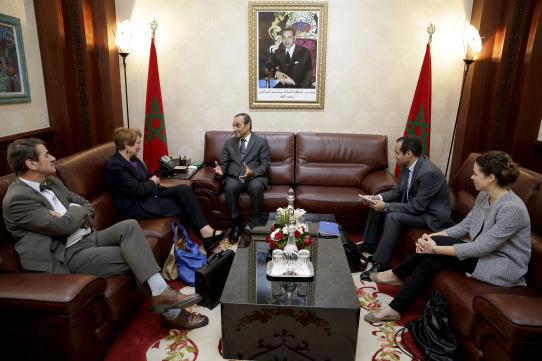
The statement came following a high-level mission to Morocco from 24 to 27 April 2017. The ICJ consulted with members of the Parliament and of the judiciary, as well as with executive officials, on the reforms needed to enhance the guarantees and procedures on police custody and preventive detention, as well as to effectively protect the right to liberty and security of person.
During the mission, the ICJ launched its paper Reform the Criminal Justice System in morocco; Strengthen pre-trial rights, guarantees and procedures which details how the use of pre-trial detention has been routine in Morocco.
The paper also points out that investigative judges and prosecutors routinely disregard provisions of the Code of Criminal Procedure that provide for pre-trial detention to be used only in exceptional cases.
Pre-trial detainees represent more than 40 percent of the prison population and most of the time convicted and pre-trial detainees are not kept separate, in violation of the latter’s right to be presumed innocent.
“Morocco must comply with its international legal obligations and ensure that pre-trial detention is an exceptional measure that can be used only as a measure of last resort, when there is sufficient evidence that deems it necessary to prevent flight, interference with evidence or the recurrence of crime,” said Said Benarbia, director of the ICJ MENA Programme.
The briefing paper also details how the Morocco Code of Criminal Procedure fails to provide for a means by which all individuals deprived of their liberty can, from the outset of the deprivation of their liberty, bring proceedings before an independent and impartial court able to determine, without delay, the lawfulness of their detention.
The provisions on police custody also fail to comply with Morocco’s obligations under international law.
Under the current framework, in ordinary cases of felonies and misdemeanors punishable with prison time, a person can be placed under garde à vue for up to three days without being brought before a judge; for up to eight days in cases of “internal or external threats against national security”; and for up to 12 days in cases of “terrorism.”
“The grounds for placing individuals under police custody must be clearly and precisely defined in the law, and include elements of appropriateness, predictability and due process of law,” said Benarbia.
“The maximum amount of time during which a person can be held in police custody without being brought physically before a judge must be reduced to the absolute minimum, and in ordinary cases no longer than 48 hours,” he added.
The ICJ also called on the Moroccan authorities to enhance defence rights during all pre-trial procedures, and remove all the obstacles that subject the exercise of these rights to the public prosecutor authorization, or that severely undermine the right to an effective counsel in proceedings before the investigative judges and prosecutors.
“The Moroccan authorities should ensure that anyone arrested or detained has immediate access to legal assistance as soon as they are placed in police custody, during the initial stages of police investigation, and before questioning by the investigative judge or prosecutor,” further said Benarbia.
“These guarantees are not only necessary to ensure the fairness of proceedings, including the principle of equality of arms, but they also serve as safeguards against arbitrary detention and torture and other ill-treatment in Morocco,” he added.
Contact:
Said Benarbia, Director of the ICJ Middle East and North Africa Programme, t: +41.22.979.3817, e: said.benarbia(a)icj.org
Additional information
The mission was led by Martine Comte, honorary judge and former President of the Court of Appeal of Orléans, and included François Casassus-Builhe, former French judge, and prosecutor; Said Benarbia, director of the ICJ Middle East and North Africa (MENA) programme, and Giulia Soldan, programme manager of the ICJ MENA programme.
The ICJ delegation met with Mr. Habib El Malki; President of the Chamber of Deputies; Mr. Mohamed Aujjar, Minister of Justice; Mr. Mustapha Farès, First President of the Cassation Court; Mr. Mohamed Abdennabaoui, Prosecutor General of the Cassation Court; Mr. Driss El Yazami, President of the National Council of Human Rights; Mr. Mohamed Akdim, President of the Morocco Bar Associations; Mr. Adil El Bitar, President of the Commission on Justice, Legislation, and Human Rights at the Chamber of Deputies, Mr. Abdessamad Kayouh, Vice-President of the Chamber of Counselors, and representatives of the civil society and the criminal justice system.
Morocco-Reform crim just syst-News-press release-2017-ARA (news in Arabic, PDF)
Morocco-Reform Crim Justice System-Advocacy-Anaylsis Brief-2017-ENG (full brief in English, PDF)
Morocco-Reform Crim Justice System-Advocacy-Anaylsis Brief-2017-ARA (full brief in Arabic, PDF)