Nov 6, 2015
The ICJ submitted a third-party intervention in the case of Bagirov v Azerbaijan before the European Court of Human Rights.
In this intervention the ICJ argues that the special role of lawyers in the administration of justice, pursuant to the rule of law, necessitates their ability to carry out their important professional functions without undue restrictions, which requires close scrutiny of any limitations imposed, including concerning those statements made by lawyers outside of courts.
The ICJ further submits that the role and responsibility of lawyers in imparting information to the public on issues of public concern related to the justice system, is not confined to comments on individual cases in which the lawyer represents a client.
In addition, such remarks warrant particularly strong protection under Article 10 of the European Convention.
The ICJ argues that comments by a lawyer that are critical of State authorities responsible for the detention of a person who has been injured or has died in their custody should be interpreted and be presumed to constitute protected forms of expression, unless they can be shown to have been made in bad faith, and that disciplinary action against lawyers should be subject to strong safeguards against arbitrariness or disproportionate penalties.
Azerbaijan-Bagirov v Azerbaijan-Advocacy-legal submission-2015-ENG (full text in PDF)
Azerbaijan-Bagirov v Azerbaijan-Advocacy-legal submission-2015-RUS (full text in Russian)
Oct 21, 2015
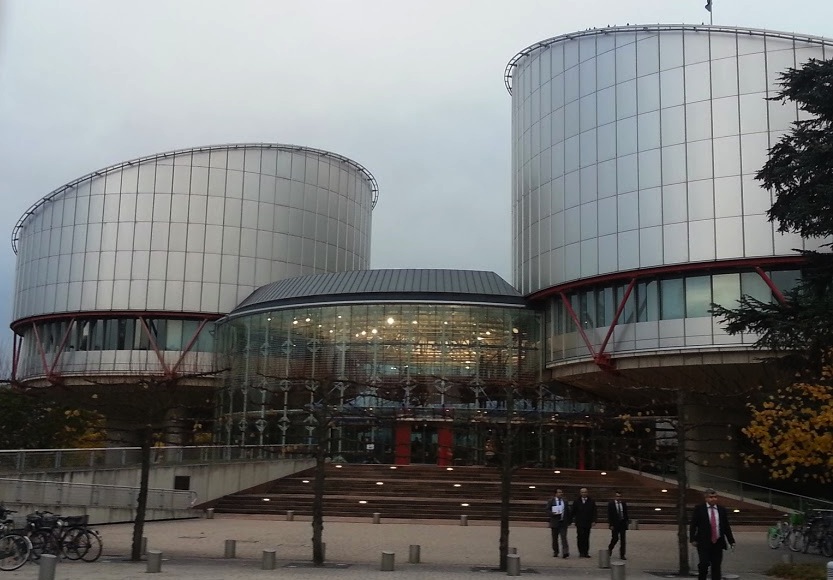
Today, the ICJ jointly with the AIRE Centre, ECRE and ILGA-Europe submitted a third-party intervention in the case of O.M. v. Hungary before the European Court of Human Rights.
The case arose from the immigration detention in Hungary of an asylum-seeker who had fled from his country of origin, Iran, because of his homosexuality. He was detained for nearly two months before eventually being recognized as a refugee.
In their written submissions to the European Court of Human Rights, the interveners focussed on:
- the relevance of the EU asylum acquis, the EU Charter of Fundamental Rights and the 1951 UN Convention relating to the Status of Refugees, as amended by its 1967 Protocol, to the determination of the scope and content of Contracting Parties’ obligations under Art 5(1) of the European Convention on Human Rights; and
- the Contracting Parties’ obligation under the European Convention on Human Rights to take account of the particular risks that the detention of asylum-seekers entails, including, in particular, when deciding to detain those asylum-seekers who might have been exposed to abuse and/or may risk violence and discrimination on account of their sexual orientation while in detention.
Hungary- ECtHR OM v Hungary – advocacy – legal-submissions-2015-ENG

Oct 19, 2015
The ICJ submission on international law concerns Bulat Baityakov, practicing in Kazakhstan, convicted of slander of a judge and sentenced to a one year of restriction of liberty because of the arguments he presented in written submissions and in court, acting in his role as a lawyer.
The submission sets out relevant international human rights law and standards concerning the role of judges, the role of lawyers, and freedom of expression.
The ICJ concluded, that criminally prosecuting and convicting lawyers for presenting, in the course of legal arguments, allegations of judicial misconduct, particularly where there is a finding the allegations were presented in good faith and lawyers substantiate the allegations by evidence, clearly constitutes a serious interference with freedom of expression, with the role of lawyers in zealously defending the interests of their clients, and with the role of lawyers in seeking to ensure integrity of the judicial system.
Contact:
Róisín Pillay, Director, Europe Programme, roisin.pillay(a)icj.org
Temur Shakirov, Legal Adviser, Europe Programme, temur.shakirov(a)icj.org
Kazakhstan-Baityakov-legal opinion-Advocacy-legal submission-2015-ENG (full text in PDF, English)
Kazakhstan-Baityakov-legal opinion-Advocacy-legal submission-2015-RUS (full text in PDF, Russian)
Sep 26, 2015
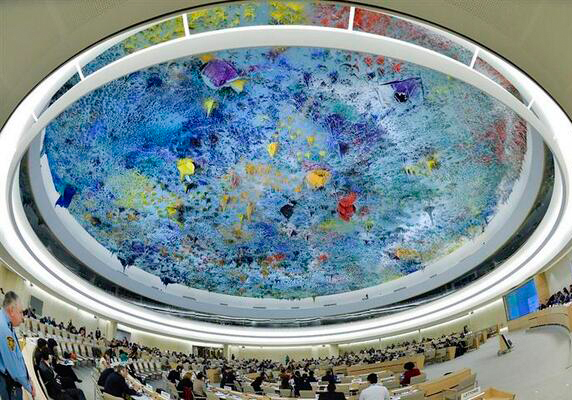
The ICJ submitted a briefing to the UN Human Rights Committee in advance of the Committee’s examination of Greece’s compliance with its obligations under the International Covenant on Civil and Political Rights (ICCPR).
In its submission the ICJ expressed concern and made recommendations about the following issues:
i. the Greek asylum system’s failure to comply in practice with the
non-refoulement obligations and the right to an effective remedy (article 2.3, read in conjunction with articles 6, 7, 9 and 14 ICCPR, in particular);
ii. the immigration detention of refugees, asylum seekers and other migrants and the conditions of their detention (article 7, 9 and 10 ICCPR);
iii. the treatment and immigration detention of unaccompanied children (articles 7, 9 and 24 ICCPR); and
iv. the reception and living conditions of asylum seekers amounting to
destitution (article 7 ICCPR).
Contact:
Massimo Frigo, Europe Programme Legal Adviser, email: massimo.frigo(a)icj.org
Greece-Europe-HRC Briefing-Advocacy-non-legal submissions-2015-ENG (full text in PDF)

Aug 26, 2015
Hoy, la CIJ y la Organización Mundial Contra la Tortura (OMCT) presentaron a un Amicus Curiae ante la Corte Constitucional de Colombia, sobre una reforma constitucional (Acto Legislativo 01 de 25 de junio 2015, “Por el cual se reforma el artículo 221 de la Constitución Política de Colombia”).
Esta reforma constitucional pretende ampliar de forma exhorbitante el ámbito de competencia de la jurisdicción penal militar y niega los principios de complementariedad entre el Derecho internacional de los Derechos Humanos y el Derecho Internacional Humanitario y de la doble protección del ser humano bajo estas dos ramas del Derecho Internacional en las situaciones de conflicto armado.
La reforma constitucional fue demandada ante la Corte Constitucional por la Comisión Colombia de Juristas, varias Organizaciones No Gubernamentales de Derechos Humanos y asociaciones de víctimas de violaciones a los derechos humanos de Colombia.
Colombia-AmicusCuriaeCIJOMCT-Advocacy-Legal submission-2015-SPA (texto íntegro en PDF)