Sep 10, 2013
The ICJ today called for better regulation of private military and security companies (PMSCs) in national and international law.
Noting gaps identified in the regulation of PMSCs in the annual report to the UN by the Working Group on the use of mercenaries as a means of violating human rights and impeding the exercise of the right of peoples to self-determination, the ICJ encouraged the Working Group to:
- Publish national laws of the concerned countries and submit this and additional detailed information and analysis to the Open Ended Intergovernmental Working Group on a possible international regulatory framework for PMSCs, which will meet for its third session in December 2013; and
- Focus in future phases of its study on the availability, accessibility and effectiveness of accountability and redress mechanisms, including judicial mechanisms, in national laws.
The statement was made during an Interactive Dialogue with the Working Group (under Item 3 of the Human Rights Council’s agenda) during the 24th regular session of the Council (9 to 27 September 2013).
HRC24-OralStatement-WGMercenaries-LegalSubmission-2013 (download full statement by the ICJ)
A-HRC-24-45 (download the annual report of the Working Group)
Sep 2, 2013
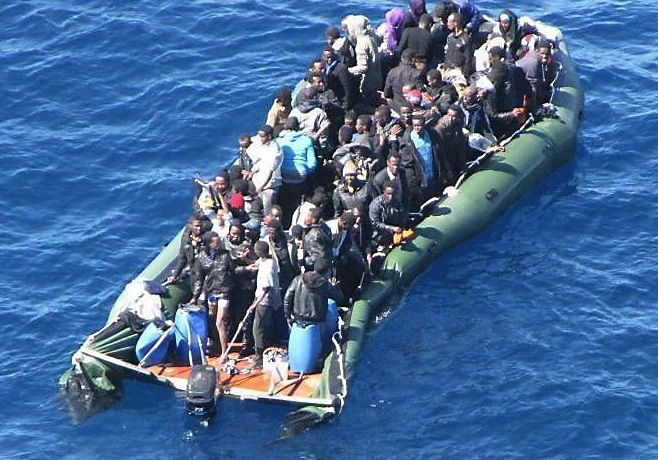
Today, the ICJ and other rights groups submitted to the EU institutions their comments on a European Commission proposal for a Regulation establishing rules for the surveillance of the external sea borders in the context of operational cooperation coordinated by the FRONTEX.
In their submission, the ICJ, Amnesty International and the European Council on Refugees and Exiles acknowledge that the Commission proposal contains a number of positive elements, including the introduction of more extensive provisions on the protection of human rights and the principle of non-refoulement (Article 4), and a clearer definition of “a situation of uncertainty”, “situation of alert” and “situation of distress” (Article 9).
The proposal explicitly requires that “the existence of a distress situation shall not be exclusively dependent on or determined by an actual request for assistance”, implying an obligation for participating units to take active measures to ensure the safety of the persons concerned, and reflecting existing international law obligations in this regard.
The proposal also usefully affirms the fact that the concept of border surveillance under EU law clearly includes measures to ensure that search and rescue operations can be carried out effectively during sea operations, as it is mandated by the international law of the sea. Finally, the provisions contained in the Regulation would be fully binding on Member States for operations conducted under the auspices of Frontex.
Despite these positive elements, the ICJ, AI and ECRE have considered in their submission that other aspects of the Commission’s proposal fail to meet the requirements of international law, including refugee law, human rights law, the law of the sea and EU law.
This briefing presents the organizations’ key concerns, including in respect of how the proposed Regulation potentially contravenes the principle of non-refoulement as established in international human rights law and jurisprudence; the lack of clear guarantees to ensure access to a fair and effective asylum procedure in practice; the risk of the proposal legitimizing the practice of “push-backs” at sea; and the lack of arrangements to address legitimate concerns arising from the disembarkation in EU Member States and third countries whose asylum systems are affected by systemic deficiencies.
At the outset, the briefing briefly discusses the relevance of the ECtHR’s main findings in the case of Hirsi Jamaa and Others v. Italy (hereinafter Hirsi) with respect to the non-refoulement obligations of EU Member States and Frontex in the context of operations at sea.
The three organizations stressed in their submission that, under this judgment, and in accordance with international law, including international human rights law, operations constituting what are sometimes referred to as “push-backs” are prohibited as they constitute violations of the prohibition of collective expulsion, and seriously risk breaching the principle of non-refoulement.

Aug 22, 2013
The ICJ calls on members of the Human Rights Council, collectively and individually, to ensure that the establishment of truth commissions fully complies with the internationally recognized right of victims and society to know the truth.
Ahead of the 24th session of the Human Rights Council (9 to 27 September 2013), the ICJ today submitted a written statement to the UN identifying seven minimum criteria that must be adhered to for truth commissions to serve as effective mechanisms that contribute to the respect of the right to truth. Focusing on core aspects of four of these criteria, the ICJ explained that:
1. Truth commissions must be given a mandate that reflects the relevant material, personal, temporal and territorial aspects of the conflict or situation.
2. Safeguards of independence must be in place such that the selection of commissioners is undertaken through a non-discriminatory, inclusive, transparent process involving public consultation; ensuring appointment of a representative body based on candidates’ expertise, integrity, moral authority and demonstrated commitment to human rights and the rule of law; and allowing for removal in the case of incapacity, death, conflict of interest or misconduct.
3. Explicit procedures must be in place to give effect to victims’ rights to access to effective remedies and reparation, including appropriate compensation, restitution, rehabilitation and measures of satisfaction.
4. The operation of truth commissions must be in compliance with the State’s obligation to investigate, prosecute and punish acts involving gross human rights violations and serious violations of international humanitarian law, excluding the possibility of granting amnesties or other measures that result in impunity for individuals responsible for serious crimes under international law.
HRC24-TruthCommissions-LegalSubmission-2013 (download full written statement in PDF)

Aug 20, 2013
Por primera vez un Tribunal de Canadá conocerá una demanda de daños y perjuicios en contra de una empresa canadiense por hechos cometidos en Guatemala.
Un Juez de la Corte de Ontario resolvió en el mes de Julio del presente año, que los casos que se siguen en contra de la empresa Hudbay Minerals Inc. por supuestos hechos cometidos en contra de dirigentes comunitarios en el Departamento de Izabal, pueden ser juzgados en Canadá por tribunales canadienses.
Este es un hecho histórico, ya que por primera vez una demanda por daños y perjuicios en contra de una compañía canadiense, relacionada con abusos a los derechos humanos, podrá ser conocida por tribunales canadienses.
Esta resolución permite que se respete el derecho de las víctimas guatemaltecas, de buscar justicia en otro país, en este caso Canadá, por hechos supuestamente cometidos en Guatemala, en los que una empresa privada de extracción de minerales (niquel) de Canadá (Hudbay Minerals Inc.), está siendo demandada.
El Director de la Comisión Internacional de Juristas para Centroamérica, a solicitud de los abogados que llevan el caso en Canadá, presentó su opinión en las cortes canadienses sobre el Derecho de Acceso a la Justicia en Guatemala, habiendo recomendado que el caso fuese conocido en Canadá, por considerar que la impunidad existente en Guatemala hacía imposible que el caso de daños y perjuicios fuese ventilado en las cortes guatemaltecas (ver adjunto el texto del peritaje sobre El Derecho de Acceso a la Justicia en Guatemala de Ramón Cadena versión en inglés).
La Comisión Internacional de Juristas en Guatemala publicará próximamente un estudio sobre este caso.
Guatemala-UE Peritaje Canadá Hudbay-expert opinion-advocacy-2013-eng (full text in pdf)

Aug 9, 2013
The ICJ submitted to the Human Rights Committee and the Committee against Torture information in preparation for the Committees’ examination of periodic reports of Ireland under the International Covenant on Civil and Political Rights (ICCPR) and the Convention against Torture and other forms of Cruel, Inhuman or Degrading Treatment or Punishment (CAT).
During its session in October 2013, the Human Rights Committee will adopt a List of Issues for the examination in 2014 of the fourth periodic report of Ireland under the ICCPR. The Committee against Torture will, in November 2013, adopt a List of Issues for the examination in 2014 of the second periodic report of Ireland under the CAT.
In separate submissions to each Committee, the ICJ raises issues and suggested questions to be put to the Government of Ireland concerning breaches of the ICCPR that may arise as a result of severe legislative restrictions in Ireland on access to safe and legal abortions.
Ireland-HRCttee109-LOISubmission-LegalSubmission-2013 (download full submission to the Human Rights Committee)
Ireland-CAT51-LOIPRSubmission-LegalSubmission-2013 (download full submission to the Committee against Torture)