Mar 16, 2021 | News
On the first day of the trial before the eastern Cairo criminal military court of those accused in connection with the 2016 explosion in the Haram district of Giza, the ICJ calls on the Egyptian authorities to: investigate allegations of torture and other ill-treatment; ensure reparation for those arbitrarily detained; and end the trials of civilians before military courts.
“The case has been under investigation by the State Security Prosecution for more than five years, involving prolonged pre-trial detention and severe restriction on the right to legal counsel, in a flagrant violation of Egyptian and international law,” said Said Benarbia, the ICJ’s MENA Programme Director. “Detaining people pending trial for that length of time makes this case yet another example of how the authorities are using pre-trial detention as a tool of repression and to punish, in violation of Egypt’s obligations under international human rights law”.
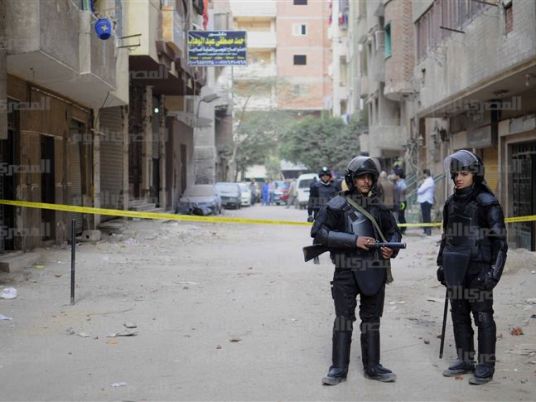
In January 2016, hundreds of people were arrested, and some forcibly disappeared in connection with an explosion in the Haram district of Giza that killed seven police officers and four civilians, and injured 15 others.
A number of those detained have reportedly been subjected to ill-treatment and denied fair trial rights guaranteed by Egyptian and international law, including the right to receive family visits. In addition, to the ICJ’s knowledge, while all the accused may have briefly met their lawyers in highly restrictive circumstances at the state prosecution office each time they have been remanded into custody, over the years, they have been denied their right to legal counsel before trial as their lawyers have not been allowed to visit them in prison.
The ICJ calls on the Egyptian authorities to investigate the incidents of enforced disappearance, ill-treatment and other human rights violations with a view to bring those responsible to justice.
“Notwithstanding the gravity of the charges involved, civilians should not be brought before military courts,” said Benarbia. “the jurisdiction of military courts should be limited to trials of military personnel in cases of strictly military offences; it should not extend to crimes over which civilian courts have jurisdiction, human rights violations or crimes under international law,” he added.
Contact
Said Benarbia, Director, ICJ Middle East and North Africa Programme, t: +41-22-979-3817; e: said.benarbia(a)icj.org
Asser Khattab, Research and Communications’ Officer, ICJ Middle East and North Africa Programme, e: asser.khattab(a)icj.org
Download
Press release in English and Arabic.
Mar 15, 2021 | News
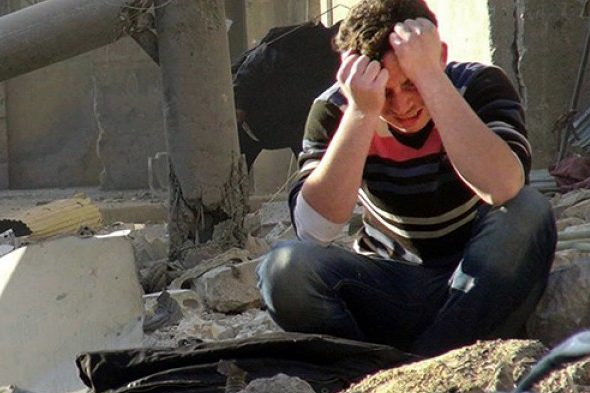
As Syria marks 10 years of a devastating armed conflict, the UN Security Council continues to abdicate its responsibility to address the gross human rights abuses committed by the Syrian government and various other actors in the country, including the use of chemical weapons and the perpetration of other crimes against humanity, likely genocide and war crimes, the International Commission of Jurists (ICJ) said today.
Since a popular uprising began in March 2011, the regime’s unabated repression has driven Syria into a full-scale civil war. Hundreds of thousands have been killed; tens of thousands have been tortured and forcibly disappeared; over 11 million have been forcibly displaced, either internally or to host countries; and tens of thousands continue to to be arbitrarily detained.
Notwithstanding this, Russia and China have vetoed at least 15 Security Council resolutions seeking to address and deter the perpetration of crimes under international law in Syria, including through the establishment of investigations into the use chemical and other weapons, by imposing sanctions over such use, and by referring the Syria situation to the International Criminal Court (ICC).
“The SC’s failure to address the Syrian conflict has been chronic and structural, and so wrong about so much and at the expense of so many”, said Said Benarbia, MENA Programme Director at the ICJ. “The SC’s failure calls into question its very role as a guarantor of peace and security and its relevance in upholding a rule-based order.”
To end impunity and ensure victims’ right to justice and effective remedies, the SC must reform its accountability practices, including by ensuring that decisions on the investigation of crimes under international law, the referral of these crimes to the ICC, and the establishment and operationalization of other forms of accountability be based on the existence of overwhelming evidence of such crimes, rather than political expediency.
In the meantime, individual UN Member States must act to begin filling the accountability gap in Syria, including by supporting United Nations accountability mechanisms, such as the the International, Impartial and Independent Mechanism, and by seeking out, prosecuting and punishing those responsible for the atrocities committed in the country pursuant to the principle of universal jurisdiction, as the recent, first-ever guilty verdict against a former official of the Syrian regime delivered by the Higher Regional Court in Koblenz, Germany, shows.
Contact:
Asser Khattab, Research and Communications Officer, ICJ Middle East and North Africa Programme, asser.khattab@icj.org
Mar 12, 2021 | News
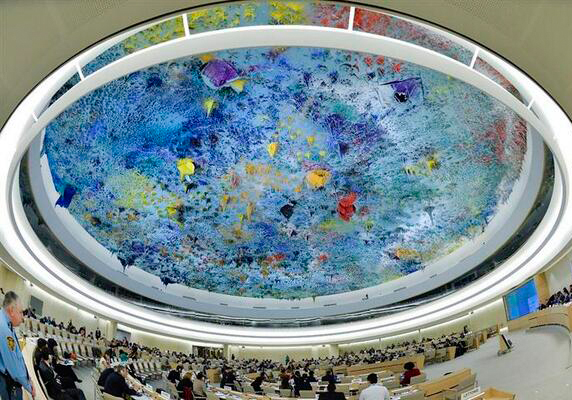
Non-governmental organizations (NGOs) from around the world expressed their strong support today for a joint declaration by UN member states condemning the human rights situation in Egypt which was delivered at the UN Human Rights Council.
In the declaration governments expressed “deep concern” for widespread human rights violations committed with impunity by the Egyptian authorities.
The joint declaration, signed by 31 states and delivered by Finland at the Council’s 46th session highlighted “restrictions on freedom of expression and the right to peaceful assembly, the constrained space for civil society and political opposition.” It also condemned the use of counter-terrorism laws to punish peaceful critics.
“The March 12 declaration ends years of a lack of collective action at the UN Human Rights Council on Egypt, despite the sharply deteriorating human rights situation in the country,” said Bahey Hassan, Director of the Cairo Institute for Human Rights Studies. “Countries should continue to make it clear to the Egyptian government that it will no longer have a carte blanche to arbitrarily imprison, torture or violate the right to life or unlawfully kill people.”
More than 100 NGOs from around the world wrote to UN member states in early 2021, warning that the Egyptian government is attempting to “annihilate” human rights organizations and eradicate the human rights movement in the country through sustained, widespread, and systematic attacks.
The organizations had asked UN member states to adopt a resolution establishing a monitoring and reporting mechanism on Egypt. The declaration delivered on March 12 is a significant step and should be followed up by concrete action toward achieving this goal, the organizations said. The declaration was on the Council’s agenda under Item 4, which provides a space to raise concerns about grave and systematic human rights violations, including country-specific situations.
The last joint declaration on the human rights situation in Egypt at the Human Rights Council was delivered by Iceland and co-signed by 26 countries in March 2014.
Since that time the human rights situation in Egypt has deteriorated dramatically. The Egyptian authorities have virtually obliterated almost all space for free expression, peaceful assembly, and association. Under President Abdel Fattah al-Sisi’s rule security forces, with the complicity of prosecutors and judges, have arrested, detained or prosecuted thousands, including hundreds of human rights defenders, religious minorities’ rights activists, peaceful protesters, journalists, academics, artists, politicians and lawyers.
Many have been forcibly disappeared, tortured or otherwise ill-treated, and detained for months or years in inhumane conditions without trial. Those detained are regularly held on the basis of unfounded terrorism-related charges. If referred to trial individuals are often convicted in grossly unfair proceedings before military courts and through mass trials. Many have been sentenced to death and executed after unfair trials that have relied on statements likely obtained through torture. The authorities have also used morality and debauchery laws to arrest and detain women influencers, sexual violence survivors and witnesses, and LGBTI individuals and activists.
The UN Working Group on Arbitrary Detention has found that arbitrary detention is a systematic problem in Egypt. The UN Committee against Torture said in 2017 following an inquiry on Egypt that the facts gathered by the committee “lead to the inescapable conclusion that torture is a systematic practice in Egypt.”
“Today’s declaration sends a clear message to the Egyptian authorities that the world will no longer turn a blind eye to their relentless campaign to crush peaceful dissent. The authorities must take urgent action to comply with their obligations under international law, starting by releasing the thousands of men and women arbitrarily detained, protecting those in custody from torture and other ill-treatment, and ending the crackdown on peaceful activism, ” said Kevin Whelan, Amnesty International representative to the UN in Geneva.
In the March 12 joint declaration governments called for “accountability and an immediate end of impunity” for abuses. Governments also called on Egypt to cease “abuses of due process,” the excessive use of “extended pre-trial detention,” and “the practice of adding detainees to new cases with similar charges after the legal limit for pre-trial detention has expired.”
Governments that have joined the declaration, led by Finland, include: Australia, Austria, Belgium, Bosnia and Herzegovina, Bulgaria, Canada, Costa Rica, Czech Republic, Denmark, Estonia, France, Germany, Iceland, Ireland, Italy, Latvia, Liechtenstein, Lithuania, Luxembourg, Montenegro, the Netherlands, New Zealand, North Macedonia, Norway, Slovenia, Spain, Sweden, Switzerland, the United Kingdom, and the United States of America. Other governments can join the declaration until two weeks after the end of the current Human Rights Council session.
“Bringing the human rights situation in Egypt to the attention of the Human Rights Council and properly addressing these abuses is of fundamental importance to ensure Egypt’s long-term stability and the dignity of its people,” said John Fisher, Geneva Director at Human Rights Watch.
The Co-signing organizations to this statement include:
Amnesty International, Arab Network for Knowledge and Human Rights (ANKH), Artists at Risk (AR), Association of juridical studies on Immigration (ASGI), The Cairo Institute for Human Rights Studies (CIHRS), le Comité de Vigilance pour la Démocratie en Tunisie, Committee for Justice, Democracy for the Arab World Now (DAWN), DIGNITY – Danish Institute Against Torture, The Egyptian Front for Human Rights, Egyptian Human Rights Forum, EuroMed Rights, The Freedom Initiative, Freedom House, Human Rights Watch (HRW), humanrights.ch, International Federation for Human Rights (FIDH), The International Commission of Jurists (ICJ), International Service for Human Rights (ISHR), MENA Rights Group, Minority Rights Group International, MTÜ Andalus Institute for Tolerance and anti-Violence Studies, The Project on Middle East Democracy (POMED), Réseau des Organisations de la Société Civile pour l’Observation et le Suivi des Elections en Guinée, PEN International, People in Need, Robert F. Kennedy Human Rights, Tunisian Coalition to Abolish the Death Penalty
Download
Press release in English and Arabic.
Q&A in English.
Contact
Said Benarbia, International Commission of Jurists (Geneva) – said.benarbia@icj.org
Jeremie Smith, Cairo Institute for Human Rights Studies (Geneva) – jsmith@cihrs.org
Neil Hicks, Cairo Institute for Human Rights Studies (New York) – nhicks@cihrs.org
John Fisher, Human Rights Watch (Geneva) – fisherj@hrw.org
Amr Magdi, Human Rights Watch (Berlin) – magdia@hrw.org
Kevin Whelan, Amnesty International (Geneva) – kevin.whelan@amnesty.org
Sara Hashash, Amnesty International (London) – Sara.Hashash@amnesty.org
Rasmus Grue, Christensen, DIGNITY – Danish Institute Against Torture – rgc@dignity.dk
Antoine Madelin, International Federation for Human Rights (Paris), amadelin@fidh.org
Mohammed Soltan, The Freedom Initiative – Soltan@thefreedomi.org
Mar 9, 2021 | News
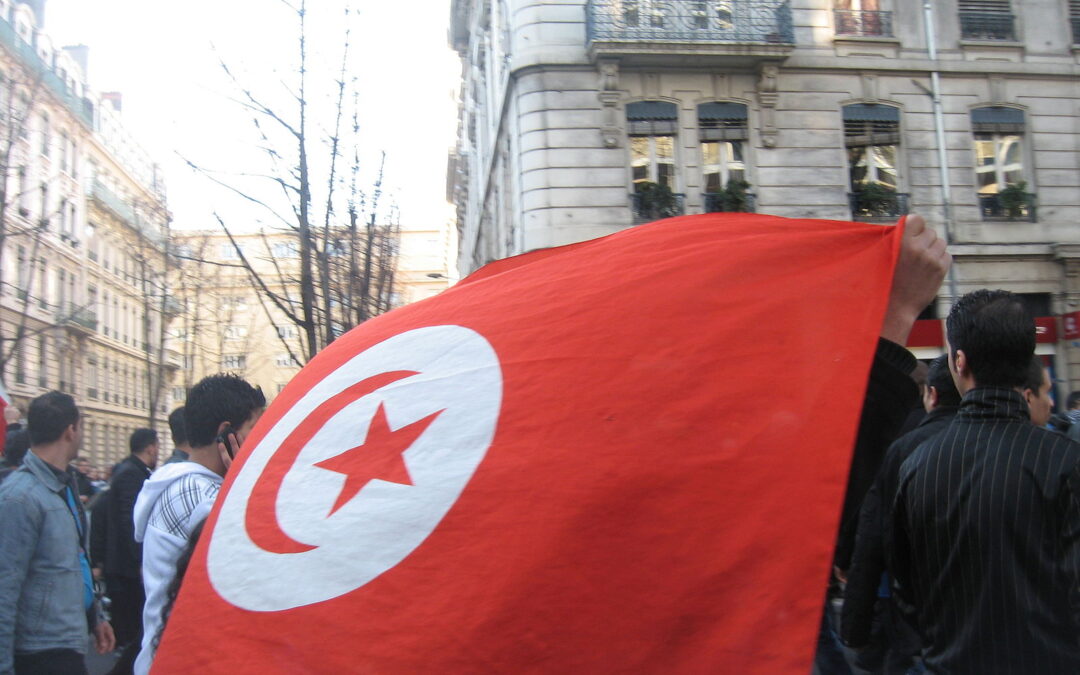
Tunisian authorities must respect the rights to freedom of expression, association and peaceful assembly, and stop the systematic targeting of protesters, lawyers and civil society activists, said the ICJ today.
البيان الصحفي باللغة العربية مرفق أدناه
Since the outbreak of social justice protests on 15 January 2021, Tunisian security forces have systematically targeted protesters, including minors, lawyers and civil society activists.
Over the last weeks, reports of abuses at the hands of the Tunisian security forces have included: hundreds of arbitrary arrests; deaths in custody in disputed circumstances; physical assaults; rape and death threats; and refusing detainees access to legal counsel. While to date more than half of the people arrested since the beginning of the protests have been released, only a few prosecutions arising from the security forces’ systematic campaign of arrests have taken place, and hundreds of people are still in custody awaiting to be brought before a judge. According to the information available to the ICJ, individuals are being prosecuted under different charges, including “insulting the police” and “abuse of morals”.
“The systematic targeting of peaceful protesters and the other abuses that we have witnessed in recent weeks are clear instances of the wider impunity that Tunisian security forces have continued to enjoy over decades,” said Said Benarbia, the ICJ’s MENA Programme Director
“The Tunisian authorities should immediately halt these practices by reforming the country’s security legislation and open independent and impartial investigations into these abuses.”
To date, Tunisia has failed to adopt a comprehensive reform of its security legislation in line with the Constitution and the country’s obligations under international human rights law and standards.
As reported on multiple occasions, investigations into reports of human rights violations by Tunisian security forces have rarely led to successful prosecutions of perpetrators in the past. Moreover, while since 2018 prosecutions arising from police abuses committed under the previous regime have started before the Specialized Criminal Chambers, numerous obstacles continue to affect the progress of trials, and no verdict has been delivered to date.
“It is time for the Tunisian authorities to abide by the Constitution and international human rights law and standards and commit to a complete end to the security forces’ oppressive practices,” Benarbia added.
“Only by undertaking a full review of Tunisia’s security laws and bringing perpetrators of human rights violations to justice will the country be able to break this cycle of abuses and ensure full respect for fundamental freedoms and human rights.”
Contact
Said Benarbia, Director, ICJ Middle East and North Africa Programme, t: +41-22-979-3817; e: said.benarbia(a)icj.org
Valentina Cadelo, Legal Adviser, ICJ Middle East and North Africa Programme, e: valentina.cadelo(a)icj.org
Asser Khattab, Research and Communications’ Officer, ICJ Middle East and North Africa Programme, e: asser.khattab(a)icj.org
Download
Press release in English and Arabic.

Mar 5, 2021 | Editorial, Noticias
En esta columna de opinión, el Comisionado de la CIJ, Rodrigo Uprimny, discute si las patentes de las vacunas COVID-19, que favorecen los intereses de propiedad intelectual de los productos farmacéuticos, tienen un costo inaceptable para proteger la vida y la salud de millones de personas. El Comisionado Uprimny también es Investigador en Dejusticia y miembro del Comité de Derechos Económicos, Sociales y Culturales..
Esta columna se publicó por primera vez en El Espectador, el 27 de febrero de 2021.
¿Por qué, me preguntaron en una conversación informal, tenemos que esperar todo este tiempo a que nos lleguen las vacunas contra COVID-19, mientras que la economía sigue mal y muere tanta gente, si ya hay muchas vacunas seguras y efectivas? ¿Es que acaso nosotros no podemos producirlas?
La respuesta a esta sencilla pero esencial pregunta es que el problema no es técnico sino político.
Tal vez Colombia no pueda técnicamente producir algunas de esas vacunas, como las basadas en el ARN mensajero, pero muchos otros países podrían hacerlo, incluso varios del Sur global, como India, Argentina o Brasil. Como lo ha mostrado Médicos sin Fronteras, no hay un obstáculo técnico a que una producción masiva mundial permita en pocos meses tener vacunas suficientes para todos los 7.800 millones de seres humanos.
El obstáculo es jurídico y político. Es la propiedad intelectual que prevé patentes para las farmacéuticas que crearon esas vacunas, que es un monopolio temporal, en general de 20 años, conforme al cual nadie puede producir esas vacunas, en ese período, sin su permiso. Y por eso esas empresas pueden también imponer precios y condiciones.
Las patentes son defendidas por los países ricos, que es en donde están domiciliadas muchas de esas farmacéuticas. El argumento es que sin patentes no habría innovación pues las empresas no tendrían incentivos para investigar y lograr nuevos productos.
No voy a controvertir acá esa defensa de la propiedad intelectual, que es muy discutible, sino que planteo esta pregunta: incluso si las patentes fueran buenas y ayudaran a la innovación, ¿es justo que hoy se mantengan intactas frente a COVID-19 si eso impide el acceso rápido a vacunas en todo el planeta?
La respuesta es negativa pues no sólo condenamos a morir a millones de personas, sino que además el riesgo epidemiológico es altísimo. Cada contagio es un riesgo de una nueva mutación del coronavirus. Nada excluye entonces que lleguemos a variantes que escapen a las vacunas actuales. O que surja y se extienda alguna variante letal para los niños, que por ahora han logrado escapar al efecto devastador de la pandemia.
Por eso, sin cuestionar la propiedad intelectual como tal, Sudáfrica y la India propusieron ante la Organización Mundial del Comercio, que es el foro internacional sobre estos temas, una exención temporal (o “waiver”) frente a las patentes de vacunas y tratamientos para COVID-19, al menos mientras se controla la pandemia. Podría incluso preverse alguna compensación justa a las empresas que descubrieron las vacunas, descontando obviamente el inmenso apoyo financiero que recibieron de dineros públicos.
Esta exención temporal es imprescindible pues las flexibilidades hoy previstas frente a las patentes, como las licencias obligatorias, son demasiado rígidas y limitadas para enfrentar esta crisis. Sólo el waiver permitirá que empresas y Estados con las capacidades técnicas suficientes se pongan a producir masivamente las vacunas necesarias, sin temer sanciones drásticas por violar patentes.
Esa propuesta enfrenta la resistencia de ciertos países del norte, pero ha recibido un apoyo creciente de muchos Estados y organizaciones científicas y humanitarias. Sin embargo, el gobierno Duque se ha abstenido de apoyarla con el vergonzoso argumento de que necesita más evidencia. ¿Más evidencia de qué? ¿No es obvio que hoy no hay suficientes vacunas pudiendo técnicamente haberlas y que las que hay están yendo sobre todo a los países ricos? ¿Y que eso se debe en gran parte a las patentes sobre las vacunas, que lejos de ser un premio justo a la innovación parecen hoy más patentes de corso a favor de las farmacéuticas, por la muerte que están provocando en el mundo?
Download the Op-Ed in English and Spanish.
ICJ Statements on Vaccine Access:
Global: “ICJ calls on States to ensure human rights compliant access to COVID-19 vaccines (UN Statement)”: (1 March 2021) https://www.icj.org/icjhrcgd2covid19/
Global: “ICJ urges the UN Committee on Economic, Social and Cultural Rights to call on States to comply with their obligations to ensure equitable access to vaccines for all” (15 Feb 2021): https://www.icj.org/icj-urges-the-un-committee-on-economic-social-and-cultural-rights-to-call-on-states-to-comply-with-their-obligations-to-ensure-equitable-access-to-vaccines-for-all/
Peru: “The COVID-19 vaccine demands international and national solidarity” (23 Feb 2021): https://www.icj.org/the-covid-19-vaccine-demands-international-and-national-solidarity/
Africa: “The ICJ recommends that the African Union acknowledge COVID-19 vaccines are a “public good” (4 Feb 2021): https://www.icj.org/the-icj-recommends-that-the-african-union-acknowledge-covid-19-vaccines-are-a-public-good/
Zimbabwe: “The ICJ and ZimRights ask for urgent intervention on access to COVID-19 vaccines from African Commission Mechanism” (19 Feb 2021): The ICJ and ZimRights ask for urgent intervention on access to COVID-19 vaccines from African Commission Mechanism
Further reading:
UN Special Procedures: “COVID-19: UN experts urge WTO cooperation on vaccines to protect global public health” (1 March 2021): https://www.ohchr.org/EN/NewsEvents/Pages/DisplayNews.aspx?NewsID=26817&LangID=E
UN Special Procedures: “Statement by UN Human Rights Experts Universal access to vaccines is essential for prevention and containment of COVID-19 around the world” (9 Nov 2020): https://www.ohchr.org/EN/NewsEvents/Pages/DisplayNews.aspx?NewsID=26484&LangID=E
UN CESCR Committee: “Statement on universal and equitable access to vaccines for the coronavirus disease (COVID-19)” (27 Nov 2020) https://tbinternet.ohchr.org/_layouts/15/treatybodyexternal/Download.aspx?symbolno=E/C.12/2020/2&Lang=en
IACHR and its SRESCER: “IACHR and its SRESCER Call on American States to Make Public Health and Human Rights the Focus of All their Decisions and Policies Concerning the COVID-19 Vaccine” (5 Feb 2021): http://www.oas.org/en/IACHR/jsForm/?File=/en/iachr/media_center/PReleases/2021/027.asp