Mar 5, 2021 | News, Op-eds
An opinion piece by ICJ Commissioner, Rodrigo Uprimny, asks whether the existing COVID-19 vaccine patenting arrangements favouring the intellectual property interests of pharmaceuticals come at an unacceptable cost to protecting the life and health of millions. Commissioner Uprimny is also Researcher at Dejusticia and member of the UN Committee on Economic, Social and Cultural Rights.
During an informal conversation I was asked:
“Why is it that, although so many of us are dying due to COVID-19 and suffering from the dramatic state of the economy, we continue to wait for vaccines despite the availability of so many safe and effective ones? Is it that we cannot produce the vaccines locally?
The answer to this simple but essential question is that vaccine access is no longer a technical but also a political issue.
While Colombia cannot technically manufacture or produce some COVID-19 vaccines such as those based on the RNA messengers, many other countries, including several in the global South such as India, Argentina or Brazil, could. As has been highlighted by Doctors without Borders, there is no technical obstacle to mass vaccine production that would allow to vaccinate every one of the 7.8 billion human beings on earth within a few months
Instead, the obstacle is legal and political. It is the intellectual property that provides patents to pharmaceutical companies, who have developed COVID-19 vaccines. That creates a temporary monopoly. During such a temporary monopoly period, which usually lasts 20 years, no other company can produce their vaccines without permissions. As a consequence, those companies can impose and regulate the prices and conditions for the production of their vaccines.
Patents are defended by high-income countries, where many large pharmaceutical companies are based. They argue that there would be no innovation without patents as companies would not have incentives to research and develop new products.
Here, I will not dispute this defense of intellectual property, which is highly debatable. I would instead like to pose this question: even if patents were good and helped innovation, is it fair that they remain intact during the COVID-19 pandemic if they prevent rapid access to vaccines all over the world? The answer to this question is no, because we are condemning millions of people to die, but also because the epidemiological risks are extremely high. Each contagion poses a new risk for a novel coronavirus mutation that may eventually result in a variant that could escape the efficacy of current vaccines. It is also possible that a new mutation has a severe impact on the health of children, who have been somewhat spared from the more lethal impacts of COVID-19 until now.
In light of the current situation, without challenging the institution of intellectual property as such, South Africa and India issued a proposal to the World Trade Organization, the international organization overseeing such trade-related issues. They proposed a temporary exemption (or “waiver”) of patents on vaccines and treatments for COVID-19 at least until the pandemic is under control. A potential, fair compensation for companies who discovered the vaccines might also been considered, although obviously discounting the immense financial support they have already received from public funding.
This temporary exemption is crucial as current flexibilities in patent rights, such as compulsory licenses, are too rigid and limited to face the current crisis. This waiver provides the only opportunity for companies and States, with sufficient technical capabilities, to mass-produce necessary vaccines without having to fear the severe penalties of patent (intellectual property) violations.
While this proposal continues to face resistance from certain countries in the Global North, it is receiving growing support from many states, scientific and humanitarian organizations. Regrettably, the Colombian government has refrained from supporting it, with the shameful argument that more evidence needs to be provided. More evidence of what? Does it not suffice that we currently do not have access to necessary vaccines, although technically we could produce ample amounts? Or that available vaccines are, above all, headed to high-income nations? And is this mainly due to patents on vaccines that, far from being a fair award for innovation, seem to be letters of marque in favor of pharmaceutical companies, without any consideration of deaths and harms caused by the global lack of COVID-19 vaccines?
This op-ed was first published on El Espectador, 27 February 2021.
Download the Op-Ed in English and Spanish.
ICJ Statements on Vaccine Access:
Global: “ICJ calls on States to ensure human rights compliant access to COVID-19 vaccines (UN Statement)”: (1 March 2021)
Global: “ICJ urges the UN Committee on Economic, Social and Cultural Rights to call on States to comply with their obligations to ensure equitable access to vaccines for all” (15 Feb 2021): https://www.icj.org/icj-urges-the-un-committee-on-economic-social-and-cultural-rights-to-call-on-states-to-comply-with-their-obligations-to-ensure-equitable-access-to-vaccines-for-all/
Peru: “The COVID-19 vaccine demands international and national solidarity” (23 Feb 2021): https://www.icj.org/the-covid-19-vaccine-demands-international-and-national-solidarity/
Africa: “The ICJ recommends that the African Union acknowledge COVID-19 vaccines are a “public good” (4 Feb 2021): https://www.icj.org/the-icj-recommends-that-the-african-union-acknowledge-covid-19-vaccines-are-a-public-good/
Zimbabwe: “The ICJ and ZimRights ask for urgent intervention on access to COVID-19 vaccines from African Commission Mechanism” (19 Feb 2021): https://www.icj.org/the-icj-and-zimrights-ask-for-urgent-intervention-on-access-to-covid-19-vaccines-from-african-commission-mechanism/
Further reading:
UN Special Procedures: “COVID-19: UN experts urge WTO cooperation on vaccines to protect global public health” (1 March 2021): https://www.ohchr.org/EN/NewsEvents/Pages/DisplayNews.aspx?NewsID=26817&LangID=E
UN Special Procedures: “Statement by UN Human Rights Experts Universal access to vaccines is essential for prevention and containment of COVID-19 around the world” (9 Nov 2020): https://www.ohchr.org/EN/NewsEvents/Pages/DisplayNews.aspx?NewsID=26484&LangID=E
UN CESCR Committee: “Statement on universal and equitable access to vaccines for the coronavirus disease (COVID-19)” (27 Nov 2020) https://tbinternet.ohchr.org/_layouts/15/treatybodyexternal/Download.aspx?symbolno=E/C.12/2020/2&Lang=en
IACHR and its SRESCER: “IACHR and its SRESCER Call on American States to Make Public Health and Human Rights the Focus of All their Decisions and Policies Concerning the COVID-19 Vaccine” (5 Feb 2021): http://www.oas.org/en/IACHR/jsForm/?File=/en/iachr/media_center/PReleases/2021/027.asp
Mar 5, 2021
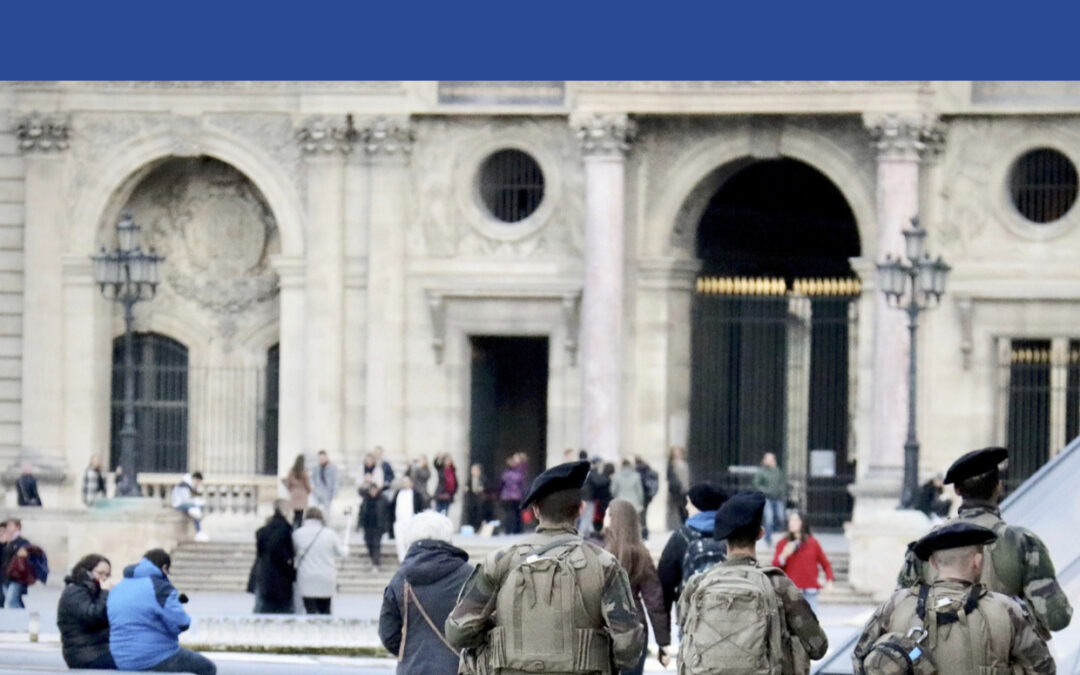
Today, the ICJ published Terrorism offences and human rights in the EU: a short guide aimed at supporting civil society and others advocating for the human rights of people affected by terrorism and counter-terrorism
Across Europe, national laws criminalise a wide range of conduct in the name of countering terrorism. In practice, these laws can affect rights to freedom of movement, expression, association, assembly, privacy, private and family life or the right to political participation. They may be applied in a way that is discriminatory, or through processes involving insufficient procedural safeguards that affect the right to liberty or the right to a fair trial..
This short Guide presents an overview of the international and EU legal framework for the protection of human rights in the application of terrorism-related criminal offences in EU Member States. It particularly addresses the impact on human rights of investigating, prosecuting and trying offences under the EU Directive on combatting terrorism.
The Guide outlines the scope of conduct considered as “terrorism” in international and EU law, as well as international law and standards on the rights of victims of terrorism and of suspects of terrorism-related crimes.
It summarises how international human rights law applies to counter-terrorism criminal law, including in times of crisis, in accordance with principles of legality, necessity and proportionality, and non-discrimination.
The Guide is complemented by the more detailed legal analysis of these issues in Counter-terrorism and human rights in the courts: guidance for judges, prosecutors and lawyers on application of EU Directive 2017/541 on combatting terrorism (the Guidance), published by the ICJ in collaboration with Human Rights in Practice, Nederlands Juristen Comité voor de Mensenrechten (NJCM) and Scuola Superiore Sant’Anna di Pisa in November 2020 as part of the EU JUSTICE project.
Download here: Terrorism offences and human rights in the EU: a short guide
Contact:
Róisín Pillay, Director Europe and Central Asia Programme; roisin.pillay(a)icj.org
Karolína Babická, Legal adviser Europe and Central Asia Programme; karolina.babicka(a)icj.org
Mar 4, 2021 | News
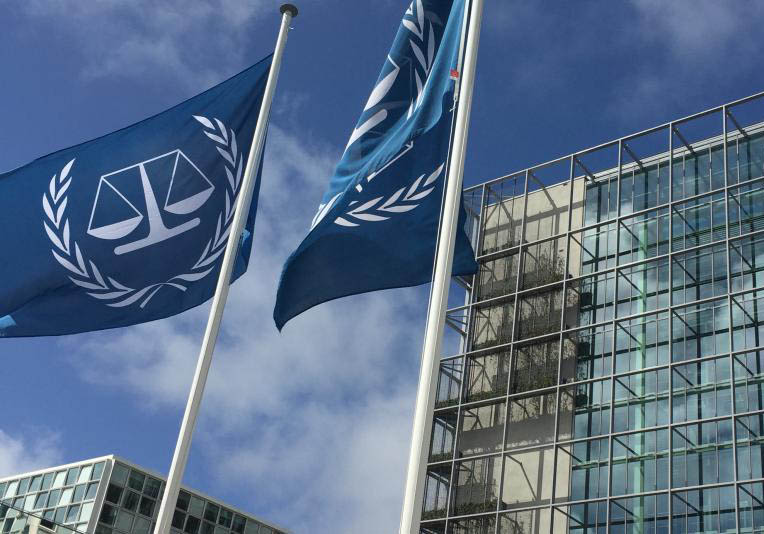
Israeli and Palestinian authorities should immediately grant the International Criminal Court unhindered access to Palestinian territory to investigate alleged crimes under international law committed by all parties to the conflict, the International Commission of Jurists said today.
The International Criminal Court’s prosecutor yesterday announced the initiation of an investigation into “war crimes [that] have been or are being committed in the West Bank, including East Jerusalem, and the Gaza Strip.”
“Israel, the United States and other States must refrain from any efforts undermining the Office of the Prosecutor and the integrity of its investigation,” said Said Bearbia, ICJ’s MENA programme director. “Rather, they should comply with universally recognized norms on the independence and impartiality of judges and prosecutors.”
The ICJ calls on all states and concerned organizations to cooperate fully with and provide any necessary assistance to Office of the Prosecutor in carrying out its investigation.
The Israeli and Palestinian authorities, in particular, should grant the Office of the Prosecutor and its members unhindered access to all Palestinian territory without delay, and allow them to visit sites, meet and speak freely and privately with victims and witnesses, and access any relevant documentation or records.
It is critical that the ICC’s investigators and prosecutors, like any other investigators and prosecutors, should be able to perform their professional functions independently, impartially, diligently and without intimidation, hindrance, harassment or improper interference.
“The ICC investigation offers a unique opportunity to begin addressing the structural impunity that prevails over past and ongoing crimes under international law in Palestine,” Benarbia added. “It’s a crucial initial step in the realization of the victims’ rights to justice, truth and reparations.”
On 5 February 2020, the ICC decided it can assert its jurisdiction over serious crimes alleged to have occurred in the State of Palestine since 13 June 2014.
On 16 March 2020, the ICJ submitted amicus curiae observations in support of the Court’s territorial jurisdiction.
Find the Press Release in Arabic here: PalestineIsrael-PR-ICC-ARA2-2021
Contact:
Said Benarbia, Director, ICJ Middle East and North Africa Programme; t: +41 22 979 3817 e: said.benarbia(a)icj.org
Asser Khattab, Research and Communications Officer, ICJ Middle East and North Africa Programme, asser.khattab@icj.org
Mar 4, 2021 | News
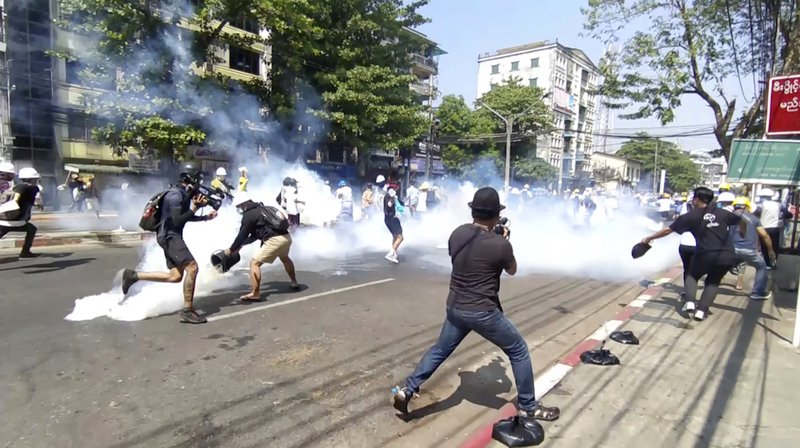
The escalating killing of peaceful protestors by Myanmar’s security forces should be independently investigated as possible crimes against humanity, said the ICJ today on the eve of a closed-door UN Security Council session on the situation.
According to reliable information provided to the ICJ, security forces have unlawfully killed approximately 50 unarmed people – including at least five children – in more than 10 cities on different days since the military overthrew the civilian government on 1 February 2021. On 3 March, at least 38 people were reported killed by security forces.
In addition, numerous protestors have been injured and a total of 1,498 people have been arrested, charged or sentenced in relation to the military coup, according to The Assistance Association for Political Prisoners (AAPP).
“As the scale of the violence continues to increase, seemingly as part of a systematic, centralized policy to use lethal force against peaceful protestors, it is hard to escape the conclusion that Myanmar’s security forces are perpetrating crimes against humanity,” said Kingsley Abbott, Director of Global Accountability and International Justice at the ICJ. “This underscores the urgent need for all states, including the permanent members of the UN Security Council, to stop shielding the Myanmar military and work together towards opening avenues to justice for the Myanmar people.”
The UN Security Council will meet this Friday for a closed-door session at the request of the United States which is President of the Council in March 2021.
“The UN Security Council should immediately refer Myanmar to the International Criminal Court for a full independent and effective investigation,” added Abbott.
In addition to acts that may constitute murder as a crime against humanity, security forces have also reportedly committed acts which, when committed in a widespread and systematic manner, would amount to other crimes against humanity, including imprisonment, torture, and enforced disappearance – all of which also go towards supporting the existence of an attack.
“These killings and other crimes under international law are a direct result of the culture of impunity that has been allowed to persist in Myanmar for decades,” added Abbott. “All states should support the different accountability initiatives underway, including the Independent Investigative Mechanism for Myanmar which is collecting evidence for use in future legal proceedings.”
“It is long past time for perpetrators of serious human rights violations in the country to be brought to justice before the International Criminal Court or in any national jurisdictions willing and able to exercise universal jurisdiction.”
Background
On 12 September 2018, following an independent investigation, the United Nations Independent International Fact-Finding Mission on Myanmar called for Myanmar’s military to be “…investigated and prosecuted in an international criminal tribunal for genocide, crimes against humanity and war crimes” concerning alleged violations in Shan, Kachin and Rakhine States and elsewhere throughout the country.
Under general international law, including customary international law and treaties and statutes of international criminal courts, crimes against humanity must be prosecuted. The authoritative definition of crimes against humanity is contained in the Rome Statute of the International Criminal Court (ICC).
Under Article 7 of the Rome Statute, for killings to amount to crimes against humanity, they must be committed as part of a widespread or systematic attack directed against any civilian population, with knowledge of the attack. According to the elements of crimes of the Rome Statute, “’Attack directed against a civilian population’ in these context elements is understood to mean a course of conduct involving the multiple commission of acts referred to in Article 7, paragraph 1, of the Statute against any civilian population, pursuant to or in furtherance of a State or organizational policy to commit such attack. The acts need not constitute a military attack. It is understood that ‘policy to commit such attack’ requires that the State or organization actively promote or encourage such an attack against a civilian population.”
Generally speaking, “widespread” refers to the geographical scope of the attack and the number of victims, but not exclusively. “Systematic” refers to the organized nature of the acts of violence and the improbability of their random occurrence.
Myanmar is not a State Party to the Rome Statute of the ICC. However, the ICC is investigating crimes committed against the Rohingya minority as part of waves of violence in Rakhine State in 2016 and 2017 where one element or part of the crime was committed inside Bangladesh, which is a party to the Rome Statute. The ICC would be able to conduct a full investigation of the situation in Myanmar if the UN Security Council used its Chapter VII powers to refer the matter to the ICC pursuant to Article 13(b) of the Rome Statute.
Universal jurisdiction refers to the legal concept that States have the authority, and in some cases the obligation, to bring proceedings in relation to certain crimes, including crimes against humanity, because they are so serious it does not matter where the crimes were committed or the nationality of the perpetrators or the victims. States are generally entitled to exercise jurisdiction for serious under crimes under international law.
Contact
Kingsley Abbott, ICJ Director of Global Accountability and International Justice; e: kingsley.abbott(a)icj.org
Sam Zarifi, ICJ’s Secretary General, sam.zarifi(a)icj.org
Mar 2, 2021 | News
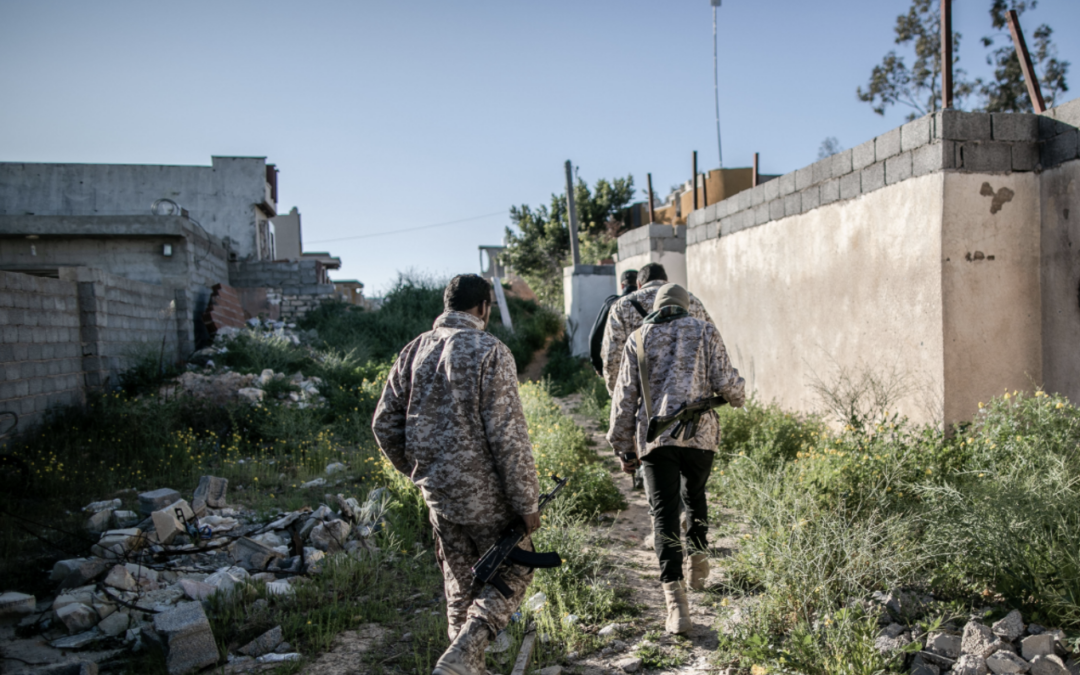
Justice and accountability in Libya can only be achieved if activists and lawyers fully engage with and support the UN Independent Fact-Finding Mission on Libya (FFM) in documenting and collecting evidence of serious violations in the country, the ICJ said today.
To facilitate such engagement, the ICJ’s Question and Answer (Q&A) published today provides guidance for Libyan and international civil society actors on:
- the role and mandate of the FFM;
- the FFM’s relationship with other accountability mechanisms, such as the International Criminal Court (ICC);
- what the FFM may be expected to achieve; and
- how to engage with the FFM.
“The success of the FFM’s mandate rests largely on its ability to establish the facts about and collect evidence of violations and abuses of international human rights and humanitarian law perpetrated in Libya.”
“We urge lawyers, activists and civil society actors to fully support the FFM in achieving these objectives and bringing about the accountability that has so far eluded Libya.”
– Said Benarbia, the ICJ’s MENA Programme Director.
The FFM was established by the UN Human Rights Council on 22 June 2020 through resolution 43/39. Its mandate includes:
- Establishing facts and circumstances of the human rights situation throughout Libya;
- Collecting and reviewing relevant information;
- Documenting alleged violations and abuses of international human rights law and international humanitarian law, including any gendered dimensions of such violations and abuses; and
- Preserving evidence with a view to ensuring that perpetrators be held accountable.
While the FFM cannot conduct criminal investigations or prosecute individuals, the evidence preserved may be used by Libyan judicial authorities, the ICC, and third countries exercising universal jurisdiction.
The FFM has issued a call for submissions of relevant information and materials, the deadline for which is 30 June 2021.
Contact
Said Benarbia, Director, ICJ Middle East and North Africa Programme; t: +41 22 979 3817, e: said.benarbia(a)icj.org
Vito Todeschini, Legal Adviser, ICJ Middle East and North Africa Programme; t: +216 53 334 679, e: vito.todeschini(a)icj.org
Asser Khattab, Research and Communications Officer, ICJ Middle East and North Africa Programme; e: Asser.Khattab(a)icj.org
Download
Q&A on the UN International Fact-Finding Mission in English and Arabic.
Press Release in English and Arabic.