May 5, 2021 | News
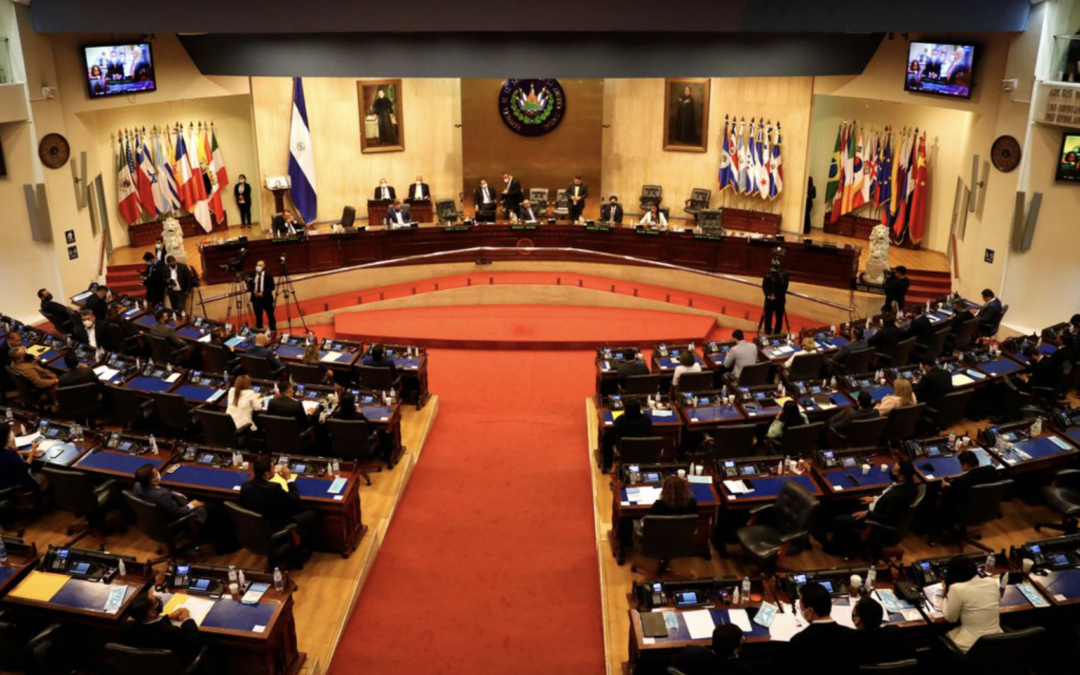
The ICJ today condemned the dismissal of all five of the justices serving in El Salvador’s Supreme Court Constitutional Chamber by the country’s newly elected Legislative Assembly, backed by El Salvador’s President Nayib Bukele.
The dismissal on 2 May was justified on vague allegations of arbitrariness and dereliction of functions particularly relating to judicial decisions taken striking down government action related to the COVID-19 Pandemic. The Legislative Assembly also dismissed El Salvador’s Attorney General.
The ICJ stressed that the dismissal violated core tenets of the independence of the judiciary, by which judges are subject to dismissal only “for reasons of incapacity or behaviour that renders them unfit to discharge their duties.” (United Nations Basic Principles on the Independence of the Judiciary). Any decision must also be subject to a fair hearing of individual judges, with full due process guarantees.
The dismissal process was carried out without any individualized hearings, and without a clear expression of a legitimate basis for the dismissal.
The ICJ is concerned that this summary dismissal will undermine the independence of the judiciary, including by intimidating other judicial authorities in the country.
The dismissal of judges and the Attorney General was followed by the immediate appointment and swearing in office of other judges in replacement. This decision violates the procedural rules of selection and appointment, which are essential to safeguard the independence and impartiality of the judges serving in the Constitutional Chamber.
The decision to dismiss the judges was taken by a qualified majority of legislators, shortly after the new legislative assembly started its functions, in a swift procedure that lasted just a few hours.
The ICJ urges the government of El Salvador to restore respect to fundamental rule of law principles to prevent the arbitrary use of power and impunity.
The country is particularly vulnerable to impunity for human rights violations, where an independent judiciary is not in place to assess the lawfulness of government actions.
The ICJ calls on the responsible authorities of the Inter-American Commission for human rights and the United Nations human rights system to address the situation as a matter of priority.

May 5, 2021 | News
The ICJ condemns the Danish authorities’ practice of revoking residence permits of Syrian refugees, mainly women and older men, on the false premise that Syria is safe for refugees’ return. Partly due to a lack of diplomatic relations with Syria, Denmark cannot forcibly remove refugees and instead detains them.
These practices should end immediately, individual assessments must be carried out in each case, and those detained pending removal should be immediately released, the ICJ said.
“International law requires that before any forcible removal, an individualized assessment of risks for each individual must be made and the principle of non-refoulement must be respected at all times,” said Róisín Pillay, ICJ Europe and Central Asia Director.
The principle of non-refoulement, prohibiting States to transfer anyone to a country where he or she faces a real risk of persecution or other serious human rights abuses, is a fundamental principle of international law and one of the strongest limitations on the right of States to control entry into their territory and to expel aliens as an expression of their sovereignty, as set out in Article 33 of the Geneva Refugee Convention and Article 3 of the Convention against Torture.
“Immigration detention pending removal is permitted only for as long as removal proceedings are in progress, and only if such proceedings are executed with due diligence and there is a realistic prospect that removal will be carried out within a reasonable time. Denmark’s practices fail to meet these standards as set out in international and EU law,” Pillay added.
At least 189 Syrians have had applications for renewal of temporary residency status denied since last summer, a move the Danish authorities said was justified because of a report that found the security situation in some parts of Syria had “improved significantly”. In March, ECRE and the Danish Refugee Council reported that the geographical scope of reassessments of cases of Syrian nationals has been expanded to include cases from greater Damascus with hundreds of cases set to be reassessed by the Appeals Board in 2021.
“The ‘improved situation’ assessment in Syria does not reflect the reality on the ground and runs counter to assessments of the UN, the European Parliament and other countries,” said Róisín Pillay.
On 11 March, the European Parliament adopted a resolution on the conflict in Syria which “(r)eminds all Member States that Syria is not a safe country to return” for refugees, and “calls on all EU Member States to refrain from shifting national policies towards depriving certain categories of Syrians of their protected status, and to reverse this trend if they have already applied such policies.” The EP also opposed any “normalization of diplomatic relations with the Syrian regime as long as there is no fundamental progress on the ground in Syria, with clear, sustained and credible engagement in an inclusive political process.”
The UNHCR considers that “changes in the objective circumstances in Syria, including relative security improvements in parts of the territory, are not of a fundamental, stable and durable character so as to warrant cessation of refugee status on the basis of Article 1C(5) of the 1951 Convention.” Furthermore, “in light of continued conflict, insecurity, and contamination with explosive remnants of war (ERW); severe concerns about the rule of law and widespread human rights violations and abuses, including against returnees; fragmented community relations and a lack of genuine reconciliation efforts; massive destruction and damage to homes, critical infrastructure and agricultural lands; and deepening economic and humanitarian crises, which are compounded by the COVID-19 pandemic, UNHCR continues to call on states not to forcibly return Syrian nationals and former habitual residents of Syria, including Palestinians previously residing in Syria, to any part of Syria, regardless of whether the area is under control of the Government or under control of another state or non-state entity. ”
“The Danish authorities’ assessment of the situation in Syria refers solely to the situation of wide-spread violence and bombing in some parts of Syria, in total disregard of the continuing hostilities in other parts of the country, as well as Syria’s abysmal human rights record, including widespread and systematic use of torture and other ill-treatment, arbitrary detention and enforced disappearances,” said Said Benarbia, ICJ MENA Director.
Read the full statement here.
May 5, 2021 | Agendas, Events, News
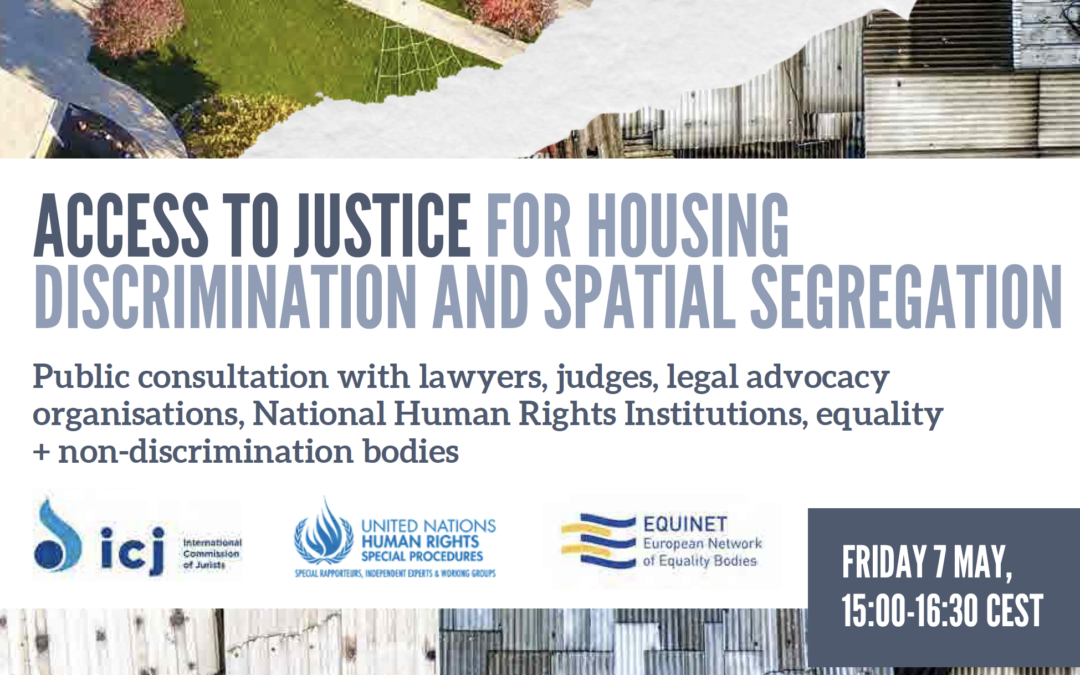
On 7 May, the ICJ will hold a public consultation, together with the UN Office of the High Commissioner of Human Rights and Equinet on Access to Justice for Housing Discrimination and Spacial Segregation.
Featured speakers include Special Rapporteur on the right to housing Balakrishnan Rajagopal; retired Justice Zak Yacoob of the South African Constitutional Court; Supreme Court of India Advocate Vrinda Grover; and Equinet human rights defender Valérie Fontaine
More info here.

May 4, 2021 | News
The removal of Lebanese public prosecutor Ghada Aoun from financial cases she had been overseeing constitutes a further attack on the independence of an already enfeebled judiciary, the International Commission of Jurists said today.
On 15 April 2021, Lebanon’s General Prosecutor removed Ghada Aoun, Mount Lebanon Public Prosecutor, from the financial cases she had been overseeing, including high-profile corruption and illegitimate gains cases. Aoun had charged Riad Salameh, the Governor of Lebanon’s Central Bank, with dereliction of duty and breach of trust, and had charged former Prime Minister Najib Mikati with illegitimate gains. She had also been overseeing and issuing arrest warrants in other high-profile cases.
“The Lebanese judiciary has a long history of utter subordination to the ruling political class in Lebanon,” said Said Benarbia, the Director of the ICJ MENA Programme.
“Removing prosecutors and investigating judges from cases solely because they carry out their legitimate functions flies in the face of the independence of the judiciary and sends a chilling message to others who might dare challenging the authorities.”
Aoun’s ouster followed the removal of investigative judge Fadi Sawan from the 2020 Beirut port blast case. Sawan was removed on 18 February 2021 by the Court of Cassation after bringing criminal negligence charges against the acting President of the Cabinet and former ministers in relation to the devastating explosion on 4 August 2020, in which nearly 200 people died and thousands more were injured. His removal by the Court of Cassation came after two former Ministers who were facing criminal charges filed a complaint against Fadi Sawan before the General Prosecutor, requesting his removal from the case.
The Lebanese authorities, including judicial authorities, should comply with their obligations under international law and ensure that judges and prosecutors be able to exercise their functions independently, free of any influences, pressures, threats or interference from any quarter or for any reason.
In August 2020, the ICJ urged the Lebanese authorities to work with the United Nations to establish a special, independent mechanism to probe the Beirut blast in line with international law and standards with a view to establishing the facts and making recommendations for appropriate accountability measures, including criminal prosecutions.
The call was informed by the ICJ publications and findings on the independence and functioning of the judiciary in Lebanon, including recommendations to ensure that the judiciary is not subject to any form of undue influence by political actors and confessional communities, and that it is able to fulfill its responsibility to uphold the rule of law and human rights.
This press release is also available in Arabic.
Contact:
Said Benarbia, Director, ICJ Middle East and North Africa Programme, t: +41-22-979-3817; e: said.benarbia(a)icj.org
Asser Khattab, Research and Communications Officer, ICJ Middle East and North Africa Programme, e: asser.khattab(a)icj.org
May 4, 2021 | Новости, Пресс-релизы
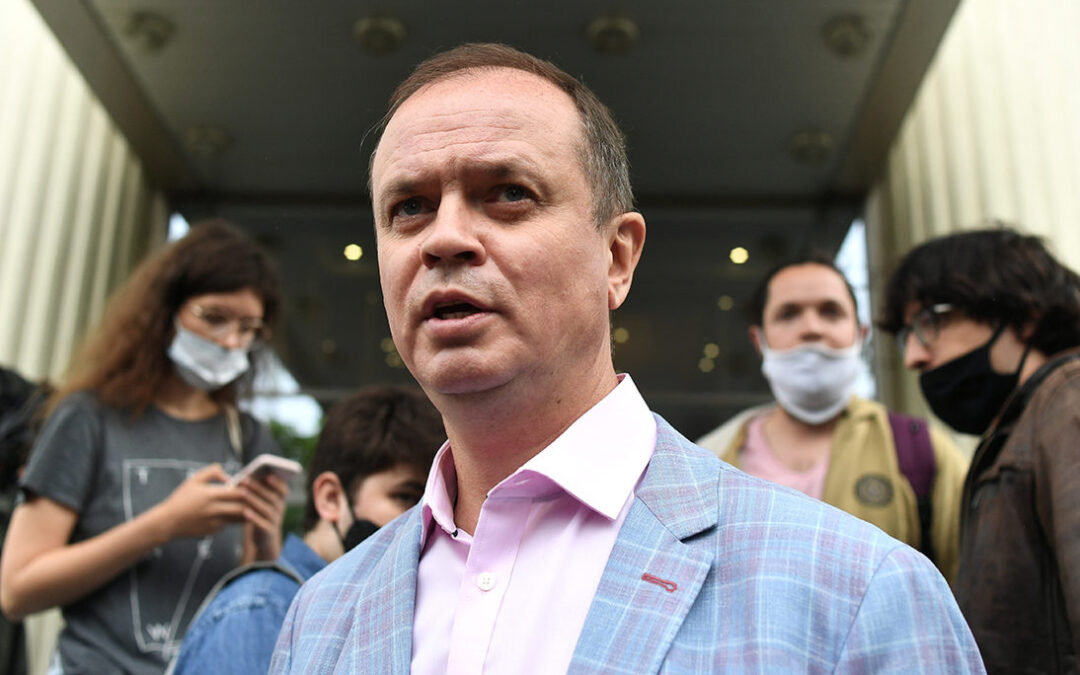
Сегодня Международная комиссия юристов (МКЮ) осудила задержание, допрос и обыски в помещениях адвоката Ивана Павлова, известного адвоката и главы правозащитного объединения «Команда 29».
Павлов был задержан сотрудниками Федеральной службы безопасности (ФСБ) 30 апреля, после обыска в номере московской гостиницы, где он остановился. Он был освобожден позднее в этот же день. Согласно постановлению о возбуждении уголовного дела, Павлову предъявлено обвинение в «разглашении данных предварительного расследования» по статье 310 УК РФ. Согласно постановлению о привлечении в качестве обвиняемого, он обвиняется в передаче газете «Ведомости» копии о привлечении в качестве обвиняемого по делу своего подзащитного, журналиста Ивана Сафронова. Кроме того, Павлову инкриминируют разглашение псевдонима одного из свидетелей по делу.
Согласно постановлению Басманного суда об избрании меры пресечения, Павлову запрещено общаться со свидетелями по уголовному делу, за исключением близких родственников, пользоваться Интернетом и другими средствами связи.
«Российские власти должны прекратить преследование Ивана Павлова и «Команды 29», которое почти наверняка связано с тем, что они представляют доверителей по ряду громких дел», – отметила Роушин Пиллэй, директор Программы МКЮ по Европе и Центральной Азии.
«Подобные рейды явно нарушают адвокатскую тайну. Материалы дела, изъятые в ходе обыска, должны быть возвращены адвокатам, и Павлов должен иметь возможность продолжать свою работу по защите всех доверителей, не опасаясь преследований или возмездия, как этого требуют международные стандарты», – добавила она.
В соответствии с Основными принципами ООН, касающимися роли юристов, правительства должны обеспечить, чтобы юристы «… могли выполнять все свои профессиональные обязанности в обстановке, свободной от угроз, препятствий, запугивания или неоправданного вмешательства; […] и (c) не подвергались судебному преследованию и судебным, административным, экономическим или другим санкциям за любые действия, совершенные в соответствии с признанными профессиональными обязанностями, нормами и этикой» (Принцип 16). Кроме того, юристы «не отождествляются со своими клиентами или интересами своих клиентов в результате выполнения ими своих функций» (Принцип 18).
Иван Павлов представляет клиентов по ряду громких дел, в том числе по многим делам, расследуемым ФСБ. Среди его доверителей – Фонд борьбы с коррупцией лидера российской оппозиции Алексея Навального, дело топ-менеджера российской электроэнергетической компании («Интер РАО») Карины Цуркан, физика Виктора Кудрявцева, журналиста Ивана Сафронова и журналиста Григория Пасько.
Помимо обыска в гостиничном номере Павлова, власти провели обыск в офисе «Команды 29» в Санкт-Петербурге и в квартире супруги адвоката. В результате обысков почти все материалы по делу подзащитного Павлова Ивана Сафронова были изъяты сотрудниками правоохранительных органов. Эти обыски не могут быть оправданы утверждениями о разглашении данных расследования и вызывают обеспокоенность в связи с тем, что основания для уголовного преследования адвоката могут быть незаконными.
«Хотя защита тайны предварительного следствия может быть законной процедурой, она не является оправданием для вмешательства в работу адвокатов, в том числе путем получения доступа к их помещениям и адвокатским досье, и ни при каких обстоятельствах не должна использоваться против адвокатов как средство их запугивания или возмездия, – подчеркнула Роушин Пиллэй. – МКЮ призывает российские следственные органы прекратить любые следственные действия, которые могут нарушить права адвоката, и соблюдать адвокатскую тайну в случаях, когда адвокат представляет интересы доверителей, независимо от того, насколько чувствительными для властей могут быть такие дела».
В соответствии с международным правом и российским законодательством, общение адвокатов с доверителями в рамках профессиональных отношений и соответствующая документация защищены законом от изъятия и разглашения в соответствии с принципом конфиденциальности отношений между адвокатом и доверителем. В частности, права на справедливое судебное разбирательство, семейную и частную жизнь гарантируются Европейской конвенцией о правах человека (статьи 6 и 8 соответственно) и Международным пактом о гражданских и политических правах (статьи 14 и 17).
Как неоднократно указывал Европейский суд по правам человека, «[…] преследование и запугивание представителей юридической профессии наносит удар в самое сердце системы Конвенции. Поэтому обыски в помещениях адвокатов подлежат особо строгой проверке» (Колесниченко против России, жалоба № 19856/04, п. 31). Адвокатская тайна также защищается российским законодательством, в частности, статьей 8 Закона «Об адвокатской деятельности и адвокатуре в Российской Федерации», как показывает Постановление Конституционного Суда РФ по делу Баляна и Дзюбы (см. ниже).
Справочная информация
В 2020 году ФСБ дважды пыталась инициировать возбуждения дисциплинарного производства в отношении Ивана Павлова, добиваясь наложения на него дисциплинарного взыскания в связи с защитой Сафронова. Адвокатская палата Санкт-Петербурга отказалась возбудить дисциплинарное производство в отношении адвоката.
Иван Сафронов, журналист и бывший советник Дмитрия Рогозина, главы Роскосмоса, был обвинен в государственной измене в связи с предположительной работой на службу безопасности одной из стран НАТО. В настоящее время находится под стражей.
Команда 29 – независимая инициатива российских юристов и журналистов, названная так в честь статьи 29 Конституции РФ, защищающей свободу мысли и слова, и главы 29 Уголовного кодекса (преступления против государственной безопасности).
В постановлении по делу Баляна, Дзюбы и других от 17 декабря 2015 г. Конституционный Суд Российской Федерации подчеркнул, что «[…] общий запрет на истребование и получение от адвоката конфиденциальных сведений, связанных с оказанием им юридической помощи доверителю законными способами исключительно в интересах защиты его [или ее] прав, предполагает, что во время обыска, который с разрешения суда органами, осуществляющими уголовное преследование, производится в отношении адвоката, не может иметь место исследование и принудительное изъятие материалов адвокатского производства, содержащих сведения, не выходящие за рамки оказания собственно профессиональной юридической помощи доверителю в порядке, установленном законом, т.е. не связанные с нарушениями со стороны адвоката и (или) его доверителя либо третьего лица, имеющими уголовно противоправный характер либо состоящими в хранении орудий преступления или предметов, которые запрещены к обращению или оборот которых ограничен. В противном случае значение адвокатской тайны, права на получение профессиональной юридической помощи, права на неприкосновенность частной жизни, личную и семейную тайну, презумпции невиновности и права каждого не свидетельствовать против самого себя фактически обесценивалось бы».