Feb 23, 2021 | Editorial, Noticias
Una opinión editorial de César Landa, Comisionado de la CIJ
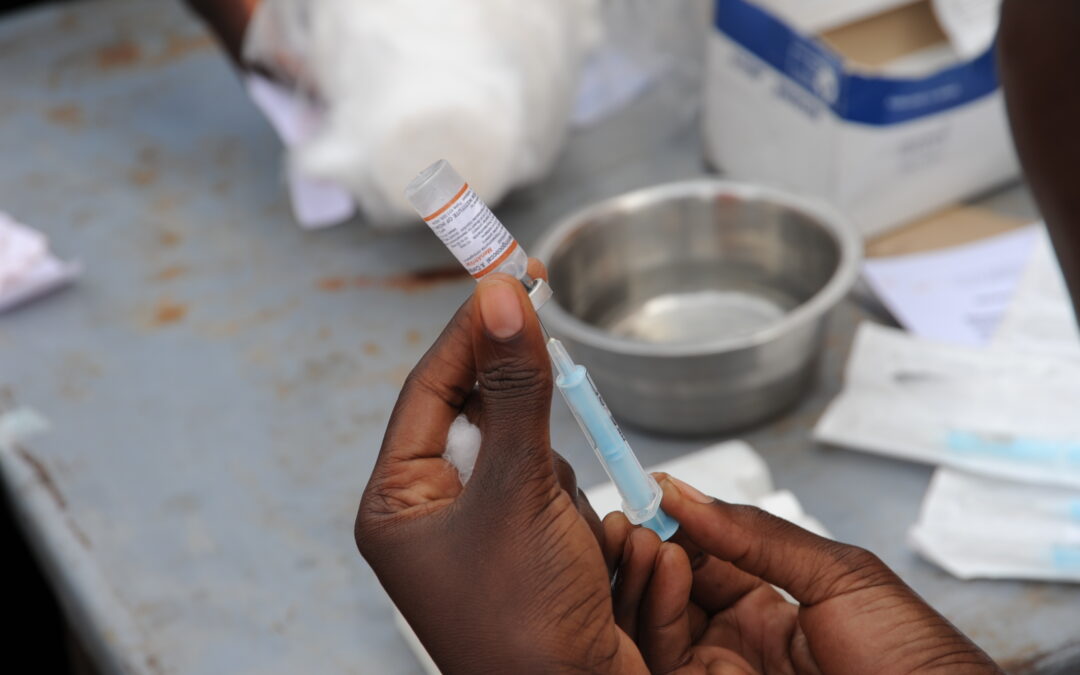
Desde el 2020 la pandemia del Covid-19 ha dejado millones de infectados y muertos en el mundo. Frente a ello, la rápida producción de las vacunas en algunos de los países centrales occidentales, su autorización de emergencia por sus gobiernos, y la inequitativa distribución a nivel internacional y nacional ha puesto en evidencia graves problemas al Estado de Derecho en la protección del derecho a la salud.
El acceso a las vacunas, al ser un bien escaso y con una alta demanda en el mundo, es mostrado como un logro nacional por los gobiernos latinoamericanos, como en el caso del Perú. Pero, es el caso señalar que desde los ensayos clínicos de la vacuna Sinopharm, la prensa peruana ha descubierto que, entre setiembre y enero, se han beneficiado de la vacunación de forma anticipada y en secreto, cerca de 500 personajes de la élite política peruana, como el ex Presidente Vizcarra, dos ministras, candidatos al Congreso, etc; autoridades de las dos universidades encargadas de los ensayos clínicos, y; la alta burocracia del Ministerio de Salud y la Cancillería, entre otros. Claro está, desplazando al personal médico y a las poblaciones vulnerables más necesitadas de la vacuna.
Lo cual pone en evidencia la necesidad de atender la cuestión de la vacuna como un medicamento esencial con un enfoque de derechos humanos, esto es de acceso universal y equitativo, como ha postulado la CIJ. Lo cual demanda de ciertos estándares en la compra de las vacunas –eficaces y seguras-. Por ejemplo, la compra a distintos proveedores; que las negociaciones sean transparentes –sin cláusulas de confidencialidad- para evitar diferentes prácticas de corrupción; que se garantice el acceso no discriminatorio a las vacunas para todas las personas, incluidas las más vulnerables –indocumentadas, presos, etc.-, y; se desarrolle instancias de control de los procesos de vacunación público y privado, con acceso a recursos judiciales efectivos en casos de violación del derecho del acceso equitativo a la vacuna.
La vacunación masiva contra el Covid-19, tanto en el hemisferio norte como en el hemisferio sur, es una de las medidas sanitarias principales para evitar la propagación de una siguiente ola del virus a escala mundial. Más aún, ayudará a revertir los graves efectos que la pandemia tiene para el pleno ejercicio de las libertades y derechos clásicos –libertad de tránsito, derecho de reunión, libertad personal, etc.-, como sobre todo para los derechos económicos, sociales y culturales –salud, trabajo, educación, etc.-, especialmente para las poblaciones más vulnerables.
Es imposible garantizar que todo el mundo tenga acceso inmediato a una vacuna contra la COVID-19. Pero, tampoco es posible que a la fecha más de 130 países no hayan recibido/adquirido alguna de las vacunas. Lo cual, en buena medida, es el resultado de que diez países han acaparado la adquisición del 75% del total de las vacunas en el mundo, según lo ha informado el Secretario General de las Naciones Unidas.
La producción y distribución masiva de las vacunas implica enormes costos financieros, por ello, solo los países centrales occidentales pueden invertir en los laboratorios de las grandes corporaciones químico-farmacéuticas. Solo así, se han podido desarrollar en tiempo récord las vacunas que cuentan con consolidados procedimientos administrativos y sanitarios de control e incluso de emergencia para validarlas. También han entrado en competencia las vacunas de países en desarrollo como China, Rusia e India. Las cuales cuentan con procesos paralelos o autónomos de investigación, producción, validación y comercialización de sus vacunas.
De modo que, se presentan dos desafíos a ser resueltos en el marco de los derechos humanos universales. Uno, la implementación de un sistema internacional de protección de la salud que promueva la distribución de la vacuna a los países en desarrollo y más vulnerables que aún no han importado ninguna vacuna, utilizando el Mecanismo Mundial de Vacunas COVAX, respaldado por la Organización Mundial de la Salud (OMS).
Dos, la prioridad nacional para las primeras vacunas es al personal sanitario y a los trabajadores que prestan los cuidados de emergencia. Asimismo, tienen prioridad las personas que presentan mayores riesgos de desarrollar una afección grave si se infectan con el Covid-19. Esto cubre cualquier causa como la edad, la existencia de patologías previas y la pobreza. También incluye a los pueblos indígenas, las minorías raciales, los migrantes, los refugiados, los desplazados, los reclusos y otras poblaciones marginadas y desfavorecidas.
Aunque, por el momento, la vacuna es un bien esencial y escaso, ello no justifica a los gobernantes a garantizar la salud y/o vida de sus ciudadanos de manera exclusiva. La humanidad no puede retornar, incluso transitoriamente, a un estado de naturaleza hobbesiano, donde “el hombre es lobo del hombre”; sino que, precisamente en estas aciagas circunstancias para la salud y la vida de miles de millones de seres humanos, corresponde apelar a la solidaridad internacional basada en la dignidad humana.
Descarga la opinión editorial en Inglés y Español.
Feb 22, 2021 | News
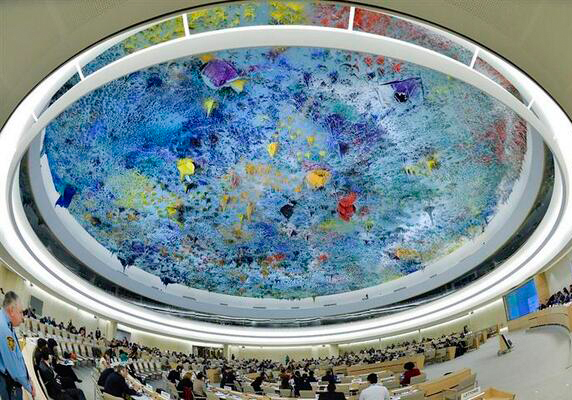
The ICJ has joined 21 other organizations to urge the Member States of the Human Rights Council to pass a strong resolution at the 46th Session, affirming an international commitment to protect human rights and justice in Sri Lanka.The letter reads:
To the Member States of the Human Rights Council
We, the undersigned organizations, urge the Member States of the Human Rights Council to pass a strong resolution at the 46th Session, affirming an international commitment to protect human rights and justice in Sri Lanka, with a particular focus on victims. The deteriorating human rights and accountability context in Sri Lanka is documented in detail in the High Commissioner for Human Rights’ damning January 2021 report as well as a joint assessment released by ten UN Special Procedures mandates earlier this month. The High Commissioner highlighted that “nearly 12 years on from the end of the war, domestic initiatives for accountability and reconciliation have repeatedly failed to produce results.” Just as concerning, the High Commissioner stressed the emergence of “early warning signs of a deteriorating human rights situation and a significant heightened risk of future violations.” Given the Government of Sri Lanka’s failure to comply with the State’s human rights obligations and implement agreed-upon accountability efforts and the need for urgent preventative action, it is essential that a new resolution detail immediate, concrete, and independent international efforts, including enhancing monitoring by the Office of the UN High Commissioner for Human Rights (OHCHR), creating an independent international mechanism to collect and preserve evidence of past and ongoing violations and abuses, and prioritizing support to civil society initiatives.
Multiple UN bodies and dozens of civil society organizations have documented grave human rights violations and abuses in Sri Lanka. The 26-year war between the Government and the Liberation Tigers of Tamil Eelam (LTTE) witnessed serious violations – including allegations of war crimes and crimes against humanity – by both parties. The toll on civilians was particularly high in the final stage of the conflict, when tens of thousands of Tamil civilians were killed, primarily by Government forces’ shelling of “No Fire Zones.” Following the end of the war, the country remained over-militarized and human rights abuses continued, including extrajudicial killings, enforced disappearances, arbitrary detention, torture, sexual violence, and harassment and persecution of journalists, activists, and government critics. Sri Lanka’s Tamil and Muslim populations have disproportionately suffered from these continuing violations and abuses, as they face institutionalized discrimination and higher levels of targeted state-sponsored violence.
Sri Lanka’s domestic accountability efforts have failed. As noted by the High Commissioner, numerous commissions of inquiry established by successive governments have “failed to credibly establish the truth and ensure accountability” and domestic investigations have failed to bring “a single emblematic case . . . to a successful conclusion or conviction.” Furthermore, despite co-sponsoring HRC Resolution 30/1 in 2015, which provided a comprehensive roadmap of measures to ensure justice and accountability, the Government of Sri Lanka “remains in a state of denial about the past, with truth-seeking efforts aborted and the highest State officials refusing to make any acknowledgment of past crimes.” The High Commissioner highlighted how “the failure to deal with the past continues to have devastating effects on tens of thousands of survivors.”
In the past year, prospects for domestic justice and accountability efforts in Sri Lanka have dimmed entirely. Gotabaya Rajapaksa – the former Secretary to the Ministry of Defense who oversaw the brutal end to Sri Lanka’s war – was elected President in November 2019. As one of its first acts on the international stage, the new Rajapaksa administration announced its withdrawal from HRC Resolution 30/1, part of a series of steps that led the High Commissioner to conclude that “[t]he Government has now demonstrated its inability and unwillingness to pursue a meaningful path towards accountability for international crimes and serious human rights violations.” The Government has also “proactively obstructed or sought to stop ongoing investigations and criminal trials to prevent accountability for past crimes,” promoted credibly accused war criminals, increased militarization of civilian institutions, reversed Constitutional safeguards, increasingly employed and promoted majoritarian and exclusionary rhetoric, increased surveillance and obstruction of civil society, and exacerbated human rights concerns.
In a joint assessment released earlier this month, ten UN Special Procedures mandates echoed the High Commissioner’s concern that the human rights and accountability context had further regressed in Sri Lanka, concluding, “[t]here is little hope that any domestic accountability measures will progress or achieve any degree of credibility.” They emphasized the “extremely disheartening” fact that their conclusions echo those of UN experts in 2009, who found “impunity has been allowed to go unabated throughout Sri Lanka. The fear of reprisals against victims and witnesses, together with a lack of effective investigations and prosecutions, has led to a circle of impunity that must be broken.” We share the High Commissioner’s and Special Procedures’ concerns that continued reliance on the Government of Sri Lanka to improve human rights and accountability will prove futile and dangerous. As both history and recent events in Sri Lanka have shown, if left unchecked, the Government will be emboldened to continue its abuses and further entrench impunity.
Given Sri Lanka’s long history of violations and failed domestic efforts to advance justice, and the warning signs of increased future abuses, it is critical that the Human Rights Council pass a strong resolution affirming its commitment to meaningful justice and accountability for serious human rights violations and abuses and crimes under international law in Sri Lanka. We join the High Commissioner and Special Procedures mandates in calling on Member States to pass a new resolution that strengthens the High Commissioner’s monitoring and reporting on Sri Lanka, prioritizes support to civil society initiatives assisting victims and their families, and establishes and supports a dedicated capacity to collect and preserve evidence. The dedicated capacity should come in the form of an independent international investigative mechanism. We also join the High Commissioner’s call for Member States to pursue alternative avenues for accountability and justice, including “taking steps towards the referral of the situation in Sri Lanka to the International Criminal Court,” the pursuit of “investigation and prosecution of international crimes” in national courts using extraterritorial and universal jurisdiction, and the imposition of targeted sanctions, including asset freezes and travel bans against State officials accused of grave human rights violations.
A strong resolution with concrete action by the Human Rights Council and UN human rights bodies will not only signal to the Government of Sri Lanka that continuing impunity and abuses are not acceptable, but will also affirm for survivors that the United Nations is committed to securing justice for the harms they experienced.
The text of the letter and the list of signatories is available here.
Feb 19, 2021 | News
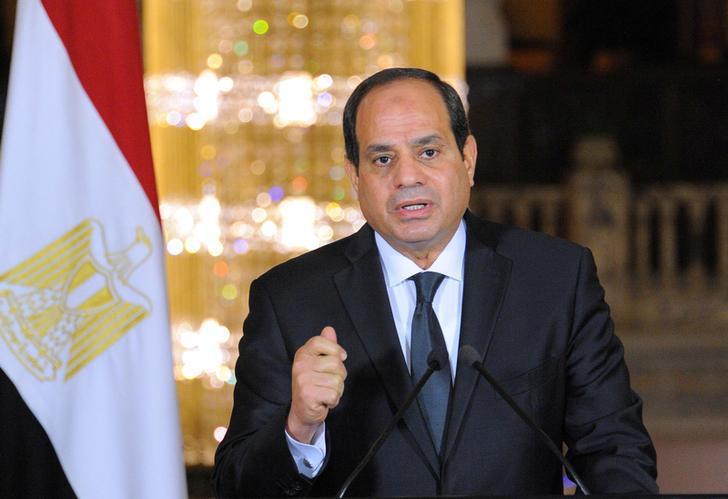
The Egyptian authorities’ targeting of families in Egypt of activists and human rights defenders living abroad has been escalating, demonstrating a clear pattern of intimidation and harassment, 22 Egyptian, regional, and international organizations said today.
Since August 2020, the authorities have targeted the families of four critics who live in the United States, as well as one in Turkey, one in Germany, and one in the United Kingdom.
These cases are among dozens reported in recent years. The authorities try to intimidate critics with unlawful home raids, arbitrary arrests, enforced disappearances, and prolonged detention of family members without trial or charges.
“The Egyptian families of dissidents abroad have been increasingly caught in President al-Sisi’s government web of oppression,” said Joe Stork, deputy Middle East and North Africa director at Human Rights Watch. “President al-Sisi should immediately rein in his security forces and end these hostage-like arrests.”
On February 13, 2021, the authorities raided the homes of six members of the extended family of Mohamed Soltan, a US-based human rights advocate. Soltan, the director of the Freedom Initiative, an independent human rights group, and two other sources with direct knowledge of the arrests told Human Rights Watch that security agents arrested two of his cousins, Mostafa Soltan and Khairi Soltan, at their homes in the Menoufiya governorate. The two sources also said security authorities arrested a third relative of Soltan’s, Mahmoud Yousri al-Naggar.
Officers told another cousin to turn himself in once a cast on his broken leg was removed. Three of Soltan’s other cousins whom officers wanted to arrest were not at home during the raids; their families were told that the cousins were wanted by the National Security Agency. Those detained were interrogated mainly about Mohamed Soltan and his activities. On the evening of February 17, authorities released Mostafa and Khairi, following their detention and interrogation by National Security officers, the two sources said.
Security agents had previously arrested five of the six targeted cousins in June 2020 and detained them without trial until shortly before Joe Biden won the US presidential election in November. Soltan has been a prominent target of Egyptian government and pro-government media defamation campaigns because of his human rights work, most recently because of his organization’s support for the establishment of the Egypt Human Rights Caucus in the US House of Representatives.
The authorities disappeared Soltan’s already-jailed father, Salah Soltan, on June 15, 2020, when officers escorted him from Wadi al-Natrun prison to an unknown destination. Since that time, the authorities have refused to provide his family and lawyers information about his whereabouts. Soltan said that Egyptian intelligence agents in Washington, DC have harassed him with “bump-ins” at the local mall, at a Freedom Initiative’s Egypt advocacy event, which Human Rights Watch and the Project on Middle East Democracy co-sponsored in March 2019, and with threatening phone calls, telling him that he should “be careful” for his father’s sake. Soltan said he reported all incidents to the US authorities and his lawyers immediately.
Aly Hussein Mahdy, a University of Illinois at Chicago graduate student and video blogger with over 400,000 followers on Facebook, was ridiculed by a pro-government TV outlet on January 17. Between January 28 and February 2, National Security officers raided the homes of several of his family members in Alexandria and arrested his father, uncle, and cousin because of his videos, Mahdy told Human Rights Watch.
“They raided the home at dawn,” Mahdy said in a Facebook video on February 11. “They took my father from his wife and my younger siblings, terrifying them. They messed up the whole house and stole everything they found.” He told Human Rights Watch that his family has not been able to learn the whereabouts of the three family members arrested.
Download
Egypt-Arrests-Joint-Press-Release-2021-ENG (full statement in English)
Egypt-Arrests-Joint-Press-Release-2021-ARA (full statement in Arabic)
Contact
Asser Khattab, Research and Communications’ Officer, ICJ Middle East and North Africa Programme, e: asser.khattab(a)icj.org
Feb 19, 2021 | Advocacy, News, Open letters
In a letter of 17 February, the ICJ and ZimRights called on the Chairperson of the African’s Commission on Human and Peoples’ Rights Working Group on Economic, Social and Cultural Rights to address Zimbabwe’s failure to meet its obligations to protect the rights of life and health of its population in respect of its COVID-19 vaccine policies.
Zimbabwe had failed to produce, publish and widely disseminate a comprehensive plan on vaccine acquisition and distribution. These are also necessary measures to secure the life and health of those living in neighbouring countries of Zimbabwe and therefore of broader concern within the Southern African Development Community in particular.
The ICJ and ZimRights called for an intervention of the Working Group and the wider African Commission with a view to ensure that vital information is made available by the Government of Zimbabwe about its national plan for COVID-19 vaccine procurement, distribution and roll-out including any resources it has set aside for these efforts.
To read the full letter, click
here.
Feb 18, 2021 | News
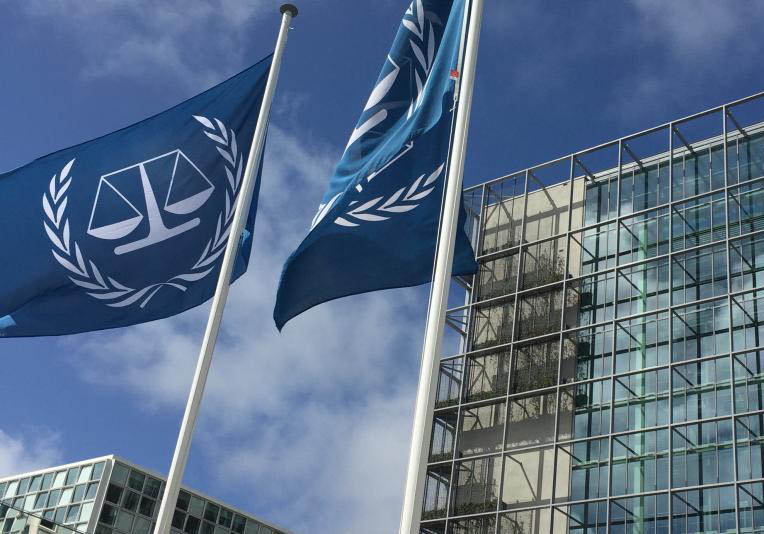
The ICJ and more than 70 other non-governmental organisations, faith-based groups, and academic institutions urge the Biden Administration to engage constructively with the International Criminal Court (ICC).
The statement reads:
The undersigned organizations urge the Biden Administration to engage constructively with the International Criminal Court (ICC). The U.S. government’s support for the ICC could help secure justice for victims in situations from Myanmar to Darfur, just as it helped facilitate the February 4 historic conviction of a former leader of an armed rebel group for war crimes and crimes against humanity in northern Uganda.
There is an immediate need to act to reset U.S. policy regarding the ICC. Most urgently, we are alarmed by recent calls for the U.S. government to maintain or even expand the sanctions put into place by the Trump administration in June 2020 currently targeting the court’s work.
These actions were an unprecedented attack on the court’s mandate to deliver justice and the rule of law globally, an abuse of the U.S. government’s financial powers, and a betrayal of the U.S. legacy in establishing institutions of international justice. They were also an attack on those who engage with the court, including human rights defenders and victims. These extraordinary measures have put the U.S. at odds with many of its closest allies. They also have been challenged on constitutional grounds domestically.
Keeping in place the executive order authorizing sanctions would be inconsistent with the new administration’s laudable commitments to respecting the rule of law and pursuing multilateral cooperation in support of U.S. interests. It would also transform a shameful but temporary action into a standing license for other governments to attack multilateral institutions when they disagree with those bodies’ actions.
We call upon the U.S. government to rescind Executive Order 13928 and all sanctions measures against ICC officials at the earliest possible opportunity. We appeal for constructive engagement with the ICC and we urge the Biden administration and members of Congress to support that approach.
Download
USA-Biden-Joint-Statement-2021-ENG (Full statement with list of organizations)
Contact
Kingsley Abbott, ICJ Director, Global Redress and Accountability; e: kingsley.abbott(a)icj.org