Nov 15, 2020 | News
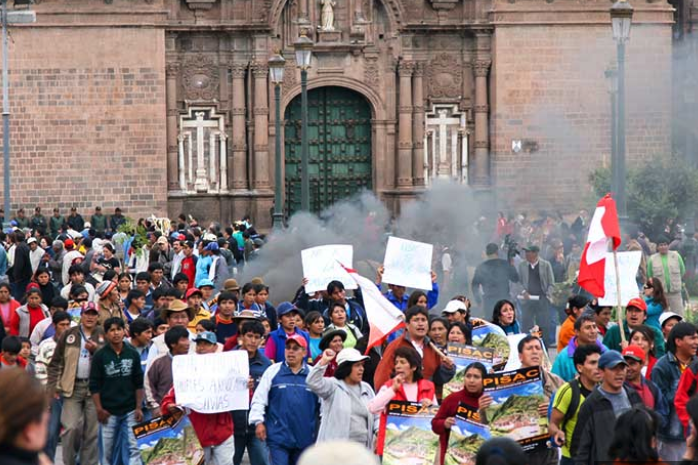
The removal of Peru’s President Martin Vizcarra by the country’s Congress has undermined respect for the principle of separation of powers and precipitated a rule of law crisis, the ICJ said today.
On 9 November, Peru’s Congress used the seldom-used article 113(2) of the country’s constitution to ‘vacate’ Vizcarra’s term on the ground of “permanent moral incapacity” for office and swore in the President of the Congress, Manuel Merino, as President of the country.
The underlying justification for Vizcarra’s removal was allegations of corruption stemming from the time when he was Governor of Moquequa state in 2011-2014. Those allegations are already under investigation by the Office of the Prosecutor.
The ICJ notes that Peru’s Constitutional Court has a pending case to review the constitutional consistency of the use of the grounds of “permanent moral incapacity” clause for ordinary crimes. The Peruvian Constitution contemplates a separate procedure of impeachment that has not been followed in this case. Yet Congress applied the clause of “moral incapacity” in hasty proceedings with that decision pending.
“Peru’s congress has preempted the decision of the Constitutional Court and applied an overly expansive and highly contested legal interpretation of article 113(2) to oust a president, thus implicating the authority of the Judicial branch as well as the Executive,” said ICJ Secretary General Sam Zarifi.
“This overreach by the Legislative branch has launched the country into a rule of law crisis that also threatens respect for human rights in the country,” he added.
Protesters demonstrating against Vizcarra’s removal have faced ill-treatment and arbitrary arrest by police and security forces.
The ICJ calls on the Peruvian authorities to respect the right to freedom of assembly and peaceful protest and to desist from any form of unlawful use of force. Allegations of violations of ill-treatment and other human rights violations must be investigated promptly, thoroughly and impartially. The ICJ also urges respect of the independence of the judiciary, particularly as concerns the Constitutional Court and its functions.
Nov 12, 2020 | Agendas, Events, News
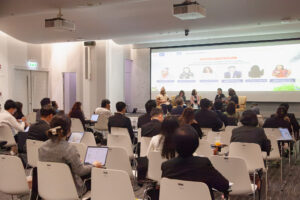
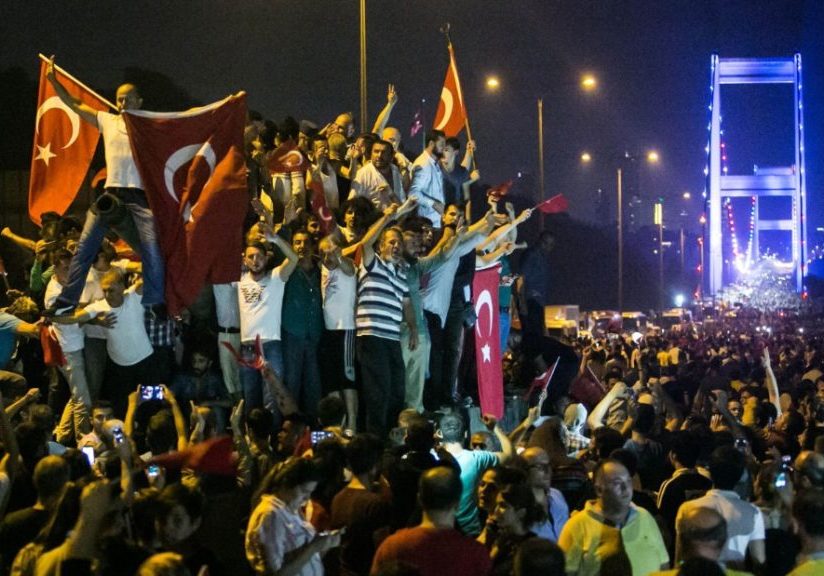
The International Commission of Jurists and the Human Rights Joint Platform (IHOP) invite you to a Zoom workshop where Turkish and international experts will discuss the legacy of the 2016-2018 state of emergency in Turkey for access to justice today.
To participate, please register by writing an email to ihop@ihop.org.tr (the Human Rights Joint Platform)
Join our great panel of speakers:
– Professor Sarah Cleveland, ICJ Commissioner
– Dr. Dilet Kurban, Hertie School
– Lawyer Ziynet Özçelik, Ankara Bar Association
– Dinçer Demirkent, Human Rights School
– Roisin Pillay, Director of ICJ Europe and Central Asia Programme
– Kerem Altiparmak, ICJ Turkey Legal Adviser
The workshop will address how state of emergency measures, such as dismissals and closures of legal entities, still impact on the human right of people in Turkey today.
The experts will discuss whether the remedies set up by Turkish authorities are up to standard with Turkey’s international human rights law obligations.
IHOPICJ-ZoomWorkshop-StateofEmergency-Agenda-2020-ENG (download the agenda in English)
IHOPICJ-ZoomWorkshop-StateofEmergency-Agenda-2020-TUR (download the agenda in Turkish)
The event is part of the REACT project: implemented jointly by ICJ and IHOP, this project seeks to support the role of civil society actors in turkey in ensuring effective access to justice for the protection of human rights. This project is funded by the European Union. The views expressed in the event do not necessarily reflect the opinion of the EU.
Nov 12, 2020 | News
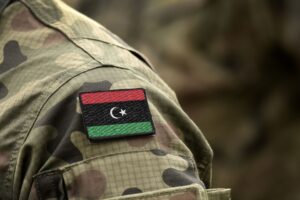
The ICJ, the Cairo Institute for Human Rights Studies (CIHRS), the Defender Center for Human Rights (DCHR), Lawyers for Justice in Libya (LFJL) and the Libyan Women’s Platform for Peace (LWPP) have issued today a joint statement on the assassination of lawyer and political activist Hanan al-Barassi .
The undersigned human rights groups are appalled by the assassination of lawyer and political activist Hanan al-Barassi in Benghazi on 10 November 2020, and call on the competent authorities to launch an independent, impartial and effective investigation into the killing and bring those responsible to justice through fair trials.
On 10 November, a group of unknown armed men shot al-Barassi in Benghazi city centre in broad daylight. Al-Barassi was known for her political engagement and criticism of the human rights violations and abuses and corruption allegedly committed by authorities in Eastern Libya and their affiliated militias. Al-Barassi was active on social media, and often posted videos on Facebook in which she criticised the Libyan Arab Armed Forces (LAAF). Her last video was posted a few hours before her killing.
Al-Barassi’s murder follows a disturbing pattern in recent years of violent attacks against prominent women activists who are critical of the authorities and affiliated militias. In June 2014, gunmen assassinated prominent human rights activist and lawyer Salwa Bugaighis. This was followed by the killing of former Derna Congress member Fariha Al-Berkawi on 17 July 2014, and human rights activist Entisar El Hassari on 24 February 2015. Women’s rights defender and member of the Tobruk-based House of Representatives Seham Sergiwa was abducted from her home by armed men on 17 July 2019, and her whereabouts remains unknown.
The failure of Libyan authorities to effectively investigate these attacks, despite public commitments to do so, has created an environment of impunity, in which women are frequently targeted, both online and offline, with threats, smear campaigns and violence for their political or human rights views. Al-Barassi’s assassination is also a stark demonstration of how online violence against women can carry over to have lethal consequences on the ground.
Such atrocities are prevalent in Libya today. The pattern of violence including enforced disappearances and assassinations of activists, human rights defenders, judges and journalists across the country is alarming, and will only continue in the absence of any effective, independent and impartial investigations. Addressing these crimes by holding the perpetrators to account must be a priority, including within any political process.
Al-Barassi’s killing has taken place as the Libyan Political Dialogue Forum (LPDF) continues talks aimed at ending the conflict and preparing for national elections, underscoring the importance of ensuring accountability and justice in the country. There can be no meaningful democratic transition in Libya until the basic security and human rights of the population are guaranteed.
Given the absence of any real commitment to effectively investigating ongoing crimes under international law being committed in Libya, the newly established Independent Fact-Finding Mission (FFM) on Libya must be urgently provided with the necessary resources to begin its investigations and preserve evidence without delay. We urge the Libyan authorities to fully cooperate with the FFM, and UN Member States to swiftly provide the needed support and adequate resources.
Signatories
- International Commission of Jurists (ICJ)
- Cairo Institute for Human Rights Studies (CIHRS)
- Defender Center for Human Rights (DCHR)
- Lawyers for Justice in Libya (LFJL)
- Libyan Women’s Platform for Peace (LWPP)
Find the Joint Statement in Arabic and English here:
Lybia-Hanan_Albarassi -JointStatement-2020-ARA
Lybia-Hanan_Albarassi -JointStatement-2020-ENG

Nov 3, 2020 | News
The government of Nepal should act without delay to carry out the National Human Rights Commission’s recommendations, particularly those concerning Nepal’s obligation to investigate and, where justified by the evidence, prosecute those accused of serious abuses, Human Rights Watch and the ICJ said today.
On October 15, 2020, the National Human Rights Commission (NHRC) published 20 years of data, naming 286 people, mostly police officials, military personnel, and former Maoist insurgents, as suspects in serious crimes. In particular, the information relates to cases where its investigators concluded there is evidence warranting investigation and prosecution for abuses including torture, enforced disappearance, and extrajudicial killing.
In addition to domestic use, the data should provide important guidance to the United Nations in vetting Nepali security forces for peacekeeping missions, and to other countries for efforts to ensure international justice, including in their obligations to prosecute or extradite individuals suspected of responsibility for crimes under international law. They will also be of use to the United States in carrying out vetting requirements under the “Leahy laws” that prohibit military assistance to military and security forces implicated in serious human rights abuses.
“The National Human Rights Commission has taken an important step in publishing this information, which will be an essential tool for the UN and foreign governments in their engagement with Nepali security forces,” said Meenakshi Ganguly, South Asia director at Human Rights Watch. “The report highlights just how little progress there has been to establish meaningful human rights protections to address conflict era violations and ongoing abuses.”
The culture of impunity in Nepal is contributing to ongoing serious human rights abuses, the groups said. There have been numerous credible allegations of extrajudicial executions, torture, and ill-treatment, sometimes resulting in custodial deaths, and deaths resulting from the unlawful and excessive use of force in policing demonstrations in recent years. In many such cases, the authorities have refused even to register complaints, much less carry out effective investigations or prosecutions.
International and foreign authorities, including prosecutors and judicial authorities, should be aware of the commission’s data when considering targeted sanctions for people accused of serious violations, or preparing criminal cases under the principal of universal jurisdiction against those allegedly responsible for crimes such as torture and enforced disappearances, Human Rights Watch and the International Commission of Jurists said.
Particularly serious violations and abuses were committed between 1996 and 2006 during an armed conflict between government security forces and Maoist rebel forces. The former Maoist party in now part of the government. Since the conflict ended, the former enemies have effectively joined ranks to successfully shield their supporters from accountability, fostering a culture of impunity that continues to protect those responsible for ongoing extrajudicial killings and deaths in custody allegedly resulting from torture.
The NHRC said in its report that the government had mostly failed to act against suspects, despite being informed of the commission’s findings. Human Rights Watch and the International Commission of Jurists have not independently investigated all the cases documented, but the Nepal government is under an obligation to thoroughly and impartially investigate the allegations in the report with a view to bringing those responsible for these crimes to justice. Altogether the NHRC has recommended action against 98 police officers, 85 soldiers, and 65 members of the former Communist Party of Nepal (Maoist).
The NHRC presented and analyzed its findings and recommendations spanning two decades, since its establishment in 2000. It has registered 12,825 complaints and reached conclusions in 6,617 cases, making 1,195 recommendations to the government. The recommendations have been carried out fully in only 13 percent of cases, partially carried out in 37 percent, and not carried out at all in the remaining 50 percent. The government has often carried out recommendations to make payments to victims or their families but has very rarely investigated or prosecuted abuses.
In a March 6, 2013 ruling, the Supreme Court decided that the NHRC has the authority to refer these cases to the attorney general and prosecutors for investigation and prosecution, yet the NHRC has been unwilling to use that authority. The NHRC has also chosen not to use its prerogative to name those allegedly responsible for the abuses until now, waiting until the last days of the outgoing commissioners’ terms to publish the report.
“While releasing this report is an important step toward addressing entrenched impunity in Nepal, it has exposed the fact that the commission has struggled with a lack of investigative capacity, failing in many cases to summon alleged perpetrators or demand documentation,” said Mandira Sharma, senior international legal advisor at the International Commission of Jurists. “Had the NHRC used its authority to request prosecution from the attorney general where it has gathered sufficient evidence, it would have made a real contribution in tackling impunity and in addressing police failures in investigating ongoing cases of rights violations.”
The NHRC has long been dogged by political interference in the appointment of commissioners, and a widely perceived reluctance to confront the government or other powerful institutions, such as the army and political parties, that oppose accountability for rights abuses. In 2019 the government proposed amendments to the 2012 National Human Rights Commission Act that would further undermine its independence.
To download the full statement with additional information, click here. (PDF)
Contact
For International Commission of Jurists, in Nepal, Mandira Sharma (Nepali, English): +977-9851048475 (mobile); or mandira.sharma@icj.org.
Nov 2, 2020 | News
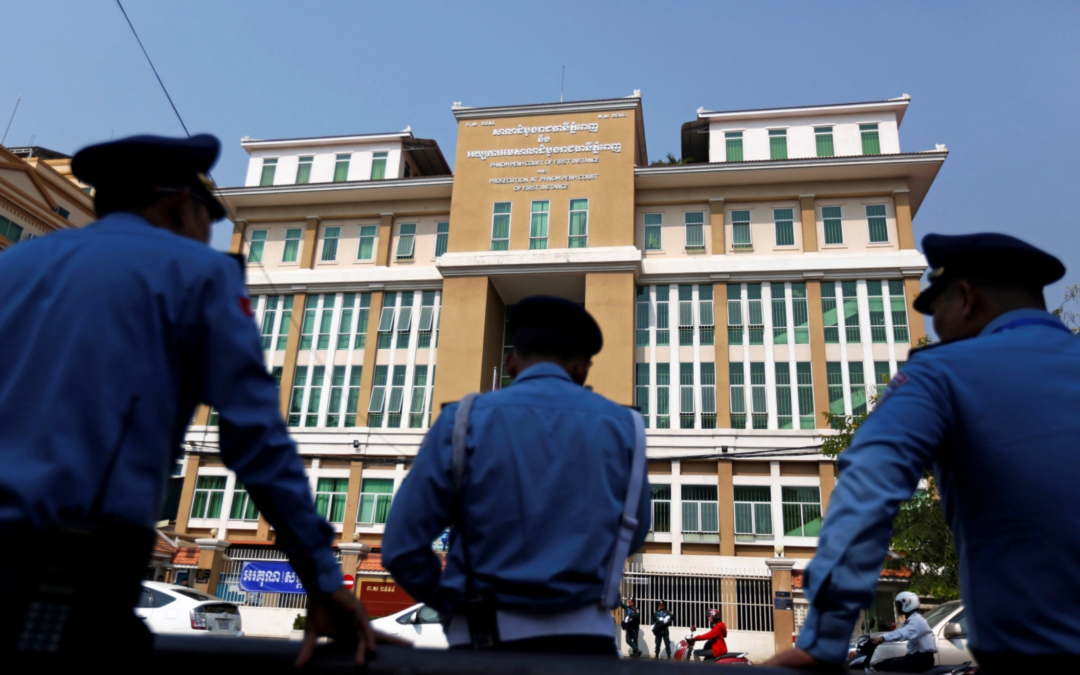
Today, the ICJ and 56 civil society organizations called for an end to attacks on independent media by the Royal Government of Cambodia (“RGC”).
Amidst an increasingly repressive landscape, the organizations called on the RGC to:
- End harassment of journalists and media outlets;
- Immediately drop apparently politically motivated charges against journalists and unconditionally release those held in detention for exercising their rights to freedom of expression and information;
- Repeal or significantly amend repressive laws that unjustifiably impede media freedom and freedom of expression, including media freedom, so as to allow for a vibrant and free media landscape in line with its international human rights obligations;
- Immediately reverse revocations of media licenses to facilitate media freedom and the right to freedom of expression and information; and refrain from similar revocations of media licenses in the future.
Download the joint statement in English and Khmer.
Contact
Kingsley Abbott, Senior Legal Adviser, ICJ Global Accountability Initiative e: kingsley.abbott(a)icj.org
See also
ICJ, ‘Cambodia: authorities must end increasing crackdown on human rights defenders’, 11 September 2020
ICJ, ‘Cambodia: ICJ and 64 organizations call for immediate withdrawal of Draft Law on Public Order’, 13 August 2020
ICJ, ‘ICJ and 31 organizations jointly urge Governments to call for respect of human rights in Cambodia’, 22 July 2020
ICJ, ‘Cambodia: State of Emergency bill violates the rule of law’, 8 April 2020