Apr 29, 2020 | Artículos, Noticias
El vicepresidente de la CIJ, el profesor Carlos Ayala Corao, presenta en el artículo “Retos de la pandemia del covid-19 para el Estado de Derecho, la democracia y los derechos humanos”, un análisis sobre cómo deben ser abordados los desafíos que ha traído la pandemia del COVID-19 en los Estados democráticos. El artículo resalta la importancia de que los Estados den respuesta a la crisis generada por la pandemia sin desconocer los derechos humanos y las garantías propias del Estado de Derecho. Esto implica, que las medidas que adopten los Estados no deben restringir los derechos de “manera innecesaria o desproporcionada; y mucho menos (…) desmantelar la Constitución, y restringir el Estado de Derecho y la democracia”.
El profesor Ayala resalta varios elementos que deben considerarse para evitar la vulneración de derechos y garantías de las personas:
- Las medidas adoptadas “deben estar (…) dentro de la Constitución y el Derecho internacional.” Es esencial que se consideren los estándares internacionales, como los principios de Siracusa sobre estados de excepción.
- Las instituciones de control y protección, tanto nacionales como internacionales, y las ramas del poder público, deben funcionar durante los estados de emergencia decretados. En este tema, destaca el rol de la rama legislativa, que ejerce una función esencial durante los estados de emergencia, pues debe “controlar las actuaciones del poder ejecutivo” y “adoptar las leyes, autorizaciones y aprobaciones necesarias.” Por ello, dada las limitaciones que ha creado la pandemia para hacer reuniones presenciales, se deben “introducir métodos complementarios y alternativos” que garanticen el correcto funcionamiento de esta rama del poder.
El poder judicial también tiene un rol esencial durante el estado de emergencia. Específicamente, señala que “en tiempos de emergencias y de medidas extraordinarias, es cuando más se necesita el funcionamiento de los tribunales, independientes e imparciales, para proteger los derechos de las personas y controlar los excesos del poder. La justicia no se puede poner en cuarentena, porque entonces la Constitución, la democracia, el Estado de Derecho y los derechos humanos también entran en cuarentena.” Por lo anterior, al igual que la rama legislativa, “los tribunales deben reinventarse, para permitir, que, con respeto a las medidas de distanciamiento social y aislamiento, puedan seguir cumpliendo sus funciones de manera continuada e ininterrumpida.”
- Las medidas excepcionales que se adopten deben ser “necesarias, graduales, temporales, idóneas y proporcionales”. Adicionalmente, estas medidas “deben estar contenidas y expresadas en actos jurídicos formales, debidamente motivados, publicados oficialmente y divulgados adecuadamente.”
- Dentro de las medidas excepcionales adoptadas por los Estados, deben incluirse medidas que garanticen la seguridad jurídica de obligaciones contractuales y extracontractuales.
- Las medidas excepcionales deben tener “en cuenta la necesidad de un trato diferenciado por grupos sociales.” En particular, se debe considerar los efectos que las medidas, como las cuarentenas obligatorias, pueden tener en las mujeres, las poblaciones pobres, las poblaciones indígenas, los niños y las niñas y las personas privadas de la libertad.
Por otro lado, el artículo explora las limitaciones que han sufrido varios derechos humanos durante la pandemia. Entre estos derechos, el artículo analiza el derecho a reunirse públicamente o circular públicamente en grupos de personas, el derecho a la libertad de cultos y a la libertad religiosa, el derecho al voto, el derecho a acceder a la justicia, el derecho a la libertad personal, el derecho a la libertad de expresión y el derecho a la salud.
Por otra parte, el artículo recuerda que las medidas adoptadas por los Estados están “sometidas a regulaciones y controles internacionales”. Sobre este punto, subraya las obligaciones que adquieren los estados en virtud de tratados internacionales, como el Pacto Internacional de Derechos Civiles y Políticos, la Convención Americana sobre Derechos Humanos, el Convenio Europeo para la Protección de los Derechos Humanos y Libertades Fundamentales y la Carta Africana sobre Derechos Humanos y de los Pueblos.
Por último, el profesor Ayala reflexiona acerca de la importancia del respeto de la democracia y el Estado del Derecho para hacer frente a la pandemia. Así, menciona que, “debemos repensar el funcionamiento del Estado, porque tampoco será lo mismo después de esta pandemia. El Estado -al igual que el sector privado- ha probado ser una institución esencial para hacer frente al grave problema de salud pública que ha causado la pandemia. Pero no se trata de cualquier Estado, sino del Estado democrático; sometido al Derecho; respetuoso de los derechos; eficaz en sus acciones y respuestas; aliado, cooperador y coordinador de los esfuerzos de la sociedad; abierto al debate y a las críticas de su gestión; transparente en el manejo de los recursos; y responsable. Por ello, aun en tiempos extremadamente difíciles, ante situaciones de extraordinarias se debe asegurar el funcionamiento eficaz de los poderes públicos del Estado de Derecho, para así garantizar la democracia, el control del poder y los derechos humanos.”
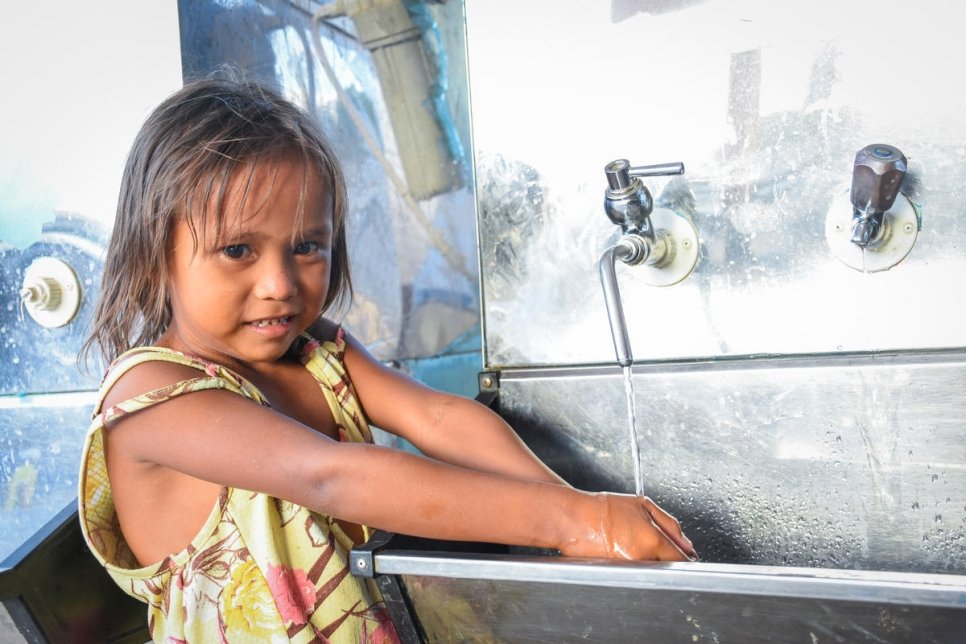
Foto: © UNHCR/Allana Ferreira
En PDF: RETOS-DE-LA-PANDEMIA-COVID-News-Feature-Articles-2020-SPA

Apr 28, 2020 | News
The ICJ today urged Taiwan to decriminalize adultery as soon as possible.
Echoing the UN Human Rights Committee, the UN the Committee on the Elimination of Discrimination against Women and the UN Working Group on discrimination against women in law and practice, the ICJ stated that the criminalization of people who are not married to each other for engaging in consensual sexual relations is a violation of the right to be free from discrimination; the right to equality before the law and equal protection of the law without discrimination; and the right to privacy, among other rights. The criminalization of adultery also often leads to discrimination and violence against women.
The Constitutional Court of Taiwan is currently deliberating on the constitutionality of Article 239 of the Criminal Code, which provides that, “a married person who commits adultery with another shall be sentenced to imprisonment for not more than one year; the other party to the adultery shall be subject to the same punishment.” On 31 March 2020, Taiwan’s Constitutional Court heard oral arguments on the constitutionality of Article 239 after several judges requested an interpretation of the law. The Court is expected to release its opinion on the matter at the end of May.
“In many ways, the ongoing criminalization of adultery leads to dire consequences for women’s human rights in Taiwan,” said Emerlynne Gil, Senior International Legal Adviser of the International Commission of Jurists.
“The enforcement of criminal adultery provisions often leads to discrimination and violence against women. In Taiwan, for example, women are disproportionately the target of adultery lawsuits. While male adultery enjoys greater tolerance in Taiwan, women are being targeted because of harmful gender stereotypes and rigid constructions of femininity.”
The ICJ notes that women are twenty percent more likely to be convicted than men in adultery cases in Taiwan. Furthermore, to secure a conviction on adultery charges in Taiwan, given the criminal law standard of proof, there has been a resort to photographic evidence of the two accused individuals engaging in sexual acts in some cases. As a result, an entire industry of private investigators, often engaging in illegal behaviour, has developed in response to “market” demand for “evidence” capable of making criminal adultery charges stick.
Taiwan is not a Member State of the UN, but in 2009 it introduced legislation aimed at incorporating the International Covenant on Civil and Political Rights (ICCPR) as a matter of domestic law. In 2013, an International Review Committee composed of independent human rights experts working in their personal capacities recommended that Taiwan should take steps to abolish the adultery provision in its Criminal Code as it was not in conformity with Article 17 of the ICCPR.
“Continuing to criminalize adultery goes against the image that Taiwan wants to portray of itself, that it is a beacon of democracy and human rights in Asia,” Emerlynne Gil said. The ICJ urges Taiwan to decriminalize adultery as soon as possible by removing the above mentioned provision from its Criminal Code.
Additional Information
There have been several challenges in the past to the constitutionality of Article 239 of Taiwan’s Criminal Code. In 2002, in one of such challenges, the Constitutional Court issued Interpretation 554, holding that the freedom of sexual behavior was inseparably related to the personality of individuals, and every person was free to decide whether or not and with whom to have sexual affairs. However, the Court went on to say that such freedom was legally protected only if it was not detrimental to “the social order or public interest”, as provided in Article 22 of the Constitution and, therefore, “the freedom of sexual behavior” was subject to the restriction that marriage and the institution of the family imposed on it.
Download the statement in Mandarin Chinese here.
Contact
Boram Jang, ICJ Legal Adviser – Access to Justice for Women, Asia & the Pacific Programme, e: boram.jang(a)icj.org

Apr 27, 2020 | News
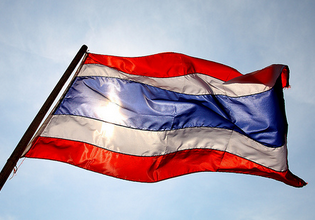
Today, the ICJ and Lawyers’ Rights Watch Canada (LRWC) jointly submitted a legal brief (amicus curiae) to the Court of Appeal in criminal defamation proceeding against Thai journalist Suchanee Rungmuanporn (Cloitre).
The journalist is being charged after making a post on Twitter highlighting labour rights violations by Thammakaset Company Limited. The post detailed an order by Thailand’s Court of Appeal for Specialized Cases for Thammakaset to provide compensation to its 14 former employees from Myanmar, with the word “slavery” included in the post. This inclusion is the basis for defamation claim.
On 24 December 2019, Suchanee was sentenced to two years’ imprisonment by Lopburi Provincial Court.
The intervention reviews the nature and scope of Thailand’s international legal obligations relating to the right to freedom of expression. It makes clear that the imposition of harsh penalties such as imprisonment has a “chilling effect” on the exercise of freedom of expression, which Thailand is bound to protect pursuant to its international legal obligations. It particularly undermines the work of journalists and human rights defenders seeking to bring to light these violations and whose activities must be protected.
The brief underscores that under international law and standards, criminal sanction involving imprisonment must never be imposed for defamation.
Criminal defamation, under sections 326 of the Criminal Code, carries a maximum sentence of one year of imprisonment, a fine of up to 20,000 Baht (approx. USD 640) or both. Section 328 criminalizes defamation “by means of publication” with up to two years’ imprisonment and a fine of up to 200,000 Baht (approx. USD 6,400).
This case is one of 36 cases brought by Thammakaset against several individuals who have expressed views and conducted advocacy on or released information relating to labour rights violations alleged to have been committed by Thammakaset. These include criminal defamation complaints against human rights defenders, including Mr. Nan Win, Ms. Sutharee Wannasiri, Ms. Ngamsuk Rattanasatiean, Ms. Angkhana Neelapaijit, Ms. Puttanee Kangkun, and Ms. Thanaporn Saleephol.
Download
Legal brief (amicus curiae) to the Court of Appeal in Thai and English.
Apr 24, 2020 | News
On 24 April 2020, the ICJ, Thai Lawyers for Human Rights (TLHR) and the Cross Cultural Foundation (CrCF) made a joint supplementary submission to the UN Human Rights Committee on Thailand’s implementation of its human rights obligations under the International Covenant on Civil and Political Rights (ICCPR).
In their submission, the ICJ, TLHR and CrCF detailed their concerns in relation to Thailand’s failure to implement the Committee’s recommendations, including the ongoing human rights shortcomings of the country’s Constitutional and legal framework; the continued lack of domestic legislation criminalizing torture, other ill-treatment and enforced disappearance; and reports of torture and other ill-treatment. In addition, the three human rights organizations expressed concern over the use of the Emergency Decree on Public Administration in Emergency Situation to combat the COVID-19 outbreak, and measures imposed under the Decree that may constitute a blanket restriction on fundamental freedoms, including the rights to free expression, opinion, information, privacy and freedom of assembly and association, with no opportunity for the courts to review these extraordinary measures.
The organizations’ submission also describes human rights concerns with respect to the following:
Constitution and legal framework
- Head of the NCPO Order No. 22/2561; and
- Head of the NCPO Order No. 9/2562
Extrajudicial killings, enforced disappearances and torture
- continued lack of domestic legislation criminalizing torture, other ill-treatment and enforced disappearance;
- reports of extrajudicial killings, torture, other ill-treatment, enforced disappearances, and the progress and results of investigations;
- the application of security-related laws; and
- threats and reprisals against persons working to bring to light cases of alleged torture, ill–treatment and enforced disappearance.
Download
Thailand-UN-Human-Rights-Committee-Supplementary Submission-2020-ENG (English, PDF)
Thailand-UN-Human-Rights-Committee-Supplementary Submission-2020-THA (Thai, PDF)
Background
On 23 March 2017, during its 119th Session, the Human Rights Committee adopted its Concluding Observations on the second periodic report of Thailand under article 40 of the ICCPR.
Pursuant to its rules of procedure, the Committee requested Thailand to provide a follow up report on its implementation of the Committee’s prioritized recommendations made in paragraphs 8 (constitution and legal framework) 22 (extrajudicial killings, enforced disappearances and torture) and 34 (conditions of detention), within one year of the adoption of its Concluding Observations – i.e., by 23 March 2018.
On 18 July 2018, Thailand submitted its follow-up report to the Committee. The report was published on 9 August 2018.
On 27 March 2018, the ICJ, TLHR and CrCF made a joint follow-up submission to the UN Human Rights Committee. However, since then, there have been several developments that the three organizations wish to bring to the attention of the Committee through this supplementary submission.
The UN Human Rights Committee will review Thailand’s implementation of the prioritized recommendations during its 129th Session, in June/July 2020.
Further reading
ICJ and TLHR, Joint submission to the UN Human Rights Committee, 13 February 2017
ICJ, TLHR and CrCF, Joint follow-up submission to the UN Human Rights Committee, 27 March 2018

Apr 22, 2020 | Адвокаси, Неюридические заявления
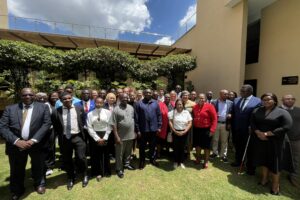
По итогам консультации с участниками Регионального форума адвокатов, который прошел в Душанбе, Международная комиссия юристов (МКЮ) опубликовала рекомендации о независимости юридической профессии и роли адвокатов в системах правосудия государств Центральной Азии.
Данные рекомендации обращают внимание государственных и негосударственных субъектов в странах Центральной Азии на экстренную необходимость обеспечить – как на уровне закона, так и на практике – независимость профессиональных адвокатских объединений и индивидуальных адвокатов.
«Адвокаты играют решающую роль с точки зрения укрепления верховенства закона и защиты прав человека в судебных системах во всем мире, в том числе в странах Центральной Азии, – отметил Тимур Шакиров, старший правовой советник МКЮ. – Мы надеемся, что данные рекомендации, сделанные по итогам консультаций и основанные на международном праве и стандартах, касающихся роли юристов, будут способствовать усилению независимости адвокатов и адвокатских ассоциаций в Центральной Азии».
Помимо самих сообществ адвокатов, данные рекомендации предназначены профессиональным объединениям адвокатов, парламентам и правительствам, в особенности министерствам юстиции, которые в некоторых странах Центральной Азии все еще пользуются формальным и неформальным влиянием на национальные коллегии адвокатов, в том числе контролируют доступ к профессии и дисциплинарное производство в отношении адвокатов. «МКЮ призывает указанные институты безотлагательно принять эффективные правовые и практические меры с тем, чтобы обеспечить способность адвокатов выполнять свои профессиональные обязанности в атмосфере, свободной от любых форм ненадлежащего влияния, будь то институционального или личного, во всех странах Центральной Азии», – добавил Шакиров.
Справочная информация:
9 ноября 2018 г. МКЮ провела Региональный форум «Независимость юридической профессии и роль адвокатов в судебных системах государств Центральной Азии» в Душанбе (Таджикистан) [https://www.icj.org/tajikistan-regional-conference-on-the-role-and-protection-of-lawyers/]. Данный форум стал первым региональным мероприятием, проведенным Союзом адвокатов Таджикистана – профессиональной ассоциацией адвокатов, которая была создана в 2014 г. В форуме приняли участие представители национальных адвокатских ассоциаций Республики Казахстан, Кыргызской Республики, Республики Таджикистан и Республики Узбекистан. В организации данного мероприятия также принимал участие Центр исследования правовой политики – аналитический центр из Алматы, Казахстан, который работает над вопросами реформы юридической профессии в регионе.
Участники Форума обратили внимание на непрерывные и возобновляющиеся попытки подорвать независимость профессиональных ассоциаций адвокатов в странах Центральной Азии, в том числе случаи целенаправленного лишения статуса и преследования отдельных адвокатов за выполнение ими профессиональных обязанностей в отношении доверителей. Участники также обсудили формирующуюся практику создания специализированных органов по защите прав адвокатов под эгидой профессиональных адвокатских ассоциаций, призванных противодействовать отрицательным тенденциям в странах Центральной Азии, которые посягают на интересы юридической профессии.
полный текст в формате PDF: Central Asia-Recommendations-Advocacy-2020-RUS