Sep 7, 2020 | News
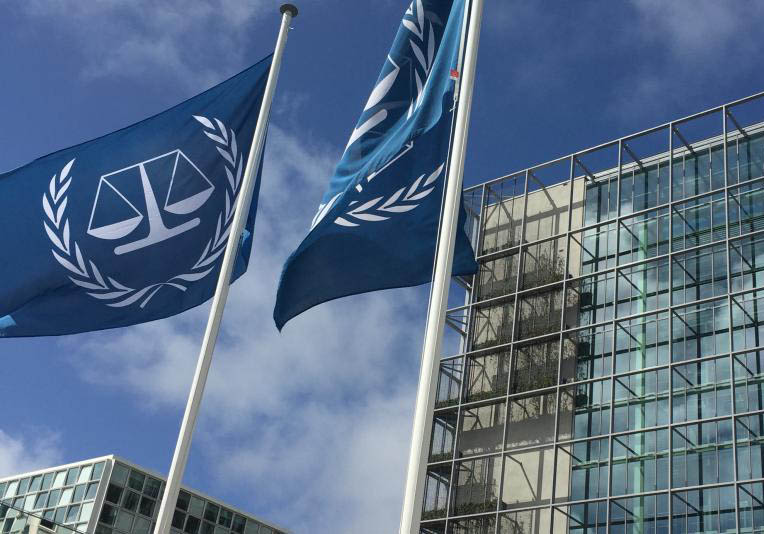
Ongoing attacks by United States officials on the International Criminal Court (ICC) and its staff amount to a full-frontal assault on international justice and the rule of law, said the ICJ, today.
On 2 September 2020, the US Secretary of State, Michael Pompeo, describing the ICC as a “thoroughly broken and corrupted institution,” indicated that the US would place on sanctions on ICC Prosecutor Fatou Bensouda, and the ICC’s Head of Jurisdiction, Complementary, and Cooperation Division, Phakiso Mochochoko, “for having materially assisted Prosecutor Bensouda” pursuant to the President’s 11 June 2020 Executive Order.
“The US must end these despicable and destabilizing attempts to interfere with the independence of the ICC and the functioning of its mandate to pursue justice for victims of the most serious crimes under international law,” said Kingsley Abbott, Coordinator of the ICJ’s Global Accountability Initiative.
“It is imperative that the 123 countries that are States Parties to the Rome Statute continue to work in solidarity to defend the Court and show the world that even individuals from a global superpower are subject to the rule of law.”
“Retaliating against individual ICC staff for merely working to fulfill the mandate of the Court sets a dangerous precedent and must be condemned specifically in the strongest possible terms,” added Abbott.
Background
On 21 September 2018, the ICJ, together with ten other organisations, sent a joint letter to UN Special Procedures regarding threats made by the then US National Security Adviser, John Bolton, against the ICC and its staff.
On 22 March 2019, the UN Special Rapporteur on the situation of human rights defenders, Michel Forst, and the Special Rapporteur on the Independence of Judges and Lawyers, Diego García-Sayán, issued a press release expressing concern at Bolton’s remarks, reaffirming the important mandate of the ICC and saying they were in contact with the US authorities on the issue.
On 11 June 2020, the ICC issued a statement expressing “profound regret at the announcement of further threats and coercive actions, including financial measures, against the Court and its officials, made earlier today by the Government of the United States.” The Court said the US action “represents an attack against the interests of victims of atrocity crimes, for many of whom the Court represents the last hope for justice.”
On 18 June 2020, the ICJ urged the United Nations Human Rights Council’s Special Procedures to act in response to steps taken by the United States against staff of the International Criminal Court (ICC) and their families.
On 25 June 2020, UN Human Rights Special Procedures experts issued a statement condemning US attacks on the ICC and its staff saying they “have been in contact with the US authorities on the issues.”
On 2 September 2020, the ICC issued a statement condemning the economic sanctions imposed on the Prosecutor and Phakiso Mochochoko, saying that the attacks “are unprecedented and constitute serious attacks against the Court, the Rome Statute system of international criminal justice, and the rule of law more generally.”
Contact
Kingsley Abbott, Coordinator of the ICJ’s Global Accountability Initiative, t: +66 94 470 1345; e: kingsley.abbott(a)icj.org
Sep 1, 2020 | News, Publications, Reports, Thematic reports
In a new report published today, the ICJ called on all States to ensure that their responses to the public health emergency brought on by the COVID-19 comply with the international human rights law and the right to health.
The report emphasized the particularly acute and discriminatory impact of the pandemic on already marginalized people and the need for access to health facilities, goods and services necessary to combat COVID-19 without discrimination.
The report Living Like People Who Die Slowly: The Need for Right to Health Compliant COVID-19 Responses documents the adverse human rights effects wrought by the COVID-19 pandemic.
The title comes from the words of Mama Yuli, an Indonesian transwoman, who has said that the pandemic left many elderly transwomen feeling like “they live like people who die slowly”.
The report emphasizes the need for a human rights and rule of law-based approach to the pandemic, with States working cooperatively to address a health crisis that by its nature knows no national boundaries.
“The COVID-19 pandemic is public health crisis that presents immeasurable threats to human rights and the rule of law globally, said Ian Seiderman, the ICJ’s Legal and Policy Director.
“But what is crucial is that States responses themselves not only respond immediately and effectively to COVID-19 as a public health emergency, but also as a human rights crisis”, he added.
Building on the ICJ’s earlier responses to COVID-19, the report details the disproportionate impact of COVID-19 on non-citizens, older persons, women and girls, LGBT persons, persons deprived of their liberty, persons with disabilities, sex workers and healthcare workers.
The report also emphasizes the need for the provision of health information by State authorities in the context of COVID-19 and scrutinizes measures taken by States which have often curbed the rights to freedom of expression, information and privacy.
For example, though “contracting tracing” measures may be effective they must also be human rights compliant and information gathered through such measures should not be used inappropriately or as an instrument of repression of individuals and human defenders.
Acknowledging the interconnectedness of all human rights, the report emphasizes the need for States to ensure provision and protection of access to the “social determinants of health” such as housing, food and water, themselves also internationally protected rights.
The report provides recommendations to States that may assist in ensuring right to health and human rights compliant responses to COVID-19.
The ICJ called on States to respect the various guidance offered by UN human rights treaty bodies and independent experts on how best to comply with their human rights obligations while responding to the pandemic.
The human rights system provides important guidance to States that was not available, for example, during the 1918 influenza pandemic, which ultimately resulted in an estimated 50 million deaths.
“States must heed these calls for a human rights and rule of law-based response to COVID-19, as failure to do so will certainly result in death and human suffering that can still be avoided,” said Seiderman.
The report also raises the importance of compliance by businesses, including particularly private actors in the healthcare sector, with their responsibility to respect human rights, including the right to health.
This will be critical, for example, in ensuring the success of combined efforts of States and private companies in the development and ultimate distribution of a COVID-19 vaccine.
Contact
Timothy Fish Hodgson, ICJ Legal Adviser on Economic, Social and Cultural Rights, t: +27828719905 e: timothy.hodgson@icj.org
Download
Universal-Global Health COVID-19 Exec Sum-Publications-Reports-Thematic Reports-2020-ENG (Executive Summary, in PDF)
Universal-Global Health COVID-19-Publications-Reports-Thematic Reports-2020-ENG (Full report, in PDF)
Myanmar-ICJ-Right-to-Health-Report-2021-BUR.pdf (Full report in Burmese)
Read also
Human Rights in the time of COVID-19: Front and Centre – ICJ news, articles, op-eds, legal blogs, videos
COVID-19 Symposium: COVID-19 Responses and State Obligations Concerning the Right to Health (Part 1)
COVID-19 Symposium: COVID-19 Responses and State Obligations Concerning the Right to Health (Part 2)
Watch
Sep 1, 2020 | Noticias
Hoy, la CIJ llamó a la Organización de los Estados Americanos (OEA) a respetar la autonomía e independencia de la Comisión Interamericana de Derechos Humanos (CIDH), como órgano encargado de promover la observancia de los derechos humanos en las Américas, incluso respecto de sus funciones administrativas básicas.
El Secretario General de la OEA se ha negado a respaldar la decisión unánime tomada por la Comisión Interamericana en enero de 2020, de renovar el mandato del Secretario Ejecutivo de la CIDH, Paulo Abrão, cuyo mandato expiró el 15 de agosto.
La negativa a renovar un mandato no puede hacerse sobre la base de denuncias presentadas, sino que éstas deben ser previamente resueltas en un plazo razonablemente breve, con base en los principios del debido proceso para todas las partes interesadas.
La CIJ señala la importancia de tramitar oportunamente las quejas realizadas por el personal conforme a los principios del debido proceso para todas las partes, y de contar con procedimientos transparentes e independientes para ello.
La CIJ recuerda que es fundamental asegurar la independencia y la autonomía de la Comisión Interamericana, lo que necesariamente incluye su Secretaría Ejecutiva y las funciones relacionadas con el proceso de nombramiento de su titular.
El Secretario General de la CIJ, Sam Zarifi, mencionó que “la CIDH ha desempeñado un papel fundamental en las Américas para promover los derechos humanos y proteger a las víctimas de violaciones de derechos humanos”. Agregó que “la situación requiere una resolución urgente que garantice el respeto de los principios de independencia y autonomía de la CIDH”.
Sep 1, 2020 | News
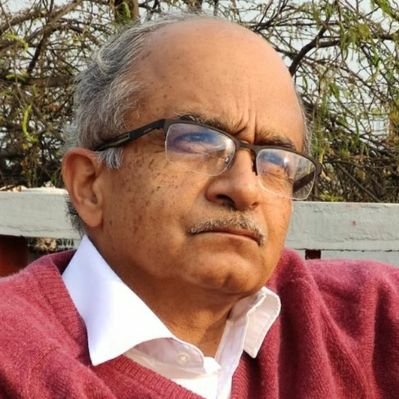
The ICJ today expressed its concern regarding the 31 August 2020 and 14 August 2020 decisions of the Indian Supreme Court to convict prominent human rights lawyer Prashant Bhushan for criminal contempt of court, on the basis of two twitter posts in which the lawyer criticized the performance of the Indian judiciary.
While the Court only imposed a symbolic fine of one rupee, rather than imprisonment, the ICJ considers that the conviction appears to be inconsistent with international standards on freedom of expression and the role of lawyers.
The ICJ stressed that the ruling risks having a chilling effect on the exercise of protected freedom of expression in India and urged a review of the laws and standards on criminal contempt as applied by the Indian courts.
The two tweets published by Prashant Bhushan referred to the Chief Justice of India riding an expensive motorbike belonging to a BJP leader “when he keeps the SC in Lockdown mode denying citizens their fundamental right to access justice” and asserted that the Supreme Court and the last four Chief Justices of India had contributed to how, in his view, “democracy has been destroyed in India even without a formal Emergency”
The Court in its 31 August judgment held that the tweets were a serious attempt to “denigrate the reputation of the institution of administration of justice” which, it said, is “capable of shaking the very edifice of the judicial administration and also shaking the faith of common man in the administration of justice.”
The Court considered that its ruling was consistent with freedom of speech and expression under Article 19 of the Indian Constitution, saying that it will have to balance its exercise of power to punish for contempt for itself (Article 129) with freedom of speech and expression.
The ICJ is concerned, however, that the conviction appears inconsistent with international law on freedom of expression as guaranteed by the International Covenant on Civil and Political Rights (Article 19, ICCPR) to which India is a party.
While some restrictions of freedom of expression are permitted by international standards, a particularly wide scope must be preserved for debate and discussion about such matters as the role of the judiciary, access to justice, and democracy, by members of the public, including through public commentary on the courts.
Any restrictions must be strictly necessary and proportionate to meet a legitimate purpose, such as protecting public order or the rights and reputations of others.
“There is a general concern that the protection of freedom of expression is rapidly eroding in India,” said Ian Seiderman, ICJ Legal and Policy Director.
“We have seen this recently around the COVID 19 crisis in relation to the imprisonment of human rights defenders, on draconian charges of sedition, rioting and unlawful assembly for protesting against the Citizenship (Amendment) Act.”
“While the Indian Supreme Court has over the years generally been an institution that has served to advance human rights in India and globally, we fear it now may be perceived as silencing criticism and freedom of expression by invoking outdated criminal contempt laws,” Seiderman added.
The ICJ joins the 1800 Indian lawyers in calling for the Supreme Court “to review the standards of criminal contempt”, emphasizing that the law is overbroad and should be aligned with international law and standards on the limited scope for restrictions on freedom of expression and criminal contempt.
“Prashant Bhushan is a lawyer and lawyers being part of the legal system have a ring-side view and understanding of the state of the court. Convicting a leading lawyer for contempt for expressing his views in this manner may have a chilling effect on lawyers, in particular considering his involvement in many public interest litigation cases,” said Mandira Sharma, ICJ South Asia Senior Legal Adviser.
Contact
Ian Seiderman – ICJ Legal and Policy Director; e: ian.seiderman(a)icj.org , t: +41 22 979 38 00
Matt Pollard – ICJ Senior Legal Adviser, Director, ICJ Centre for the Independence of Judges and Lawyers; e: matt.pollard(a)icj.org, t: +41 79 246 54 75
Download
India-Criminal-Contempt-of-Court-Press-Release-2020-ENG (PDF, with additional background information)
Aug 30, 2020 | News, Publications, Reports, Thematic reports
The ICJ marked the International Day of the Victims of Enforced Disappearances today by releasing a baseline study (in Spanish) which identifies key obstacles to accountability for serious human right violations in Colombia.
“The report finds that although Colombia has a comprehensive legal framework aimed at providing accountability for serious human rights violations, victims still face many challenges in obtaining access to justice,” said Kingsley Abbott, Coordinator of the ICJ’s Global Accountability Initiative.
“A robust domestic legal framework is important, but without effective Government implementation at every level full accountability for these violations will remain out of reach,” added Abbott.
Among other challenges, some victims still encounter difficulties in participating in criminal proceedings or obtaining information about investigations and prosecutions of those alleged to be responsible for violations.
The study recommends steps Colombia should take to improve the implementation of the domestic legal framework, including:
- raising the awareness of civil servants, including judicial employees, of victims’ rights and the appropriate legal mechanisms employed to search for “disappeared” persons;
- improving coordination between the State’s institutions, including the Search Unit for Persons Presumed Disappeared in the context and by Reason of the Armed conflict, the Special Jurisdiction for Peace, and the Office of the Attorney General; and
- ensuring that the investigation and prosecution of enforced disappearances and extrajudicial killings take place within the civilian rather than the military justice system.
The study also stresses the importance of Colombia recognizing the competence of the UN Committee on Enforced Disappearances (CED) to receive and consider individual communications. Considering the high levels of impunity, the recognition has been requested by Colombian civil society organizations and victims to improve the protection and guarantee of rights of victims of enforced disappearances.
The baseline study has been produced as part of the ICJ’s regional project addressing justice for extrajudicial killings and enforced disappearances in Colombia, Guatemala and Peru, sponsored by the European Union.
The baseline study is available in Spanish.
Background
The ICJ has long been monitoring laws, policies and practices concerning the investigation and prosecution of serious human rights violations and abuses in Colombia, including enforced disappearances and extrajudicial killings, as part of its efforts to promote accountability, justice and the rule of law around the world.
Enforced disappearances and extrajudicial killings are among the most prevalent human rights violations committed in Colombia, particularly in the context of the ongoing internal armed conflict. In Latin America, Colombia has one of the highest figures of people who have been subject to enforced disappearance or unlawfully killed.
The project is implemented under the ICJ’s Global Accountability Initiative which has also produced baseline studies for Eswatini, Nepal, Myanmar, Venezuela, Cambodia, Tajikistan and Tunisia.
Contacts
Kingsley Abbott, Coordinator of the Global Accountability Initiative, e: kingsley.abbott(a)icj.org
Carolina Villadiego, Legal and Policy Adviser, Latin America, and Regional Coordinator of the Project, e: carolina.villadiego(a)icj.org
Rocío Quintero M, Legal Adviser, Latin America, e: rocio.quintero(a)icj.org
Download
Colombia-GRA-Baseline-Study-Publications-Reports-Thematic-reports-2020-SPA (full report, in Spanish, PDF)