Feb 14, 2018 | News
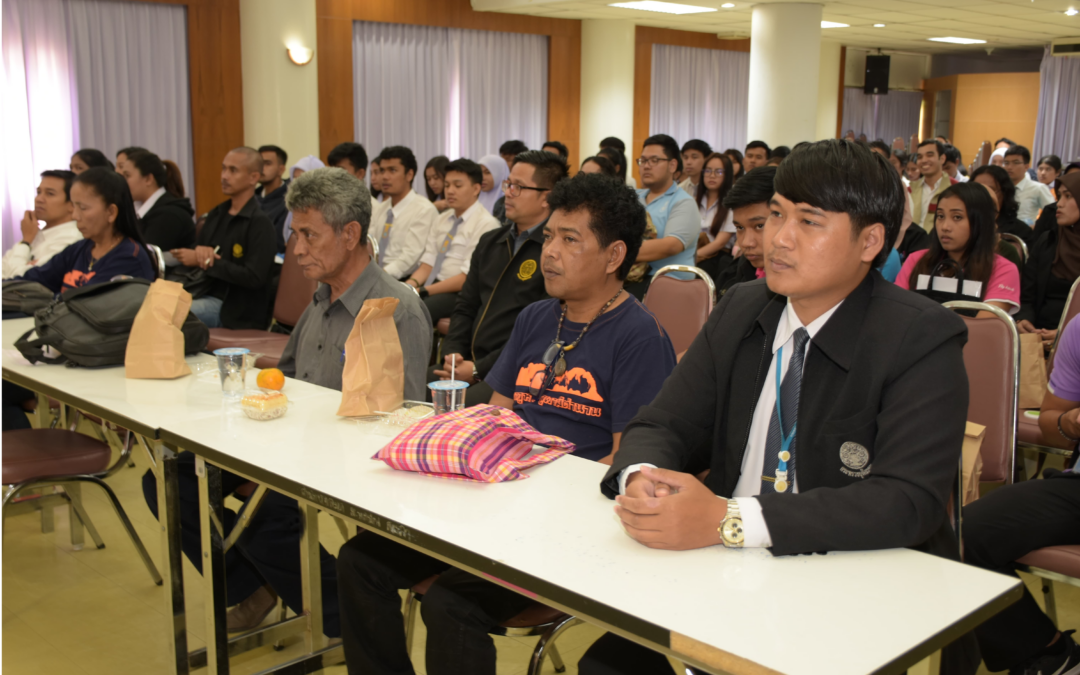
Today, the ICJ addressed an academic seminar on the topic of “Public interest and the anti-strategic lawsuit against public participation (SLAPP)”.
It was organized by Thaksin University’s Faculty of Law, in collaboration with the Embassy of Canada in Bangkok, the Thai Ministry of Justice’s Justice Office, and the Community Resources Centre Foundation (CRC).
Participants in the seminar, which was held at Thaksin University, included more than 50 undergraduate students and lecturers from Thaksin University, around 20 villagers from affected communities, and approximately 20 justice officers from the Justice Office of Songkhla Province, Ministry of Justice.
Sanhawan Srisod, ICJ National Legal Adviser, delivered an introduction to basic international human rights law on the rights to freedom of expression, association, and peaceful assembly, and Thailand’s international legal obligations in relation to these rights.
Other speakers at the Workshop were Ms. Jantima Thanasawangkul, Special Prosecutor, Department of Legal Aid and Civil Rights Protection, Office of the Attorney General; Ms. Sor.Rattanamanee Polkla, Lawyer, Community Resources Centre Foundation; and Mr. Tawan Puakpong, Justice Office of Songkhla Province, Ministry of Justice.
Feb 14, 2018 | Communiqués de presse, Nouvelles
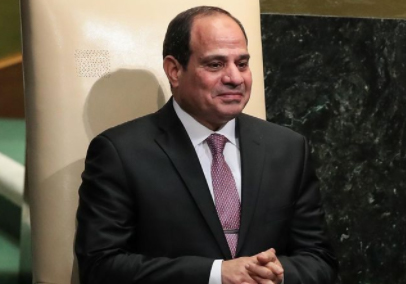
Le gouvernement égyptien a piétiné les conditions minimales pour que des élections libres et équitables aient lieu les 26-28 mars 2018 lors du vote pour la présidence, ont annoncé aujourd’hui la CIJ et treize organisations internationales et régionales de défense des droits humains.
Le gouvernement du président Abdel Fattah al-Sissi ne cesse d’étouffer les libertés fondamentales. Il a également arrêté des candidats potentiels et effectué des rafles parmi leurs partisans.
« Les alliés de l’Egypte devraient aujourd’hui dénoncer publiquement la mascarade que sont ces élections, plutôt que de continuer à offrir un soutien inconditionnel à un gouvernement présidant à la pire crise des droits humains que le pays ait connue depuis des décennies », ont déclaré les organisations.
Les États-Unis, l’Union européenne et les États européens, qui fournissent une aide financière substantielle au gouvernement égyptien, devraient systématiquement intégrer les droits humains dans leurs relations avec l’Égypte.
Ces pays devraient mettre fin à toute assistance en matière de sécurité pouvant être utilisée dans le cadre de la répression interne, et axer leurs efforts sur l’amélioration concrète des droits fondamentaux.
La répression en amont de l’élection présidentielle égyptienne est une escalade substantielle dans un environnement politique qui nie le droit des individus à la participation politique et à la liberté d’expression, d’association, et de rassemblement pacifique.
Les autorités égyptiennes devraient immédiatement libérer toutes les personnes arrêtées pour avoir participé à des campagnes politiques ou avoir déclaré leur intention de se présenter aux élections présidentielles, appellent les organisations.
Les autorités ont successivement éliminé les principaux concurrents ayant annoncé leur intention de se présenter à la présidentielle. Ils ont ainsi arrêté deux candidats potentiels, le général à la retraite Sami Anan et le colonel Ahmed Konsowa.
Un troisième candidat potentiel, Ahmed Shafiq, ancien Premier ministre et commandant de l’armée de l’air, aurait été placé en résidence surveillée non déclarée dans un hôtel jusqu’à ce qu’il se retire de la course.
Deux autres candidats potentiels, l’avocat des droits humains Khaled Ali ainsi qu’un ancien membre du parlement, Mohamed Anwar al-Sadat, ont fait marche arrière mettant en cause l’environnement répressif, la sécurité de leurs partisans et les manipulations gouvernementales.
Le seul candidat actuel contre le président al-Sissi est Moussa Mostafa Moussa, le chef du parti Al-Ghad, qui soutient le gouvernement. Il a enregistré sa candidature le 29 janvier, dernier jour possible, après des efforts des députés pro-gouvernementaux pour le convaincre de se présenter.
Jusqu’à la veille de sa candidature, il était membre d’une campagne soutenant al-Sissi pour un second mandat. Dans ce contexte, le droit de tout citoyen à se présenter librement et à voter lors d’élections traduisant la libre expression de la volonté des électeurs, semble dénué de sens.
Ces actions gouvernementales contreviennent à la Constitution égyptienne et constituent une violation manifeste de ses obligations et engagements internationaux, notamment du Pacte international relatif aux droits civils et politiques (PIDCP), de la Charte africaine des droits de l’homme et des peuples (CADHP) et de la Déclaration de 2002 de l’Union africaine sur les principes régissant les élections démocratiques en Afrique.
L’article 25 du PIDCP et l’article III de la Déclaration de l’Union africaine lient la participation politique, en tant qu’électeur et candidat, aux libertés de réunion, d’expression et d’association.
Un manuel de l’Union européenne pour les observations électorales, détaillant les normes pour des élections équitables, rappelle que ce sont des droits « sans lesquels [les élections] ne peuvent pas être exercées de manière significative ».
L’actuel climat de représailles contre les voix dissidentes et la répression croissante à l’encontre des défenseurs des droits humains et des organisations indépendantes de défense des droits ont rendu extrêmement difficile l’observation efficace des élections par des organisations nationales et étrangères.
Les médias ont indiqué que le nombre d’organisations ayant obtenu l’autorisation de surveiller les élections était inférieur de 44% à celui de la dernière élection présidentielle en 2014. Le nombre de demandes a en général également diminué.
Plusieurs partis d’opposition ont appelé au boycott des élections. Un jour plus tard, le Président al-Sissi a menacé d’utiliser la force, y compris l’armée, contre ceux qui minent la « stabilité et la sécurité égyptiennes ».
Le 6 février, le parquet général a ordonné une enquête visant 13 des principaux dirigeants de l’opposition, les accusant d’appeler à « renverser le régime au pouvoir ».
« Sept ans après le soulèvement de 2011 en Egypte, le gouvernement se moque des droits fondamentaux pour lesquels les manifestants se sont battus, » ont déclaré les organisations.
Et d’ajouter: « Le gouvernement égyptien prétend être dans une “transition démocratique” mais s’en éloigne à chaque élection. »
Contact
Said Benarbia (anglais, français, arabe) : t: + 41-22-979-3817 ; ou e: said.benarbia(a)icj.org
Organisations signataires :
Cairo Institute for Human Rights Studies
CIVICUS “World Alliance for Citizen Participation”
CNCD-11.11.11
Commission internationale de juristes
EuroMed Droits
Fédération internationale des droits de l’homme (FIDH)
Human Rights First
Human Rights Watch
International Service for Human Rights
Organisation mondiale contre la torture (OMCT)
Project on Middle East Democracy
Reporters sans frontières (RSF)
Robert F. Kennedy Human Rights
Solidar
Egypte-Election présidentielle dans un contexte ni libre ni équitable-Communiqué de presse-2018-FRA (Communiqué de presse complet en PDF)
Feb 13, 2018 | News
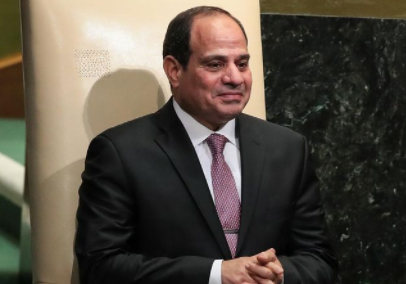
The Egyptian government has trampled over even the minimum requirements for free and fair elections for the planned March 26-28, 2018 vote for president, the ICJ and thirteen international and regional rights organizations said today.
The government of President Abdel Fattah al-Sisi (photo) has relentlessly stifled basic freedoms and arrested potential candidates and rounded up their supporters.
“Egypt’s allies should speak out publicly now to denounce these farcical elections, rather than continue with largely unquestioning support for a government presiding over the country’s worst human rights crisis in decades,” the groups said.
The United States, European Union, and European states, which provide substantial financial assistance to the Egyptian government, should consistently integrate human rights into their relations with Egypt.
These countries should halt all security assistance that could be used in internal repression and focus aid on ensuring concrete improvements to protect basic rights.
The repression in advance of Egypt’s presidential election is a substantial escalation in a political environment that denies people’s rights to political participation and to freedom of expression, association, and peaceful assembly.
The Egyptian authorities should immediately release all those arrested for joining political campaigns or stating their intention to run as presidential candidates in the elections, the groups said.
The authorities have successively eliminated key challengers who announced their intention to run for president. They have arrested two potential candidates, retired Lt. Gen. Sami Anan and Col. Ahmed Konsowa.
A third potential candidate, Ahmed Shafik, a former prime minister and air force commander, apparently was placed under undeclared house arrest in a hotel until he withdrew from the race.
Two other key potential candidates, the human rights lawyer Khaled Ali and a former parliament member, Mohamed Anwar al-Sadat, backtracked on formally registering, citing the repressive environment, concerns over the safety of their supporters, and government manipulation.
The only current candidate running against al-Sisi is Mousa Mostafa Mousa, the leader of the Al-Ghad Party, which supports the government. He registered his candidacy on January 29, the last possible day, after efforts from pro-government parliament members to convince him to run.
Until the day before he registered his candidacy, he was a member of a campaign supporting al-Sisi for a second term. In this context, the right of every citizen to freely stand and vote in elections that reflect the free expression of the will of the electors appears meaningless.
These government actions are in contravention to Egypt’s Constitution and a clear violation of its international obligations and commitments, including the International Covenant on Civil and Political Rights (ICCPR), the African Charter on Human and Peoples’ Rights (ACHPR), and the 2002 African Union Declaration on the Principles Governing Democratic Elections in Africa. Article 25 of the ICCPR and Article III of the African Union declaration link political participation, as a voter and as a candidate, to the freedoms of assembly, expression, and association.
An EU handbook for elections observations, detailing standards of fair elections, says that these are rights “without which it [elections] cannot be meaningfully exercised.”
The current atmosphere of retaliation against dissenting voices and the increasing crackdown against human rights defenders and independent rights organizations have made effective monitoring of the elections extremely difficult for domestic and foreign organizations.
Media reports have said that the number of organizations that were granted permission to monitor the elections was 44 percent fewer than in the last presidential election in 2014 and that the number of requests, in general, has gone down.
Several opposition parties called for boycotting the elections. A day later al-Sisi threatened to use force, including the army, against those who undermine “Egypt’s stability and security.”
On February 6, the Prosecutor-General’s Office ordered an investigation against 13 of the leading opposition figures who called for a boycott, accusing them of calling for “overthrowing the ruling regime.”
“Seven years after Egypt’s 2011 uprising, the government has made a mockery of the basic rights for which protesters fought,” the groups said. “Egypt’s government claims to be in a ‘democratic transition’ but move further away with every election.”
Contact
Said Benarbia, Director of ICJ’s Middle East and North Africa Programme, t: +41-22-979-3817 ; e: said.benarbia(a)icj.org.
Signatories
Cairo Institute for Human Rights Studies
CIVICUS “World Alliance for Citizen Participation”
CNCD-11.11.11
EuroMed Rights “The Euro-Mediterranean Human Rights Network”
Human Rights First
Human Rights Watch
International Commission of Jurists
International Federation for Human Rights (FIDH)
International Service for Human Rights
Project on Middle East Democracy
Reporters Without Borders (RSF)
Robert F. Kennedy Human Rights
Solidar
World Organisation Against Torture (OMCT)
Egypt-Presidential vote neither free nor fair-Presse release-2018-ENG (Full Press release in English, PDF)
Egypte-Election présidentielle dans un contexte ni libre ni équitable-Communiqué de presse-2018-FRA (Full Press release in French, PDF)
Egypt-Presidential vote neither free nor fair-Presse release-2018-ARA (Full Press Release in Arabic, PDF)
Feb 13, 2018 | News
The one-year extensions of Nepal’s two transitional justice mechanisms without necessary legal and institutional reforms ordered by the Supreme Court and the UN are insufficient to comply with international standards, the ICJ, Amnesty International and Human Rights Watch said today.
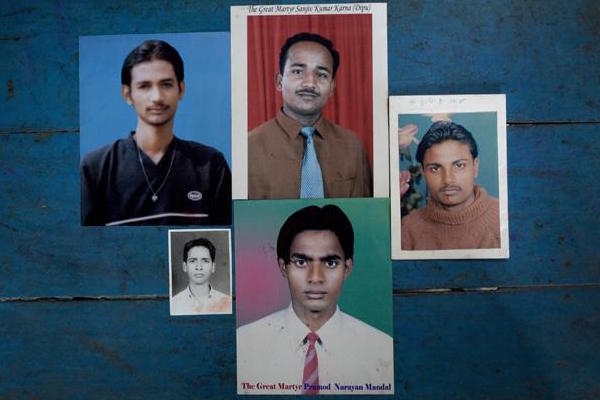
The three organizations warned that the mere extension of the terms of the Truth and Reconciliation Commission (TRC) and the Commission on the Investigation of Enforced Disappeared Persons (CIEDP) is likely to prolong the justice process without meaningfully improving the chances that victims will have their demands for justice, truth, and accountability met.
“The net worth of these two bodies has now been tested by the victims in Nepal who are deeply dismayed and disappointed at not having been served truth and justice—even after years of delay,” said Biraj Patnaik, Amnesty International’s South Asia Director.
On February 5, 2018, the Government of Nepal extended, for the second time, the mandates of the TRC and CIEDP by one year without taking any measures to ensure their credibility and human rights compliance, and to increase the capacity of the Commissions as demanded by victims, civil society groups, and the National Human Rights Commission of Nepal (NHRC).
On the same day, the NHRC called on the government to amend the Enforced Disappearances Enquiry, Truth and Reconciliation Commission Act, 2014, in line with international standards and the judgements of the Supreme Court of Nepal.
The TRC and CIEDP have fallen short of international standards, both in constitution and operation, despite repeated orders by the Supreme Court of Nepal.
Among other flaws, the current legal framework allows for the possibility of amnesties and effective impunity for gross human rights violations amounting to grave crimes under international law, and the broad authority to facilitate reconciliation, including without the informed consent of the victims and their families.
In addition, a non-consultative, uncoordinated and opaque approach to their work has also created distrust with all major stakeholders, including conflict victims and members of civil society.
Where the Commissions have made efforts to work effectively, they face problems due to a lack of sufficient human and financial resources.
“Families and victims of Nepal’s decade-long civil war have waited far too long for answers, and cynical government attempts such as extending the mandate without broader reform as directed by the highest court is a further slap in the face,” said Meenakshi Ganguly, South Asia director at Human Rights Watch.
“The two commissions have gathered a lot of documentation, but the authorities seem more committed to protecting perpetrators than ensuring justice in the process.”
Despite flaws in the law, and questions of legitimacy and capacity, victims and their families have given the benefit of the doubt to these bodies, and submitted thousands of complaints.
As of February 2018, the TRC has received 60,298 complaints of human rights violations, and the CIEDP has received 3,093 complaints of enforced disappearance.
Though the Commissions have stated that they have initiated investigations into some of these cases, there are serious concerns about the quality of these investigations, and to date, not a single case has been recommended for prosecution.
“Now a member of the UN Human Rights Council, the international community has high expectations of the government of Nepal,” said Frederick Rawski, Asia Director of the International Commission of Jurists.
“It needs to commit to ensure that these institutions function independently and free from political interference, and in accordance with international standards that prohibit impunity for gross human rights violations. Merely extending their mandates without addressing the underlying problems is not adequate.”
Contacts
Frederick Rawski, ICJ Asia Pacific Regional Director, t: +66 64 478 1121, e: frederick.rawski@icj.org
Meenakshi, Ganguly, South Asia Director, Human Rights Watch, e: gangulm@hrw.org
Omar Waraich, Deputy Director, Amnesty International South Asia, t: +94 72 737 5467; e: omar.waraich@amnesty.org
Background
The TRC and CIEDP were established on 10 February 2015 through the Enforced Disappearances Enquiry, Truth and Reconciliation Commission Act, 2014.
The two-year mandates of the TRC and CIEDP expired on February 9, 2017.
The government extended the mandates for one year.
On 20 January 2018, the President approved an Ordinance extending the mandate of the two Commissions.
On the basis of the Ordinance, the Council of Ministers, on 5 February 2018, extended the mandates of these bodies for an additional year.
Feb 12, 2018 | News
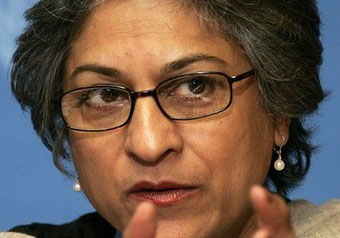
The ICJ mourns the loss of its former Commissioner, Executive Committee Member and Honorary Member, Asma Jahangir, who was at the frontline of the struggle for the rule of law and human rights in Pakistan and around the world.
Ms. Jahangir died of cardiac arrest on Sunday, 11 February, in Lahore, Pakistan. She was 66.
“The ICJ benefited immeasurably from Asma Jahangir’s contribution and leadership. She was a giant of the human rights movement, dedicated to defending the rule of law and fighting for the rights of everyone – including her fiercest detractors,” said Sam Zarifi, ICJ’s Secretary General.
Asma Jahangir was elected to the ICJ in 1998, and went on to serve on the organization’s Executive Committee until the end of her term.
She continued to work closely with the ICJ as an Honorary Member.
Asma Jahangir started her journey as a human rights defender as a petitioner is a case challenging the military dictatorship of Yahya Khan. She was only 19 at the time.
She continued throughout her life to be an outspoken critic of military rule and abuses in Pakistan and at the forefront of the struggle for human rights and the rule of law in the country.
In 1987 she co-founded the Human Rights Commission of Pakistan, which remains one of the oldest and most preeminent human rights organizations in the region.
Asma Jahangir was a senior advocate of the Supreme Court with a legal career spanning nearly forty years.
In 1987, along with other women lawyers, she established the first legal aid cell in the country for free legal representation to women, children, bonded laborers and religious minorities.
She also made lasting contribution to the human rights globally, and served as a UN Special Rapporteur for three different mandates: Extrajudicial, summary or arbitrary executions (1998 to 2004); freedom of religion or belief (2004 to 2010); and the situation of human rights in Iran (2016 – 2018).
In the course of her work as a human rights activist, she was repeatedly threatened, put under house arrest and even imprisoned. However, these attacks did not deter her from her commitment to human rights.
“Asma Jahangir’s brave, powerful voice for human rights and dignity has fallen silent much too soon. We will miss her and strive to live up to her example,” said Zarifi.
Last year, Asma Jahangir participated in ICJ’s Women profiles video series:
Asma Jahangir profile