Nov 22, 2017 | News
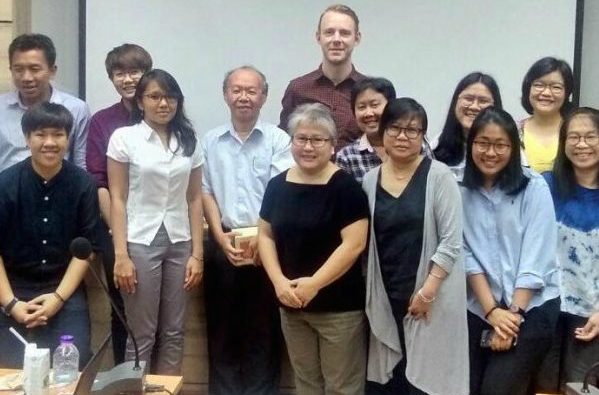
On 22 November, the ICJ, in collaboration with the Legal Research and Development Center under Chiang Mai University’s Faculty of Law, held a roundtable discussion on “Human Rights Litigation concerning the Special Economic Zones in Myanmar and Thailand”.
The objective of the discussion, held on campus at Chiang Mai University, was to identify legal issues and to share experiences regarding strategic litigation and advocacy strategies concerning human rights violations associated with the development of Special Economic Zones (SEZs) in Thailand and Myanmar.
In recent years, both the Thai and Myanmar governments have been trying to attract foreign direct investment into their countries by demarcating specific areas where special regulations concerning, inter alia, public administration, the environment, land or labour rights might be applied.
Proponents of SEZs tend to link their development with jobs and economic growth, however, there is generally limited publicly available information about their economic or public purpose rationale.
The development of SEZs, which requires a lot of land, can undermine the protection of human rights and the rule of law by creating governance structures and permitting processes less stringent than that required under national and international law.
Participants at the discussion included postgraduate students and lecturers from Chiang Mai University’s Faculty of Law, lawyers and representatives from Thai civil society organisations.
The ICJ shared with participants its report analysing the legal framework of SEZs in Myanmar and human rights concerns arising from a case study of Kyauk Phyu SEZ, ‘Special Economic Zones in Myanmar and the State Duty to Protect Human Rights’, during the discussion.
The speakers at the discussion were:
· Sean Bain, ICJ International Legal Advisor, Myanmar
· Sumitchai Hattasan, Director, Center for Protection and Revival of Local Community Rights
· Supaporn Malailoy, EEC Watch, Human Rights and Environmental Lawyer
Nov 21, 2017 | Artículos, Noticias
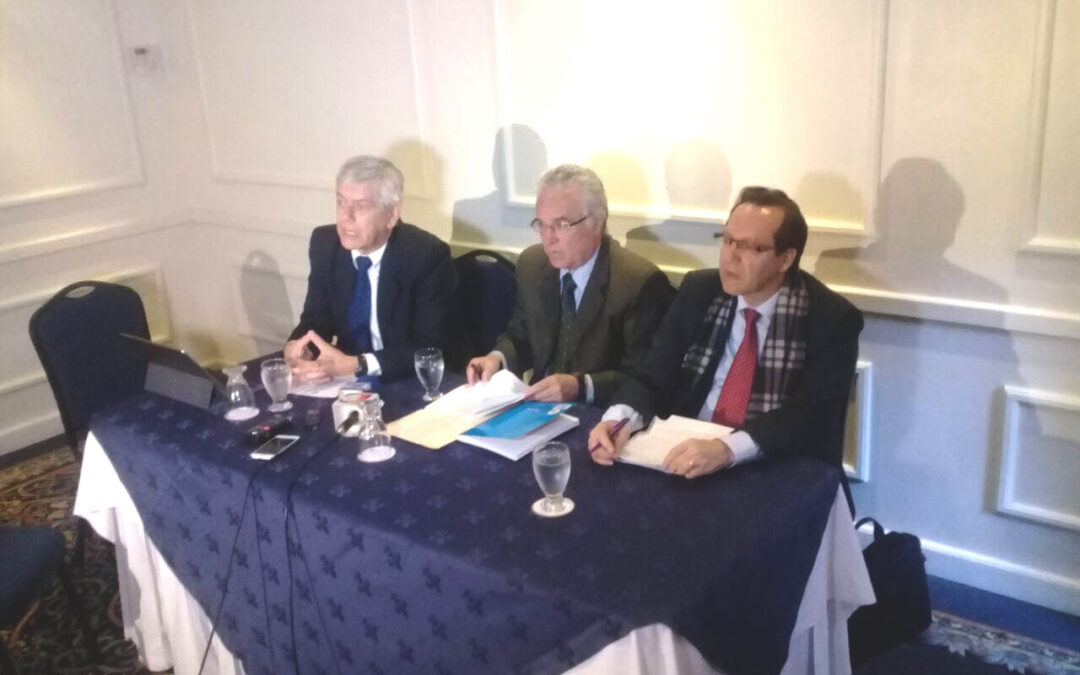
El Comisionado de la CIJ Belisario Dos Santos y el ex magistrado de la Corte Constitucional de Colombia Jaime Araujo visitaron el país, con el objeto de presentar las principales conclusiones del Informe de la CIJ sobre los desafíos que abogado-a-s enfrentan.
Los dos abogados, acompañados del Director de la CIJ para Centroamérica Ramón Cadena (foto de la primera misión), pudieron entrevistarse con el Presidente del Colegio de Abogados, con el Presidente del Tribunal de Honor de dicho colegio, con el Procurador de Derechos Humanos y con el diputado Leocadio Juracán, Sub Jefe de la Bancada Convergencia del Congreso de la República y miembro de la Comisión de Derechos Humanos.
La CIJ agradece la apertura de dichos representantes de los órganos máximos del Colegio de Abogados y Notarios de Guatemala, así como la del Procurador de Derechos Humanos y la del diputado del Congreso de la República.
Dichas conversaciones enriquecieron aún más, los puntos críticos que se presentan a continuación.
La CIJ, en sus actividades relativas a su mandato, se encarga de velar porque el Derecho Interno se adecúe y respete las normas y principios del Derecho Internacional de los Derechos Humanos.
En otras palabras, en el caso de Guatemala, la CIJ lleva a cabo actividades para supervisar que el Estado cumpla con respetar los estándares internacionales en materia de derechos humanos.
La Carta de Naciones Unidas, constituye la base del estado de derecho en el plano internacional.
Además están todas la convenciones y tratados, declaraciones y principios que la Comunidad Internacional ha aprobado, desde que se conformó la Organización de las Naciones Unidas.
Guatemala-Segunda Misión Beli-News-web stories-2017-SPA (texto completo, en PDF)
Nov 17, 2017 | News
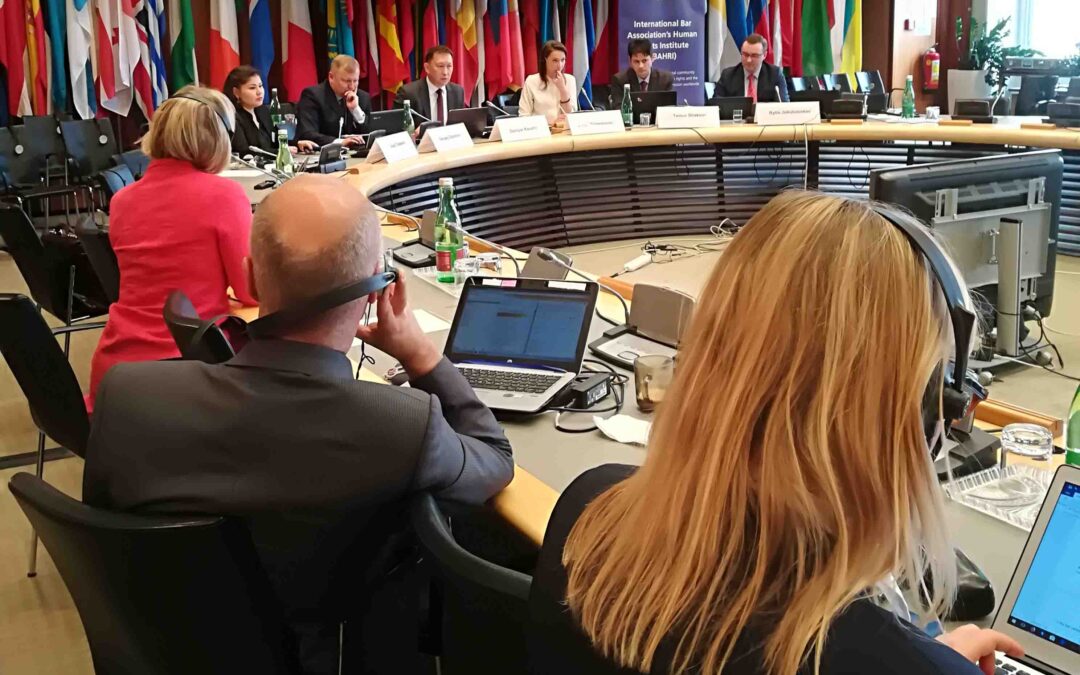
Today, the International Bar Association’s Human Rights Institute (IBAHRI) and the ICJ held a side event in the framework of the OSCE’s Supplementary Human Dimension Meeting (SHDM) on Access to Justice in Vienna.
The event aimed to give an overview of current challenges and key organizational and procedural barriers faced by lawyers in Kazakhstan, in the light of international standards on the independence and role of lawyers.
At the event, lawyers from Kazakhstan as well as international experts discussed what guarantees should be ensured in the planned reform of the legal profession to guarantee professional autonomy and to strengthen the independence of lawyers.
Any undue interference with the independence of the current Bar Association in Kazakhstan would be contrary to international law and standards and would have a significant negative effect not only for Kazakhstan’s justice system but also for the wider Central Asia region.
Nov 17, 2017 | News
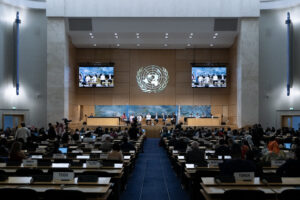
Pakistan’s third Universal Periodic Review (UPR) has drawn global attention to a number of serious human rights failures in the country, said the ICJ today.
On 16 November, the UPR Working Group of the Human Rights Council adopted a draft UPR outcome report for Pakistan. Pakistan received a total of 289 recommendations – a substantial increase from its previous UPR in 2012, when Pakistan received 167 recommendations. As many as 111 State delegations took the floor to make statements, and 14 States submitted their questions in advance.
“That well over a hundred delegations participated in the review indicates the global community’s interest in Pakistan’s human rights situation,” said Frederick Rawski, ICJ’s Asia Director.
Key recommendations urge Pakistan to:
- Reinstate a moratorium on executions with the view to abolishing the death penalty;
- Repeal or amend “blasphemy laws” to bring them in line with international human rights law;
- Ratify the International Convention for the Protection of All Persons from Enforced Disappearance and a number of other human rights treaties;
- Ensure effective protection of the rights of religious minorities, human rights defenders, journalists and other vulnerable groups;
- Strengthen the National Commission for Human Rights;
- Ensure prompt, impartial and effective investigations of human rights violations and bring perpetrators to justice;
- Set 18 as the minimum legal age for marriage; and
- Ensure effective implementation of laws on violence against women.
“The States’ recommendations echo the concerns of dozens of civil society organizations and even the National Commission of Human Rights – who all agree that the Government must take urgent measures to address the downward spiral of rights in the country”, Rawski said.
Pakistan will now examine the recommendations and respond to the Human Rights Council at latest by the Council’s next session in March 2018.
Pakistan’s review comes at a time of serious concern about the rights situation in the country.
The Government lifted the informal moratorium on the death penalty and carried out nearly 500 executions in less than three years – among the highest execution rates in the world; Parliament enacted laws allowing military courts to try civilians for certain terrorism-related offences in secret trials; and the authorities started a new wave of crackdowns on NGOs, journalists and human rights defenders, including subjecting them to enforced disappearance.
Persecution of religious minority communities also continues despite the Government’s claims that religious minorities “enjoy equal rights as equal citizens of Pakistan”. Last month, three Ahmadi men were sentenced to death for blasphemy for allegedly scratching anti-Ahmadi pamphlets that had the “Mohr-e-Nabbuwat” (seal of the Prophet Muhammad) printed on them. And earlier this week, the Islamabad High Court directed the Government to respond to a petition demanding a separate database for Ahmadis in the civil service to ensure they are not “posted in offices involving sensitive matters”.
“As a member of the Human Rights Council, Pakistan is expected to uphold the highest standards in the promotion and protection of human rights, something it has clearly failed to do,” added Rawski.
“Pakistan should make use of this process by accepting the recommendations made during the review and adopting a concrete, action-based national human rights plan to ensure their effective implementation.”
Contact
Frederick Rawski, ICJ Asia Pacific Regional Director, t: +66 64 478 1121, e: frederick.rawski@icj.org
Reema Omer, ICJ International Legal Adviser for Pakistan (London), t: +447889565691; e: reema.omer(a)icj.org
Pakistan-UPR-PressRelease-2017-eng (download the press release)
Additional information
UN Member States reviewed Pakistan’s human rights record for the third time on Monday, 13 November, through the UPR process.
The UPR is a unique mechanism of the UN Human Rights Council aimed at improving the human rights situation of each of the 193 UN Member States. Under this mechanism, the human rights record of all UN Member States is peer-reviewed every four to five years by the UPR Working Group, consisting of the 47 UN Member States of the Human Rights Council; however, any UN Member State can take part in the discussions and the dialogue during the UPR of the reviewed States. States then make recommendations to the country under review, which has the option of accepting or noting the recommendations.

Nov 16, 2017 | Artículos, Noticias
Communicado de la CIJ, ante la visita de Alto Comisionado de las Naciones Unidas para los Derechos Humanos Sr. Zeid Ra´ad Al Hussein a Guatemala.
La CIJ expresó:
1. El país se encuentra en una de las más graves crisis institucionales que se han presentado en la época post-conflicto armado interno. Desde el 27 de agosto, cuando el Presidente de la República declaró persona non grata al Comisionado de la Comisión Internacional contra la Impunidad (CICIG), quedó evidenciado que el Organismo Ejecutivo, al más alto nivel, iniciaba una serie de actos arbitrarios, para afectar el desenvolvimiento de este organismo de las Naciones Unidas.
2. Por su parte, el Congreso de la República, inició la implementación de una “Agenda Legislativa a favor de la Impunidad”, por medio de la aprobación de una ley de reformas al Código Penal, que luego, ante el rechazo generalizado de la población guatemalteca, tuvo que dar marcha atrás.
3. En las últimas semanas, el Congreso de la República, en forma abierta, ha evidenciado que la “Agenda Legislativa a favor de la Impunidad” tiene como pilares fundamentales: a) Facilitar la corrupción por medio de iniciativas tales como eliminar la constancia de “finiquito” o constancia de haber cumplido con todas las normas relativas a la transparencia, para quienes quieran optar al cargo público de diputado o diputada; b) Consagrar la Impunidad en casos de Justicia Transicional a favor de militares acusados de graves violaciones a los derechos humanos cometidas durante el conflicto armado interno, por medio del otorgamiento de una “amnistía general”, y reformas a la Ley de Reconciliación Nacional; c) Reprimir a quienes ejercen el derecho a la resistencia pacífica, así como afectar el normal funcionamiento de las Organizaciones No Gubernamentales, por medio de leyes, que permitirán establecer mayores controles al funcionamiento de las ONGs y desarrollar aún más, la persecución a dirigentes comunitarios, por medio de la Ley contra actos terroristas.
4. Mientras tanto, las y los jueces independientes y honestos del Poder Judicial, continúan sufriendo campañas de difamación, recusaciones infundadas para ser apartados de los casos de alto impacto que conocen; litigio de mala fe por parte de abogados y abogadas que defienden a funcionarios públicos en casos de corrupción que se ventilan en su contra; ataques por medio de medidas disciplinarias y hasta ataques fìsicos.
5. La CIJ ha podido constatar que el Sistema de Justicia tiene grandes retos que debe superar; sin embargo, para ello es necesario que se impulsen reformas que lo fortalezcan. Esas reformas se vuelven casi imposibles, cuando están en manos de funcionarios acusados de cometer delitos o actos de corrupción. Un claro ejemplo, lo constituye la figura jurídica del antejuicio, que según las reformas constitucionales debería desaparecer para el caso de muchos funcionarios públicos. Sin embargo, precisamente fue el Congreso de la República, quien rechazó esta reforma en forma tajante.
6. El próximo año 2018 se iniciará con la crucial elección de Fiscal General. Como lo expresara la CIJ en su comunicado del mes de febrero del presente año, la existencia de un pacto de impunidad, hacía prever acciones concretas en contra de la CICIG y su representante en el futuro inmediato.
7. LA CIJ considera que si en dicha elección el crimen organizado toma el control de esta institución, significará que las estructuras criminales habrán consolidado el Pacto de Impunidad que pretenden implementar, para lograr que los casos de alto impacto que hoy se ventilan ante los tribunales de justicia, se vean seriamente afectados, incluso con la liberación de las personas que se encuentran guardando prisión.
8. En lo que respecta a la obligación del Estado de Guatemala de respetar los derechos humanos de las personas, la CIJ considera que la visita del señor Al Hussein se lleva a cabo en un clima de inseguridad y ataques contra defensores y defensoras de derechos humanos, contra los Pueblos Indígenas y campesinos pobres de Guatemala, imperando acciones estatales de racismo, exclusión y discriminación.
Ante esta crisis institucional, que afecta a los tres organismos del Estado y a la sociedad guatemalteca en su conjunto, Ramón Cadena, Director de la Comisión Internacional de Juristas para Centroamérica expresó:
“La oficina del Alto Comisionado de las Naciones Unidas para los Derechos Humanos (OACNUDH), debe asumir en esta visita, la posición más contundente posible, para obtener de las autoridades del Estado de Guatemala, compromisos concretos, viables y verificables, para construir un verdadero Estado de Derecho, en el que se respeten los derechos humanos de todos los pueblos.”
Guatemala, 16 de noviembre de 2017