May 17, 2017 | News
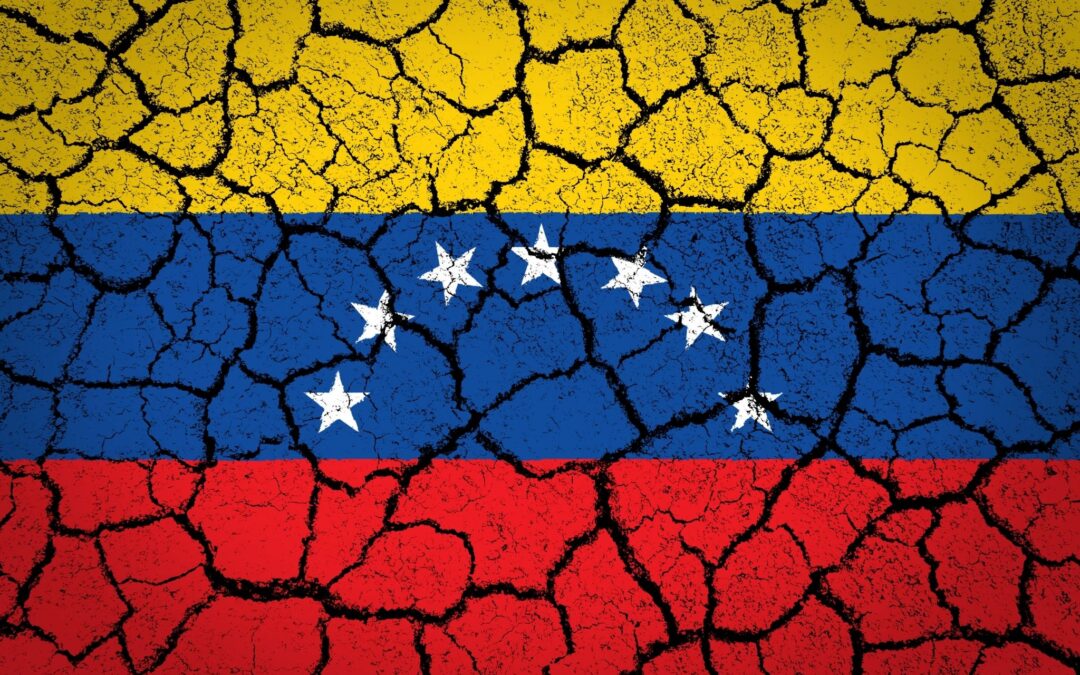
La CIJ condena enérgicamente la violenta represión de las manifestaciones por parte del Gobierno venezolano y sus cuerpos de seguridad, así como el juzgamiento de civiles por tribunales militares de ese país.
Entre el 4 de abril y el 16 de mayo de 2017, han fallecido de manera violenta más de 40 personas en el contexto de manifestaciones, por la acción de los cuerpos de seguridad del Estado venezolano y grupos armados de civiles afectos al Gobierno.
Asimismo, centenares de personas han sido detenidas arbitrariamente, muchas de las cuales han sido trasladadas a prisiones militares, instalaciones de organismos de seguridad o a cárceles de máxima seguridad.
Numerosos detenidos han denunciado golpizas, tratos crueles e inhumanos así como actos de tortura.
Igualmente, por lo menos 275 civiles están procesados por tribunales militares, acusados de delitos previstos en el Código Militar, como los de “rebelión” y “traición”.
En muchos casos, a los abogados defensores se les limita el acceso a las salas de audiencia, sólo están autorizados a hablar uno pocos minutos antes de las audiencias con sus defendidos y se les restringe el acceso al expediente penal.
La CIJ recuerda que todas estas prácticas vulneran derechos y libertades fundamentales y constituyen una violación flagrante por parte del Estado venezolano de sus obligaciones constitucionales e internacionales de garantizar y proteger los derechos humanos.
Desde hace varios años la CIJ ha venido siguiendo la situación en Venezuela y ha podido constatar el vertiginoso y sistemático deterioro de los derechos humanos y de las libertades fundamentales, la pérdida de independencia del Poder judicial y, en general, el ocaso del Estado de Derecho.
Al respecto ver los informes de la CIJ: Fortaleciendo el Estado de Derecho en Venezuela (2014) y Venezuela: el ocaso del Estado de Derecho (2015).
May 16, 2017 | News
Non-governmental organisations interested in participating in UN human rights mechanisms have until 1 June 2017 to submit an application for consideration during 2017.
The International Commission of Jurists, which itself has had consultative status with the UN since 1957, has been requested by the United Nations to disseminate the following information about the upcoming deadline for other interested NGOs to obtain UN consultative status:
1 June 2017 is the last day for Non-Governmental Organizations to apply for consultative status with the Economic and Social Council (ECOSOC), in order to have an opportunity to take part in UN deliberations. ECOSOC consultative status is governed by ECOSOC resolution 1996/31, which outlines the eligibility requirements for consultative status, rights and obligations of NGOs in consultative status, procedures for the withdrawal or suspension of consultative status, the role and functions of the ECOSOC Committee on NGOs, and the responsibilities of the UN Secretariat in supporting the consultative relationship. Consultative status is granted by ECOSOC upon recommendation of the ECOSOC Committee on NGOs, which is composed by Member States.
Who is eligible for applying?
Consultative relationships may be established with international, regional, sub regional and national non-governmental, non-profit public or voluntary organizations. NGOs affiliated to an international organization already in status may be admitted provided that they can demonstrate that their programme of work has direct relevance to the aims and purposes of the United Nations.
To be eligible for consultative status, an NGO must have been in existence (officially registered with the appropriate government authorities as an NGO/non-profit) for at least two years, must have an established headquarters, a democratically adopted constitution, authority to speak for its members, a representative structure, appropriate mechanisms of accountability and democratic and transparent decision-making processes. The basic resources of the organization must be derived in the main part from contributions of the national affiliates or other components or from individual members.
What are the benefits?
NGOs that are accredited with ECOSOC can participate in a number of events, including, but not limited to regular sessions of ECOSOC, its functional commissions and its other subsidiary bodies. NGOs may:
- Attend official meetings;
- Submit written statements prior to sessions;
- Make oral statements;
- Meet official government delegations and other NGO representatives;
- Organize and attend parallel events that take place during the session;
- Participate in debates, interactive dialogues, panel discussions and informal meetings.
Organizations established by governments or intergovernmental agreements are not considered NGOs.
Information about how to apply is available here: http://csonet.org/index.php?page=view&nr=377&type=230&menu=14
Please note that ICJ is not itself involved or in a position to assist with applications for UN consultative status and all queries should be directed to the UN.

May 6, 2017 | News
The programme, launched today in Niamey, Niger, aims to enhance the capacity of civil society organizations to use AU mechanisms for human rights protection and promotion.
The three-year Africa-wide project on Consolidating Civil Society’s Role in the Transition from African Human Rights Standards to Practice is run by the ICJ, together with the African Centre for Democracy and Human Rights Studies (ACDHRS), the Norwegian Refugee Council (NRC) and the ICJ-Kenya Section.
The programme increases awareness of people in Africa about the AU human rights mechanisms for human rights implementation and compliance. It is directed at both national and community levels.
A further objective of the project is to strengthen national and regional responses to displaced persons and other groups at risk, including women and children.
The project will also provide an opportunity to human rights defenders, CSOs and journalists, who ordinarily have no means to access and attend the African Commission on Human and Peoples’ Rights, to do so in order to increase their involvement in the AU human rights system and will provide advocacy and litigation support to them.
Arnold Tsunga, Director of the ICJ Africa Regional Programme, noted that the African Union (AU) has developed an impressive body human rights law and standards.
He observed, however, that “one of the missing links is that of implementation and that unless human rights are effectively implemented, they may just remain standards on paper.”
The launch took place in the plenary of the NGO Forum preceding the 60th Ordinary Session of the African Commission on Human and Peoples’ Rights (ACHPR).
Participants in the Forum strongly welcomed the opportunities that the project will create and many indicated that they would take advantage of the opportunity to broaden participation in the African human rights mechanisms.
The programme is supported by the European Union, which was represented at the launch by Mr. Basile Sallustio, Attaché to the Délégation in Niger.
May 5, 2017 | Nouvelles, Plaidoyer
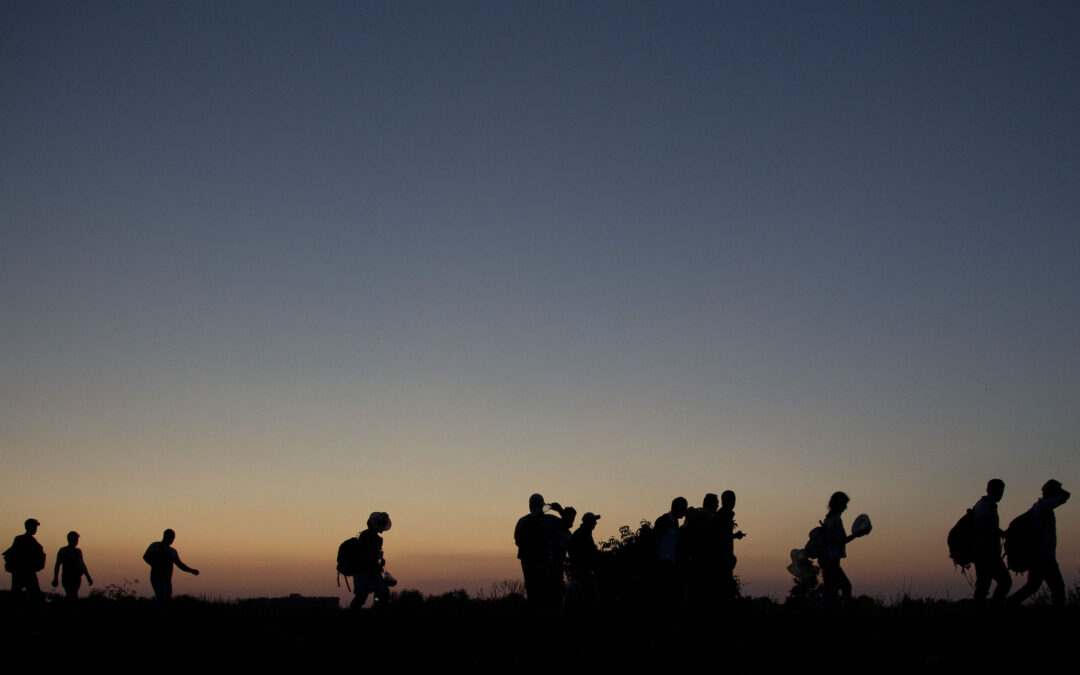
La CIJ a publié une série de principes sur le rôle des magistrats et des avocats en relation avec les réfugiés et les migrants.
Ces Principes ont été élaborés par la CIJ, à la suite de consultations, dont le Forum de Genève 2016 des magistrats et avocats et la session du Conseil des droits de l’Homme de l’ONU en mars 2017, et sur la base des études mondiales, de l’expérience et des compétences de la CIJ.
Bien que la CIJ entende traduire, à travers les Principes, le soutien le plus large possible des personnes consultées, ces Principes ne reflètent pas nécessairement le point de vue de tous les participants à la consultation.
Ils traitent essentiellement du rôle des magistrats et des avocats, y compris des procureurs. Toutefois, la CIJ exhorte les législateurs, les représentants de l’exécutif et toutes les autres personnes exerçant d’autorité publique de jure ou de facto (en tant que fonctionnaire, par mandat de l’État ou par contrat), à mettre en œuvre, à maintenir et à respecter le rôle des magistrats et des avocats dans la protection des droits des réfugiés et des migrants, notamment ceux énoncés ci-après.
Les Principes devraient être renforcés par un cadre juridique, des politiques et des pratiques plus larges qui garantissent et appliquent les droits de l’Homme et l’état de droit au sein des États ainsi qu’à l’échelle régionale et nationale.
Dans ces principes, l’expression « réfugiés et migrants » doit être interprétée au sens large et prise dans son ensemble. Elle inclut, sans s’y limiter, les demandeurs d’asile, les apatrides, les victimes de trafics d’êtres humains, les enfants non accompagnés ou séparés ainsi que toute autre personne en situation de migration.
Elle s’applique même si l’arrivée, la présence ou la résidence d’une personne est considérée comme irrégulière par le droit national.
Les Principes visent à compléter et orienter l’application d’instruments internationaux existants relatifs à la protection des réfugiés et des migrants, y compris et sans limitation :
- la Déclaration universelle des droits de l’Homme,
- la Convention relative au statut des réfugiés et son protocole,
- le Pacte international relatif aux droits civils et politiques et le Pacte international relatif aux droits économiques, sociaux et culturels,
- la Convention internationale sur la protection des droits de tous les travailleurs migrants et des membres de leur famille,
- la Déclaration de New York pour les réfugiés et les migrants ainsi que l’ensemble des traités et des normes régionales en la matière.
Les Principes traitent du rôle des juges et des avocats en lien avec les aspects suivants, parmi d’autres:
- Détermination du droit en protection internationale;
- Privation de liberté
- Expulsions
- Recours effectifs et accès à la justice
- Indépendance, impartialité et égalité devant la loi;
- Conflits entre droit national et international;
Les Principes, avec commentaires, peuvent être téléchargés en français et au format PDF: Principes sur le rôle des magistrats et avocats en relation avec les réfugiés et les migrants
May 4, 2017 | News
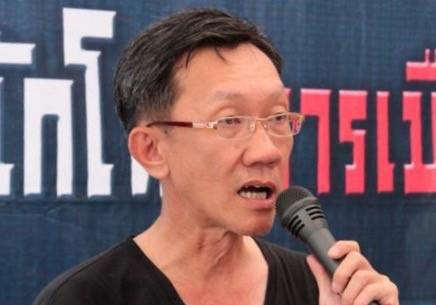
Thailand should immediately end the practice of arbitrarily detaining persons in unofficial places of detention said the ICJ today.
The statement came after it was revealed that human rights lawyer, Prawet Prapanukul, who had been arbitrarily detained for five days at a detention facility inside a military base in Bangkok, finally appeared and was charged at the Bangkok Criminal Court on 3 May 2017.
During the morning of 29 April 2017, military officers invoked Head of National Council for Peace and Order (NCPO) Order 3/2015 to arrest Prawet Prapanukul and search his residence in Bangkok, seizing a number of items located at the property including computers, phones and hard-drives.
The whereabouts of Prawet Prapanukul were unknown until the afternoon of 3 May 2017, when Prawet Prapanukul contacted several lawyers including Thai Lawyers for Human Rights (TLHR) and said he had been held at the Nakhon Chaisri temporary remand facility inside the 11th Army Circle military base in Bangkok.
“Prawet Prapanukul’s five-day incommunicado detention without being brought before the courts or access to legal counsel amounts to an arbitrary detention in violation of his rights under international law and consequently he should be provided with appropriate reparation,” said Kingsley Abbott, the ICJ’s Senior International Legal Adviser for Southeast Asia.
“To ensure the protection of all persons while in detention, Thailand has a duty to detain people in officially recognized places of detention, to have their names and places of detention made available to interested persons and to bring them before a court without delay within 48-hours,” he added.
According to TLHR, on 3 May 2017, Prawet Prapanukul was charged with ten counts of the highly restrictive crime of lese majeste (article 112 of the Criminal Code), three counts of a sedition-like offence (article 116 of the Criminal Code), and violation of article 14(3) of the Computer Crime Act.
The ICJ has previously raised concerns about abusive recourse to these laws.
Pursuant to article 91(3) of the Thai Criminal Code, it is possible that, if convicted of these charges, Prawet Prapanukul could receive a maximum sentence of 50-years imprisonment.
“Freedom of expression, as protected under international law, must never be criminalized. In any event, imprisonment is never a proportionate penalty for the exercise of free expression, let alone the unthinkable possibility of 50-years, which would set a new recorded record for a sentence for lese majeste,” Abbott said.
On 25 April 2017, after reviewing Thailand’s compliance with its obligations under the International Covenant on Civil and Political Rights (ICCPR), to which Thailand is a State Party, the Human Rights Committee, the international expert body charged with supervising the implementation of the ICCPR, issued its Concluding Observations in which it noted that in Thailand “individuals were reportedly often detained without charge and held incommunicado at undisclosed places of detention for periods of up to seven days, with no judicial oversight or safeguards against ill-treatment and without access to a lawyer.” The Human Rights Committee observed that Thailand should immediately release all victims of arbitrary detention and provide them with full reparation.
“The fact that Thailand arbitrarily detained Prawet Prapanukul at a military facility just five days after the Human Rights Committee issued its Concluding Observations criticizing Thailand’s practice of detaining people incommunicado in undisclosed placed of detention demonstrates a worrying contempt for its international human rights obligations as pointed out by the Committee,” Abbott added.
Contact
Kingsley Abbott, ICJ Senior International Legal Adviser for Southeast Asia, t: +66 94 470 1345 ; e: kingsley.abbott(a)icj.org
Thailand-Prapanukul-detention-News-2017-ENG (full text with background, in PDF)
Thailand-Prapanukul-detention-News-2017-THA (Thai version, in PDF)