Nov 17, 2016 | Événements, Multimédia, Nouvelles
7ème Forum annuel de juges et avocats à Genève, 17-18 Novembre 2016
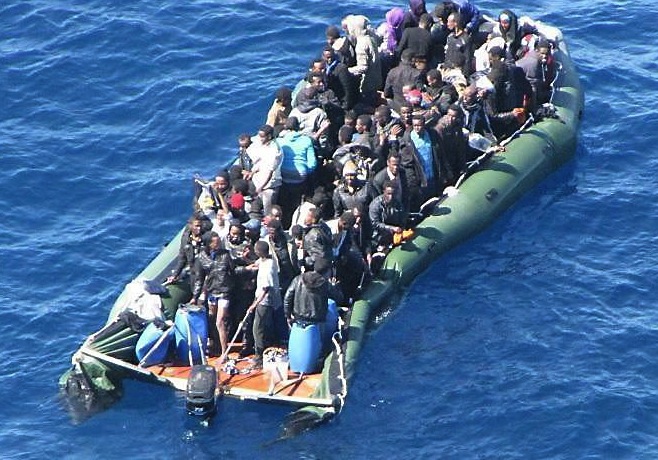
Le septième Forum annuel de juges et avocats, qui aura lieu à Genève les 17 et 18 novembre 2016, réunira juges et avocats provenant du monde entier, ainsi que les agences des Nations Unies concernées à Genève, afin de discuter du rôle des juges et des avocats dans les situations de déplacements massifs de réfugiés et de migrants.
Les participants réfléchiront aux défis pratiques, juridiques et de nature politique soulevés par les mouvements contemporains de réfugiés et de migrants actuels, perçus comme exceptionnels par leur ampleur et leur rapidité.
Les situations particulières considérées visent notamment celles en Europe (avec des personnes venant principalement de et par l’Afrique du Nord et le Moyen-Orient, y-compris la Syrie, l’Erythrée, l’Irak et l’Afghanistan); des Amériques (y-compris des personnes se rendant aux États-Unis d’Amérique depuis l’Amérique centrale et l’Amérique du Sud); en Asie (en particulier concernant les Rohingyas à travers l’Asie du Sud-Est, ainsi que les pratiques migratoires impliquant l’Australie et le Pacifique); et à l’intérieur et en provenance de parties de l’Afrique sub-saharienne.
Dans la plupart de ces situations, les protections juridiques disponibles et les rôles respectifs des pouvoirs exécutif, législatif et judiciaire pour la garantie de ces protections, ont fait l’objet de débats.
Les autorités du monde entier ont été confrontés au défi de s’assurer qu’en toutes circonstances, les individus puissent avoir accès à des procédures équitables et effectives vis-à-vis toutes décisions clés relatives à leurs droits et intérêts tels que: les déterminations relatives au droit d’une personne à la protection internationale, notamment les déterminations relatives au statut de réfugié; les décisions concernant la détention ou les poursuites pénales fondées sur l’entrée ou à la présence d’une personne dans le pays; et les décisions concernant l’expulsion ou le transfert ultérieur.
Dans certains cas, les gouvernements se sont radicalement éloignés des procédures ordinaires. Le cadre de « crise » ou d’« urgence » a été de plus en plus invoqué, parfois, afin de réduire les protections et garanties judiciaires et l’accès à la justice.
Le Forum entend se concentrer en particulier sur le rôle des juges et des avocats dans la garantie des droits procéduraux des individus dans de telles situations, et dans l’examen de la constitutionnalité et de la légalité internationale des législations, politiques et pratiques nationales pertinentes.
Les participants au Forum seront invités à analyser les cadres juridiques et des politiques ainsi que les pratiques en la matière aux niveaux national, régional et universel, et à formuler des recommandations sur le rôle spécifique des juges et des avocats dans ces situations, y-compris, à l’égard des pouvoirs exécutif et législatif.
Le principal résultat du Forum sera un ensemble de Principes sur le rôle des juges et des avocats dans les situations de mouvements massifs de réfugiés et de migrants. Les Principes seront élaborés par la CIJ, et ils ne seront pas être attribués aux participants du Forum.
Ces Principes viseront à compléter le Guide des praticiens de la CIJ n°6 de 2011 sur la migration et le droit international des droits de l’Homme.
fr-programme-2016gf-09-11-2016 (Texte complet en PDF)

Nov 14, 2016 | Доклад миссии установления фактов, Доклады, Публикации
В докладе, МКЮ обнаруживает, что системные недостатки в адвокатуре в Азербайджане подорвали ее независимость, что привело к преследованию независимых юристов и мешает им играть свою роль в защите прав человека.
В новом докладе Беззащитные защитники: Системные проблемы адвокатуры Азербайджана, опубликованном сегодня на трех языках, заключают, что внутренние проблемы в организации юридической профессии подрывают ее независимость.
Доклад находит, что Ассоциация адвокатов не действует как самоуправляющийся институт адвокатов, который защищает независимость профессии или поддерживает высокие этические нормы.
Его вспомогательные органы не избираются своевременно, и Ассоциация адвокатов не использует инструменты саморегулирования, которые она имеет в своем распоряжении.
У его членов есть серьезные недостатки в прозрачности и подотчетности.
В докладе определены проблемы в процедуре квалификации юристов, которые страдают от отсутствия объективных критериев оценки и привели к большой нехватке юристов в стране.
Дисциплинарная процедура является особенно слабым местом для юристов и злоупотребляется как средство преследования адвокатов.
В докладе представлены многочисленные случаи преследования юристов, что противоречит международному праву и международным стандартам в отношении независимости юридической профессии.
В нем содержатся рекомендации по решению этих проблем на основе анализа международных норм и стандартов в области прав человека.
В нем также подчеркивается, что независимость и роль юристов должны соблюдаться всеми правительственными учреждениями: исполнительными, законодательными и судебными и всеми государственными органами.
В докладе рекомендуется, чтобы Ассоциация адвокатов пересмотрела свою роль управления профессией и должна начать, через процесс консультаций, реформирование, основанное на принципе независимости и высоких этических стандартах профессии.
Процесс квалификации должен обеспечить наличие достаточного числа юристов для соблюдения принципа доступа к правосудию и эффективного средства правовой защиты от нарушений прав человека.
В отношении дисциплинарной процедуры, она должна быть справедливой, объективной и должна быть направлена на поддержку независимости адвокатов в Азербайджане; она не должна использоваться ни для каких целей, кроме обеспечения высоких профессиональных стандартов, честности и независимости адвокатов.
Доклад доступен на русском и азербайджанском:
azerbaijan-systemic-problems-legal-prof-publications-reports-mission-reports-2016-rus (Русский, PDF)
azerbaijan-systemic-problems-legal-prof-publications-reports-mission-reports-2016-aze (Азербайджанский, PDF)

Nov 14, 2016 | News
The Philippines government must immediately halt its initiative to restore the death penalty to the country after abolishing the practice a decade ago, said the ICJ today.
The ICJ received reports that the Sub-Committee on Judicial Reform of the House of Representatives of the Philippines has commenced hearings on a bill bringing back the death penalty into Philippine domestic laws.
The first hearing reportedly occurred on 8 November 2016.
It took place without adequate notice, preventing important stakeholders from participating or giving input.
“President Rodrigo Duterte’s administration seems to be hell-bent on returning to the bad old days of executing people,” said Sam Zarifi, ICJ’s Asia director.
“Reinstating the death penalty would breach the Philippines’ international legal obligations and would constitute an all-out assault on decades of global advances in protecting the right to life through abolition of this barbarous practice,” he added.
Under international standards, including the International Covenant on Civil and Political Rights, States may not reintroduce the death penalty once it has been abolished.
The ICJ considers that the death penalty constitutes a violation of the right to life and the prohibition on cruel, inhuman or degrading punishment.
“There appears to be a deliberate strategy on the part of the House of Representatives to circumvent meaningful consultations and a full debate on this unconscionable measure,” said Zarifi.
“The ramifications on the Philippines’ obligations under international law appear not to have been properly considered by legislators who proposed the measure bringing back the death penalty.”
Until now the Philippines had set an example of regional and global best practice on the abolition of the death penalty.
It abolished the death penalty in 2006 and became the first member of the Association of Southeast Asian Nations (ASEAN) to become party to the 2nd Optional Protocol to the ICCPR on the abolition of the death penalty.
The 2nd Optional Protocol provides for no possibility of denunciation or withdrawal and the Human Rights Committee has affirmed that States Parties may not withdraw from this treaty.
Moreover, the Committee has stressed that under the ICCPR, no abolitionist State may lawfully reintroduce the death penalty under Article 6 on the right to life, whether or not they are party to the 2nd Optional protocol.
“The Philippines Congress must perform its role as an equal branch of the government and stop such a horrific move backwards for the country,” Zarifi added.
“Filipino legislators must question the government as to why it’s even considering such an action, especially at a time when the country is facing an outbreak of extrajudicial executions with apparent government complicity.”
On 31 May 2016, the ICJ wrote to President Rodrigo Duterte underscoring that the death penalty was not only an affront to human rights, but that it had no demonstrable deterrent effect on addressing serious crime.
The ICJ pointed out that investing in improved investigation techniques and capacity, and making other needed reforms to the criminal justice system would be the best way to reduce crime.
Contact:
Emerlynne Gil, ICJ’s Senior International Legal Adviser for Southeast Asia, t: +66840923575 ; e: emerlynne.gil(a)icj.org
Nov 11, 2016 | News
The ICJ today condemned efforts by a group of States led by the African Group of the UN Members States to halt the work of the UN Independent Expert charged with protecting people from discrimination and violence based on sexual orientation and gender identity (SOGI).
The organization said that the move constituted an unwarranted interference with the independence and capacity of the Human Rights Council to discharge its mandate for the promotion and protection of all human rights and fundamental freedoms for all, without discrimination.
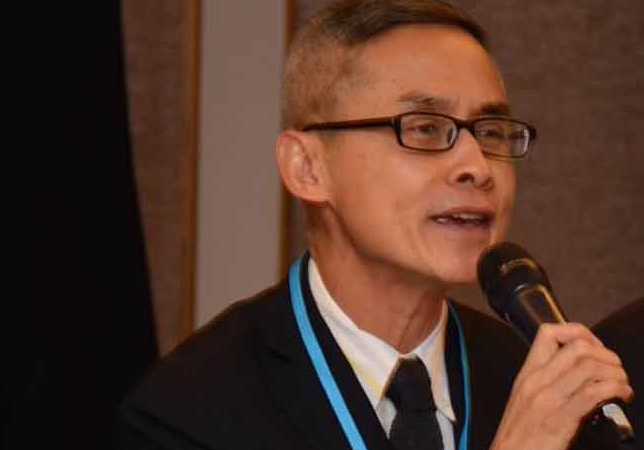
On 3 November 2016 Botswana on behalf of the African Group introduced a draft resolution before the Third Committee of the UN General Assembly in New York questioning the authority for the mandate of the Independent Expert Vitit Muntarbhorn (photo) and deferring action indefinitely on confirming the mandate’s establishment.
The ICJ is calling on the African Group to withdraw its draft resolution.
If a vote on the resolution does go ahead, the ICJ said that States must resoundingly reject it and send a signal to the world that the rights of all persons must be protected on an equal basis and that the UN Human Rights Council is capable of acting to secure such protection.
The ICJ considers that adoption of the resolution would represent a dramatic setback to the Human Rights Council’s efforts to tackle violence and discrimination based on SOGI.
Each year, the Third Committee of the UN General Assembly considers the Human Rights Council’s annual report.
This year, that report contains Human Rights Council resolution 32/2 on Protection against violence and discrimination based on sexual orientation and gender identity.
The Human Rights Council’s adoption of resolution 32/2 on 30 June 2016 made history by establishing the first-ever mandate of an Independent Expert of the Human Rights Council on protection against violence and discrimination based on SOGI.
In September this year the Human Rights Council appointed Prof. Vitit Muntarbhorn of Thailand to discharge this mandate.
Since then, Prof. Muntarbhorn has duly taken up his position and has begun fulfilling this work.
The draft resolution that the African Group has tabled at the Third Committee questions the basis in international law for the establishment of the Independent Expert’s mandate on SOGI and seeks to defer action on Human Rights Council resolution 32/2 indefinitely.
Since the Human Rights Council was set up in 2006, none of its resolutions mandating the establishment of a Special Procedure has ever been challenged by the General Assembly.
The ICJ considers that the adoption of the African Group’s resolution would set an extremely detrimental and regressive precedent by blocking the Human Rights Council from carrying out its own mandate.
It would undermine the UN’s preeminent human rights body’s overall authority by sapping its independence and ability to fulfil its mandate for the promotion and human rights for all without discrimination as it sees fit.
Contact
Livio Zilli, ICJ Senior Legal Adviser and UN Representative, t: +41 22 979 38 23 ; e: livio.zilli(a)icj.org
Read also
What is the Future of the SOGI Mandate and What Does it Mean for the UN Human Rights Council?
Nov 11, 2016 | Agendas, Events
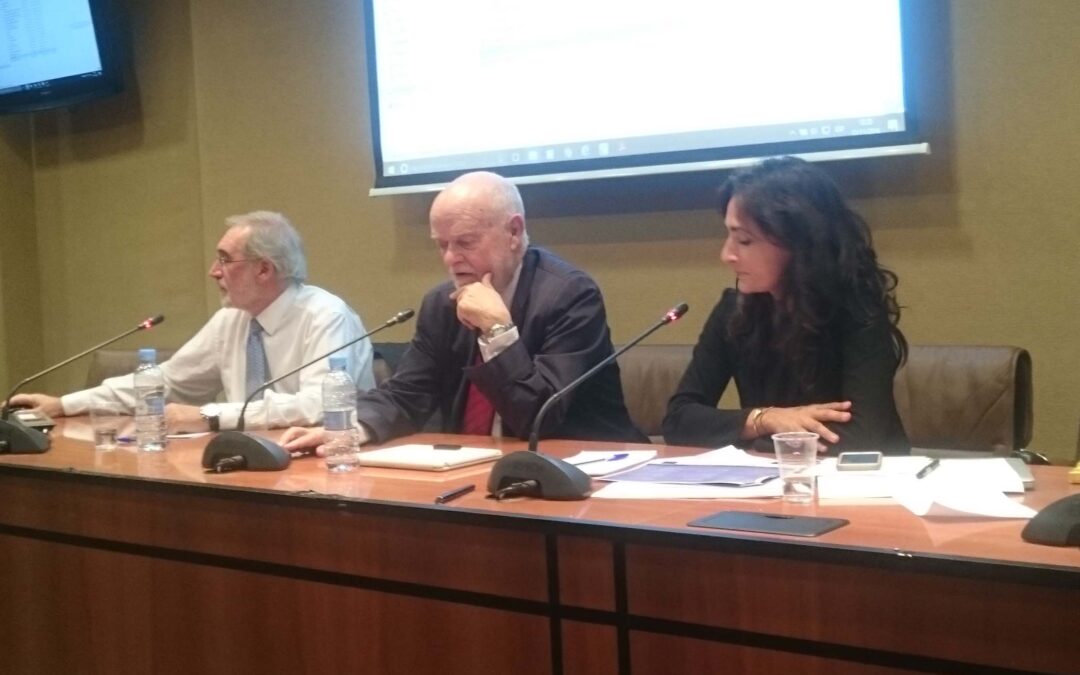
The ICJ and Foundation Raices are holding a training on the rights of migrant children and on accessing international human rights mechanisms from 11 to 12 November in Madrid (Spain).
The training aims to support the strategic use of national and international mechanisms to foster children’s access to justice.
The training will focus on accessing the international mechanisms in order to protect and promote the rights of migrant children, the child’s right to be heard and related procedural rights, the best interests of the child, age assessment and the presumption of minority.
Trainers will include representatives of the ICJ and Foundation Raices, as well as experts from the Committee on the Rights of the Child, the Spanish Constitutional Court and the office of the Spanish Ombudsman.
The training is based on draft training materials prepared by the ICJ (to be published in the second half of 2017) and the ICJ Practitioners Guide no. 6: Migration and International Human Rights Law.
The training is organized as part of the FAIR project co-funded by the Justice and Equality Programme of the EU and OSIFE.
Download the agenda of the training here:
spain-fair-training-events-agenda-2016-eng (in PDF)