Sep 18, 2016 | News
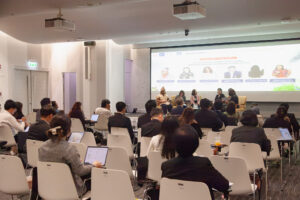
The ICJ held a workshop on Environmental Impact Assessment in Kyauk Phyu on 17-18 September 2016. Thirteen women and 30 men attended from Kyauk Phyu town, its surrounding villages and the regional capital Sittwe.
Kyauk Phyu is the proposed site for a megaproject to include a Special Economic Zone and deep seaport in Myanmar’s westernmost Rakhine State.
A Chinese company plans to develop the projects and the newly elected Myanmar Government is considering its future.
The EIA workshop included lawyers and civil society representatives as well as village administrators from each of the nine village administrative tracts in the proposed SEZ area.
An EIA is designed to avoid, minimize, eliminate and reduce harmful impacts of development projects.
It can require revising plans, making alternative arrangements and even cancelling project components.
Myanmar law now requires EIAs, including in SEZs, under the 2014 SEZ Law and 2015 EIA Procedure. Health, livelihood and social impact assessments are critical to this process.
Projects may only commence after the Environment Ministry approves an EIA.
Sean Bain, ICJ Legal Consultant for Myanmar, shared updates from research on SEZ legal frameworks and project plans.
The ICJ’s Legal Researcher, U Hayman Oo, facilitated discussions and linked these laws with local developments.
Participants were encouraged to document their land and livelihoods so they may have an evidence base to refer to in future.
Matthew Baird, an environmental lawyer supporting both the Environment Ministry and civil society groups, outlined each step involved in an EIA.
He emphasized the importance of public participation throughout the process – particularly in the early screening and scoping stages.
Early community engagement is critical to influence the focus and scope of the investigation, which would inform the draft EIA Report developed by an EIA consultancy firm.
Daw Khin Su Su Naing, from Coffey, explained the role of the consultancy firms hired by companies to conduct EIAs.
She described how social impacts are assessed, providing examples from elsewhere in Myanmar. Public participation was again emphasised as crucial.
U Mya Hlaing, from the Thilawa Social Development Group, shared community experiences from the development of Myanmar’s only active SEZ – located in Thilawa, across the river from Yangon. Villagers resettled by the project remain concerned about the standard of relocation sites and loss of livelihood opportunities.
Community organizing in Thilawa has been an important factor in improving public participation in EIA and resettlement processes.
Dr Daniel Aguirre, the ICJ’s International Legal Adviser, discussed international business and human rights frameworks, and the monitoring role of civil society.
From Earth Rights International, U Zaw Zaw explained how an Operational Grievance Mechanism can be a useful tool for creating a communication channel between affected people and companies.
An OGM cannot solve all problems, but can help to discuss issues and remedies as they arise.
Many participants have experienced impacts from irresponsible and at times illegal business activities.
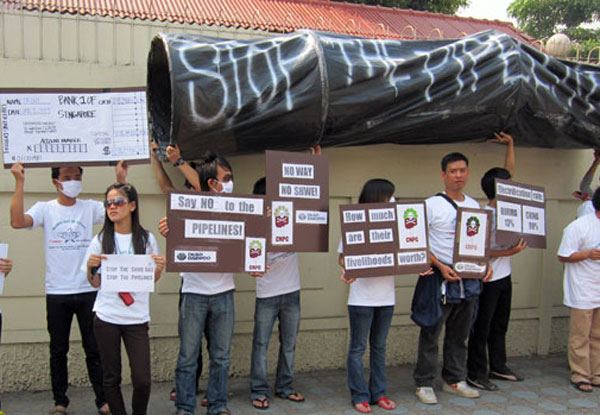
Kyauk Phyu hosts oil and gas facilities that serve a pipeline, finished in 2013, linking the Bay of Bengal with western China. No public EIA was conducted, and locals say the pipeline project led to land loss, deteriorating livelihoods and environmental pollution.
Many are still owed compensation and some were imprisoned for protesting to demand remedies.
Workshop participants expressed concerns that these problems will be repeated.
U Mya Hlaing encouraged locals in Kyauk Phyu to review the legal procedures and understand government obligations: “I am just a poorly educated farmer, but I have carefully read the laws and it has helped our community to demand our rights.”
He encouraged participants to raise concerns with Myanmar’s new governance bodies for SEZ management.
This was the ICJ’s third event in Kyauk Phyu over two years, with further initiatives planned.
Sep 16, 2016 | News
Indian authorities have detained a Kashmiri human rights activist after stopping him from traveling to the United Nations Human Rights Council in Geneva, Human Rights Watch and the ICJ said today.
Khurram Parvez was arrested in his home on 15 September 2016, a day after being prevented from leaving the country with a group of rights activists who were traveling to Geneva to raise concerns about the security force crackdown in Jammu and Kashmir.
Human Rights Watch and the ICJ call on authorities to immediately release Parvez and allow him to attend the Human Rights Council session.
“Indian authorities seem to have missed the irony of blocking a rights activist on his way to the UN Human Rights Council,” said Sam Zarifi, Asia Director at the International Commission of Jurists.
“Monitoring and engage
ment by civil society is necessary to prevent human rights violations and ensure accountability. The Government should immediately release Khurram Parvez and begin working with him and other activists to address the difficult issues facing Jammu and Kashmir,” he added.
Parvez, 39 years of age, is chair of the Asian Federation Against Involuntary Disappearances (AFAD) and program coordinator of the Jammu Kashmir Coalition of Civil Society (JKCCS).
He has documented cases of enforced disappearances and investigated unmarked graves in Kashmir.
According to his lawyer, Parvez has been detained by Kashmir police under “preventive detention” provisions of the Code of Criminal Procedure, including section 151 (arrest to prevent the commission of cognizable offense).
The Government’s actions against Parvez violate his right to freedom of movement.
Under international human rights law, any restrictions on freedom of movement for security reasons must have a clear legal basis, be limited to what is necessary and be proportionate to the threat.
This is further supported by article 5 of the UN Declaration on Human Rights Defenders, which states that “[f]or the purpose of promoting and protecting human rights and fundamental freedoms, everyone has the right, individually or in association with others, at the national and international levels… to communicate with nongovernmental or intergovernmental organizations.”
“Instead of trying to silence human rights activists, India should be addressing the serious human rights problems in Jammu and Kashmir and holding perpetrators of abuses to account,” said Meenakshi Ganguly, South Asia Director at Human Rights Watch.
“Preventing open discussion of these issues, whether in India or in Geneva, sends a message to Kashmiris that the government has no interest in addressing their concerns,” she added.
Background
Violent protests broke out in Jammu and Kashmir state after the killing of Hizb-ul-Mujahedin militant Burhan Wani in an armed encounter on 8 July.
Since then, the authorities have placed large parts of the state under curfew restrictions to try to stop protesters who hurl stones at security forces and attack police posts.
Security forces have used unnecessary lethal force to contain the violence, which has resulted in the death of 80 protesters and 2 police officers, and thousands injured.
Some protesters, including children, lost their vision from pellets fired from riot-control guns.
While police have a duty to protect lives and property, under the UN Basic Principles on the Use of Force and Firearms by Law Enforcement Officials, they should use non-violent means as far as possible, only use force when unavoidable and in a proportionate manner, and use lethal force only when absolutely necessary to save lives, Human Rights Watch and International Commission of Jurists said.
The authorities have also attempted to censor news and restrict access to information.
The Government shut down local newspapers for three days, blocked mobile internet services temporarily, and ordered local cable operators to block the transmission of five news channels on television.
India has failed to address longstanding grievances in Jammu and Kashmir.
Numerous expert committees in India have recommended steps to address past human rights violations, including a repeal of the draconian Armed Forces Special Powers Act, but the Indian Government has ignored these recommendations.
Contact:
Sam Zarifi, ICJ Asia-Pacific Regional Director, (Bangkok); t:+66(0) 807819002; e: sam.zarifi@icj.org

Sep 14, 2016 | Events
This panel discussion features two Iraqi torture survivors, Salah Hassan Nsaif and Ali Shallal Abbas, who will share their first-hand accounts serious abuse suffered at Iraq’s notorious Abu Ghraib prison, and the role of U.S. contractors in that torture and abuse.
The event organised by the International Commission of Jurists, the International Federation of Human Rights (FIDH), and the Center for Constitutional Rights, takes place 15 September 2016, 11:00-12:00, at the Palais des Nations Room XXVII in Geneva, Switzerland.
CCR Senior Staff Attorney Katherine Gallagher will discuss legal cases, Saleh v Titan and Al Shimari v CACI, brought in the United States on behalf of victims as they seek justice. The cases will be placed in context of broader corporate accountability efforts, including those of the UN Working Group on Mercenaries and the Open-Ended Working Group on a legally binding instrument on transnational corporations and other business enterprises.
Speakers:
Salah Hassan, journalist and photographer for Al Jazeera network and Abu Ghraib torture survivor
Ali Shallal Abbas, Founder and President of the Association of victims of the American and Iranian prisons in Iraq, and Abu Ghraib torture survivor
Katherine Gallagher, Senior Staff Attorney, Center for Constitutional Rights
Carlos Lopez, Senior Legal Adviser, Business and Human Rights, International Commission of Jurists (moderator)
Remarks will also be made by Patricia Arias, Chair of the UN Working Group on Mercenaries.
Following the event, there will be the opening of an art exhibit organized by the UN Working Group on the use of mercenaries. Ms. Arias, Mr. Nsaif, and Mr. Abbas will make remarks, and guests are invited to engage with the photographs, multimedia display, and virtual reality film. The exhibit is open to delegates, NGOs, and the public. “Private Actors in Warfare: Stories from victims of private military and security companies and foreign fighters” will take place at 13:00 – 15:00 in Palais des Nations Room XXIII.
A flyer for the event may be downloaded, in PDF format, here: side-event-pmsc-abu-graib-sept2016
Sep 12, 2016 | News
The Thai junta’s Order today phasing out the prosecution of civilians in military courts is a welcome step but the military government must do much more to comply with its international human rights obligations, said the ICJ today.
Head of the National Council for Peace and Order (NCPO) Order 55/2016, dated 12 September 2016 and issued under Article 44 of the Interim Constitution, phases out the heavily criticized practice of prosecuting civilians before military courts for four categories of offences, including offences against internal security; violation of NCPO orders; possession and use of war weapons; and the highly punitive offence of lese majeste.
The Order only applies to offences committed from the date the Order comes into force – today – and not to past or pending cases.
Since the May 2014 coup, at least 1,811 civilians have been tried in Military Courts, based on information the Judge Advocate General’s Department (JAG) provided to Thai Lawyers For Human Rights (TLHR) in July 2016 and covering the period 22 May 2014 to 31 May 2016.
“Almost 2,000 civilians have faced an unjust process and unfair trials before military tribunals, many of whom were prosecuted simply for exercising their rights to freedom of expression and assembly,” said Sam Zarifi, Asia Director at the ICJ. “All pending cases should be transferred to civilian courts and the convictions of all civilians prosecuted in military courts since the 2014 coup should be set aside.”
Head of the NCPO Order 55/2016 also explicitly affirms that the deeply problematic Head of the NCPO Orders 3/2015 (which replaced nationwide Martial Law on 1 April 2015) and 13/2016 shall remain in force.
These Orders prohibit the gathering of more than five people for political purposes; allow for the detention of civilians in military facilities for up to seven days without charge; and provide appointed “Prevention and Suppression Officers” and their assistants, drawn from the commissioned ranks of the Armed Forces, including the paramilitary Ranger Volunteers, with wide-ranging powers to prevent and suppress 27 categories of crimes including against public peace, liberty and reputation, immigration, human trafficking, narcotics, and weapons. The ICJ considers that these orders are not in accordance with Thailand’s international human rights obligations
“Its now crucial for the military to return responsibility for law enforcement to civilian authorities, and ensure they are properly trained and competent,” Zarifi said. “We hope today’s Order is a step toward returning Thailand to the rule of law and respect for human rights.”
Background
Clause 3 of Head of the NCPO Order 55/2016 notes “As appropriate, the Prime Minister may propose to the National Council for Peace and Order to amend this Order.”
Previously, NCPO Announcements 37/2014, 38/2014 and 50/2014 extended the jurisdiction of Thailand’s military courts to four categories of offences, including offences against internal security, violation of NCPO orders, possession and use of war weapons, and lese majeste.
The prosecution of civilians in military courts is inconsistent with Article 14 of the International Covenant on Civil and Political Rights (ICCPR) – to which Thailand is a State Party – which affirms that everyone has the right to a “fair and public hearing by a competent, independent and impartial tribunal established by law.”
The Principles Governing the Administration of Justice through Military Tribunals sets out principles that apply to state use of military tribunals. Principle 5 states “Military courts should, in principle, have no jurisdiction to try civilians. In all circumstances, the State shall ensure that civilians accused of a criminal offence of any nature are tried by civilian courts.”
Contact:
Sam Zarifi, ICJ Asia Pacific Regional Director (Bangkok), t: +66 807819002; e: sam.zarifi(a)icj.org
Kingsley Abbott, ICJ Senior International Legal Adviser, t: +66 9 4470 1345, e: kingsley.abbott(a)icj.org
Download:
thailand-unofficial-translation-head-of-ncpo-order-55_2559-advocacy-2016-eng (full text of Order in English, PDF)
thailand-ncpo-order-55_2559-news-2016-tha (full text of news in Thai, PDF)
Read also:
Thailand: transfer all civilians to civilian courts
Thailand: end prosecution of civilians in military tribunals
Sep 6, 2016 | Новости, Статьи
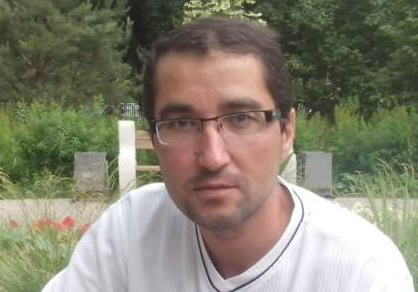
МКЮ выражает сожаление в связи с задержанием и арестом, по спорному обвинению, адвоката из Таджикистана Джамшеда Ёрова.
Адвокат был задержан 22 августа 2016 года и помещен под стражу на два месяца в следственный изолятор г. Душанбе.
Его обвиняют в «раскрытии государственной тайны» по статье 311 часть 1 Уголовного кодекса Таджикистана.
Джамшед Ёров был задержан в понедельник, 22 августа 2016 года. На следующий день Ёров позвонил родственникам, которым сообщил, что находится в полиции под арестом и что его допрашивают в связи с предположительной публикацией в интернете текста засекреченного приговора.
Данный приговор был вынесен по делу тринадцати руководителей и трех членов Партии исламского возрождения Таджикистана (ПИВТ), которые 2 июня 2016 года были приговорены к различным срокам лишения свободы, вплоть до пожизненного.
Джамшед Ёров был защитником Махмадали Хаита, одного из руководителей ПИВТ, получившего пожизненный срок.
МКЮ обеспокоена тем, что решение об аресте Джамшеда Ёрова может быть реакцией на законное осуществление адвокатом своих профессиональных функций по защите Хаита.
Любые подобные неправомерные действия противоречили бы фундаментальному правилу верховенства закона, отраженному в Основных принципах ООН, касающихся роли юристов, в соответствии с которым адвокаты не должны отождествляться со своими клиентами или интересами своих клиентов в результате выполнения ими своих функций.
Кроме того, адвокаты должны иметь возможность выполнять все свои профессиональные обязанности в обстановке, свободной от угроз, препятствий, запугивания или неоправданного вмешательства.
Основные принципы ООН устанавливают, что адвокаты не должны подвергаться судебному преследованию и судебным, административным, экономическим или другим санкциям за любые действия, совершенные в соответствии с признанными профессиональными обязанностями, нормами и этикой, а также угрозам такого преследования и санкций.
МКЮ призывает власти Таджикистана к соблюдению всех международно-правовых обязательств Таджикистана по защите прав человека, в том числе права на справедливое судебное разбирательство, в отношении Джамшеда Ёрова.
В соответствии с правом на свободу, закрепленным в статье 9 Международного пакта о гражданских и политических правах (МПГПП), досудебное содержание под стражей может применяться лишь в исключительных случаях, в качестве крайней меры, и при любых обстоятельствах у соответствующего лица должна иметься возможность ходатайствовать об освобождении под залог.
При производстве по делу Джамшеда Ёрова необходимо всячески принимать во внимание его профессиональные обязанности защитника, а также следует обеспечить, чтобы он не подвергался уголовным или административным санкциям за выполнение своих обязанностей.
МКЮ также обеспокоена тем, что арест адвоката предположительно связан с публикацией «секретного» приговора.
Пункт 1 статьи 14 МПГПП, которая гарантирует право на справедливое судебное разбирательство, предусматривает, что любое судебное постановление должно быть публичным, за исключением тех случаев, когда интересы несовершеннолетних требуют иного или когда дело касается матримониальных споров или опеки над детьми.
В целом, международные стандарты гарантируют право каждого искать, получать, использовать и распространять информацию, которой располагают государственные органы или иные лица, выступающие в качестве их представителей, либо доступ к которой закон предоставляет государственным органам.
Несмотря на наличие некоторых исключений, связанных с соображениями национальной безопасности, они применяются в ограниченных пределах, при условии соблюдения ряда гарантий, которые, как представляется, не были соблюдены по данному делу.
Справочная информация
Данный арест является продолжением серии арестов адвокатов в 2014-2016 гг., которые вызывают серьезную обеспокоенность в связи с защитой права на справедливое судебное разбирательство и соблюдение международных стандартов, касающихся роли юристов, в Таджикистане.
Данные задержания, в том числе арест Джамшеда Ёрова, могут оказать значительное негативное воздействие на готовность защитников представлять клиентов по делам, которым приписывается особая важность, особенно по обвинениям в посягательстве на интересы государственной безопасности, которые рассматриваются в закрытом судебном заседании.
Джамшед Ёров является братом Бузургмехра Ёрова, который был задержан в ноябре 2015 года, а до ареста осуществлял защиту семи членов Политсовета ПИВТ.
Бузургмехр Ёров до сих пор содержится в следственном изоляторе вместе с еще одним адвокатом, Нуриддином Махамовым, который также представлял интересы ПИВТ и был заключен под арест в ноябре 2015 года. Судебное разбирательство по их делу еще не окончено.
МКЮ и другие международные НКО уже выражали обеспокоенность в связи с тем, что данное дело также может быть связано с выполнением адвокатами своих профессиональных функций.
Ранее МКЮ выразила обеспокоенность в связи с осуждением адвоката Шухрата Кудратова по обвинению в мошенничестве и даче взятки. 13 января 2015 года Кудратов был приговорен к девяти года лишения свободы. Несмотря на сообщения о возможной амнистии, обвинительный приговор по его делу остается в силе.
tajikistan-lawyer-yorov-case-news-web-stories-2016-rus (полный текст на русском, PDF)