Mar 15, 2016 | Artículos, Informes, Noticias, Publicaciones
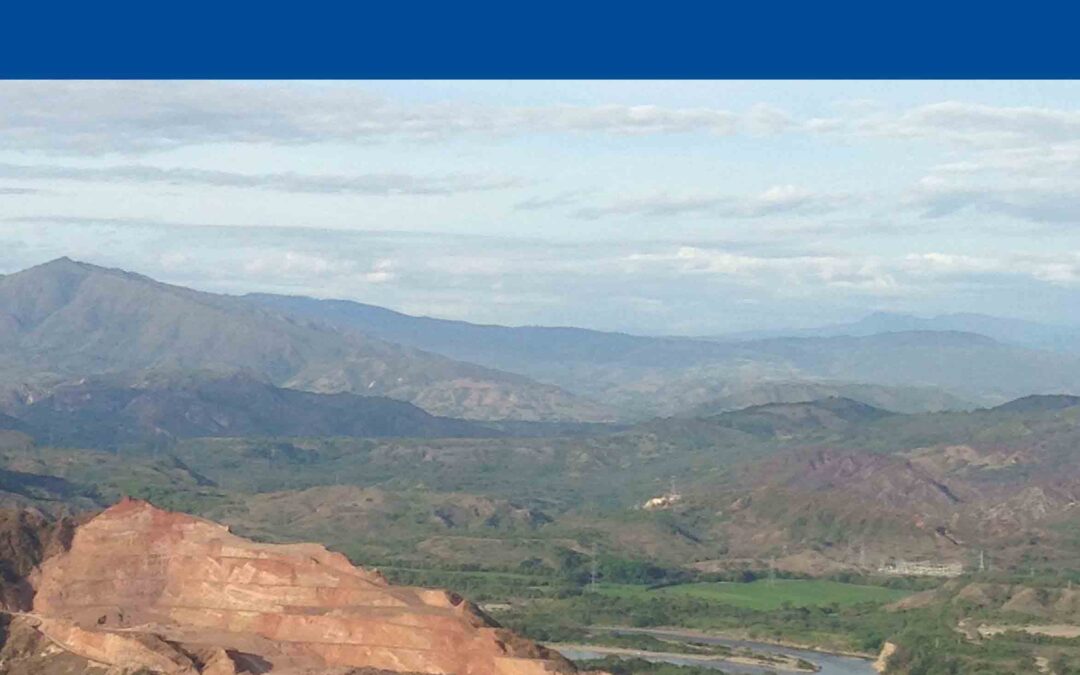
Hoy, la CIJ lanza su Informe de Misión sobre el impacto del proyecto hidrológico de El Quimbo en la vulneración de los derechos económicos, sociales, culturales y ambientales de la población de varios municipios del Departamento del Huila, Colombia.
Asimismo, el Informe da cuenta de la respuesta estatal y de la empresa responsable del proyecto de El Quimbo a las demandas de las comunidades afectadas.
Finalmente, el Informe formula recomendaciones al Estado colombiano, a la empresa responsable del proyecto de El Quimbo y a la Comunidad internacional para garantizar los derechos humanos, la protección del medio ambiente y poner fin a los abusos y exacciones cometidas contra las comunidades.
La Misión de observación visitó a Colombia entre el 15 y el 21 de noviembre de 2015, y estuvo integrada por Philippe Texier y Belisário do Santos Junior, Comisionados de la CIJ por Francia y Brasil, respectivamente, y Sandra Ratjen, Consejera jurídica principal responsable del Programa de Derechos Económicos, Sociales y Culturales de la CIJ. Asimismo, la Misión contó con la asesoría del abogado Alberto León Gómez.
Colombia-ElQuimbo Megaprojects & ESCR-Publications-Facts Finding Mission Report-2016-SPA (full report in PDF, Spanish)
Mar 15, 2016 | News
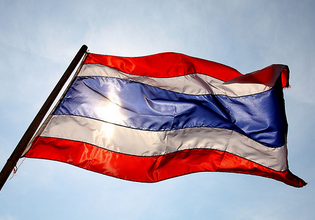
Today’s acquittal of the only person facing charges for the killing of lands rights activist Chai Bunthonglek, highlights the urgent need for the Thai Government to protect human rights defenders in the country, said the ICJ today.
In addition to Chai Bunthonglek, a member of the Southern Peasant Federation of Thailand (SPFT), three other SPFT activists have been killed since 2010: Montha Chukaew and Pranee Boonrat in 2012 and Somporn Pattanaphum in 2010.
No one has been prosecuted for these three killings, reportedly due to insufficient evidence obtained by the police.
“The result in this case underscores the pressing need for the Department of Special Investigations to investigate the pattern of killings of land rights activists in southern Thailand,” said Kingsley Abbott, ICJ International Legal Adviser for Southeast Asia.
Chai Bunthonglek was killed on 11 February 2015. All four SPFT activists killed since 2010 had been advocating for the land rights of poor farmers who are in a dispute with the Government and a palm oil company operated by Jiew Kang Jue Pattana Co. Ltd.
“Today’s acquittal means that no-one has been held accountable for the killing of Chai Bunthonglek, representing another failure to bring to justice those responsible for crimes against human rights defenders and, in particular, those trying to uphold social and economic rights in Thailand,” said Abbott.
“The ICJ calls on the Thai Government to ensure justice and effective remedies for human rights defenders.”
On 15 March, the Viangsra Provincial Court acquitted Santi Wanthong, who was accused of driving the motorcycle from which Chai Bunthonglek, 61-years-old, was shot six times and killed in front of his family in Klong Sai Pattana in Surat Thani Province.
Two other suspects initially arrested for the crime were not indicted.
The DSI has the power to assume jurisdiction over “special” criminal cases including complex cases that require special inquiry, crimes committed by organized criminal groups, and cases where the principal suspect is “an influential person.”
The trial court held today that prosecution witnesses could not properly identify the defendant, and that a cap and gun collected from his house could not be positively identified as belonging to the man who had been involved in attacking Chai Bunthonglek.
Chai Bunthonglek’s family intends to appeal the verdict, the ICJ has been told. They have 30 days to file an appeal.
Witnesses in the case, as well as members of SPFT, have expressed their fear of further attacks. Suraphon Songru, member of the Steering Group of the SPFT, told the ICJ: “the perpetrators – which the community believe may be linked to the local authorities in the area – are still out there, which means another killing could take place.”
The ICJ called on Thai authorities to ensure the safety of all witnesses and ensure the safety of all human rights defenders, including members of SPFT, in Surat Thani.
Background
Santi Wanthong was formally indicted on the following charges: murder of another person (section 288 of the Thai Criminal Code); jointly premeditated murder (section 289 of the Thai Criminal Code); possession of a firearm without a permit (section 371 of the Thai Criminal Code); and possession of ammunition for a firearm without a permit (sections 7, 8 and 72 of the Gun, Ammunition, Explosive Substance, Firework and Artificial Gun Weapon Act).
SPFT was formed in 2008 and campaigns for the right to agricultural land in the Khlong Sai Pattana and Permsub area, in Surat Thani Province and other areas in the region.
Thailand is a state party to the International Covenant on Economic, Social and Cultural Rights (ICESCR) and had its review before the Committee of the ICESCR in June 2015, where the killings of land rights defenders was particularly noted. The Committee urged Thailand to “adopt all measures necessary to protect human rights activists, including those working to defend economic, social and cultural rights, from any and all acts of intimidation, harassment and killings and to ensure that perpetrators of such acts are brought to justice.” The obligation to protect the right to life and other rights of human rights defenders working on economic, social and cultural rights, and to take effective criminal proceedings in response to such crimes, is also an obligation of Thailand under the International Covenant on Civil and Political Rights, and is recognized in numerous UN standards on protection of human rights defenders.
Contact
Kingsley Abbott, International Legal Adviser for Southeast Asia, t +66 94 470 1345 ; e: kingsley.abbott(a)icj.org
Thailand-Chai case-News-2016-THA (full text in Thai, PDF)
Mar 11, 2016 | Новости, Статьи
Сводная мобильная группа известна своей мужественной работой по открытию судебных дел от имени жертв пыток в Чечне. 9 марта они путешествовали вместе с журналистами, когда группа подверглась физическому нападению; их конфиденциальные записи были украдены, а их автомобили сожжены.
Их офисы в Ингушетии также подверглись нападению.
Это часть постоянных угроз и запугивания, направленных против Сводной мобильной группы.
Еще в декабре их офисы в Чечне были полностью сожжены.
Премия Мартина Энналса обеспечивает защиту через рекламу правозащитников, которые работают под личным риском для защиты прав других.
«К сожалению, кажется, что необходимость защиты в этом случае остается столь же актуальной, как и прежде. Мы настоятельно призываем ответственные органы выявить виновных и привлечь их к ответственности», – говорится в заявлении МКЮ.
Лауреат премии выбирается жюри из 10 глобальных правозащитных организаций, включая МКЮ.
Другие члены – Международная амнестия, Human Rights Watch, Human Rights First, МФПЧ – Международная федерация по правам человека, Всемирная организация против пыток (ВОПП), Front Line Defenders, ПАДР Германия, Международная служба по правам человека и HURIDOCS.
Для получения дополнительной информации вы также можете прочитать статьи на BBC, The Guardian, Russia Today и отчет о ПМЭ 2013.
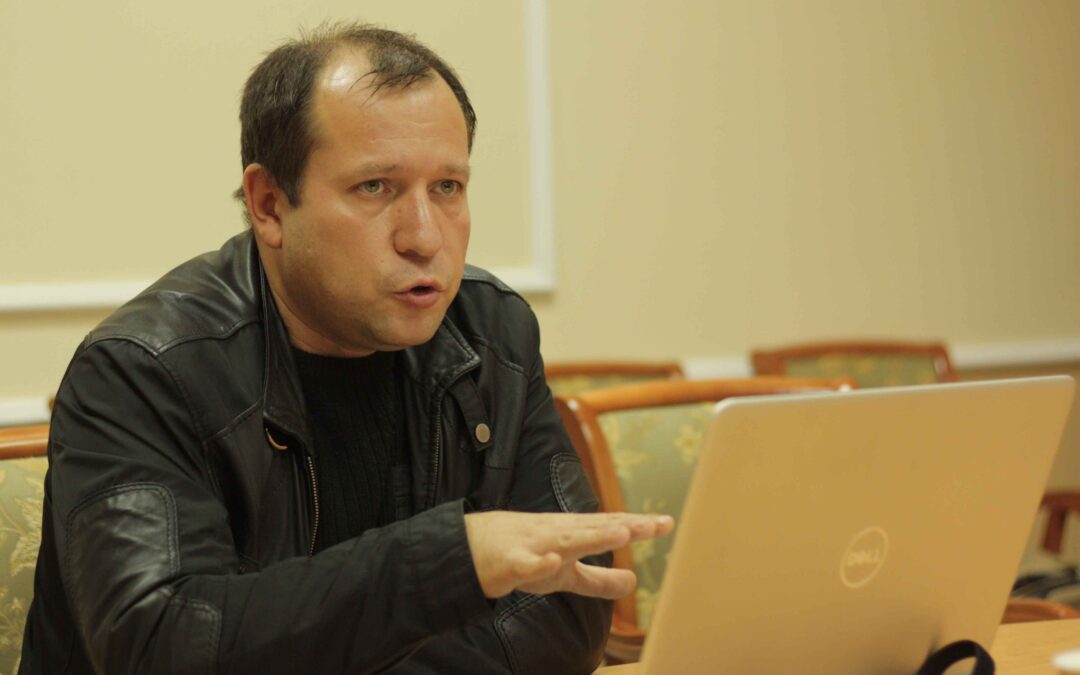
Фотография: Игорь Каляпин, основатель Сводной мобильной группы.
Mar 11, 2016 | News
The Joint Mobile Group is known for its courageous work in opening legal cases on behalf of victims of torture in Chechnya. On March 9th, they were travelling together with journalists and the group was physically attacked, their confidential notes stolen, and the vehicles they were in burned.
Their offices in Ingushetia were also attacked.
This is part of an ongoing pattern of threats and intimidation directed against the Joint Mobile Group.
As recently as December their offices in Chechnya were completely burned.
The Martin Ennals Award provides protection through publicity for Human Rights Defenders who are working at personal risk to protect the rights of others.
“Sadly it appears that the need for protection, in this case, remains as urgent as ever. We urge the responsible authorities to identify the perpetrators and bring them to justice,” the ICJ says.
The Award laureate is selected by a jury of 10 global human rights organizations, including the ICJ.
The other members are Amnesty International, Human Rights Watch, Human Rights First, FIDH – International Federation for Human Rights, World Organisation Against Torture (OMCT), Front Line Defenders, EWDE Germany, International Service for Human Rights and HURIDOCS.
For further information, you can also read articles on the BBC, The Guardian, Russia Today, and the report on the MEA 2013.
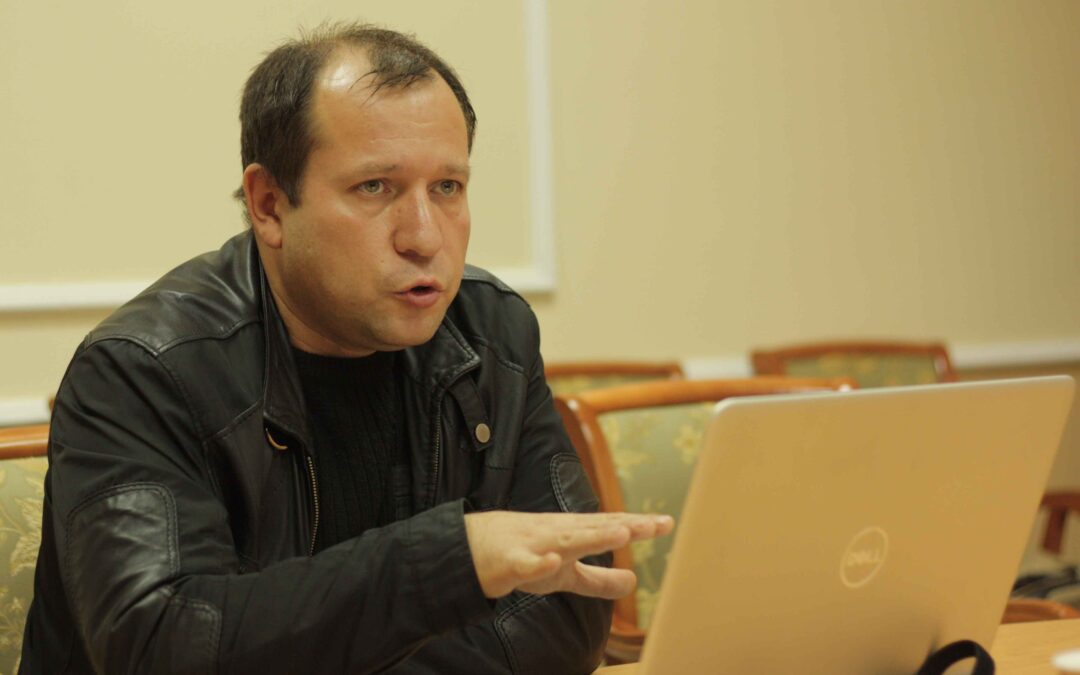
Picture: Igor Kalyapin, founder of the Joint Mobile Group.

Mar 10, 2016 | News
The ICJ welcomes the decision of the Magistrate Court to dismiss the charges against Lena Hendry for her involvement in 2013 screening of No Fire Zone: The Killing Fields of Sri Lanka, an award-winning human rights documentary on the civil war in Sri Lanka.
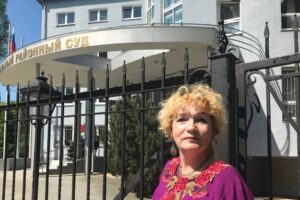
Magistrate Mohamad Rehab Mohd Aris determined that the prosecution failed to prove a prima facie case against Lena Hendry (photo).
As a consequence, she did not have to enter her defense.
“We welcome the decision of the Magistrate’s Court to clear Lena Hendry from all charges,” said Emerlynne Gil, ICJ’s Senior International Legal Adviser.
“We must emphasize though that subjecting Lena Hendry in the first place to criminal prosecution simply for screening this documentary violated her human rights and contravenes Malaysia’s obligations to uphold freedom of expression,” she added.
“We should remember that the provision in the Film Censorship Act 2002 used against Lena Hendry remains on the books and still operative. It can still be used to stifle the voices of other human rights defenders in Malaysia,” Gil further said.
Lena Hendry was charged under section 6(1)(b) of the Film Censorship Act 2002 for allegedly showing the film without prior authorization by the Board of Censors.
The said provision prohibits any person to circulate, exhibit, distribute, display, manufacture, produce, sell, or hire any film or film publicity material that has not been approved by the Board of Censors.
If Lena Hendry had been found guilty, she could have faced a fine of up to RM30,000 (approximately US$6,900) and/or a sentence of up to three years imprisonment.
The ICJ reiterates its call to the Government of Malaysia to safeguard freedom of expression and uphold the right of individuals to elaborate and disseminate information, including on questions of public import and the documentation of human rights abuses.
Contact:
Emerlynne Gil, Senior International Legal Adviser for Southeast Asia, t: +66 840923575 ; e: emerlynne.gil@icj.org