Jun 30, 2015 | News
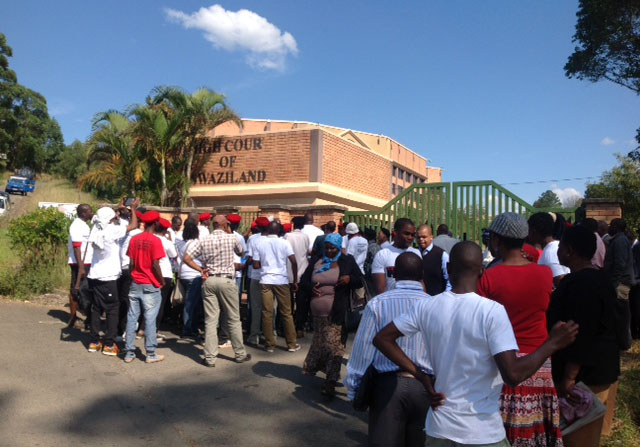
The ICJ welcomes the decision of the Supreme Court of Swaziland to uphold the appeal of imprisoned human rights defenders Thulani Maseko and Bheki Makhubu and ordering their immediate release.
“The decision marks a victory for the rule of law in Swaziland,” said ICJ Secretary-General Wilder Tayler. “We hope that this is but the first of many steps to come in restoring the integrity of the courts and reinforcing the respect for the rule of law that has undergone so much erosion in recent years.”
The ICJ considers that while the release of the two men is a necessary step for justice for the two men, alone it is not enough.
The government of Swaziland should ensure adequate reparation for their wrongful imprisonment.
More broadly, it must engage in legal and structural reforms necessary to ensure the fair and effective administration of justice, the independence of the judiciary and respect for human rights in the country.
Thulani Maseko and Bheki Makhubu were arrested on 17 March 2014 under contempt of court charges for having written articles criticizing the manner in which the then Chief Justice (CJ), Michael Ramodibedi, had handled the case of another defendant, Bhantshana Gwebu.
Mr. Gwebu had been arraigned before the CJ without legal representation, charge sheet or being informed of his rights to apply for bail.
The trial of Thulani Maseko and Bheki Makhubu was riddled with violations of basic due and fair trial principles, as affirmed by the UN Working Group on Arbitrary Detention (WGAD), which ruled on a complaint in Thulani Maseko’s case.
Background
The trial of Thulani Maseko and Bheki Makhubu resulted in their conviction and a two-year prison sentence It was improperly conducted before a presiding judge, Mpendulo Simelane, who was a potential witness and had a direct interest in the case.
They had been in custody since their arrest, save for a three-day release in June 2014, and were due for final release on the 17 July 2015.
The ICJ has previously issued a number of statements after conviction by the High Court, underscoring that the prosecution and trial Court’s judgment had constituted a breach of Swaziland’s obligations to respect the rights to freedom of expression and fair trial.
The UN WGAD opinion issued on 22 April 2015 held that the deprivation of liberty of the accused was arbitrary and in contravention of the Universal Declaration of Human Rights and Swaziland’s obligations under the International Covenant on Civil and Political Rights (ICCPR).
The WGAD also emphasized that Swaziland should release the accused and facilitate the enforceable right to compensation in accordance with article 9 of the ICCPR.
In the appeal hearing yesterday, the Crown conceded most of the legal arguments by defence counsel and in particular that Judge Simelane ought to have recused himself from presiding over the case.
The Supreme Court’s written judgment is expected to be issued at the end of the session of its sitting.
Read also:
Swaziland: ICJ condemns the harsh prison term imposed on Thulani Maseko and Bheki Makhubu
Swaziland: ICJ condemns the conviction of celebrated human rights lawyer and prominent journalist on charges of contempt of court
Swaziland: ICJ concerned at detention of human rights lawyer and journalist
American Bar Association’s statement
Contact:
Arnold Tsunga, Director, ICJ Africa Regional Programme, t +27 716 405 926 or +41 76 239 90 32 e: arnold.tsunga(a)icj.org
Matt Pollard, Senior Legal Adviser, ICJ’s Centre for the Independence of Judges and Lawyers, t: +41 22 979 38 12, e: matt.pollard(a)icj.org
Jun 29, 2015 | News
The ICJ calls on the UN Human Rights Council and the Security Council to respond to the findings of the Independent Commission of Inquiry on the 2014 Gaza Conflict, and fully implement all its recommendations.
This should be done with a view to ensuring accountability, including effective remedy and reparation, for all violations of international humanitarian law and human rights abuses committed by the Israeli Defence Forces (IDF) and by Palestinian armed groups, the ICJ says.
The ICJ further calls on the Human Rights Council to establish an independent mechanism to monitor the implementation of the Commission’s recommendations by both parties.
“Israeli and Palestinian authorities must break the chronic cycle of impunity in the Israeli-Palestinian conflict. All credible evidence of war crimes, such as the Commission of Inquiry has highlighted, must be properly investigated,” said Said Benarbia, Director of the ICJ MENA Programme.
“No one who is responsible, whether military or civilian and regardless how high their office, can be allowed to escape justice,” he added.
The Report published last week, and discussed today at the Human Rights Council, documents serious violations of international law and human rights abuses committed during the conflict, such as indiscriminate attacks, including disproportionate attacks, and direct attacks against civilians and against civilian objects that are not justified under the International Humanitarian Law.
The Commission found that artillery and other explosive weapons had been used in densely populated areas, that entire neighborhoods in Gaza had been destroyed, and that unguided rockets had been used.
As indicated by the Commission, some of those acts may constitute war crimes.
To date, both Israeli and Palestinian authorities have failed to meet their obligations under international law to effectively investigate the violations and to prosecute anyone criminally responsible.
Investigations and criminal proceedings initiated by the IDF’s Military Advocate General (MAG), which is also involved in the planning and execution of the IDF’s military operations, fall short of international standards including in relation to independence and impartiality.
No criminal investigations into violations and abuses committed by Palestinian armed groups appear to have been initiated by the Gaza authorities.
The ICJ calls on both authorities to provide for effective, independent and impartial investigation mechanisms in line with international standards.
Absent such reforms, international justice mechanisms can and should fill accountability and remediation gaps where domestic authorities are unwilling or unable to effectively administer justice.
“Israeli and Palestinian authorities must reform the framework for their current investigations and prosecutions. They must also fully cooperate with international accountability mechanisms, including the preliminary examination initiated by the International Criminal Court,” Benarbia said. “The aim throughout must be to make known the truth about the violations, to identify and hold those responsible to account, to ensure victims’ rights, and to prevent any recurrence.”
Contact:
Theo Boutruche, Legal Adviser of the ICJ Middle East and North Africa Programme, tel: +33 670735747, e-mail: theo.boutruche(a)icj.org
POT-UN Report Gaza -News-Press release-2015-ARA
Jun 26, 2015 | News
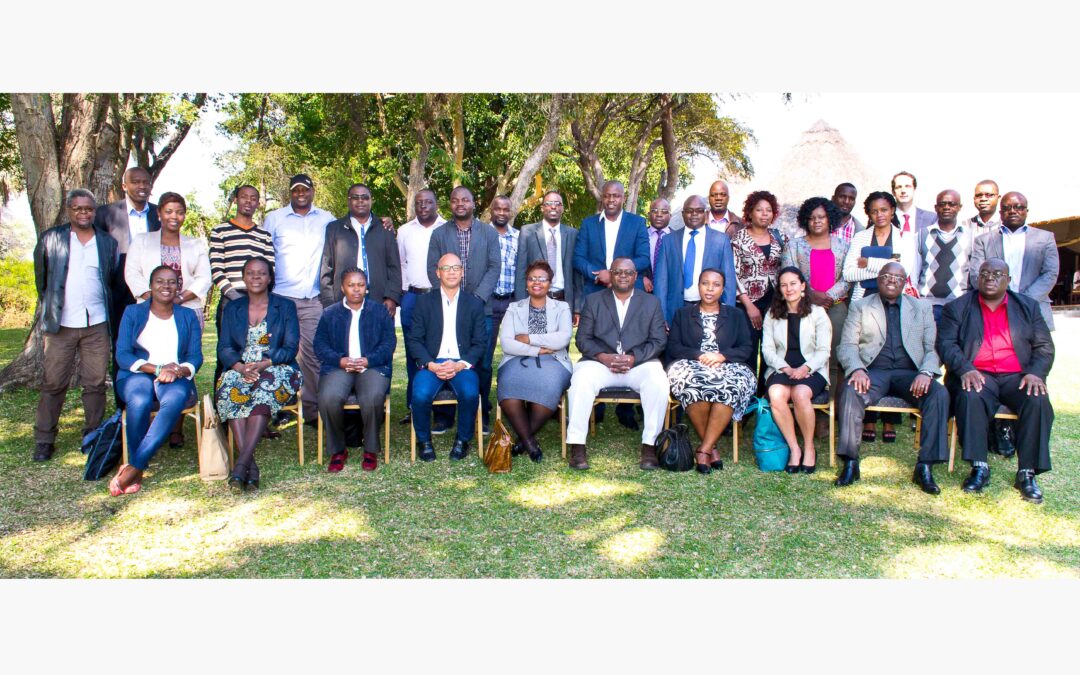
On 24 and 25 June 2015, the ICJ and the Law Society of Zimbabwe (LSZ) organized a 2 day workshop at the A’Zambezi River Lodge in Victoria Falls, on Economic Social and Cultural (ESC) Rights.
It brought together legal practitioners and NGO representatives involved in the protection of economic, social and cultural rights.
The main objective of the workshop was to share knowledge on international and national standards for the guarantee and protection of ESC Rights.
The meeting also sort to consult practitioners on and validate the new ICJ guide on ESC Rights litigation in Zimbabwe.
The Guide on ESC rights seeks to give greater effect to the rights enshrined in the Constitution.
The 2013 Constitution contains a comprehensive bill of rights including ESC rights.
The Constitution includes important provisions and arrangements for the guarantee of accessible and effective remedies including judicial remedies for rights-holders whose rights are violated.
In adopting this new Constitution, Zimbabwe has joined the increasing group of States that have equipped themselves with a domestic law that guarantees and protects all human rights.
This integrates and converges with international human rights law, in respect of which there has been remarkable progress in recognizing the need for specific protection of various categories of rights-holders such as women, children or persons with disabilities.
Judges in domestic courts have a vital role to play in enforcing and interpreting national laws in compliance with the international human rights standards and obligations to which the State has committed.
Judges and lawyers will need enhanced knowledge of this framework and will benefit from comparative experiences in using it.
The guide seeks to respond to this context and these needs. It is this imperative that has also led to ICJ organizing this workshop.

Jun 25, 2015 | News
While welcoming the recent momentum towards finalizing the drafting of a new Constitution, the ICJ said that the Constituent Assembly in Nepal must ensure strong and effective protections for all human rights, consistent with its international human rights obligations.
In addition, they also must ensure that the drafting process is fully inclusive and participatory,
After seven years of political impasse, the devastating earthquake of 25 April 2015 provided Nepali political leaders an opportunity to restore public faith in public authority by reinvigorating the constitutional process.
The country’s four major political parties have now apparently reached agreement on some previously contentious issues and developed a fast-tracked process for the adoption of a new democratic Constitution.
“The horrific earthquake and the government’s response to it has led to a renewed sense of urgency about finalizing and adopting a Constitution that will help create a stable, representative government structure in Nepal consonant with rule of law principles”, Sam Zarifi, ICJ’s Asia director. “The country’s political leaders have a unique responsibility, and opportunity, to adopt a strong, progressive and human rights-compliant constitutional text”.
International law and standards require meaningful public consultation through a transparent and inclusive process. However, the lack of transparency in the current fast-tracked process, combined with the accelerated timeframe, risks undermining people’s ability to participate effectively in the development of the Constitution.
“None of Nepal’s previous Constitutions were the result of meaningful consultation and public participation”, Zarifi said. “The current government must take immediate steps to consult and ensure the participation of all stakeholders, including marginalized groups and minorities”.
The new Constitution must serve to implement the full range of human rights guaranteed under international law. Specifically, while drafting the new constitution, the ICJ urges the Government of Nepal to ensure, among other things, that:
- The new constitution guarantees all of Nepal’s international human rights obligations;
- Permissible limitations on human rights and provisions derogating from rights during emergencies in the new Constitution comply with international human rights laws;
- There is no impunity for gross violations of human rights and serious violations of international humanitarian law committed during the armed conflict, and criminal law is applicable to acts committed at the time;
- The right to effective remedies and reparation for all human rights is recognized;
- Economic, social and cultural rights are recognized as justiciable; and
- Judicial independence is reinforced.
Contact
Nikhil Narayan, ICJ Senior Legal Advisor (Kathmandu), t: +977 9851061167; Email: nikhil.narayan(a)icj.org

Jun 25, 2015 | Новости, Пресс-релизы
МКЮ приветствовала сегодня решения Верховного Суда Кыргызской Республики, признавшего незаконными недавние обыски в домах и в рабочих помещениях адвокатов, и изъятие материалов их дел.
В трех связанных друг с другом делах Верховный Суд оставил в силе выводы Ошского областного суда о том, что обыски домах адвокатов Валериана Вахитов и Хусанбая Салиева и в организации “Бир-Дуйно-Кыргызстан» сотрудниками Государственного комитета национальной безопасности противоречат законодательству Кыргызской Республики.
Суд также отклонил попытки прокуратуры инициировать дисциплинарные меры в отношении судей Ошского областного суда в связи с вынесением ими решений по этим делам.
Данные решения играют важную роль для подтверждения верховенства права в Кыргызской Республике, и будут способствовать укреплению независимости судебной власти и юридической профессии, заявила МКЮ.
«Решения Верховного Суда имеют решающее значение для обеспечения независимости и укрепления юридической профессии и не так давно созданной Ассоциации адвокатов, а также для возможности принятия судьями независимых решений, основанных на законе и фактах», – заявила Ольга Зимарева, один из двух наблюдателей МКЮ, присутствовавших на слушании.
«Это является демонстрацией готовности судебной власти и ее способности эффективно отстаивать верховенство права и защищать фундаментальную роль адвокатов», – добавила она.
Международный пакт о гражданских и политических правах, который является обязательным для Кыргызской Республики, защищает право на справедливое судебное разбирательство, включая адвокатскую тайну.
Кроме того, принцип 16 Основных принципов, касающихся роли юристов, закрепляет обязанность государства обеспечить, возможность выполнения адвокатами всех своих профессиональных функций без каких-либо препятствий, запугивания или неоправданного вмешательства.
Международные стандарты также требуют, чтобы судьи не подвергались дисциплинарным взысканиям за выполнение своих судебных функций, как того добивалась в данном случае прокуратура.
Принцип 2 Принципов ООН о независимости судебной власти разъясняет, что: «Судебные органы решают переданные им дела беспристрастно, на основе фактов и в соответствии с законом, без каких-либо ограничений, неправомерного влияния, побуждения, давления, угроз или вмешательства, прямого или косвенного, с чьей бы то ни было стороны и по каким бы то ни было причинам».
Дополнительная информация
25 марта 2015 года, Умар Фарук, гражданин США и журналист, был арестован сотрудниками Государственного комитета национальной безопасности (ГКНБ), которые изъяли ряд имеющихся у него предметов, включая, визитные карточки адвокатов Валериана Вахитова и Хусанбая Салиева.
28 марта, Умар Фарук был депортирован из Кыргызской Республики в связи с осуществленим сбора информации без аккредитации.
Следователь обратился в суд с ходатайством о производстве обыска в помещениях, занимаемых адвокатами, на том основании, что там могут находиться документы, «необходимые при расследовании уголовного дела». Это было сделано, несмотря на четкие гарантии против подобного вмешательства в соответствии со статьей 29 Закона «Об адвокатуре и адвокатской деятельности Кыргызской Республики», которая закрепляет, что «истребование, изъятие, осмотр, проверка, копирование документов, сбор и использование информации, связанные с юридической помощью по конкретному уголовному делу, допускаются лишь в случае привлечения адвоката в качестве обвиняемого…».
Постановления о производстве обыска в офисе НКО, где работали адвокаты, а также по месту жительства Валерьяна Вахитова и Хусанбая Салиева были вынесены судьями Матисаковым К.М. и Б.Т. Сатыбалдиевым в ходе отдельных заседаний. Сотрудники правоохранительных органов провели обыски в домах адвокатов и офисе правозащитной организации «Бир-Дуйно-Кыргызстан» и изъяли некоторые материалы дел адвокатов.
В заявлении, опубликованном 31 марта 2015 года, МКЮ осудила противоправные действия в отношении адвокатов и подчеркнула, что независимая юридическая профессия имеет основополагающее значение для обеспечения справедливого правосудия и права на справедливое судебное разбирательство для всех лиц, которые предстают перед судом.
Выдача ордеров была успешно обжалована адвокатами в Ошском областном суде, который вынес решение 30 апреля 2015 года. В Верховном Суде, прокуратура требовала подтверждения законности обыска домов и рабочих помещений адвокатов, а также признания законности изъятия материалов дела. Обе гарантии четко защищены национальным законодательством Кыргызской Республики и нормами международного права о роли адвокатов и правом на справедливое судебное разбирательство.
Прокуратура также пыталась добиться возбуждения дисциплинарных мер в отношении судей областного суда, которые вынесли решение в пользу защиты профессиональных гарантий адвокатов, постановив, что обыски и изъятия документов являются незаконными.
На слушаниях в Верховном Суде присутствовали наблюдатели МКЮ: Ольга Зимарева, адвокат, практикующий в Российской Федерации и Алмаз Османова, адвокат в Кыргызской Республике и председатель Лиги юристов Центральной Азии.
24 июня 2015 Верховный суд вынес свои решения, признав обыски и изъятие документов незаконными. Основания для вынесения решения на данный момент опубликованы не были.
МКЮ опубликует юридический анализ дела и решений Верховного Суда в установленном порядке.
Контакты:
Роушин Пиллей, директор Региональной программы МКЮ по Европе, roisin.pillay(a)icj.org
Тимур Шакиров, правовой советник Региональной программы МКЮ по Европе, temur.shakirov(a)icj.org
Kyrgyzstan-Supreme Court Vakhitov Saliyev-News-Press release-2015-RUS (полный текст на русском, PDF)