Apr 20, 2015 | Incidencia
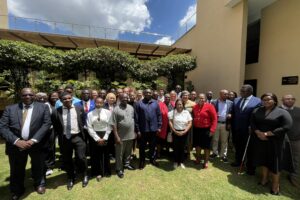
En febrero de 2014, el Representante para Suramérica de la CIJ rindió un dictamen pericial en audiencia pública ante la Corte Interamericana de Derechos Humanos, en el Caso Cruz Sánchez y otros Vs. Perú.
Este caso está referido a la ejecución extrajudicial de tres miembros del grupo armado “Movimiento Revolucionario Túpac Amaru – MRTA”, luego de ser puestos fuera de combate, por las fuerzas de seguridad peruanas en el marco de la llamada “Operación Chavín de Huántar”, de retoma de la Embajada del Japón en Lima (Diciembre 1996 –abril 1997).
El dictamen pericial rendido por la CIJ abordó cuestiones relativas a: i) la naturaleza jurídica de graves infracciones al derecho internacional humanitario; ii) la intervención de la justicia militar en la investigación y juzgamiento de delitos que no son de función y que pueden constituir violaciones a los derechos humanos; y iii) los estándares internacionales relativos a la debida diligencia en la investigación, juzgamiento y sanción de los responsables de violaciones de derechos humanos.
El pasado 17 de abril de 2015, la Corte Interamericana profirió Sentencia en el caso.
Peru-PeritajeFAGChavinHuantar-Advocacy-legal submission-2015-SPA (texto íntegro en PDF)

Apr 20, 2015 | News
The ICJ is concerned at reports that a police official has purported to terminate a lawyer’s representation of a client against the client’s wishes, in violation of the right to fair trial and international standards on the independence and role of the legal profession.
A.J. Uchkempirov, the investigator of the City Department of Internal Affairs (the city police department) of Karakol City, reportedly issued a ruling removing lawyer Nurkyz Asanova from representation of her client, Mr Ishen Abdyrashev.
The ICJ is particularly concerned given that the removal of lawyer Asanova comes while she is representing Mr Abdyrashev in a case alleging that he was subjected to torture by police officers in detention, and subsequently detained at a police officer’s home and forced to carry out unpaid work for one and a half months.
On 29 December 2014, Ishen Abdyrashev, assisted by lawyer Asanova, complained about these events and a criminal investigation was initiated.
The investigation has now been completed and a criminal trial is underway.
On 3 April 2015, Abdrashev himself was charged with robbery, which he denies.
Lawyer Asanova also represents him in the robbery case.
On 14 April, investigator Uchkempirov issued a ruling purporting to remove her, despite Mr Abdyrashev’s opposition.
The purported basis for the ruling was that Lawyer Asanova was in some way interfering with the investigation of the case.
The investigator had no authority under Kyrgyz law to issue such a decision.
Under international standards, such a decision could in any event only be taken by an appropriately independent authority following a regular and fair procedure, which was clearly not the case here.
According to the UN Basic Principles on the Role of Lawyers, for instance, “[n]o court or administrative authority before whom the right to counsel is recognized shall refuse to recognize the right of a lawyer to appear before it for his or her client unless that lawyer has been disqualified in accordance with national law and practice and in conformity with these principles” (Article 19).
This is an important guarantee for the right under international law of every person to be represented by a lawyer of their own choice, as protected by the International Covenant on Civil and Political Rights and recognized by the Basic Principles.
The Principles also recognize, further to the right to fair trial under the Covenant, that it is the obligation of the government to guarantee that lawyers are able to pereform their functions without “intimidation, hindrance, harassment or improper interference” and that they are able to consult with their clients both within their own country and abroad.
The investigator’s decision should be declared void and lawyer Nurkyz Asanova’s right to represent, to communicate with and to visit her client, should be fully recognized and respected.
Furthermore, the authorities must take steps to ensure that there is no further unlawful interference with Ishen Abdyrashev’s right to the lawyer of his choice.
Kyrgysztan-Lawyer Asanova_statement-News-web story-2015-RUS (full text in PDF)

Apr 20, 2015 | Новости, Статьи
МКЮ обеспокоена сообщениями о том, что сотрудник правоохранительных органов попытался отстранить адвоката от дела против воли подзащитного, в нарушение права на справедливое судебное разбирательство и международных стандартов, касающихся независимости и роли юридической профессии.
Сообщается о том, что Aзамат Учкемпиров, следователь ОВД города Каракол, вынес постановление об отводе адвоката Нуркыз Асановой, которая представляет интересы Ишена Абдрашева.
МКЮ выражает особую обеспокоенность в связи с тем, что адвокат Асанова отстранена от защиты клиента, который жалуется на пытки со стороны сотрудников милиции во время содержания под стражей, а также на то, что впоследствии на протяжении полутора месяцев его удерживали в доме одного из сотрудников милиции, где заставляли выполнять различные (неоплачиваемые) работы.
29 декабря 2014 года Ишен Абдрашев при помощи адвоката Асановой обжаловал данные нарушения, и по его заявлению было возбуждено уголовное дело.
В настоящее время следствие уже завершено и дело находится на стадии рассмотрения судом.
3 апреля 2015 года Абдрашеву было предъявлено обвинение в грабеже, совершение которого он отрицает.
Адвокат Асанова осуществляет защиту Абдрашева и по данному делу.
14 апреля следователь Учкемпиров, несмотря на возражения Абдрашева, вынес постановление об отводе адвоката на том основании, что она якобы препятствует проведению расследования по делу.
С точки зрения кыргызского законодательства, следователь не обладает полномочиями по вынесению таких постановлений.
В соответствии с международными стандартами, такое постановление в любом случае может быть вынесено только органом, обладающим надлежащей независимостью, по итогам проведения предусмотренной законом и справедливой проверки, которая явно отсутствовала в настоящем деле.
Так, в соответствии с Основными принципами ООН, касающимися роли юристов, «(н)и один суд или административный орган, в котором признается право на адвоката, не отказывается признавать права юриста отстаивать в суде интересы своего клиента, за исключением тех случаев, когда юристу было отказано в праве выполнять свои профессиональные обязанности в соответствии с национальным правом и практикой и в соответствии с настоящими принципами» (Принцип 19).
Это важная международно-правовая гарантия права каждого лица пользоваться услугами адвоката по собственному выбору, которое защищается Международным пактом о гражданских и политических правах и признается Основными принципами ООН.
Принципы также закрепляют, в дополнение к праву на справедливое судебное разбирательство, предусмотренному Пактом, что правительства обязаны обеспечить, чтобы юристы могли выполнять все свои профессиональные обязанности в обстановке, свободной от «угроз, препятствий, запугивания или неоправданного вмешательства» и чтобы они могли беспрепятственно консультироваться со своими клиентами внутри страны и за ее пределами.
Постановление следователя должно быть признано незаконным, а право адвоката Нуркыз Асановой на защиту своего клиента, общение и свидания с ним должно всесторонне признаваться и соблюдаться.
Кроме того, власти обязаны принять меры, чтобы предотвратить незаконное вмешательство в право Ишена Абдрашева пользоваться услугами адвоката по собственному выбору в будущем.
Kyrgysztan-Lawyer Asanova_statement-News-web story-2015-RUS (полный текст, PDF)
Apr 20, 2015 | News
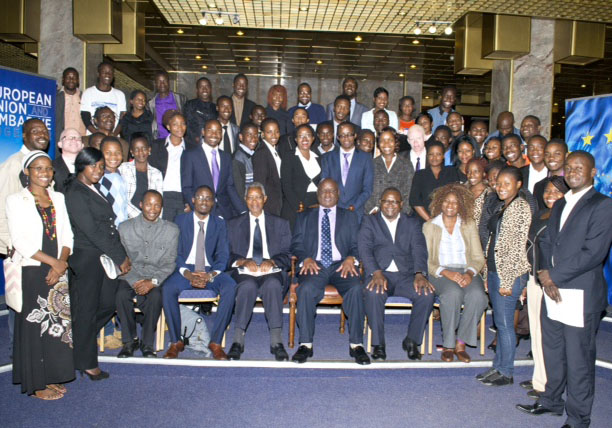
The ICJ and the Zimbabwe Law Students Association (ZILSA) held a symposium on economic, social and cultural rights (ESC rights) on 17 April 2015 at Rainbow Towers Hotel, Harare.
A total of 84 people attended the symposium, 77 being students from the University of Zimbabwe.
The presenters at the symposium were Deputy Chief Justice L. Malaba, Dr V. Guni, Mr. D. Chimbga, Ms R. Rufu and Mr. J Mavedzenge.
Economic, social and cultural rights are a new phenomenon in Zimbabwe’s human rights discourse as they have been introduced into Zimbabwe’s Declaration of rights by the new Constitution of Zimbabwe (Constitution of Zimbabwe Amendment (No.20) Act 2013).
Zimbabwean jurisprudence on ESC rights is therefore still developing.
As a consequence, the notion of the justiciability of ESC rights is one that still requires nurturing if greater protection of these rights is to be achieved.
It was this background that motivated the ICJ and ZILSA to hold this symposium on ESC rights.
The symposium forms part of a broader initiative by the ICJ to ensure ESC rights awareness, education and litigation in Zimbabwe.
Through this symposium, the ICJ and ZILSA sought to provide a platform for law students to engage in an academic discussion on the scope, meaning and enforcement of the ESC rights.
The symposium discussions were meant to increase the students’ knowledge and understanding of ESC rights.
The topics presented at the symposium focused on the historical development and significance of ESC rights, litigation and justiciability of ESC rights under the new constitution and international best practices in the implementation of ESC rights.
The key note address was made by Deputy Chief Justice Malaba, under the topic, “Defining the Role of the Judiciary in the Enforcement of ESC Rights in Zimbabwe”.
The focus of his presentation was how the Zimbabwean judiciary has developed jurisprudence around ESC rights and in particular the approach of the Constitutional Court to the issue of “progressive realization” of ESC rights.
Commenting, after the symposium, Herbert Muromba a 4th year law student and President of ZILSA said: “The Deputy Chief Justice has transformed my understanding of ESC rights. The whole concept is no longer abstract but real, alive and relevant in my everyday life.”
Contact:
Arnold Tsunga, ICJ Regional Director for Africa, t: +27 73 131 8411, e: arnold.tsunga(a)icj.org
Apr 16, 2015 | News
Thailand must strengthen its efforts to solve the apparent enforced disappearance of Karen human rights defender, Pholachi “Billy” Rakchongcharoen, who “disappeared” one year ago this Friday, said the ICJ.
“Thailand must strengthen its efforts to carry out a thorough and effective investigation into Billy’s fate and whereabouts in a manner that complies with its international obligations,” said Kingsley Abbott, International Legal Adviser at the ICJ.
“As part of this process, it is essential that the authorities evaluate the investigation objectively to ensure it has been carried out independently and impartially, that the necessary resources have been allocated, and that all investigative opportunities have been pursued,” he added.
The ICJ reiterates its call for the Department of Special Investigations (DSI) to assume responsibility for the investigation because of the need for the DSI’s special expertise.
The DSI has the power to assume jurisdiction over special criminal cases including complex cases that require special inquiry, crimes committed by organized criminal groups, and cases where the principal is an influential person.
A six-day habeas corpus inquiry monitored by the ICJ and which concluded on 17 July 2014, and a subsequent appeal delivered on 26 February 2015, were unsuccessful in shedding any light on Billy’s fate or whereabouts.
Thailand, as a Party to the International Covenant on Civil and Political Rights, is required to investigate, prosecute, punish and provide a remedy and reparation for the crime of enforced disappearance.
Background
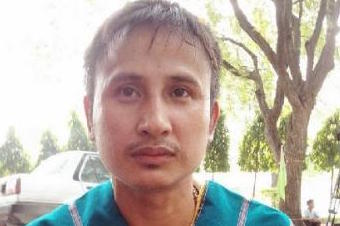
Billy (photo) was last seen on 17 April 2014 in the custody of Kaeng Krachan National Park officials. The officials claimed they detained Billy for illegal possession of honey but released him later the same day.
Billy had been working with ethnic Karen villagers and activists on legal proceedings the villagers had filed against the National Park, the Wildlife and Plant Conservation Department, the Ministry of Natural Resources and Environment, and the former Chief of Kaeng Krachan National Park concerning the alleged burning of villagers’ homes and property in the National Park in 2010 and 2011.
The Royal Thai Government has signaled its recognition of the gravity of the crime of enforced disappearance, and its commitment to combating it, by signing the International Convention for the Protection of All Persons from Enforced Disappearance on 9 January 2012.
The Convention affirms the absolute right not to be subject to enforced disappearance and places an obligation on states to investigate acts of enforced disappearance and to make it a criminal offence punishable by appropriate penalties that take into account its “extreme seriousness”, and to take the necessary measures to bring those responsible to justice.
Contact:
Kingsley Abbott, ICJ International Legal Adviser, t: +66 (0) 94 470 1345 ; e: kingsley.abbott(a)icj.org
Thailand-Billy one year-News-PressRelease-2015-THA (full text in PDF)