Dec 17, 2014 | News
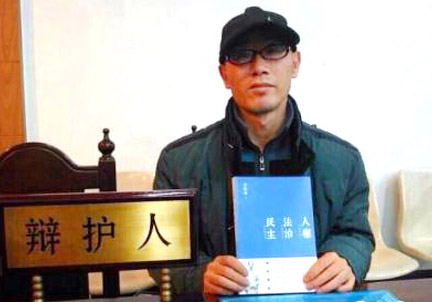
Mr Chang Boyang, whose case ICJ raised in a letter to Chinese President Xi Jinping in September calling for his release, has been released on bail.
Mr Boyang, a lawyer working among other things to promote the rights of persons with disabilities in China, had been arrested and charged for activities that should have been recognized to be well within the scope of his professional role and his freedom of expression and association. The ICJ was informed today that Chang Boyang was released on bail on 29 November.
In another update, the ICJ has also been informed that Beijing-based lawyer Pu Zhiqiang, whose case was also raised in the letter to President Xi Jinping, has had additional charges brought against him. He remains in detention while his case has been sent back to police for further investigation, which is in turn likely to prolong his pre-trial detention. His lawyer reportedly said that Pu has already been interrogated 60 to 70 times, with each session lasting more than 10 hours.
The ICJ has not received any reply to its letter of 1 September 2014 to Chinese President Xi Jinping.
The ICJ remains deeply concerned about the situation of lawyers who raise human rights issues or otherwise act on cases the Chinese government deems to be sensitive. Those held in detention should be immediately released, and all criminal proceedings based on lawyers’ due discharge of their professional functions, or exercise of freedom of expression, association or assembly, must be dropped.
The ICJ Practitioner’s Guide no 1 on independence of judges, lawyers and prosecutors is available here in a variety of languages, including Chinese.
Dec 13, 2014 | News
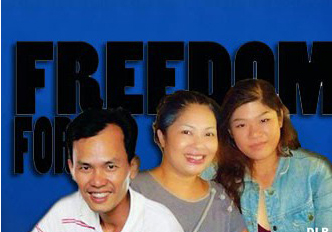
The ICJ condemned decision of the People’s Supreme Court on 12 December 2014 affirming the unfair convictions of human rights defenders Bui Thi Minh Hang, Nguyen Van Minh and Nguyen Thi Thuy Quynh respectively to three, two-and-a half and two years imprisonment.
Dec 11, 2014 | News, Publications, Reports
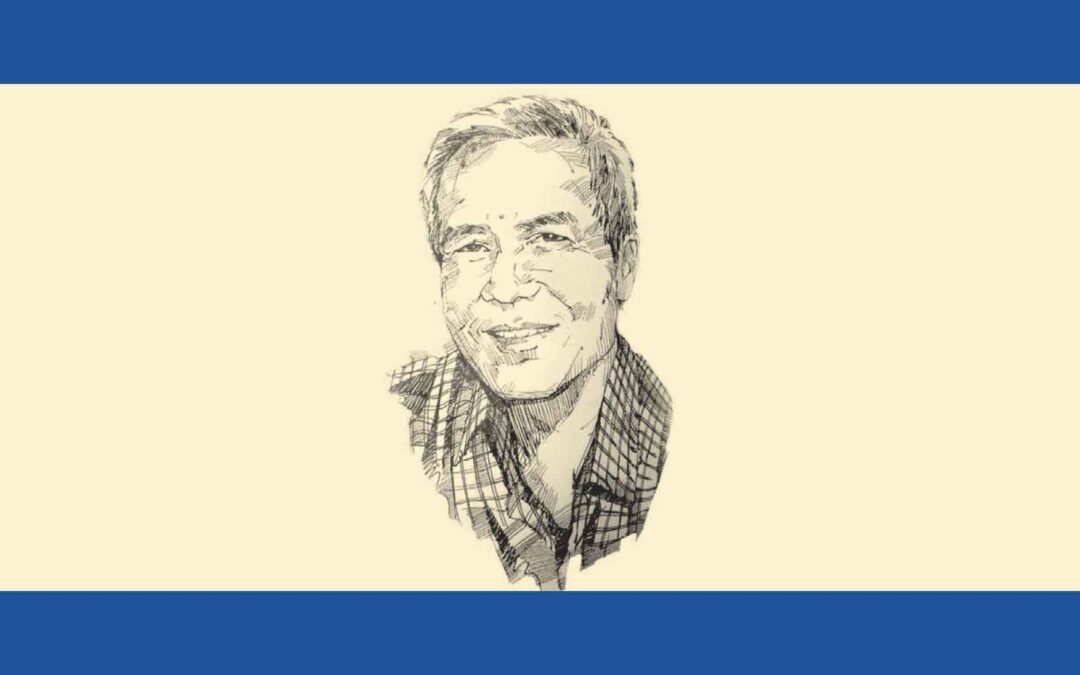
Two years after prominent Laotian activist Sombath Somphone was last seen at a police checkpoint, the Laotian government must do more to investigate his suspected enforced disappearance, said the ICJ in a new report released today.
In the report, Missed Opportunities: Recommendations for Investigating the Disappearance of Sombath Somphone, which was co-authored by Michael Taylor QPM, a leading international investigator, the ICJ noted that despite the passage of two years since Sombath Somphone’s apparent enforced disappearance on December 15, 2012, very little information about the progress of investigation has been released to the public or his family.
“The fact that the Lao PDR government’s last report on the progress of the investigation was released over 18 months ago raises serious concerns as to whether the Laotian authorities are in fact carrying out an effective investigation into this case as they are required to do under international law,” said Sam Zarifi, ICJ’s Regional Director for Asia and the Pacific.
“It is not enough for the Laotian government simply to assert it is investigating this case. International law obliges Lao PDR authorities to conduct an investigation that is credible and effective, along the lines suggested in ICJ’s report.”
Among other recommendations, the ICJ’s report suggests a range of investigative steps that should be addressed by the authorities of Laos PDR including establishing a relationship with Sombath Somphone’s family, carrying out a proper technical assessment of the Closed circuit Television (CCTV) footage of his abduction, analyzing relevant cell phone information from telephone cells and towers, and mandating an independent expert body to review the results of the investigation to date and make recommendations.
The Lao PDR government has denied any involvement in Sombath Somphone’s abduction.
But reports released by police reveal a wholly inadequate investigation that has not come any closer to a credible explanation as to his fate or whereabouts.
“The ICJ hopes that this report will assist the Laotian authorities to identify potential leads in the case so that the truth as to the whereabouts and fate of Sombath Somphone can finally be established and those who are responsible for criminal conduct and violations of his rights can be brought to justice,” said Zarifi.
“One of the conclusions of the ICJ’s review of the publicly available material regarding this case is that this case remains ‘eminently solvable’ if proper investigative methodology is followed.”
Key recommendations in the report include:
- Formulate a sensitive family liaison strategy that ensures that their right to be regularly provided with information about the progress and results of the investigation are respected in a manner that also ensures the effectiveness of the investigation.
- Implement a CCTV strategy that ensures the capture and systematic analysis of all relevant material and the submission of material to accredited independent and expert laboratories that will provide the best opportunity for enhancement of critical detail.
- Seek the assistance of appropriate agencies in other countries in the forensic examination and analysis of crime scenes, vehicles, phone and CCTV data, and any physical or other evidence.
- Ensure an independent comprehensive review of the scope, methodology and results of the investigation to date is carried out by a competent, independent and relevantly expert body. Such a body should have the authority to request and receive all relevant information, question individuals and make recommendations. All officials and experts who have been involved in the investigation to date should cooperate and provide information to the independent body carrying out the review.
Contact:
Sam Zarifi, ICJ Asia Regional Director, (Bangkok), t:+66 807819002, e-mail: sam.zarif(a)icj.org
Kingsley Abbott, ICJ International Legal Adviser, (Bangkok), t:+66 944701345, e-mail: kingsley.abbott(a)icj.org
Background:
Sombath Somphone, Lao PDR’s most prominent community development advocate and a Ramon Magsaysay Award winner, was last seen on December 15, 2012, on a road in the capital Vientiane.
Closed circuit Television footage showed him being stopped at a police checkpoint, exiting his vehicle, and after his vehicle was driven away by an unidentified man, getting into another vehicle with unidentified men and being driven away. He has not been seen since.
As a State Party to the International Covenant on Civil and Political Rights (ICCPR and Convention Against Torture and Other, Inhuman or Degrading Treatment or Punishment (CAT), the Government of Lao PDR has the duty to carry out independent, impartial and effective investigations into cases of alleged enforced disappearance.
Download the report in PDF:
Lao-Somphone disappearance-Publications-report-2014-ENG (full report in English, PDF)
Lao-Somphone disappearance-Publications-report-2014-LAO (full report in Laotian, PDF)
Read also:
Lao PDR: government must tackle enforced disappearance case
ICJ submission on the Universal Periodic Review of Lao
Dec 10, 2014 | News
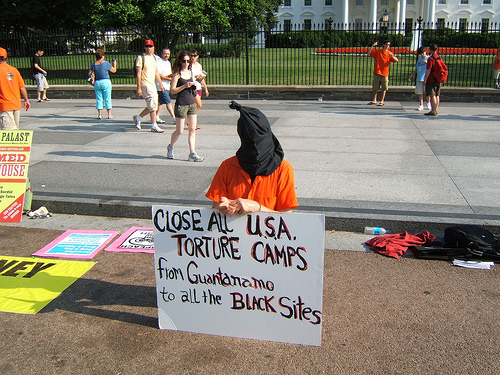
The ICJ repeated its call for the United States to take immediate measures to hold accountable officials for acts of torture, enforced disappearance and other gross human rights violations committed in the course the CIA’s rendition and secret detention programs between 2001 and 2006.
The call follows the release yesterday of a redacted summary of the United States Senate Intelligence Committee’s report on the programs, which highlights appalling abuses committed against at least 119 persons.
The ICJ has also called for the United States to provide access to effective remedies and reparation for the victims of the violations, some of whose identities or whereabouts remain unknown.
The report exposed numerous acts of torture and cruel, inhuman or degrading treatment, including, among others: forced rectal feeding; extreme sleep deprivation for up to a week; sensory disorientation; near drowning through “waterboarding”; confinement in boxes; dousing with cold water; prolonged subjection to painful stress positions; and threats of extreme violence against family members. Some detainees were held in secret detention for years, without any contact with the outside world.
“With the partial release of the Intelligence Committee’s report, the US has finally begun to take the first steps towards acknowledging the truth of the lawless and criminal conduct in which it engaged systematically over the course of years”, said Ian Seiderman, the ICJ’s Legal and Policy Director. “It is now time for the United States to fulfill its international legal obligations and hold the responsible officials criminally accountable and ensure full reparation for the victims.”
To date, no officials have been subject to prosecution for participation in the abuses and all attempts by victims to access justice through judicial and administrative channels have been thwarted by claims of state secrecy.
The report draws attention to the complicity of a number of other States in the rendition and secret detention programs, possibly up to 54 countries according to a study by the Open Society Foundation.
The European Court of Human Rights has already found the former Yugoslav Republic of Macedonia and Poland responsible for violations in this connection, with further cases pending against Lithuania and Romania.
The ICJ also called for the United States to release the entire Senate Committee report, said to number 6700 pages, with only those very minimal redactions of personal data strictly necessary to protect serious threats, such as to children and the privacy interests of victims and their families if they so request.
“Responsibility for these criminal abuses extends not only to the CIA agents who directly carried them out, but also to officials at the highest levels of the executive, who approved and facilitated the practices, and Justice Department lawyers who provided spurious legal cover for them,” said Ian Seiderman.
Torture and enforced disappearance are crimes under international law.
United States treaty obligations, including under the UN Convention against Torture and the International Covenant on Civil and Political Rights require the prosecution of officials responsible for such acts and provision of effective remedies and reparation the victims.

Dec 9, 2014 | News
On the eve of the 64th annual world Human Rights Day, the ICJ urges the Pakistani Government to promptly constitute a strong and effective National Human Rights Commission that is compliant with the UN Principles relating to the Status of National Institutions (Paris Principles).
“Independent and credible national human rights institutions can be helpful for protecting and promoting human rights,” said Sam Zarifi, ICJ’s Director for Asia and the Pacific. “The Pakistan Government has been inexplicably dragging its feet despite repeated promises to constitute the Commission.”
In South Asia, India, Sri Lanka, Nepal and Bangladesh have established National Human Rights Institutions (NHRIs), making Pakistan a regional exception.
“A properly constituted national human rights commission will not by itself fix any country’s human rights problems, but it can be part of the solution,” said Zarifi. “Pakistan can and should learn from the lessons of failed NHRIs in the region and constitute an institution that can address the real needs of all people in the country.”
Pakistan passed the National Commission for Human Rights Act in 2012. The law provides for an independent commission with broad powers to promote human rights and to investigate human rights violations.
However, the law significantly limits the Commission’s mandate where the armed forces are accused of committing human rights violations.
In such cases, the Commission is only authorized to seek a report from the Government, and make recommendations if it sees fit.
The law further emphasizes that the functions of the Commission “do not include inquiring into the act or practices of the intelligence agencies”.
“The proposed Commission’s restricted mandate over the armed forces, and especially the intelligence agencies, is of grave concern given that Pakistan’s military and intelligence services are accused of perpetrating gross human rights violations, including enforced disappearances, extrajudicial killings, and torture and ill-treatment,” Zarifi added.
“A human rights commission that does not have jurisdiction over abuses by these actors risks being toothless and ineffective—and worst, a cover for continuing government inaction in response to these violations.”
Contact:
Sam Zarifi, ICJ Asia Pacific Regional Director (Bangkok), t: +66 807819002; e: sam.zarifi(a)icj.org
Reema Omer, ICJ International Legal Adviser (London), t: +44 7889565691; e: reema.omer(a)icj.org
Background:
Section 3 (a) (ii) of the Paris Principles, which provide the minimum standards required by national human rights institutions to be considered credible and effective, states that a NHRI should have the power to hear a matter without higher referral over “any situation of violation of human rights which it decides to take up”.
Because of the proposed Commission’s limited mandate over the military, it is questionable whether the proposed National Human Rights Commission is compliant with the Paris Principles.
During its 2012 Universal Periodic Review, Pakistan accepted multiple recommendations to speedily operationalize the National Commission for Human Rights.
Over two years since the Review, there has been little progress in constituting the Commission, let alone amending the law establishing the Commission to ensure that it complies with the Paris Principles.