Dec 5, 2014 | Multimedia items, News, Video clips
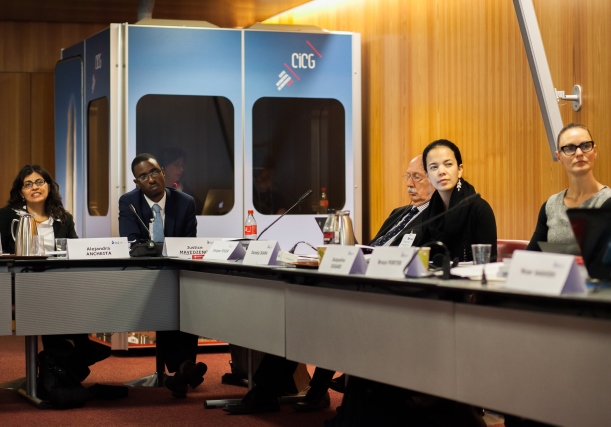
Jacqueline Dugard, Hina Jilani, Rodrigo Uprimny Yepes, Gilles Badet, Alejandra Ancheita and Harsh Mander talk about their experience and the situation of economic, social and cultural rights in their respective countries.
These prominent participants in ICJ’s Geneva Forum 2014 give their views on judicial protection of economic, social and cultural rights (ESCR) as well as on what needs to be changed to address obstacles to guarantee an effective remedy for victims of violations of their socio-economic rights.
They also tell about the main opportunities and key challenges for the realization of ESCR in their respective countries.
The 2014 Geneva Forum of Judges and Lawyers is a joint initiative of the ICJ Center for the Independence of Judges and Lawyers (CIJL) and the ICJ Programme on Economic, Social and Cultural Rights.
It has been made possible with the support of the République et Canton de Genève, the Permanent Mission of Germany to the United Nations in Geneva, and the Taipei Bar Association.
Dec 4, 2014 | Articles, Événements, Nouvelles
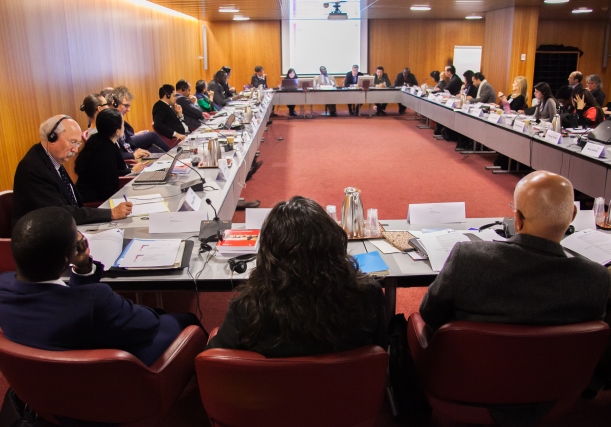
Le Forum 2014 de la CIJ accueille des juges et des avocats de toutes les régions du monde pour discuter de “l’application judiciaire des droits économiques, sociaux et culturels”. Gilles Badet parle de son expérience au Bénin, son pays (vidéo).
Les participants au Forum 2014 de Genève échangent leurs vues sur les progrès accomplis durant les deux dernières décennies, et notamment sur l’entrée en vigueur du Protocole facultatif se rapportant au Pacte international sur les droits économiques, sociaux et culturels (PF-PIDESC) de mai 2013.
Dans la vidéo, Gilles Badet donne sa vision de la protection judiciaire des droits économiques, sociaux et culturels (ESCR) ainsi que sur les changements nécessaires pour garantir des réparations effectives aux victimes de violations de leurs droits socio-économiques.
Le Forum de Genève des juges et avocats est une initiative du Centre pour l’Indépendance des Magistrats et Avocats de la CIJ (CIMA).
Compte rendu et programme du forum:
Universal-Programme GVA Forum 2014-Events-2014-FRA (Compte rendu complet en PDF)
Voir l’interview de Gilles Badet:
Dec 4, 2014 | Events, News
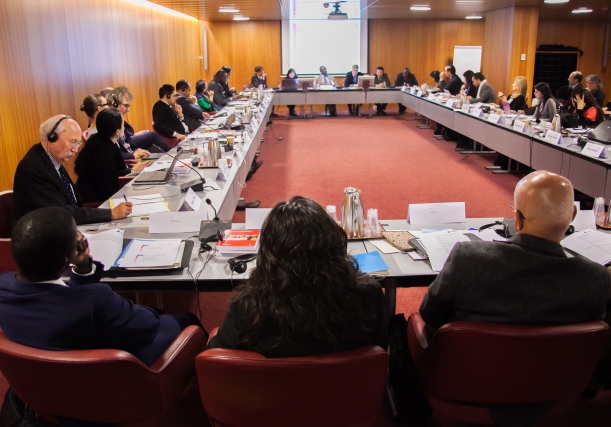
Today and tomorrow, the ICJ welcomes judges and lawyers from all regions of the world to discuss the “Judicial Enforcement of Economic, Social and Cultural Rights”.
The 2014 Geneva Forum of Judges and Lawyers is a joint initiative of the ICJ Center for the Independence of Judges and Lawyers (CIJL) and the ICJ Programme on Economic, Social and Cultural Rights.
Participants are exchanging views on the progress made over the past two decades, including the entry into force of the Optional Protocol to the International Covenant on Economic, Social and Cultural Rights in May 2013.
The Protocol allows individuals to bring complaints of violations of such rights to an independent international body of experts for adjudication.
Discussions are held also in relation to challenges to the justiciability of these rights, including as regards the principle of separation of powers between the judicial, executive and legislative branches of government.
Managing potential implications for public human and financial resources of judicial orders for enforcement of ESCR, and the conflicts that may arise between state development plans, public interest and the interests and rights of the individuals, will also be topics of discussion.
Participants are invited to ground the discussion of conceptual issues in examples from their own actual experience and practice in their national jurisdictions.
Alejandra Ancheita, recent winner of the Martin Ennals Award 2014 – The Nobel Prize of Human Rights – is among the guest speakers.
A report of the discussions will be published in 2015.
The draft agenda for the 2014 Geneva Forum is available here:
Universal-Programme GVA Forum 2014-Events-2014-ENG (English)
Universal-Programme GVA Forum 2014-Events-2014-ESP (Español)
The 2014 Geneva Forum has been made possible with the support of the République et Canton de Genève, the Permanent Mission of Germany to the United Nations in Geneva, and the Taipei Bar Association.
The Geneva Forum has been convened annually by the CIJL since 2010.
Information on, and reports of, the previous Geneva Forums can be found here:
Geneva Forum 2013 (photo)
Geneva Forum Series no. 1: Women and the Judiciary
Geneva Forum 2012
Third Geneva Forum for Judges and Lawyers: the report is published
Geneva Forum 2011
2nd ICJ Geneva Forum of Judges and Lawyers: final report
Geneva Forum 2010
1st ICJ Geneva Forum of Judges and Lawyers: accountable national security policies – the role of judges and legal practitioners

Dec 3, 2014 | News
The December 2 conviction of journalist David Bergman on contempt charges by the International Crimes Tribunal (ICT) further shrinks the narrowing space for observers to comment on the war crimes proceedings, the ICJ, Amnesty International and Human Rights Watch said.
Bergman (photo) was sentenced to a symbolic “simple imprisonment till the rising of the court” and a fine of Taka 5,000 (about US$56) for comments he made in three separate blog postings regarding legal proceedings before the ICT.
The ICT is a specially constituted court set up to bring to account those responsible for grave violations of international law during the country’s 1971 war of independence.
Concerns over its statute, rules of procedure, and practices have been raised since its inception, including by international monitors and legal experts.
“The ICT is dealing with incredibly complex factual and emotional issues of tremendous interest to people in Bangladesh and across the world, and part of this process is establishing public confidence in the legal system,” said Sam Zarifi, ICJ’s Director for Asia. “Holding a credible and highly regarded journalist in contempt for raising important questions doesn’t end the debate surrounding the ICT’s performance, in fact it undermines confidence in the court’s commitment to justice.”
Download the full story in PDF here:
Bangladesh-Conviction of Journalist-News-Press release-2014-ENG

Dec 3, 2014 | News
Vani Sathisan, ICJ’s International Legal Adviser in Myanmar, and Carlos Lopez, ICJ Senior Legal Adviser on Business and Human Rights made presentations at the annual Business and Human Rights Forum.
Vani Sathisan’s statement highlighted the State duty to protect human rights and provide access to remedies; the need for greater cooperation between businesses and local communities; and possibilities for home governments to cooperate on business and human rights issues.
She underscored that the State duty to protect, respect and fulfil human rights is one that is already grounded in international human rights law and accordingly, Myanmar must adopt and enforce laws – including policies, legislation, and regulations – that are preventative and remedial, and to regulate business conduct and protect the economic, social and cultural rights of its people.
Without proper investment, land and environmental laws, as well as an effective judiciary to enforce these laws and provide appropriate judicial remedies, development projects risk being counterproductive for sustainable development and the protection of human rights in Myanmar.
This panel discussion can be viewed on the UN’s Web TV.
Carlos Lopez Carlos Lopez focused on the work of the Committee on the rights of the child on business and human rights through the adoption of General Comment 16 on States obligations regarding the impact of business on the rights of the child.
The Guiding Principles on Business and Human Rights do not establish legal obligations, but elaborate on the practical implications of those obligations. The legal obligations for States to protect, respect and fulfil human rights are contained in international human rights treaties. One of them is the Convention on the Rights of the Child.
Besides examining State reports and providing conclusions and recommendations, the Committee elaborates General Comments to assist States in their implementation of their legal obligations under the Convention. In February 2013 the Committee adopted General Comment 16 on States obligations regarding the business impacts on the rights of the child. This General Comment was necessary:
· First, because in the Committee’s examination of State reports the issue of impacts of economic actors had arisen repeatedly. The General Comment is a more organized response to these practical and recurrent issues.
· Second, the Committee considered that the existing instruments and guidance did not sufficiently address the particular situation and needs of children. GC16 aims at fulfilling that gap in relation with States while the UNICEF Child Rights and Business Principles does so in relation to business enterprises.
The Committee, with the support of a core group comprising UNICEF, ICJ, Save the Children and OHCHR started a process of reflection, research and global and regional consultations (these took place in Kenya, India and Argentina and an international seminar was held in Sion, Switzerland.
This panel discussion can be viewed on the UN’s Web TV.
Carlos Lopez also moderated a Panel on the rights of the child and business enterprises, under the title Measures for implementing the Convention on the Rights of the Child in the context of business operations.