Dec 2, 2014 | News
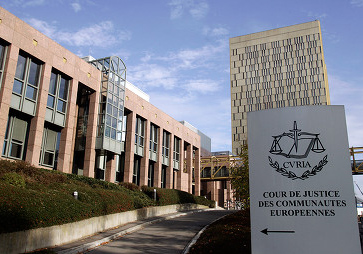
Today, the Court of Justice of the European Union (CJEU) delivered its judgment in the joint cases of A, B and C v. Staatssecretaris van Veiligheid en Justitie.
It affirms the need for national authorities to undertake individualized credibility assessments in asylum cases involving claims of persecution based on sexual orientation.
The ruling concerned a request for a preliminary ruling from the Netherlands, through its Council of State, to the CJEU.
The cases arose from three applications for asylum in the Netherlands by three men claiming a well-founded fear of persecution in their countries of origin based on their alleged same-sex sexual orientation.
The Dutch authorities rejected each asylum claim on the basis that each applicant had failed to prove his same-sex sexual orientation.
The Council of State asked the CJEU what limits the EU Qualification Directive and the Charter of Fundamental Rights, and in particular article 3 (right to the integrity of the person) and article 7 (respect for private and family life), impose on the method of assessing the credibility of a declared sexual orientation, and whether these limits are different from those applying to the assessment of credibility in asylum claims based on other grounds.
Interpreting the Qualification Directive in light of articles 3 and 7 of the Charter, as well as article 1, i.e. human dignity, the Court held that EU law does impose certain requirements on refugee status determination authorities.
The ICJ welcomes the Court’s determination that the competent domestic authorities must ensure that any credibility assessment method must allow for an individualized consideration of each applicant’s claim, having regard to its specific features, and that it is the duty of the State to cooperate with the applicant in the context of the assessment of all the relevant elements of her or his claim.
The ICJ welcomes a number of other aspects of the ruling, including:
- The emphasis on the Netherland’s need to comply with the Charter of Fundamental Rights;
- The fact that the Court firmly came down against seemingly intrusive and lewd questioning of an applicant’s sexual practices and proclivities, which it held to be contrary to respect for private and family life; and,
- The Court’s awareness of the particular challenges relating to the disclosure of one’s sexuality. The court noted that an applicant may be understandably reticent in revealing intimate aspects of his or her life and that therefore late disclosure of same-sex sexual orientation should not necessarily undermine the applicant’s credibility.
See also the ICJ’s commentary on the CJEU judgment in X, Y and Z v. Minister voor Immigratie en Asiel.

Dec 2, 2014 | E-bulletin on counter-terrorism & human rights, News
Read the 88th issue of ICJ’s monthly newsletter on proposed and actual changes in counter-terrorism laws, policies and practices and their impact on human rights at the national, regional and international levels. The E-Bulletin on Counter-Terrorism and Human...
Dec 1, 2014 | News
The ICJ expresses deep concern that the Legislative Assembly of Bolivia continues to threaten three Constitutional Court judges with removal, and possibly criminal punishment, based solely on legislators’ disagreement with a legal opinion and ruling issued by the judges.
A “trial” of the three judges conducted by the Senate is scheduled to begin on 4 December 2014.
The ICJ has previously condemned the proceedings as fundamentally flawed and in violation of international standards for the independence of judges.
The legislature and government now appear to accept some of the ICJ’s criticisms.
Last-minute legislative amendments would apparently specify that the legislative assembly process is disciplinary in character and that the only sanction the assembly can directly impose is permanently to remove judges from office; if a disciplinary violation is found, the case would be referred onward for criminal prosecution before the ordinary courts. (Legislators were previously reported to be seeking for the Senate itself to impose a sentence of 10 years’ imprisonment.)
The ICJ reaffirms, however, that the case against these three judges remains inherently flawed because the allegations on which the proceedings are based cannot be a valid basis for any removal from office or criminal punishment.
“It is fundamental to the independence of the judiciary, and the rule of law, that judges must be able to decide cases without fear of punishment for their legal opinions and rulings, including those that the government or legislature may not like,” said Matt Pollard, Head of the Centre for Independence of Judges and Lawyers at the ICJ.
“The procedural amendments under consideration could be an improvement for other kinds of cases in the future,” said Pollard. “However, the stated reason for pursuing these three judges – disagreement with the content of their legal opinion and ruling – cannot form a valid basis for their removal from office or criminal punishment under any procedure.”
“The case against these three judges cannot be cured by legislative ‘quick fixes’ and must simply be dropped immediately,” Pollard added.
The ICJ is also concerned that the legislature has said it will press ahead immediately with the “trial” on 4 December, a few days from now, while fundamental changes to the procedure are still underway.
Further, the media has reported that Chamber of Deputies President Marcelo Elío has stated that the judges could avoid trial by “voluntarily” resigning before 4 December.
It would be unacceptable to use the threat of unjust or unclear procedures to pressure a judge to resign.
The ICJ welcomes the decision by the legislature to review and potentially reform judicial accountability procedures in Bolivia.
At the same time, reform of procedures that are of such fundamental importance to the rule of law and democracy should be based on a process of broader consultation with all concerned stakeholders, and more considered, comprehensive and detailed assessment and analysis in relation to international standards.
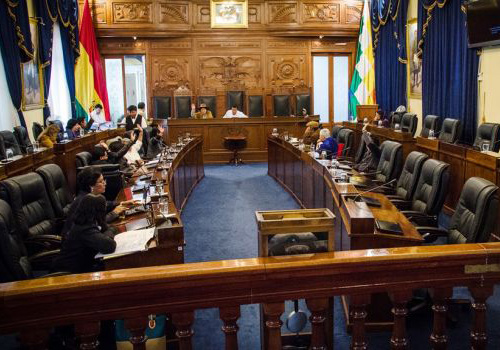
For instance, under the new amendments, it would appear that the Senate (photo) has no option in any case to impose a disciplinary penalty less than permanent removal from office, even if this would be disproportionate.
Placing all responsibility for disciplinary proceedings with an independent Judicial Council should also be considered.
In October, the ICJ sent an open letter and analysis brief to members of the Legislative Assembly, explaining why the proceedings violate international law and standards, urging that proceedings against the three judges immediately be ended, and recommending a process of longer-term reform of judicial accountability processes in Bolivia.
Contact:
English: Matt Pollard, Head of the Centre for Independence of Judges and Lawyers at the ICJ, t: +41 79 246 54 75; e: matt.pollard(a)icj.org
Spanish: Carlos Ayala, ICJ Commissioner, t: +58 212 952 8448; e: carlos.ayala(a)icj.org
Bolivia-Procedimento magistrados-News-Press Release-2014-SPA (full text in PDF)
(Update: the proceedings were suspended on 4 December, and are to continue on 9 December)

Nov 28, 2014 | Доклад миссии установления фактов, Доклады, Новости, Публикации, Статьи
В докладе МКЮ делается вывод о том, что для обеспечения независимости судебных органов в России и их способности стать на страже Верховенства закона необходимо провести всестороннюю реформу системы назначения судей и их продвижения по службе, а также иных аспектов судебной системы.
В докладе, подготовленном по итогам ее миссии в Российскую Федерацию, рассматриваются вопросы отбора судей, их назначения и продвижения по службе, а также анализируются институциональные, процессуальные и практические аспекты назначения и продвижения судей.
Также в докладе освещено объединение Верховного Суда РФ и Высшего Арбитражного Суда РФ и процесс переназначения судей в новый состав Верховного Суда, крайне актуальные с точки зрения более общего предмета миссии – процедуры назначения судей.
В докладе делается вывод о том, что слабые стороны процедуры назначения судей порождают недостатки с точки зрения независимости российских судебных органов, на которые МКЮ обратила внимание в своих предшествующих докладах: «Состояние судебной системы в России» 2010 года и «Защита правосудия: дисциплинарное производство в отношении судей в Российской Федерации» 2012 года.
Расхождения между законом и практикой в процессе отбора судей, а также «внепроцессуальные» рычаги влияния и «обходные пути», к которым прибегают лица, руководящие комплексным многоэтапным процессом отбора и назначения судей, относятся к основным недостаткам процедуры.
В докладе предложен ряд конкретных рекомендаций, затрагивающих различные аспекты процедуры отбора, органы, которые играют главную роль в данном процессе, а также необходимую судебную реформу.
В основу доклада легли выводы миссии, проведенной в мае 2014 г., участники которой встретились с рядом заинтересованных сторон в г. Москве, включая судей, независимых экспертов и НКО.
В ходе миссии были проведены два круглых стола с участием ряда экспертов.
Данные обсуждения были организованы при поддержке Института права и публичной политики и Независимого экспертно-правового совета.
В проведении миссии приняли участие: Азар Качалия (судья Апелляционного Суда ЮАР и Председатель Исполнительного комитета МКЮ), Джолин Шуккинг (судья Административного высокого торгово-промышленного суда Нидерландов), Видар Штрёмме (председатель норвежского отделения МКЮ), Роушин Пиллей (директор Европейской программы МКЮ), Тимур Шакиров (правовой советник Европейской программы МКЮ) и Мари Гьефсен (член норвежского отделения МКЮ). Проведению миссии содействовали консультации Тамары Морщаковой, комиссара МКЮ и судьи Конституционного Суда РФ в отставке.
Контакты:
Роушин Пиллей, директор Региональной программы МКЮ по Европе, roisin.pillay(a)icj.org
Тимур Шакиров, правовой советник Региональной программы МКЮ по Европе, temur.shakirov(a)icj.org
RUSSIA-Selecting the judges-News-2014-Rus (полный текст на русском, PDF)
RUSSIA-Selecting the judges-Publications-Reports-2014-Rus (полный доклад на русском, PDF)
Nov 27, 2014 | News
The ICJ today strongly condemned the decision by Prime Minister Najib Razak to retain and even strengthen the country’s 1948 Sedition Act despite having made a commitment in 2012 to repeal the Act.
The ICJ has repeatedly expressed its concern that the Sedition Act has been used to stifle and criminalize the exercise of freedom of expression and to silence human rights defenders, lawyers, political activists, among others.
The ICJ considers the Act as it stands to be incompatible with international human rights standards and to be made still more repugnant by the politically loaded manner in which it is typically applied.
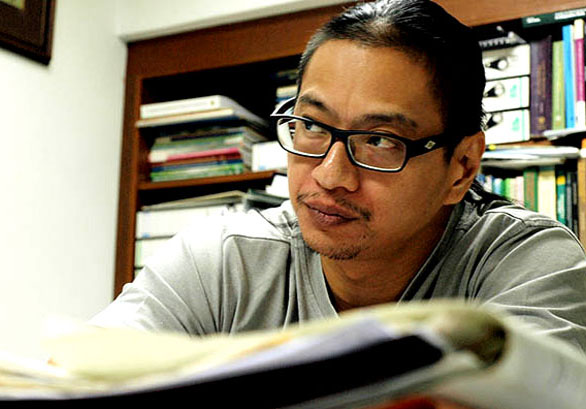
In early September, the ICJ denounced the use of sedition against two members of the legal profession, Dr. Azmi Sharom (photo) and N. Surendran for commenting on questions of law and public policy.
On 20 September 2014, Edmund Bon a prominent human rights and constitutional lawyer, was questioned by the police regarding comments made in a based on the decision of a Malaysian Federal Court.
On 30 September 2014, Dr. Abdul Aziz Bari, a law professor at the University of Selangor, was summoned for a police interview over comments made about the selection process of the new Chief Minister by the Sultan of Selangor.
Background:
The 1948 Sedition Act, originally enacted by the British colonial government and amended several times over the years, criminalizes speech and publications considered to have “seditious tendencies”.
The term “seditious tendencies” is ambiguously defined to mean any kind of speech or publication that causes “hatred or contempt, or excite disaffection” against any ruler or the government or promotes “ill will and hostility between the different races or classes”.
The law also considers “seditious” any speech or publication that questions the special privileges of the Malay people, as provided in the Constitution.
Furthermore, sedition is a strict liability offence in Malaysia, which means that the intention of a person allegedly making seditious statements is irrelevant.
For instance, a person making a statement may not have the intent to cause “hatred or contempt” towards the government, but may nonetheless be held liable for sedition if authorities believe that the person in fact incited such feelings.
The ICJ considers that the Act, by its very terms, contemplates restrictions on the exercise of freedom of expression that are grossly overbroad and inconsistent with basic rule of law and human rights principles.