Oct 24, 2014 | Новости, Статьи
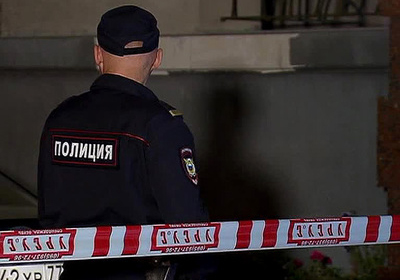
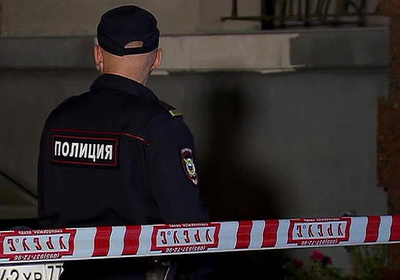
Сегодня МКЮ выразила серьезную обеспокоенность в связи с убийством юриста Виталия Моисеева и его жены Елены Моисеевой, которое произошло в Московской области.
МКЮ призывает следственные и иные уполномоченным органы обеспечить проведение оперативного, беспристрастного и эффективного расследования убийства юриста и его супруги, а также принять все необходимые меры, чтобы обеспечить действенную защиту других участников судопроизводства, включая адвокатов.
Юрист Моисеев представлял интересы Сергея Журбы, депутата регионального совета Одинцовского района, ключевого свидетеля по делу о многочисленных убийствах, совершенных членами Ореховской группировки, криминальной организации, особенно активной в Москве в 1990-х годах.
Сергей Журба оказался в коме в результате покушения, совершенного ранее в этом году.
Уголовное дело было возбуждено в отношении лидера группировки Дмитрия Белкина, а также его сообщника Олега Пронина, которых 23 октября 2014 г. суд присяжных признал виновными в совершении 22 убийств и 11 покушений, а также иных преступлений.
Одним из убитых являлся Юрий Керезь, первый следователь, который работал по данному делу еще в 1998 г.
Белкин осужден к пожизненному лишению свободы.
Виталий Моисеев был убит на следующее утро после вынесения вердикта в отношении лидера группировки.
Сообщается, что в юриста и его жену было сделано не менее 30 выстрелов из автомата Калашникова, когда они отъезжали от своего дома на машине.
Двойное убийство имело место всего за несколько часов до того, как Виталий Моисеев должен был давать свидетельские показания в суде по другому делу, возбужденному в отношении лидеров Ореховской группировки.
Это уже второе убийство юриста, представлявшего интересы Сергея Журбы по данному делу.
23 сентября этого года адвокат Татьяна Акимцева была убита рядом с собственной квартирой. Ее убийству предшествовали угрозы.
Также был убит водитель адвоката, очевидец ее убийства.
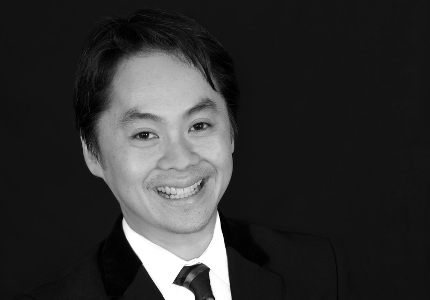
«Данные убийства подлежат решительному осуждению в связи с лишением жизни потерпевших и страданиями, которые они причиняют их семьям», – заявил Тимур Шакиров, правовой советник МКЮ. – «Однако они также наносят более общий вред принципу верховенства закона в стране, если адвокаты и юристы становятся жертвами смертельных нападений только потому, что представляют интересы клиентов и выполняют свои профессиональные обязанности».
МКЮ призвала правительство Российской Федерации дать четкий сигнал о том, что убийства, в особенности нападения на юристов и членов их семей не останутся безнаказанными.
МКЮ напоминает о том, что Основные принципы ООН, касающиеся роли юристов, устанавливают, что «[в] тех случаях, когда возникает угроза безопасности юристов в результате выполнения ими своих функций, власти обеспечивают им надлежащую защиту».
Кроме того, власти должны обеспечить, чтобы юристы могли выполнять свои обязанности в отсутствие запугивания и угроз.
МКЮ подчеркивает, что для выполнения своих профессиональных обязанностей юристы должны иметь возможность действовать в обстановке, свободной от страха, в том числе от страха перед возмездием любого рода.
МКЮ обеспокоена явным отсутствием эффективной защиты адвокатов и свидетелей по данному делу.
МКЮ также озабочена тем, что адвокаты и свидетели защиты находятся под угрозой совершения на них нападений.
Экстренные меры, гарантирующие эффективную защиту адвокатов всех сторон процессе, свидетелей, судей и следственных органов, включают обеспечение их реальной безопасности перед лицом покушений на их жизнь и жизнь членов их семей.
Контакты:
Роушин Пиллей, директор Региональной программы МКЮ по Европе, roisin.pillay(a)icj.org
Тимур Шакиров, правовой советник Региональной программы МКЮ по Европе, temur.shakirov(a)icj.org
Russia-Murder of lawyer Moiseyev-News-web stories-2014-RUS (полный текст на русском, PDF)
Oct 16, 2014 | Advocacy, Analysis briefs, News, Open letters
The ICJ condemns the imminent “trial” of Constitutional Court judges by Bolivia’s Senate, in proceedings that could see the judges sent to prison over politicians’ disagreement with a legal ruling.
The proceedings “violate the independence of the judiciary and the right to fair trial,” the Geneva-based organization wrote today in an open letter to all Senators and Deputies of the legislative assembly.
The charges in the trial, scheduled to begin on 21 October, are based entirely on a precautionary ruling by the judges that parts of a new law regulating notaries should not be implemented until the Court has an opportunity to hear a constitutional challenge to the law.
“The spectacle of dozens of politicians pretending to act as an independent and impartial criminal court, threatening to throw constitutional court judges in jail over a difference of opinion as to interpretation of the law, is incompatible with respect for human rights, the separation of powers, and the rule of law,” said Matt Pollard, Head of the Centre for Independence of Judges and Lawyers at the ICJ.
Constitutional Court Judges Soraida Rosario Chanez Chire and Ligia Mónica Velásquez Castaños are to be tried on 21 October, while proceedings against Judge Gualberto Cusi Mamani have reportedly been temporarily suspended for reasons of health. The judges were suspended from duty on 28 July.
An analysis brief published by the ICJ and sent to the legislative members concludes that the proceedings violate Bolivia’s international legal obligations under the American Convention on Human Rights and the International Covenant on Civil and Political Rights.
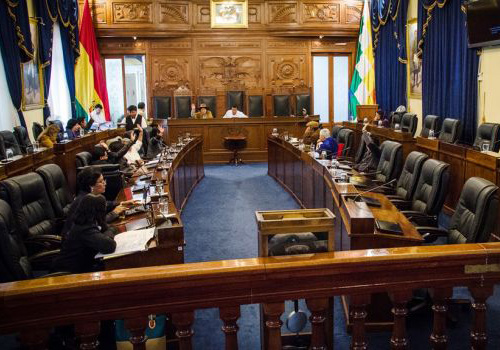
The brief also cites judgments of the Inter-American Court of Human Rights that found violations of the American Convention as a result of defective parliamentary proceedings for removal of judges in other countries. The proceedings in Bolivia are poised to be even more egregious than the proceedings at issue in the earlier judgments, given the possibility for the Bolivian Senate (photo) to impose a criminal conviction and imprisonment.
“The ICJ urges the Senators and Deputies immediately to cancel the proceedings, to end the judges’ suspension from duty, to refrain from any other form of interference with judicial independence, and to reform judicial discipline and removal procedures to bring them into line with international standards,” said Pollard.
(update as of 21 October: the proceedings were postponed to 4 November after one of the judges collapsed on arrival at the Legislative Assembly and was taken to hospital).
Contacts:
English: Matt Pollard, Head of the Centre for Independence of Judges and Lawyers at the ICJ, t: +41 79 246 54 75; e: matt.pollard(a)icj.org
Spanish: Carlos Ayala, ICJ Commissioner, t: +58 212 952 8448; e: carlos.ayala(a)icj.org
BOLIVIA-Unfair trial of judges-News-Press release-2014-SPA (full text in PDF)
BOLIVIA-unfair trial of judges-Advocacy-Open letter-2014-ENG (full text in PDF)
BOLIVIA-unfair trial of judges-Advocacy-Open letter-2014-SPA (full text in PDF)
BOLIVIA-unfair trial of judges-Advocay-Analysis brief-2014-ENG (full text in PDF)
BOLIVIA-unfair trial of judges-Advocacy-Analysis brief-2014-SPA (full text in PDF)