Dec 11, 2019
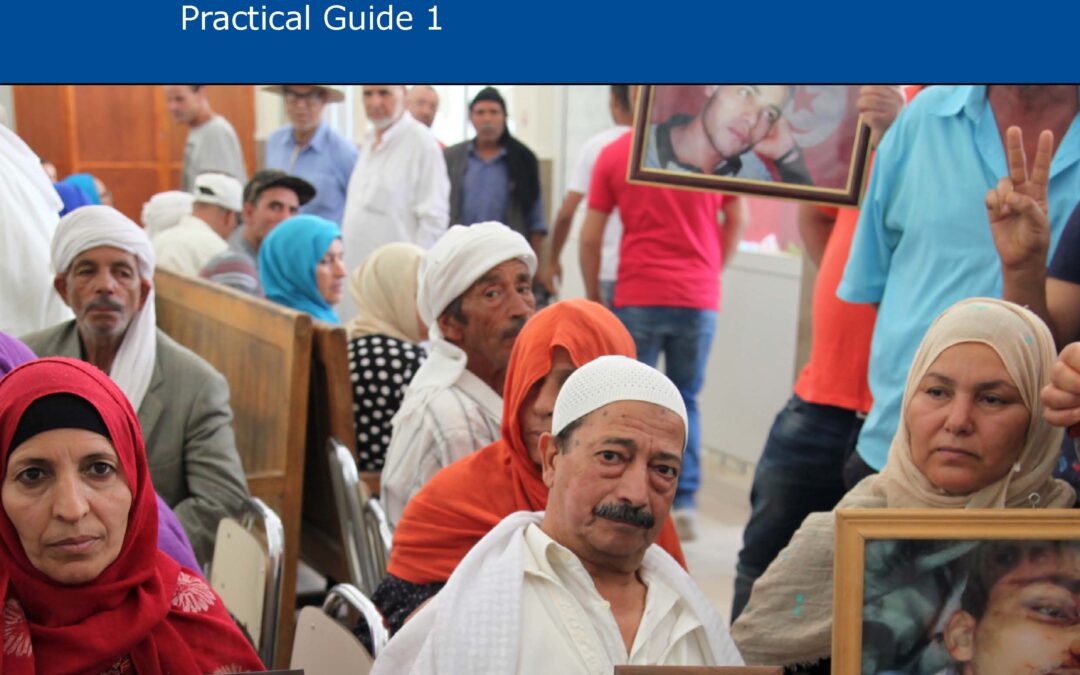
Today, the ICJ released Practical Guide 1 on the adjudication of crimes under Tunisian and international law, the first guide in a four-part series on accountability for crimes under international law and the Tunisian Specialized Criminal Chambers (SCC).
Practical Guide 1 addresses the application of Tunisian law governing the penalization of crimes and modes of liability, in relation to international law and standards.
The SCC were established in 2014 to adjudicate cases involving alleged “gross human rights violations” between 1955 and 2013 referred by the Truth and Dignity Commission.
“Tunisia has obligations under international law to ensure justice for victims and combat impunity for the egregious human rights violations that were committed in the past,” said Saïd Benarbia, ICJ MENA Programme Director.
“International law is directly relevant to the work of the SCC, particularly since the gross human rights violations over which the SCC have jurisdiction are either not defined in domestic law or are defined inconsistently with the definitions under international law binding Tunisia,” he added.
The Practical Guide sets out relevant international law and correlates it to related provisions of Tunisian law.
The Guide examines the principles of legality and non-retroactivity under international law and their application in the domestic system, and conducts an analysis of the definition of crimes under domestic law vis-à-vis international law for arbitrary deprivations of life, arbitrary deprivations of liberty, torture and other ill-treatment, enforced disappearance, rape and sexual assault and crimes against humanity.
Although the transitional justice framework governing the SCC gives judges some tools to remedy the gaps and inconsistencies in domestic law, legislative reform is needed to ensure Tunisia is in compliance with its obligation to penalize crimes under international law and investigate, prosecute and remedy them whenever they are committed, whether pre- or post-2011.
“Tunisian legislators gave the SCC the mandate to adjudicate gross human rights violations but haven’t remedied all the gaps and inconsistencies in the domestic law the SCC were tasked with applying,” said Valentina Cadelo, ICJ MENA Programme Associate Legal Adviser.
“Tunisian authorities must now take steps to reform the law to guarantee that all perpetrators of gross human rights violations can be held criminally responsible in any Tunisian court,” she added.
Practical Guide 1 aims to:
- Explain international law relevant to the SCC, including the application of the principles of legality and non-retroactivity, statutory limitations and crimes under international law, to guarantee justice for victims of gross human rights violations and hold perpetrators accountable, while meeting international fair trial standards.
- Correlate domestic definitions of crimes with the definitions of crimes under international law applicable at the time the alleged conduct occurred.
- Describe the requirement that penalties applied upon conviction be based in law and correspond to the gravity of the crimes.
Contact
Saïd Benarbia, Director of the ICJ Middle East and North Africa Programme, t: +41.22.979.3817, e: said.benarbia(a)icj.org
Valentina Cadelo, ICJ Associate Legal Adviser, t: +21671962287, e: valentina.cadelo(a)icj.org , twitter: @ValentinaCadelo
Download
Tunisia-Accountability series-Publications-Reports-Thematic reports-2019-ENG (full report in English, PDF)
Tunisia-Accountability series-News-2019-ARA (full story in Arabic, PDF)
Tunisia-Accountability series-Publications-Reports-Thematic reports-2019-ARA (full report in Arabic, PDF)
Dec 11, 2019
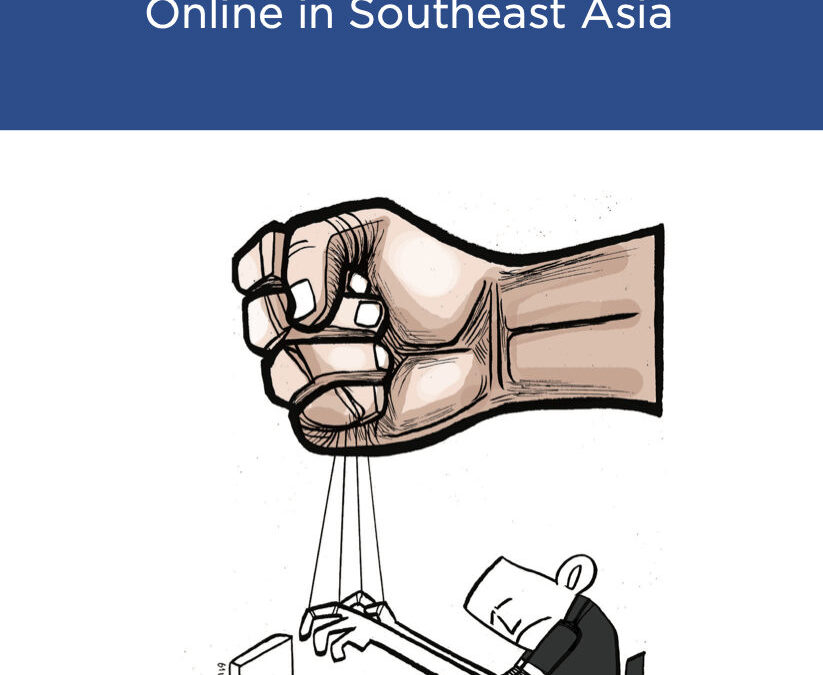
Today, the ICJ launched its report Dictating the Internet: Curtailing Free Expression, Opinion and Information Online in Southeast Asia at the Foreign Correspondents’ Club of Thailand (FCCT).
The report looked at selected legal frameworks and case studies across ten countries in the region – mapping out a general pattern of abuse of legal frameworks by governments in Southeast Asia to restrict and control content online to the detriment of individuals’ rights to freedom of expression, opinion and information.
This trend is not new. Southeast Asian governments have, for decades, crafted and enforced the law to curtail expression and information.
Laws enacted before the internet era – including those prohibiting defamation, lèse-majesté, sedition, contempt of court or crimes against the State – have been repurposed or supplemented to censor expression and information online.
More recent laws that have been introduced purportedly to regulate information online, control the spread of disinformation, ensure cybersecurity and justify internet shutdowns have been used for the same aims.
Multiple commonalities are evident in these legal frameworks. They commonly include:
- Vague, overbroad legal provisions;
- Severe and disproportionate penalties;
- Lack of independent oversight mechanisms; and
- Failure to provide effective remedy or accountability.
Conceptions of “national security” and “public order” have been conflated with the perceived interests of the ruling government or other powerful interests to target specific expression.
Emerging laws allow for extraterritorial application, and in some cases, seek to extend their reach beyond public expression, to private communications.
These frameworks do not advance legitimate aims or do not do so in accordance with applicable principles of legitimacy, necessity and proportionality, in violation of international law.
The report concludes by reasserting that international human rights law not only remains relevant, but that its application is needed, now more than ever in the digital age, to protect the exercise of rights online as well as offline.
The report argues that respect for human rights is essential for ensuring that all members of the global community can fully enjoy and exercise their freedom of expression, opinion and information, and that legislation framed in human rights terms is also the best and most effective way to protect against the very real threats posed by the spread of hate speech, disinformation online, cyber-attacks and other cybercrimes.
It calls for States in Southeast Asia to repeal, amend or otherwise rectify existing legal and regulatory frameworks to bring them in line with their international obligations.
The report launch included a panel discussion, which drew together human rights defenders, artists, journalists, lawyers and civil society who spoke to their experiences of being targeted by governments for their activities online, and about the impact of new laws and policies being enacted in the region to police expression on social media and through other new technologies.
The discussion was moderated by Gwen Robinson, editor-at-large of Nikkei Asian Review and President of the FCCT, and included as panelists:
- Frederick Rawski, ICJ Asia and the Pacific Director
- Ma Thida, Burmese surgeon, writer, human rights activist and former political prisoner
- Zunar, Malaysian political cartoonist
- Jolovan Wham, Singaporean civil and labour rights activist
- Sutharee Wannasiri, Thai human rights activist
Contact
Frederick Rawski, ICJ Asia and the Pacific Director, frederick.rawski@icj.org
Round-table discussion
Before the report launch, the ICJ conducted a closed-door roundtable discussion on ‘Enhancing protection of human rights online in Southeast Asia’ at the Sukosol Hotel in Bangkok.
The discussion brought together experts, advocates and researchers working in the Information and Communications Technology (ICT) and human rights sectors to identify key challenges faced in ensuring human rights protections online, and preliminarily consider potential policy solutions towards ensuring greater protections.
15 representatives from the private and civic tech sectors, digital rights advocates, civil society and researchers focused on the intersection between human rights protection and ICT participated in the discussion.
Download
Southeast Asia-Dictating the Internet-Publications-Reports-Thematic reports-2019-ENG (full report in English)
Myanmar-Dictating-The-Internet-Report-2021-BUR.pdf (full report in Burmese)
Nov 29, 2019
The ICJ today publishes an expanded and updated version of Indigenous and Other Traditional or Customary Justice Systems: selected international sources.
The compilation is a unique practical resource for practitioners in official State justice systems and indigenous, traditional or customary systems.
It is also intended to assist other community members, government officials, development practitioners, civil society organizations, and academic and other professionals who engage with such justice systems.
The compilation is being published as part of an ongoing project on the relationship between indigenous and other traditional or customary justice systems and human rights, access to justice, and the rule of law.
Among the sources included in the compilation are global and regional treaty provisions, UN and other declarations, and the jurisprudence and recommendations of Committees and Special Procedures established by treaties and the UN Human Rights Council.
The sources are organized by themes including the rights of women, rights of children, the role of judges and lawyers and the administration of justice, the rights of indigenous peoples, the rights of minorities, and transitional justice.
This revised edition incorporates new developments since 2018, including the landmark report of the UN Special Rapporteur on the Rights of Indigenous Peoples, and expands to cover certain topics more comprehensively, particularly with respect to indigenous rights.
The ICJ’s multi-year project has included global and Asia-Pacific and Africa regional consultations, and continues in 2020 with a concluding Global Forum in Geneva, and culminating with the publication by ICJ of detailed legal and practical guidance.
The guidance will seek to assist all actors involved in implementation and assessment of relevant targets of Sustainable Development Goal 16 on access to justice for all and effective, accountable and inclusive institutions, as well as Goal 5 on gender equality, including: decision-makers and other participants in traditional and customary justice systems; judges, lawyers and prosecutors operating in official justice systems; other government officials; development agencies; United Nations and other inter-governmental organizations; and civil society.
The initial version of the compilation was published in January 2018 under the title Traditional and Customary Justice Systems: Selected International Sources.
Contact
Matt Pollard, Senior Legal Adviser, matt.pollard@icj.org
Download
Universal-Trad Custom Justice Compil updated-Publications-2019-ENG (updated and expanded version of the compilation, in PDF)
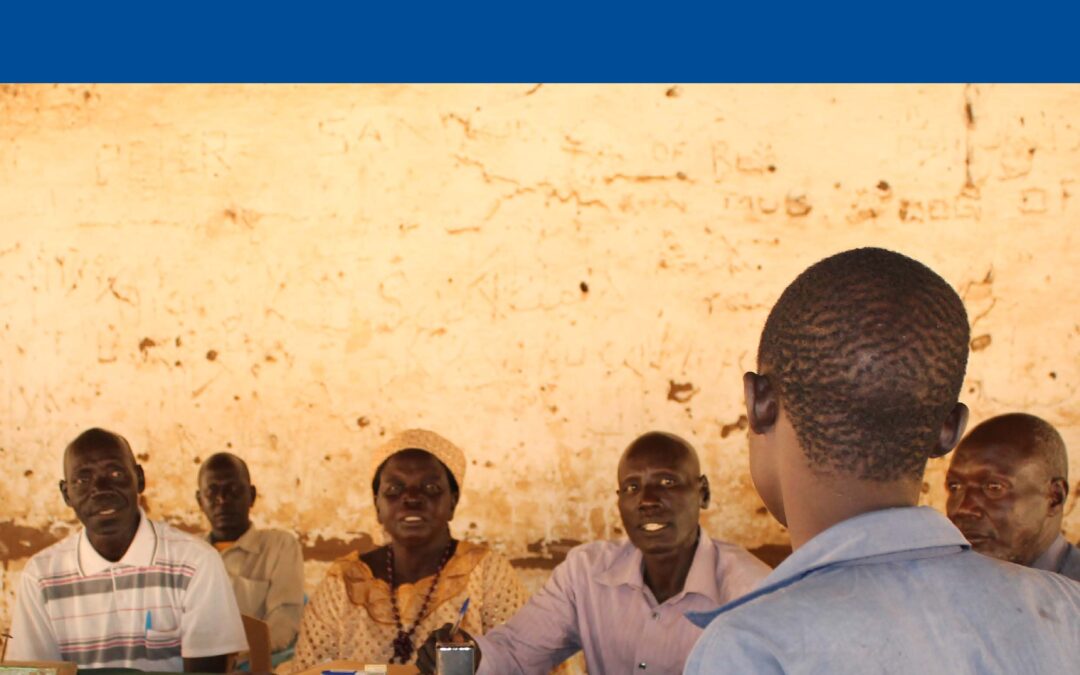
Cover Photo: Traditional leaders preside over a case in B-Court, Nyang Payam, Torit County, South Sudan. Photo Credit: UNDP South Sudan2016Angelique Reid ©2016 United Nations

Sep 19, 2019
ICJ’s new report – and its executive summary – on the implementation of the Special Jurisdiction for Peace, are now available in English.
The ICJ, in furtherance of its objective to promote accountability, justice and the rule of law in Colombia, has been continuously monitoring the implementation of the mechanisms and institutions created as a result of the peace negotiations between the Colombian National Government and the Revolutionary Armed Forces of Colombia – People’s Army (FARC-EP).
Among these mechanisms and institutions, the Special Jurisdiction for Peace (JEP in its Spanish acronym) is of particular importance because it is the institution that was designed to investigate, prosecute and punish those responsible for the most serious human rights violations committed during the armed conflict in Colombia.
In June 2019, as a result of its monitoring activities, the ICJ released its report Jurisdicción Especial para la Paz: análisis a un año de su entrada en funcionamiento (Special Jurisdiction for Peace: analysis of its first year since it started functioning). The report presents the advances in the implementation of the JEP, documenting both strengths and challenges. It uses the international human rights framework as a point of reference for the national implementation of transitional justice instruments and mechanisms; and provides a description of Colombian law relevant to the JEP and a detailed analysis of the JEP’s operations and procedures. The report reflects developments up to 7 June 2019.
Considering the importance of improving the understanding of JEP’s work among non-Spanish speakers, the executive summary of the ICJ report is now available in English. The full version of the report will be available in English in the forthcoming months.
Download
Colombia-Jurisd para la paz-PUBLICATIONS-Reports-Fact-finding mission report-2019-ENG (full report in PDF)
Colombia-Jurisd para la paz Exec Summary-PUBLICATIONS-Reports-Fact-finding mission report-2019-ENG (full executive summary in PDF)

Sep 18, 2019
The ICJ has issued its Annual Report 2018, which offers a concise summary of the work carried out by the ICJ over the past year.
The ICJ’s long-standing work to uphold the international framework underlying human rights protection has never been so important as in the current climate of wholesale assault upon this framework and the very concept of the rule of law.
Many of the current challenges to human rights stem from the same issues that we have been dealing with in recent decades. However, there are also new challenges that come from States that would not have been predicted 15 years ago.
The rise of democratically elected, self-styled populist leaders who embrace and espouse authoritarian, nationalistic and xenophobic policies has led to almost unprecedented levels of licence to engage in attacks and incitement against some of the most marginalized in society, including immigrants, asylum seekers and minorities.
These leaders have also attacked human rights defenders, civil society organizations, the civilian judiciary, the media, and have arrested opposition leaders and at times have cynically used counter-terrorism laws against and military courts to try peaceful protesters.
Such practices are exquisitely antithetical to and utterly destructive of the rule of law and the rights-based system that the ICJ has sought to promote and protect over the years.
While these new challenges to human rights are particularly insidious and damaging, the ICJ is well-placed to deal with them by virtue of our unique approach which focuses on the transformative role and potential of the law, of justice institutions and of justice actors.
Our ability to influence legal and institutional reform and individual justice actors is unparalleled and this reinforces the relevance and effectiveness of the ICJ.
Accordingly, rule of law issues on the international and regional levels continued to dominate the ICJ’s core work in 2018.
As indicated in this Report, the ICJ helped to protect the European Court of Human Rights from proposed ‘reforms’ that would have undermined its ability to operate effectively, and contributed to the UN Global Compact for Safe, Orderly and Regular Migration, which recognizes the need to observe human rights in the context of large movements of peoples.
As part of our global and regional efforts to strengthen independent and accountable judicial systems, the ICJ contributed to the elaboration of the Lilongwe Principles on the Appointment of Judicial Officers and was actively engaged with the UN Global Judicial Integrity Network.
In addition, we continued our work on traditional and customary justice systems and the opportunities they offer for enabling access to justice consistent with internationally recognized fair trial standards.
Finally, it is worth noting that 2018 marked the 70th anniversary of the Universal Declaration of Human Rights.
Given the current climate, it is altogether fitting to recall and reflect on why this seminal document was adopted and why it envisions that human rights be protected by the rule of law.
Accordingly, the ICJ will continue to work vigorously to uphold the rule of law around the world, always mindful that what we do is ultimately intended to benefit all rights holders in all places and in all contexts.
Download
Universal-ICJ Annual Report 2018-Publications-Reports-Annual Report-2019-ENG (full report in PDF)