Dec 21, 2020
The ICJ has issued its Annual Report 2019, which offers a concise summary of the work carried out by the ICJ over the past year.
Human rights work is tough at the best of times and while some years it feels like more progress is being made than lost, in other years the challenges faced seem almost overwhelming.
In 2019 the ICJ has continued its work in defense of the rule of law and human rights but there is no doubt that this has been a challenging year and that more challenges, predictable and unpredictable, await us in the years ahead.
These threats are serious but over the past seven decades the ICJ has learned how to face dark times effectively. As the lawyers of the human rights movement, we have fostered global institutions and grassroots human rights defenders; drafted international treaties and used them to defend the rights of individuals; worked hand in hand with the most marginalized people and advocated for their rights face to face with the most powerful authorities.
In early 2019, the ICJ was able to bring together its Commissioners, Sections and Affiliates, and supporters in a full Congress that emphasized the organization’s commitment to the core mandate issues that have directed our work for almost 70 years. These continued challenges include the fettered and ineffective judiciaries that cannot properly dispense justice (or worse, become tools of injustice), the continued marginalization of vulnerable groups, attacks on rights defenders and the inaccessibility of justice.
The Tunis Declaration that resulted from the 2019 Congress reaffirmed the ICJ’s unyielding commitment to defend and advance the rule of law and human rights at a time when commitment to them by States and other powerful actors has been wavering.
The Declaration also stressed that not only are human rights and the rule of law indispensable to the betterment of the human condition but must also be harnessed to address contemporary challenges identified by the Commission including those posed by resurgent authoritarian populism, unprecedented movements of people driven by increasing social disparity and climate change and intrusive new technologies.
These challenges in 2019 all prefigured, and were aggravated by, the unprecedented and catastrophic impact of the Covid-19 pandemic on lives and livelihoods, the repercussions of which can be expected to impact human rights development for years to come.
Throughout 2019, the ICJ has continued working against discrimination that inhibits access to justice and accountability, particularly barriers to justice on the basis of gender in Asia and the Middle East and North Africa and discrimination on the basis of sexual orientation and gender identity in Asia, Africa, and Europe.
We have pushed for accountability for human rights violations in Latin America, Asia and the Middle East, and pushed to develop new global norms necessary to hold businesses responsible for their impact on human rights
As existing and new threats to human rights and the rule of law evolve and emerge the ICJ knows that it needs to adapt to be able to meet these challenges.
In 2019, we accelerated efforts to make sure the ICJ has sufficient resources and an infrastructure that is fit for purpose, which included investing in a number of new systems and processes to support staff, improve accountability and ensure we are capable of delivering the ICJ’s expertise in a way that really benefits the lives of the people on whose behalf we work.
The implementation of some of these changes, such as technological improvements that facilitated information and resource sharing, have immediately helped us continue our work despite the movement restrictions that are currently binding our Commissioners, staff and partners. However, some of the changes we have attempted have taken longer than we hoped to implement and we know we have more work to do to guarantee we are ready to address the challenges ahead.
It can be hard to remain optimistic when there is so much work to do but the ICJ has proven itself as an organization that can stand fast in the face of extraordinary pressures and bring to bear a weight, that far exceeds its resources, in bringing about real change that improves lives. With your support we will keep doing the good work that is showcased in this report and will continue working towards our vision of a rule of law that upholds the dignity and human rights of every person everywhere.
(Message from Sam Zarifi, ICJ Secretary General)
Download
Universal-ICJ AnnualRep 2019-Publications-Annual Report-2020-ENG
Dec 16, 2020
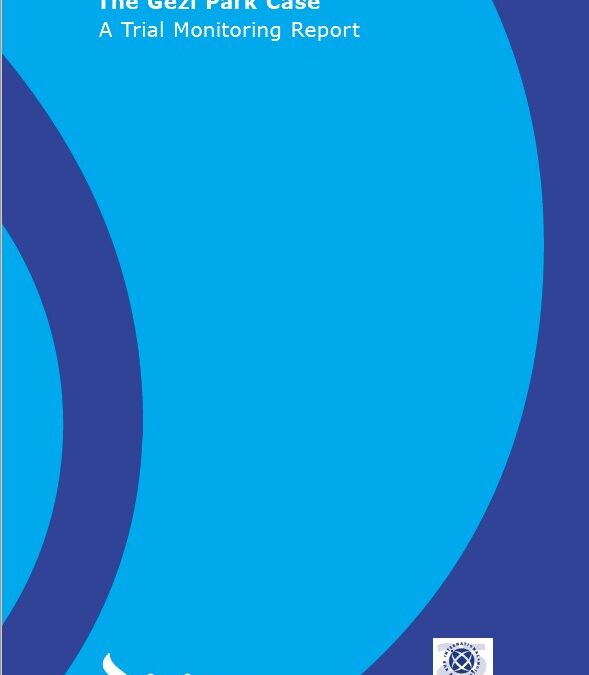
In a report published today, the ICJ and the International Bar Association’s Human Rights Institute (IBAHRI) have documented a range of human rights violations in the “Gezi Park” trial, which took place in Istanbul before the 30th Assize Court from 24 June 2019 to 18 February 2020.
Further, the organizations call for the immediate release of Osman Kavala who was acquitted of all Gezi Park trial-related charges, but is in detention, and for all the remaining charges against all defendants to be dropped.
Following the joint trial observation, the ICJ and IBAHRI found that the trial of leading figures in the Gezi Park protests failed to comply with fair trial guarantees under Turkish and international law.
In the re, the organizations concluded that the trial did not meet the requirement of a fair trial under Article 6 of the European Convention on Human Rights (ECHR) and Article 14 of the International Covenant on Civil and Political Rights (ICCPR). Specifically, the proceeding failed to comply with the rights to be tried by an independent and impartial court, the presumption of innocence and to call and cross examine witnesses.
The ICJ and IBAHRI further affirmed that the trial was compromised due to the clear violation of the principle of legality in relation to the criminal law applied, as well as in respect of the grounds for detention, which failed to satisfy articles 9 and 15 of the ICCPR, and articles 5 and 7 of the ECHR.
The Gezi Park protests began in May 2013 as an effort by a group of environmentalists to save a park in central Istanbul from being rezoned, but soon grew into nationwide demonstrations. Police quelled the protests in Taksim Square with the use of tear gas and water cannons.
“While the acquittal of some is welcome, the charges against the defendants were patently baseless and unsubstantiated, and should not have been brought to begin with,” said Massimo Frigo, Senior Legal Adviser of the Europe and Central Asia Programme of the ICJ. “The renewed detention of Osman Kavala under fresh charges related to the same facts as those he is acquitted upon is a deplorable abuse of process and he should be released immediately.”
Baroness Helena Kennedy QC, Director of the International Bar Association’s Human Rights Institute, commented: “Following our extensive trial observation, we are greatly disappointed to see that Osman Kavala will again face trial from 18 December 2020 on new and wholly unsubstantiated charges. Mr Kavala and the Gezi Park protestors should never have been charged, which only makes the failure to uphold fair trial guarantees more disconcerting. Such disregard for due process is sadly now commonplace in Turkey, and we hope this trial report alerts the international community to the true disintegration of the independence of the judiciary and the rule of law in the country.”
The criminal charges brought against the defendants related to offences that are overly broad and prone to unduly restrict the exercise of human rights, notably the freedoms of expression, association and assembly, political participation and privacy.
The defendants in the trial were Mehmet Osman Kavala, Gokçe Yilmaz, Ali Hakan Altinay, Hanzade Hikmet Germiyanoglu, Yigit Aksakoglu, Cigdem Mater Utku, Yigit Ali Ekmekci, Memet Ali Alabora, Handan Meltem Arikan, Can Dundar, Ayse Mucella, Serafettin Can Atalay, Tayfun Kahraman, Inanç Ekmekçi, Mine Ozerden and Ayse Pinar Alabora.
The defendants were charged under the following articles of the Turkish Criminal Code:
- Article 312: an attempt to overthrow the Turkish government or an attempt to prevent it from fulfilling its duties;
- Article 151: damage to property;
- Article 152: qualified damage to property;
- Article 174: possession or exchange of hazardous substances without permission;
- Article 153: damaging places of worship and cemeteries;
- Article 149: qualified robbery;
- Article 86: intentional injury;
- crimes under the Law on Firearms, Knives and Other Tools No 6136; and
- crimes under the Law on Protection of Cultural and Natural Assets No 2863.
The detention of Osman Kavala was declared unlawful under articles 5 and 18 of the ECHR by the European Court of Human Rights during the trial, and the Committee of Ministers of the Council of Europe has called three times for his immediate release despite newly raised charges of espionage.
Download the report:
In English: Turkey-GeziParkTrial-TrialObservation-Publications-Reports-2020-ENG
In Turkish: Turkey-GeziParkTrial-TrialObservation-Publications-reports-2020-TUR
Contact:
Massimo Frigo, Senior Legal Adviser, ICJ Europe and Central Asia Programme, t: +41 79 749 99 49, e: massimo.frigo(a)icj.org
Dec 11, 2020
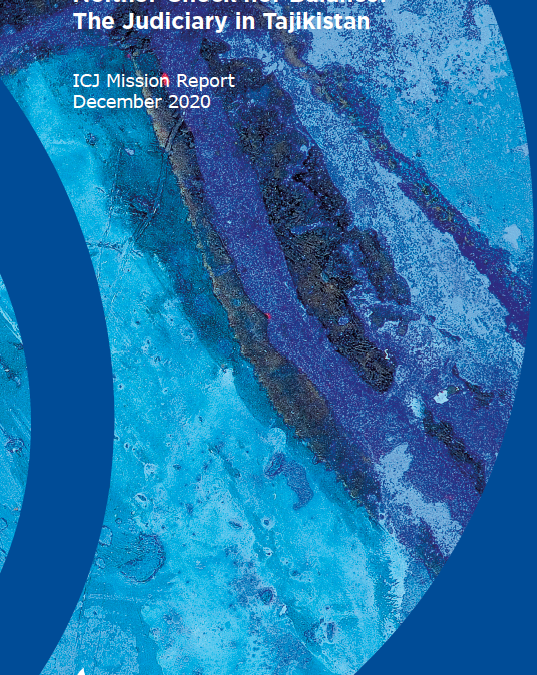
Today, as it publishes its mission report on the country’s judiciary, the ICJ calls on the Government of Tajikistan to adopt comprehensive measures to reform the judiciary, in order to ensure its independence and enable it to effectively protect human rights.
The ICJ report Neither Check nor Balance: the Judiciary in Tajikistan provides a detailed overview of the organization and functioning of the judiciary in administering justice in Tajikistan. Through an analysis of laws and information obtained during a mission to the country the ICJ has identified the weaknesses in the judiciary and made recommendations concerning the institutions and procedures of judicial governance.
“There have been many attempts to reform the justice system in Tajikistan, as we demonstrate in the report, but they have so far failed to result in a judiciary with strong self-governance institutions which are capable of protecting and supporting judges in independently applying the law,” said Temur Shakirov, Senior Legal Adviser of the ICJ Europe and Central Asia Programme.
“Among many other issues, the report points to the problem of an almost complete absence of acquittals in Tajikistan, which can be seen as a litmus paper of the judiciary’s ability to fulfil their role independently.”
The report provides a set of recommendations, in particular, in regard to the governing bodies of the judiciary, the system of appointment of judge, judicial security of tenure, and the disciplinary system for judges, with a view to strengthening the independence and effectiveness of the judiciary.
“There is a conspicuous need for a significant institutional reform to re-design a system of self-regulation that would allow for the independent administration of justice, without a formal or informal check or approval from superiors,” Shakirov added.
Background:
In April and May 2019, ICJ conducted a research mission on the independence of the judiciary in Tajikistan. Following the mission, the ICJ expressed concerns about the independence of individual judges as well as the functioning of judicial institutions and procedures in law and in practice.
Download
Tajikistan-Judiciary-Publications-Reports-Mission report-2020-ENG (full report in English, PDF)
Dec 9, 2020
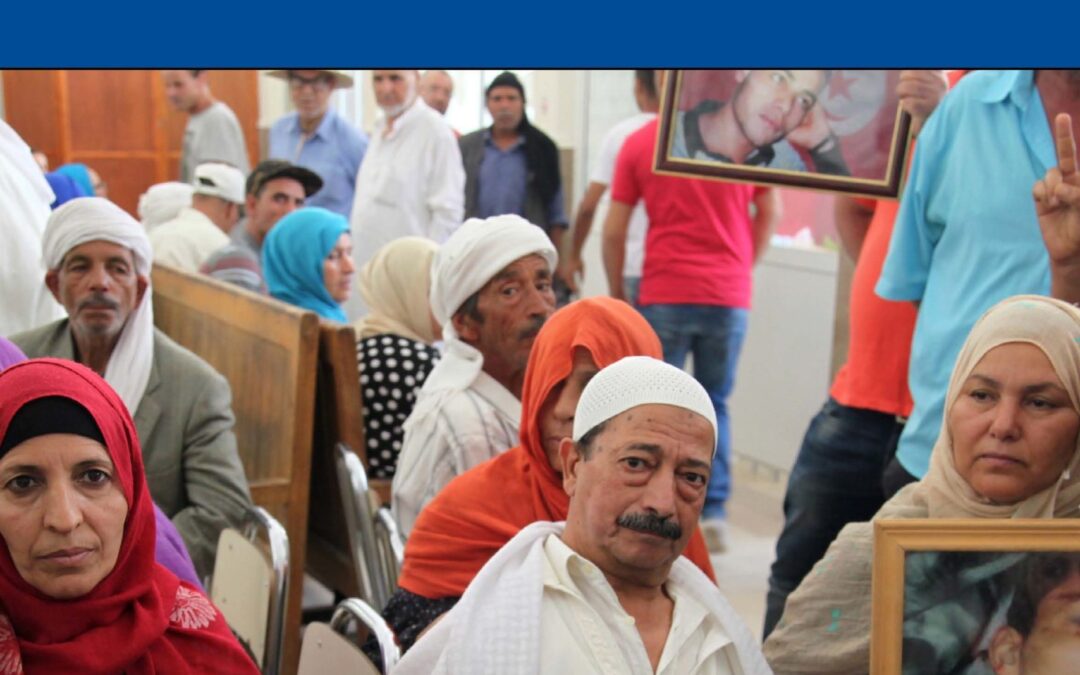
The ICJ today released two practical guides aimed to assist practitioners to advance accountability and justice through the Specialized Criminal Chambers (SCC) in Tunisia.
Practical Guide 2 addresses the investigation and prosecution of gross human rights violations under Tunisian and international law, while Practical Guide 3 covers the principles and best practices on evidence in the administration of justice. Practical Guide 1, which was released in December 2019, considered the role of international law and standards in proceedings before the SCC.
Trials before the SCC started in May 2018. Since the opening of the first hearing, it has been evident that gaps in the rules and procedures governing the investigation, prosecution and evidence in the SCC cases have served to endanger efforts to hold perpetrators to account and bring justice to victims for past violations of human rights.
“The credibility of SCC trials largely depends on their capacity to ensure effective and fair investigations and prosecutions based on strong, compelling and untainted evidence,” said Said Benarbia, the ICJ’s MENA Programme Director.
“These practical guides should serve to assist those working in the Tunisian justice sector to make the most of this opportunity to end impunity and enable victims to obtain redress, all while ensuring the highest possible fair trial standards.”
Practical Guide 2 sets out the international law and standards governing the obligation to investigate and prosecute gross human rights violations, the accused’s right to a fair trial, and the rights of victims and their families to participate in proceedings and to an effective remedy.
Practical Guide 3 describes the principles and best practices under international law that apply to the collection, admissibility and evaluation of evidence in the investigation and prosecution of gross human rights violations.
Both guides aim to provide options for applying Tunisia’s law and procedures on investigation, prosecution, and evidence in SCC cases in compliance with international law and standards.
“Tunisians have waited so long to see justice for the many human rights abuses that were committed in the past,” said Kate Vigneswaran, the ICJ’s MENA Programme Senior Legal Adviser.
“The SCC holds out the promise that this wait might end, but only if the trials are grounded on solid proceedings that put accountability, human rights and fairness at the forefront.”
Contact
Said Benarbia, Director, ICJ Middle East and North Africa Programme, t: +41-22-979-3817; e: said.benarbia(a)icj.org
Kate Vigneswaran, Senior Legal Adviser, ICJ Middle East and North Africa Programme, t: +31-62-489-4664; e: kate.vigneswaran(a)icj.org
Background information
The SCC were established in 2014 to adjudicate cases involving alleged “gross human rights violations” between 1955 and 2013 referred by the Truth and Dignity Commission (Instance Verité et Dignité, IVD).
At the end of its mandate in December 2018, the IVD’s referred to the SCC 200 cases of arbitrary deprivations of life, arbitrary deprivations of liberty, torture and other ill-treatment, enforced disappearance, rape and sexual assault and crimes against humanity committed by the past regime.
Practical Guides 2 and 3 are preceded by Practical Guide 1 on The Adjudication of Crimes Under Tunisian and International Law, which examines the principles of legality and non-retroactivity under international law and their application in the domestic system, and conducts an analysis of the definition of crimes under Tunisian law vis-à-vis international law for arbitrary deprivations of life, arbitrary deprivations of liberty, torture and other ill-treatment, enforced disappearance, rape and sexual assault and crimes against humanity. The three Guides will also be followed by Practical Guide 4 on modes of liability under Tunisian and international law.
In a briefing paper published in October 2020, the ICJ also called on the Tunisian authorities to undertake substantial legal and policy reforms with a view to strengthening accountability and removing the obstacles that impede the SCC work.
Download
Tunisia-SSC guide series no2-Publications-Reports-Thematic reports-2020-ENG (Guide 2 in English, PDF)
Tunisia-SSC guide series no3-Publications-Reports-Thematic reports-2020-ENG (Guide 3 in English, PDF)
Tunisia-Launch Guides-News-2020-ARA (story in Arabic, PDF)
Tunisia-SSC guide series no2-Publications-Reports-Thematic reports-2020-ARA (Guide 2 in Arabic, PDF)
Tunisia-SSC guide series no3-Publications-Reports-Thematic reports-2020-ARA (Guide 3 in Arabic, PDF)
Dec 9, 2020
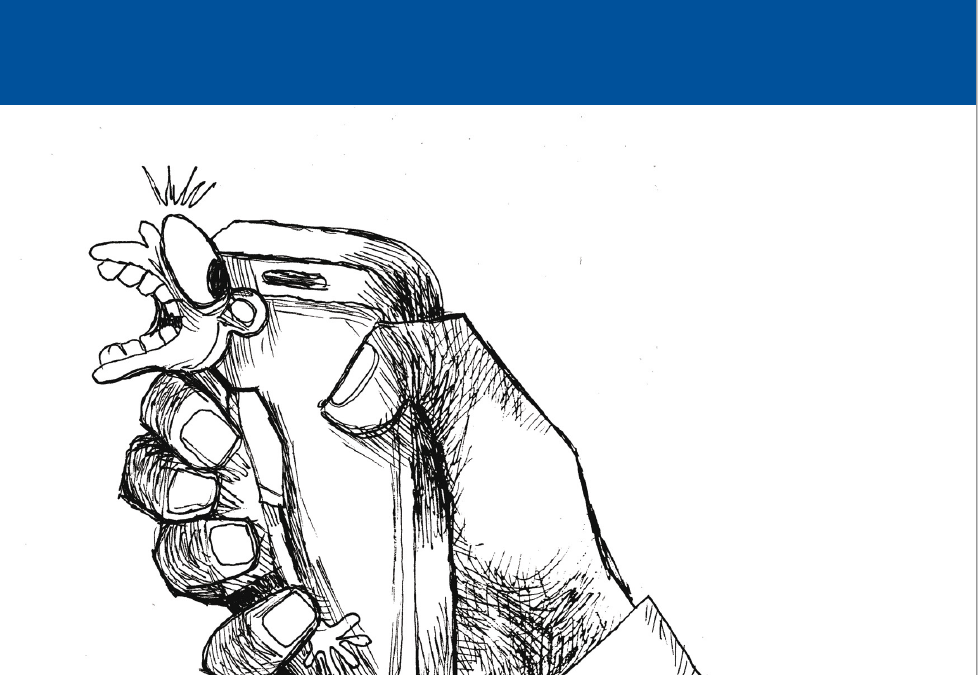
In a new report released today, the ICJ called on the Vietnamese authorities to take swift measures to reform its laws and practices around the use of the internet and to stem the pattern of accelerating human rights abuse of individuals online.
The paper, Dictating the Internet: Curtailing Free Expression and Information Online in Vietnam, details the deteriorating human rights environment online in Vietnam. The paper tracks, in particular, how State authorities have increasingly abused laws and the administration of justice to violate the rights to freedom of expression, opinion and information online.
The paper follows on from the ICJ’s 2019 regional report entitled Dictating the Internet: Curtailing Free Expression, Opinion and Information Online in Southeast Asia assessing non-human rights compliant legal frameworks and case studies across Southeast Asia, including Vietnam.
The paper outlines emerging developments and trends in 2020 and tracks interferences not only with freedom of expression, opinion and information online, but also the rights to privacy, liberty, fair trial, freedom of association and assembly, life and health.
Multiple case studies highlight how affected individuals have been subject to harassment, investigation, criminal charges, prosecution, and imprisonment for exercising their rights to free expression and information on online platforms. The Dong Tam dispute and trial – which reflected the abuse of rights online and offline of individuals seeking to bring to light human rights violations relating to the land rights dispute – is also highlighted as an emblematic case study.
The paper further explains how, within the context of the COVID-19 pandemic, freedom of expression and information online has been arbitrarily curtailed by the State in the misguided name of protecting public health.
Along with applying ill-conceived laws to harass individuals, Vietnamese authorities have continued to employ other tactics to ensure State control of expression and content online, including through cybersurveillance and policing of online platforms, and applying pressure on technological companies to comply with demands for censorship by silencing human rights defenders on their platforms.
The paper provides specific recommendations to the Vietnamese Government to safeguard in law and practice the rights to freedom of expression, opinion and information online as well as offline, in line with the State’s international human rights obligations.
The full report is available in English here. (PDF)
Contact
Kingsley Abbott, ICJ Senior Legal Adviser, email: kingsley.abbott@icj.org
See also
ICJ, ‘Southeast Asia: ICJ launches report on increasing restrictions on online speech’, 11 December 2019