May 7, 2014
The ICJ issued today its Annual Report 2013, which offers a concise summary of the work carried out by the ICJ over the last year.
In 2013 the ICJ undertook over 160 advocacy interventions and, with the help of its Commissioners, carried out 11 country missions.
Through its seminars and workshops, it has provided tools to over 300 legal professionals, to use international law and the rule of law more effectively to support human rights.
This annual report does not contain an accounting of all the activities undertaken by the ICJ last year, but the selected examples are emblematic of ICJ’s work and highlight some of the most important initiatives.
ICJ Annual Report 2013 – Publications-Reports-2014 (download pdf)
Mar 28, 2014
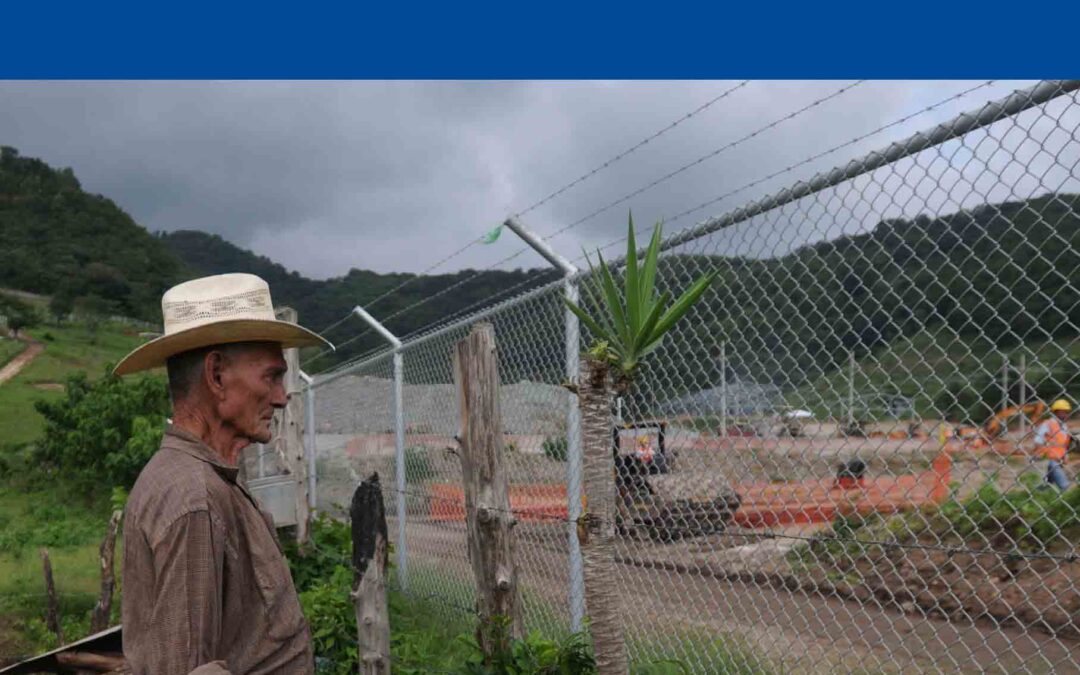
La CIJ ha publicado un informe que analiza el sistema jurídico y judicial de Guatemala en relación con las obligaciones y responsabilidades de las empresas.
El informe se enfoca en las vías de recursos legal existentes en virtud del derecho constitucional, derecho laboral, derecho civil y derecho penal, y examina casos concretos como ejemplos de su aplicación.
El informe identifica las deficiencias estructurales, institucionales, normativas, económicas, políticas y sociales en los sistemas jurídicos y judiciales del país que dificultan el acceso a la justicia para las víctimas de abusos de los derechos humanos cometidos por los negocios.
Las limitaciones y los obstáculos para acceder a la justicia son especialmente graves en relación con los pueblos indígenas en un país donde estos han sido históricamente discriminados.
El informe recomienda un conjunto de medidas para fortalecer la independencia del poder judicial, la reforma de varias leyes, el fortalecimiento de las instituciones estatales de protección, el fomento del diálogo entre las partes interesadas y un mayor respeto a los derechos de los defensores de los derechos humanos.
Guatemala – empresas y violaciones a los derechos humanos – report – 2014-spa (Informe en PDF)
Contacto:
Carlos Lopez, Director, Business and Human Rights, carlos.lopez(a)icj.org, +41 22 979 3816
Ramón Cadena, Director, Central America, ramon.cadena(a)icj.org, +50 22 335 3325

Dec 18, 2013
Published today in Geneva the new study analyses the current state of the country’s judiciary in statutory courts and the legal profession, in light of international standards on the independence of judges and lawyers.
The 57-page report South Sudan: An Independent Judiciary in An Independent State? also makes concrete recommendations to relevant authorities in South Sudan.
The report is based on research conducted on and in South Sudan, including but not limited to a high-level fact-finding mission, a two-day National Consultation Conference on the theme of Judicial and Legal Professional Independence and Accountability, and the ICJ workshop on fair trial guarantees, all undertaken by the ICJ in Juba between September and October 2012.
The Republic of South Sudan became an independent State on 9 July 2011, after 50 years of almost continuous civil war with the North, rooted in deep cultural, ethnic and religious differences.
Since independence, South Sudanese authorities have taken some meaningful steps towards ensuring that the new-born country has institutions and a legal framework that complies with rule of law principles.
However, as far as the justice sector is concerned, significant institutional challenges remain and several gaps in the constitutional and legal order need to be addressed for South Sudan to comply with international human rights standards on the administration of justice.
Overall, the ICJ report seeks to ensure that ongoing justice reforms achieve the establishment of an independent and better-resourced statutory judiciary throughout the country, and secure the independence and competence of the legal profession, in accordance with international standards on the rule of law, human rights, the principle of separation of powers and the independence of the judiciary and the legal profession.
Based on its findings, the ICJ makes 40 recommendations to South Sudanese authorities pertaining to constitutional and legal reforms, South Sudan’s international human rights obligations, court structure, judicial independence in the statutory courts system, and the legal profession.
Contact:
Ilaria Vena, Associate Legal Adviser with the ICJ Centre for the Independence of Judges and Lawyers, t: +41 22 979 3827; email: ilaria.vena(a)icj.org
South Sudan-Report on independence of judiciary-publications-2013 (download in pdf)
Nov 21, 2013
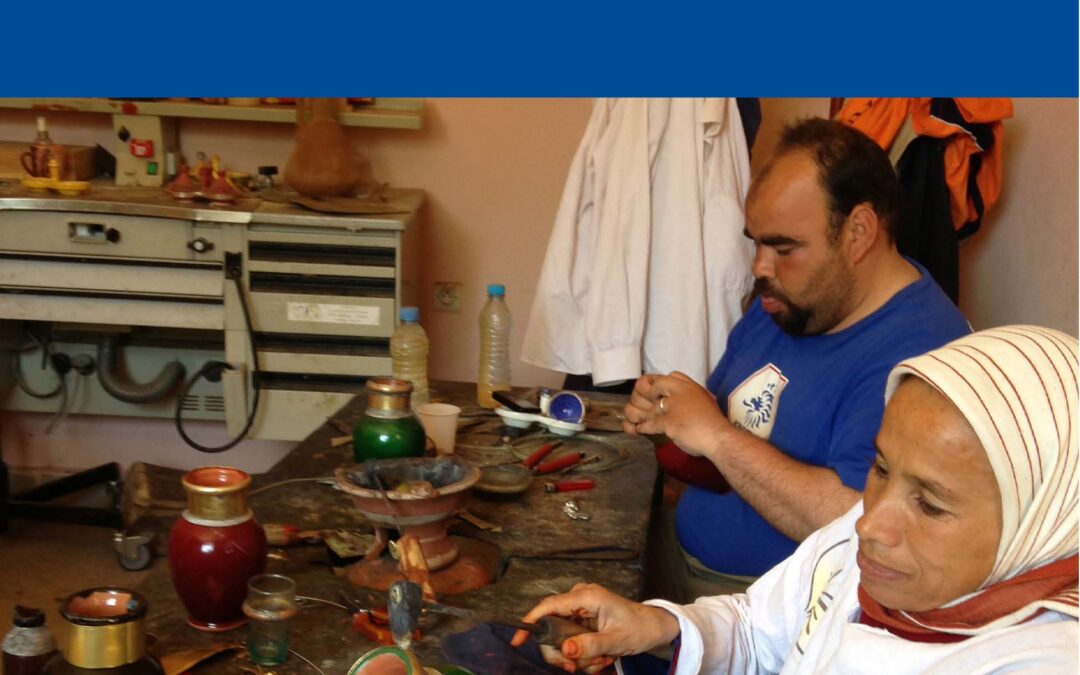
The new ICJ study on access to justice for economic, social and cultural rights in Morocco was presented during a 4-day mission in this country.
The study welcomes the provisions of the 2011 Constitution that should contribute to better guarantee and protect economic, social and cultural rights (ESCR).
It also welcomes a number of recent social policies initiated to improve access to important social services and goods, especially to the benefit of disadvantaged and marginalized sectors of the Moroccan society.
But the report also identifies and describes significant gaps and issues in the normative, institutional and remedial frameworks that deprive many Moroccans from accessing justice in cases of violations of ESCR, and from enjoying their right to an effective remedy when facing such violations.
The ICJ is especially concerned at the prevalence of legal provisions that discriminate against women in areas that are fundamental to ESCR, such as inheritance, or family law.
The inaccessibility of judicial remedies for victims of violations of ESCR for procedural reasons, and the weakness of sanctions in certain cases of abuses of ESCR (for ex. in labour matters) is another area of concern.
In the coming months, the ICJ will continue to promote and discuss the findings of the study, which is the result of over a year of research and consultations on the advances and obstacles in the access to justice for alleged victims of ESCR in Morocco – a country that has initiated deep legal reforms.
Beside civil society actors, the new publication was handed over to several public authorities, including the Minister of Justice, the President of the Cour de Cassation, the Ombudsman, the President of the Human Rights Commission of the Parliament and the Secretary General of the Government.
Morocco-Access to Justice ESCR-publications-report-2013-ara (full text in Arabic, pdf)

Nov 19, 2013
Despite progress for many women in Botswana, access to justice remains a challenge, a new ICJ report says.
Launched today, Women’s Access to Justice in Botswana: Identifying the Obstacles and Need for Change, assesses some of the challenges faced by women in Botswana when seeking justice and legal protection for human rights abuses and other wrongful conduct.
It underlines that a range of practical barriers and legal impediments continue to combine to undermine the ability of women to seek legal redress for such abuses.
“Although Botswana has implemented a number of important measures to advance gender equality, for many women justice remains an abstract ideal rather than a practical reality,” said Leah Hoctor ICJ Senior Legal Advisor on Women’s Human Rights. “Over the coming years further concerted action is needed.”
The report outlines a series of effective and meaningful steps that Botswana can take to ensure laws and procedures support and advance women’s ability to assert their rights.
“This report provides a wide range of stakeholders, including government actors, the judiciary, civil society representatives and the legal profession with important guidance as to the action now necessary,” said Arnold Tsunga, Director of the ICJ’s Africa Programme.
Contact:
Leah Hoctor: leah.hoctor(a)icj.org
Arnold Tsunga: arnold.tsunga(a)icj.org
ICJ Women’s Access to Botswana-publications-2013 (download in pdf)