Aug 22, 2018
The ICJ is participating in trial observation mission by leading jurists in hearings on the Zimbabwe Presidential election petition that started at the Constitutional Court in Harare today expected to continue over three days.
Nelson Chamisa of the Movement for Democratic Change Alliance (MDC A), the leading opposition candidate, filed the petition alleging serious irregularities in the way the presidential elections were conducted particularly by the Zimbabwe Electoral Commission (ZEC).
Among other things, he is calling for the elections to be annulled or alternatively for him to be declared the winner.
Both the ZEC and the announced winner incumbent president Emmerson Mnangagwa have filed papers opposing the petition.
The ICJ is conducting a joint trial observation with the Africa Judges’ and Jurists’ Forum in the trial observation mission.
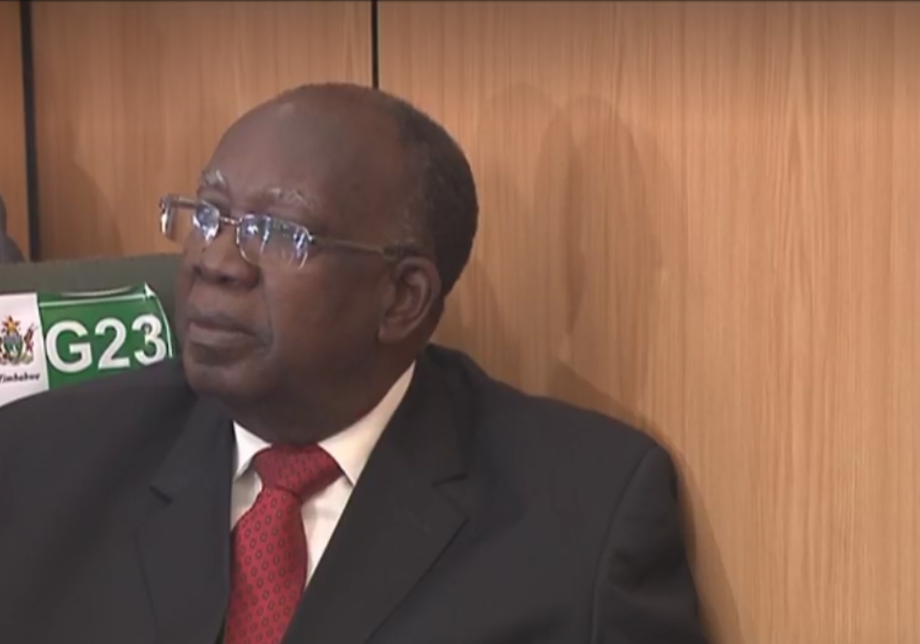
The Mission team is composed of Retired Chief Justice Ernest Sakala (photo) who is a Zambian lawyer and retired Chief Justice of Zambia, Justice Isaac Lenaola a Kenyan lawyer and serving Justice of the Supreme Court of Kenya, since 28 October 2016, Martin Okumu Masiga a Ugandan lawyer and founder member and incumbent Secretary General of the Africa Judges’ and Jurists’ Forum and Simphiwe Sidu a lawyer in the ICJ’s Africa Programme.
The observation mission will include an assessment of the proceedings of the petition in terms of compliance with regional and international human rights law and standards on fair trial and the administration of justice applicable to Zimbabwe.
A statement will be produced at the end of the observation with views that will be made available to the authorities in Zimbabwe and the general public.
Download
A “Question and Answer” briefing paper on the election petition in Zimbabwe is available here for more information:
Zimbabwe-Q and A elections-Advocacy-Analysis brief-2018-ENG (download in PDF)
Contact
Brian Penduka, e: brian.penduka(a)icj.org or t: +263772274307
Arnold Tsunga, e: arnold.tsunga(a)icj.org or t: +27716405926
Aug 2, 2018 | Articles, Nouvelles
La CIJ condamne avec la plus grande fermeté les violences qui ont éclaté au Zimbabwe après les élections et appelle au rétablissement de l’état de droit et au respect des droits de l’Homme.
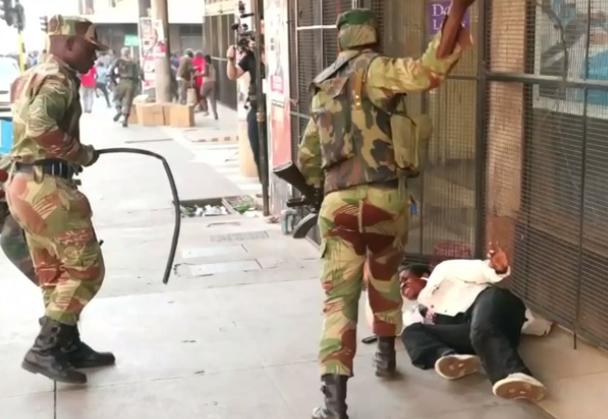
Au moins trois personnes seraient mortes à Harare le 1er août suite à l’utilisation de balles réelles par les Forces de défense du Zimbabwe (ZDF) «pour disperser» des manifestants non armés dans le quartier central des affaires de Harare.
Des membres de la ZDF auraient tiré à balles réelles sur la foule en fuite et auraient agressé des personnes sans distinction, causant des blessures et des pertes en vies humaines.
Bien que la CIJ ne pardonne pas les actes de violence commis par les manifestants et les partisans du parti au pouvoir, elle condamne fermement l’utilisation intentionnelle d’armes mortelles et d’autres actes de la ZDF qui étaient disproportionnés et inutiles dans les circonstances.
Selon la CIJ, les troubles auraient pu être maîtrisés d’une manière compatible avec les obligations internationales du Zimbabwe en matière de droits de l’Homme, ce qui aurait pu éviter des pertes en vies humaines et des blessures aux manifestants et aux passants.
«Le recours à la force létale contre des manifestants non armés ne doit jamais être toléré», a déclaré Sam Zarifi, secrétaire général de la CIJ.
“L’utilisation mortelle et intentionnelle d’armes à feu ne peut être effectuée que lorsqu’elle est absolument inévitable pour protéger la vie”, a-t-il ajouté.
La CIJ rappelle aux autorités zimbabwéennes leur engagement vis-à-vis de l’état de droit, du constitutionnalisme et de la protection des droits de l’Homme prévus par la Constitution et le droit international relatif aux droits de l’Homme.
La CIJ les appelle à respecter l’état de droit et à protéger les droits de l’Homme pendant cette période postélectorale.
La CIJ exhorte les autorités responsables à demander des comptes aux membres de la ZDF responsables des pertes en vies humaines et des mutilations physiques lors des manifestations du 1er août.
Contact:
Arnold Tsunga, Director of the Africa Regional Programme, International Commission of Jurists C: +263 77 728 3248, E: arnold.tsunga(a)icj.org
Aug 2, 2018 | News
The ICJ condemns in the strongest terms the violence that erupted in Zimbabwe after the elections, and calls for the restoration of the rule of law and respect for human rights.
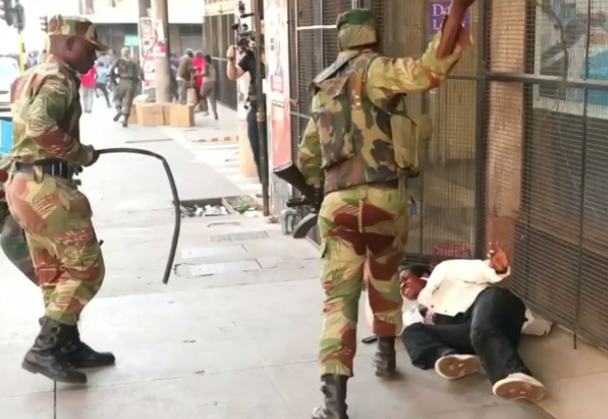
At least 3 people are reported to have died in Harare on 1 August as a result of the Zimbabwe Defence Forces’ (ZDF) use of live ammunition “to disperse” unarmed protestors in Harare’s Central Business District.
Members of the ZDF are reported to have fired live bullets against the fleeing crowd, and assaulted people indiscriminately, resulting in injuries and loss of life.
While the ICJ does not condone acts of violence carried out by protesters and party supporters, it strongly condemns the intentional use of lethal force and other actions of the ZDF, which were disproportionate and unnecessary in the circumstances.
According to the ICJ, the unrest could have been contained in a manner consistent with Zimbabwe’s international human rights law obligations, which, in turn, could have avoided loss of lives and injuries to protesters and bystanders.
“The use of lethal force on unarmed protesters must never be condoned,” said Sam Zarifi, the ICJ Secretary General.
“The intentional lethal use of firearms may only be made when strictly unavoidable in order to protect life,” he added.
The ICJ reminds the authorities in Zimbabwe of their commitment to rule of law, constitutionalism and protection of human rights as provided for under the Constitution and relevant international human rights law and standards.
The ICJ calls on them to uphold the rule of law and protect human rights during this post-election period.
The ICJ urges the responsible authorities to hold to account members of the ZDF responsible for the loss of life and limb during the protests on 1 August.
Contact:
Arnold Tsunga, Director of the Africa Regional Programme, International Commission of Jurists C: +263 77 728 3248, E: arnold.tsunga(a)icj.org
Background information
Protests erupted in the morning of 1 August 1 2018 during the announcement of the results for the National Assembly following “the Harmonised Elections” held on 30 of July 2018.
It is alleged by authorities that protesters were damaging property during the protest.
Media reports published later in the day indicate that the Zimbabwe Republic Police (ZRP) invoked section 37(1) of the Public Order and Security Act [Chapter 11 :17], which allows the Minister of Home Affairs upon request by the Commissioner General of Police to seek assistance from the Zimbabwe Defence Forces (ZDF) to quell civil commotion in any district and for the ZDF to assist.
The Zimbabwean Constitution recognizes and protects the rights of citizens to freely and peacefully demonstrate and petition.
It also guarantees the freedom of assembly and association.
Although section 86 of the Constitution makes clear the non-absolute nature of these rights, Zimbabwean authorities must be reminded that any limitations must be in terms of a law of general application and must be fair, reasonable, necessary and justifiable in a democratic society based on openness, justice, human dignity, equality and freedom.
Citizens of Zimbabwe are also reminded of these constitutional provisions and encouraged to exercise their rights within the confines of the law.
Jul 30, 2018 | News
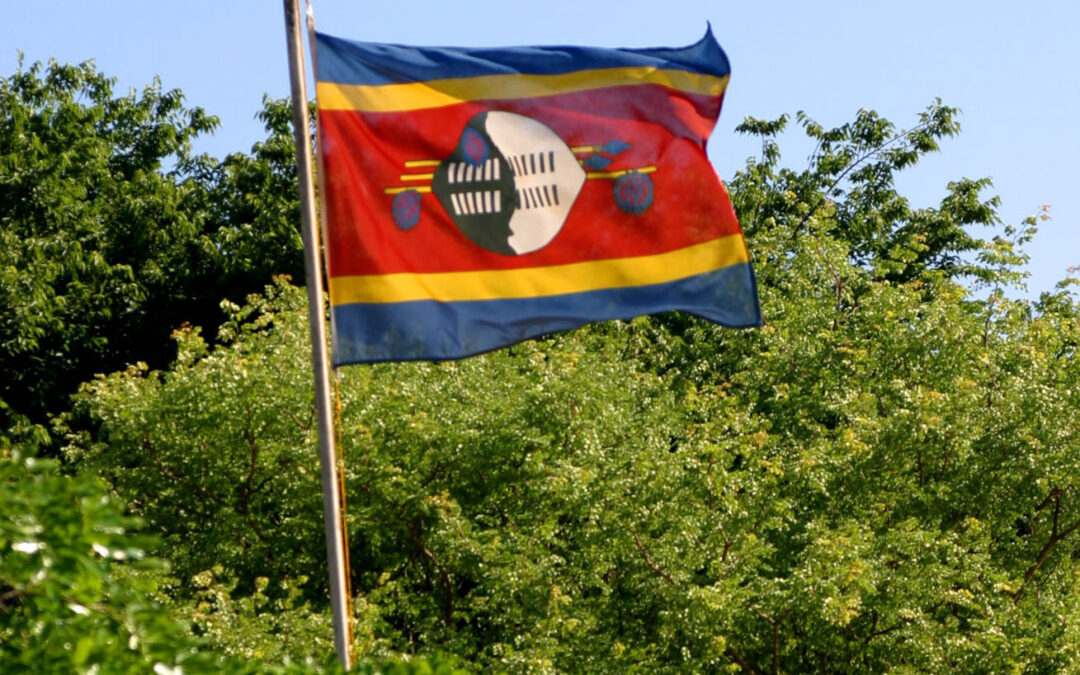
On 25 July 2018, the ICJ facilitated an integrated meeting of governmental stakeholders in the justice chain involved in different aspects of combatting sexual and gender-based violence (SGBV) in the Kingdom of Eswatini (Swaziland), the first meeting of its kind.
The meeting was convened by ICJ Commissioner and Principal Judge of the High Court of Eswatini, Justice Q. M. Mabuza. It followed a meeting held in February 2018 on combating SGBV in Eswatini and an ICJ report on key challenges to achieving justice for gross human rights violations in Eswatini, the latter of which recommended that justice sector stakeholders involved in the investigation, prosecution and sanctioning of, and provision of redress to victims for, acts of SGBV should convene six-monthly meetings so as to develop a common and integrated approach to the effective combating of SGBV.
The integrated meeting involved senior officials from the Office of the Deputy Prime Minister, the Office of the Attorney General, the Office of the Director of Public Prosecutions, the police, correctional services, and the judiciary.
The meeting discussed the fight against SGBV in the context of the Guidelines on Combating Sexual Violence and its Consequences in Africa, and other international standards. It considered the national legal and policy framework on SGBV; practices and challenges in the investigation and prosecution of SGBV; the sanctioning of SGBV offences; and the rehabilitation of sexual and domestic violence offenders by correctional services. Perspectives of the Office of the Deputy Prime Minister, the police and the judiciary were emphasized during discussions.
Stakeholders discussed issues with a view to identifying gaps and challenges in national law, policy and practice when measured against regional and global standards and best practices, as well as with a view to considering potential solutions to those gaps and challenges. The meeting agreed on next steps, including on concrete action that aligns with and/or augments the National Strategy to End Violence. Stakeholders agreed that they should all be involved in the early stages of cases involving SGBV.
Stakeholders also agreed that the recently enacted Sexual Offences and Domestic Violence Act will only be effectively implemented if justice sector stakeholders are well coordinated. Stakeholders agreed that integrated meetings should be held regularly, at intervals of no less than six months including, if possible, before the end of 2018.
Jul 19, 2018 | News
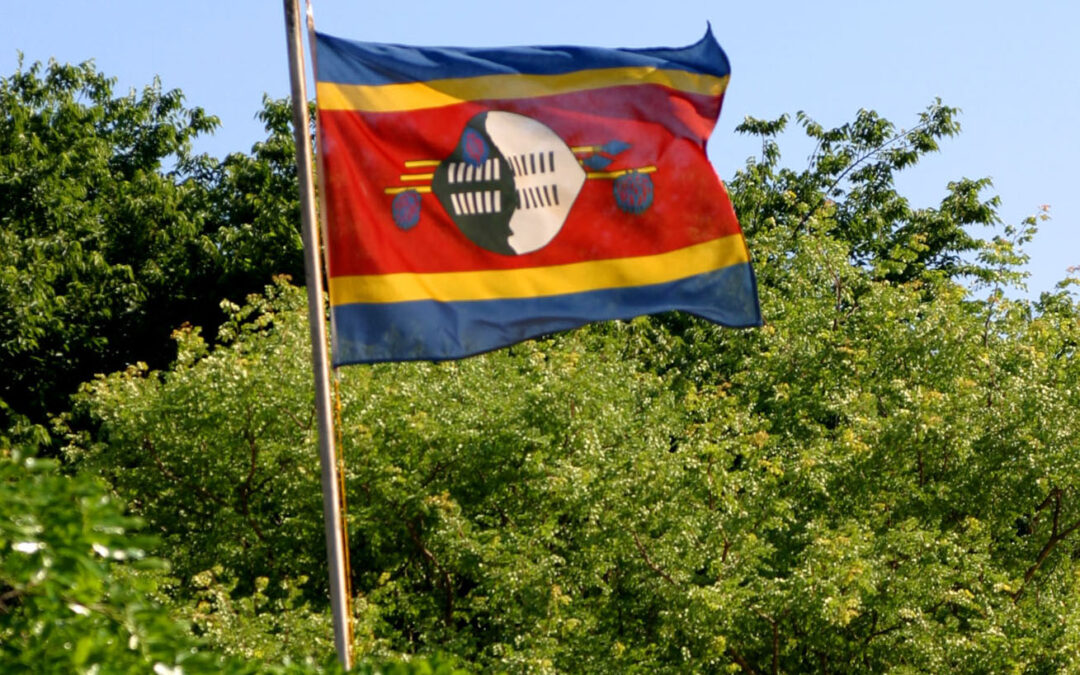
His Majesty King Mswati III of the Kingdom of Eswatini (formerly known as the Kingdom of Swaziland) yesterday gave his royal assent to the Sexual Offences and Domestic Violence Act, a milestone in the fight against sexual and gender-based violence (SGBV) in the country.
In its May 2018 report on key challenges to achieving justice for human rights violations in Swaziland, the ICJ identified the widespread occurrence of SGBV, with discriminatory practices based on customary laws and traditional beliefs undermining equality between men and women and the access by victims of such violence to effective remedies and reparation, as well as the holding to account of perpetrators of such violence.
Eswatini’sNational Strategy to End Violence in Swaziland 2017-2022, produced by the Office of the Deputy Prime Minister in collaboration with the UN Population Fund, itself pointed to an alarming rate of increasing violence in all its forms, noting that its most common form was gender-based violence, disproportionately affecting women and girls.
The new law follows a protracted legislative process, first initiated in 2009; then resumed in 2015. It has also been accompanied by increasing attention and concern by international human rights mechanisms, including the UN Human Rights Committee and the Committee on Elimination of Discrimination against Women.
Building on ICJ initiatives to bring together international, regional and local SGBV experts in 2015, and on sustainable development goals on access to justice and gender equality in 2017, the ICJ with local partners convened a workshop on combatting SGBV in Swaziland in February 2018. In consultations during and around this most recent workshop, interlocutors signaled fears that the Senate of Swaziland was equivocating on passage of the 2015 Bill. Responding to local partners’ requests, the ICJ made a submission to the Senate in March 2018, bringing to its attention to the global and regional obligations of the Kingdom to enact the legislation, as well as the Government’s own commitments to do so. The Senate soon after voted to adopt the legislation.
The new law for the first time criminalizes marital rape and other domestic violence offences; makes provision for Specialised Domestic Violence Courts; creates mechanisms and avenues for reporting of offences; and requires medical examination and treatment of victims. These are issues that had not been previously provided for.
Enactment of the law is significant, incorporating into domestic law a very large part of Eswatini’s international human rights obligations, including those arising from the Africa region, to criminalize and sanction the perpetrators of SGBV. It also discharges commitments made by His Majesty’s Government during the 2016 Universal Periodic Review.
Just as important will be the effective implementation of the new law to combat SGBV by bringing perpetrators to account and providing victims with access to justice.
With a view to enhancing the prospects of an effective and comprehensive approach to that end, the ICJ’s Commissioner, and Principal Judge of the High Court, Justice Qinsile Mabuza, will next week be coordinating a meeting of governmental justice sector stakeholders involved in combatting SGBV in the country. This first coordinated meeting of governmental actors will focus on issues of investigation, prosecution and sanctioning of sexual and gender-based violence crimes, including the role of social and medical services.
The ICJ is also commissioning a report on the access of victims of SGBV to effective remedies and reparation. Focused on case studies, the report will include attention to lack of justice through acquittals that have been prompted by inadequate laws or procedures and/or through lack of prompt or sufficient forensic or medical evidence. This report will feed into discussions at a second meeting of governmental justice sector stakeholders, intended for 2019.