May 30, 2016 | News
The ICJ commends the victims of the former Chadian president Hissene Habre for their relentless pursuit of justice that resulted in Habre’s conviction of crimes against humanity.
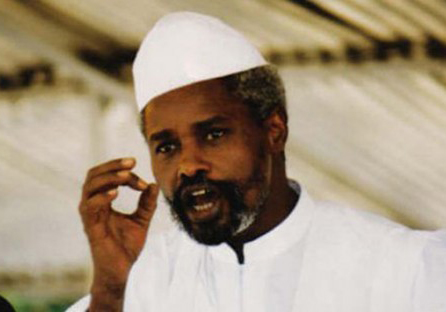
Today Hissene Habre (photo) was convicted for the murders, summary executions and torture of over 40,000 people, which were committed during his rule from 1982-1990 until he was deposed by the current president Idriss Deby Itno.
For over two decades victims and survivors groups have been campaigning with human rights organizations for an end to the lack of accountability and impunity that enabled Habre to spend years in exile before prosecution.
Speaking after the handing down of the judgement by the Extraordinary African Chambers, Wilder Tayler, ICJ’s Secretary General, reminded the African Union of the “need to enhance effectiveness of the African Court on Human and Peoples’ Rights to ensure that crimes against humanity can be addressed in a timely way that ensures the provision of remedies to victims of human rights violations.”
Further, Tayler urged other countries that have housed war criminals to reconsider their attitude towards international human rights and criminal law, and to ensure that international jurisdiction and prosecution requirements to end impunity are met.
In conclusion, the Secretary General, expressed his hope that “this event mark the beginning of the end of the African continent being perceived as an epicentre of impunity.”
Contact
Arnold Tsunga, ICJ Regional Director for Africa, t: +27 73 131 8411, e: arnold.tsunga(a)icj.org
Apr 2, 2016 | News
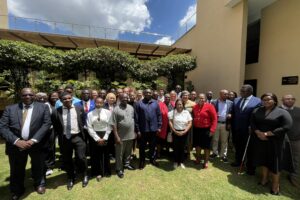
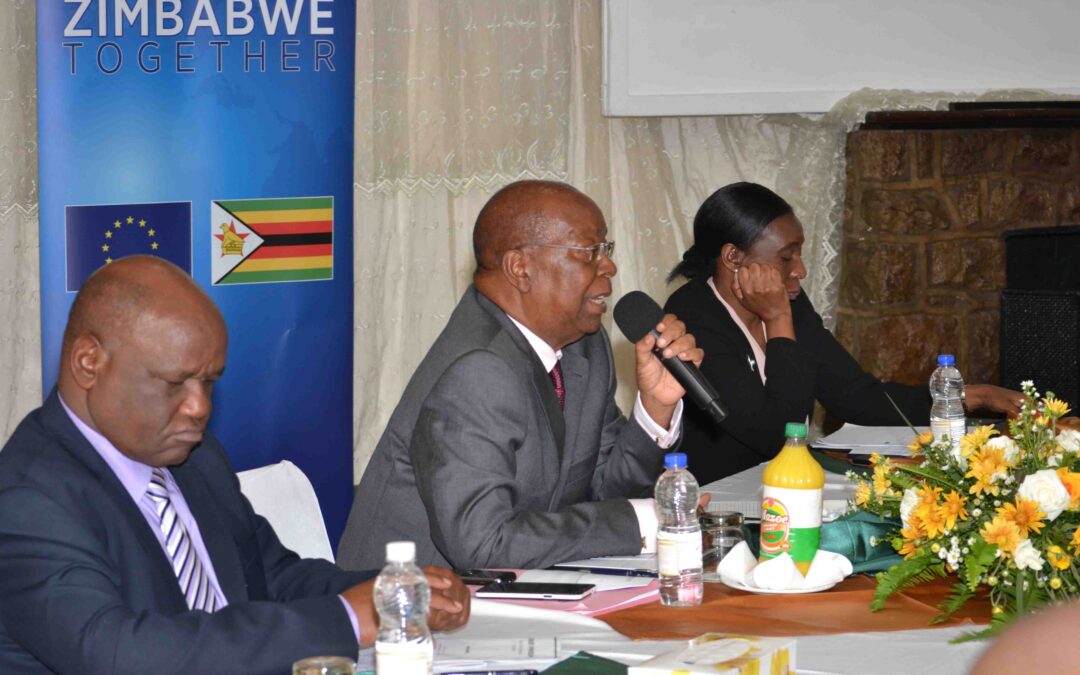
The ICJ and the Judicial Service Commission of Zimbabwe held the End of Term Symposium for the judiciary of Zimbabwe at the Troutbeck Inn in Nyanga, 31 March – 2 April 2016.
Chief Justice Chidyausiku in his opening remarks at the End of Term Symposium, stated that the Symposia are important because they give judges an opportunity to meet and engage with each other on various issues of interest or concern.
Additionally the purpose of the Symposium is to improve the quality of service in terms of judgments and the speedy outcome of cases.
In attendance at the Symposium were 72 delegates including judges from the Supreme Court, High Court and Labour Court, as well as representatives from the Law Society of Zimbabwe.
The programme included a joint session with all the courts in attendance, to discuss topics of judicial ethics and case management.
Mar 23, 2016 | Advocacy, Non-legal submissions
Today, the ICJ made a submission to the Human Rights Council’s Working Group on the Universal Periodic Review in advance of the Human Rights Council’s review of Uganda in October/November 2016.
In its submission, the ICJ expressed concern about the detrimental impact of the adoption and enforcement of the Anti-Homosexuality Act, 2014; the effect of pre-existing and extant criminalization of consensual same-sex sexual conduct; and the introduction of the Prohibition of Promotion of Unnatural Sexual Practices Bill, on the respect for and the protection and realization of human rights in Uganda.
A copy of the submission can be found here:
Uganda-ICJ CESCR submission-Advocacy-non legal submission-2015-ENG (full text in PDF)
Mar 1, 2016 | Events
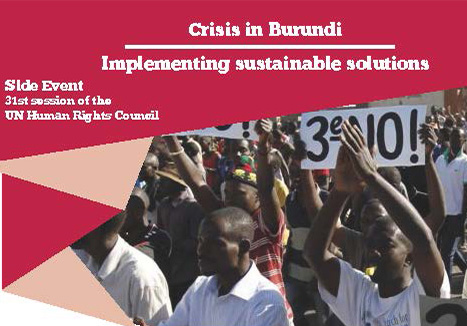
The ICJ is co-sponsoring a panel discussion on the situation for human rights in Burundi, as a side-event to the UN Human Rights Council, 4 March 2016.Details are available in the flyer available to download here: HRC31-sideeventflyer-burundi-2016
Feb 18, 2016
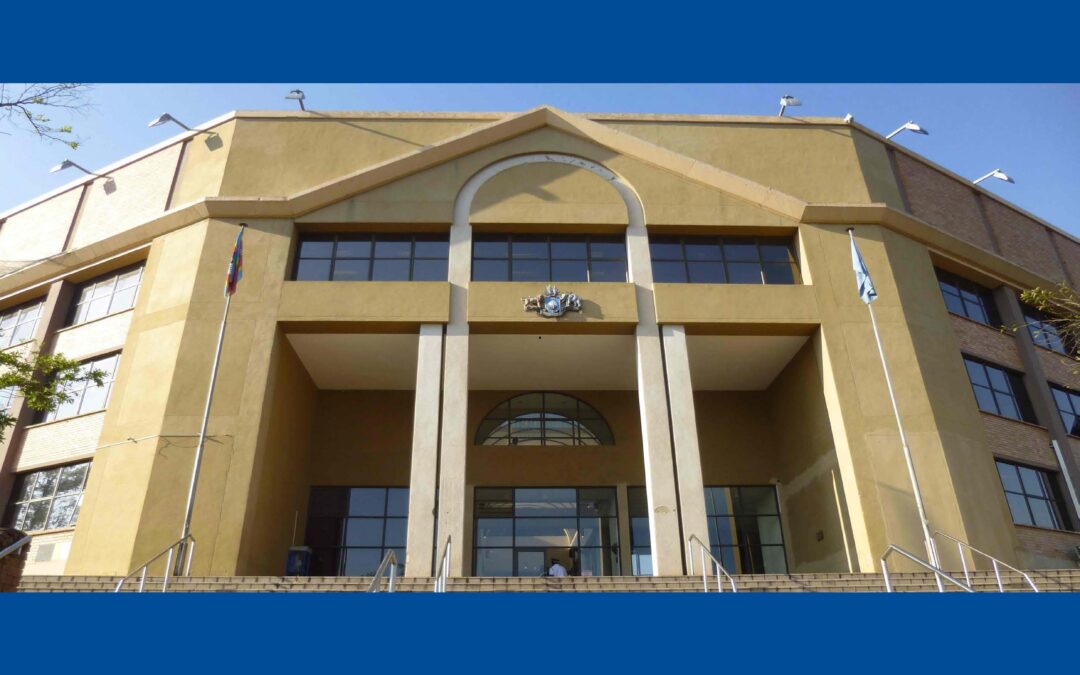
Today the ICJ launched a new report that makes several findings and recommendations regarding the independence and accountability of the judiciary in the country.
The report is a result of the International Fact Finding Mission in Swaziland (IFFM-SZ) held in 2015 by the ICJ, in collaboration with the Africa Judges and Jurists Forum (AJJF), Judges for Judges Netherlands (J4J) and the Commonwealth Magistrates’ and Judges’ Association (CMJA).
The mission was conducted at the backdrop of a number developments of concern for the independence and accountability of the judiciary in Swaziland.
The report observes that:
- The Kingdom of Swaziland has a constitutional and legislative framework that does not respect the separation of powers or provide the necessary legal and institutional framework and safeguards to ensure the independence of the judiciary;
- The former Chief Justice Ramodibedi failed to protect and defend the institutional independence of the judiciary;
- The Executive failed to respect the independence of the judiciary; and
- The failure to respect the independence of the judiciary by the Executive and the failure by the Chief Justice to defend the institutional independence of the judiciary created conditions conducive to abuse of the legal system for personal gain
Presenting the Mission’s findings, the ICJ Africa Regional Programme Director, Arnold Tsunga urged the Crown, Judiciary, civil society and international community to collectively work towards the implementation of the recommendations to strengthen the institutional and structural independence of the judiciary thereby restoring citizen’s and stakeholders confidence in the judiciary and the rule of law.
Contact
Arnold Tsunga, ICJ Regional Director for Africa, t: +27 73 131 8411, e: arnold.tsunga(a)icj.org
Swaziland-Justice locked out RoL crisis-Publications-Fact Finding Mission Report-2016-ENG (full report, in PDF)