Feb 26, 2019
The ICJ has joined with other NGOs in a letter urging States to ensure that the UN Human Rights Council adopts a resolution that provides for a time-bound plan for the Government of Sri Lanka to implement its obligations and commitments for reconciliation, accountability and human rights in the country.
The letter reads as follows:
“February 25, 2019
Your Excellency,
Sri Lanka: Need for time-bound plan for implementation of commitments to the Human Rights Council
We write to seek your support in ensuring that the United Nations Human Rights Council (HRC or Council) adopts a resolution at this 40th session to maintain scrutiny of Sri Lanka’s progress towards implementation of its commitments, including, at minimum, regular reporting to the Council and a time-bound plan, developed in collaboration with the Office of the High Commissioner for Human Rights, to implement its pledges.
In October 2015, the Council adopted resolution 30/1 by consensus in which Sri Lanka, through its co-sponsorship, committed to 25 key undertakings across a range of human rights issues. A core commitment was to set up four transitional justice mechanisms to promote “reconciliation, accountability and human rights” in the country. These included an accountability mechanism involving international judges, prosecutors, investigators, and defense lawyers; a truth and reconciliation mechanism; an office of missing persons; and an office for reparations.
While some positive steps have been taken by the government to date, both the current and former High Commissioners in their reports have expressed concern at the slow rate of progress.
The UN High Commissioner for human rights, Michelle Bachelet, noted in her September 2018 update that Sri Lanka has “moved too slowly towards meaningful implementation of the transitional justice agenda.” She reiterated concern at the “lack of sufficient progress, particularly towards truth seeking and accountability” during the recent intersessional dialogue with HRC members and observers on February 4, 2019, noting that this created “significant obstacles to reconciliation.”
Her predecessor, Zeid al Ra’ad Hussein, in his opening remarks to the Council on September 11, 2017, had called on the government to realize that its obligations are not a mere “box-ticking exercise to placate the Council but as an essential undertaking to address the rights of all its people.”
Yet, it appears that the Sri Lankan government continues with exactly that endeavor.
Thus far only the Office of Missing Persons has been set up, but progress was delayed. The commissioners were appointed only in February 2018 and making the office operational was marred with logistical difficulties. The commissioners have held both public and private consultations with the families of victims and are observing the ongoing excavation and exhumation of a mass grave in Mannar. However, in its interim report in September 2018, the Office of Missing Persons called for “active cooperation” of various relevant state institutions, which has not been entirely forthcoming. Families of the forcibly disappeared are still awaiting answers.
While President Maithripala Sirisena said that all military-occupied civilian land in the predominantly ethnic Tamil north would be released by December 2018, progress has stalled, hindered in part by broad military claims of national security and the lack of a transparent process. Nor has the government fulfilled its pledge to repeal the abusive Prevention of Terrorism Act (PTA). While the cabinet has apparently adopted draft legislation to set up a National Truth Commission, it has yet to be made public for civil society consultations. Sri Lankan civil society groups have expressed reservations about the proposed Office for Reparations Bill, calling for a fully independent mechanism.
There has been no discernible progress on establishing an accountability mechanism involving international judges, prosecutors, and investigators. Instead, Sri Lankan political leaders have repeatedly said that there will be no foreign judges, and that “war heroes” will be protected from prosecution. Importantly, a report issued by the government-appointed Consultation Task Force, which conducted extensive nationwide consultations on the transitional justice mechanisms, has not been given the attention it deserves. The Task Force report contains detailed recommendations, drawn from all affected communities including the security services, and provides an important blueprint for the way forward in addressing abuses by both the Liberation Tigers of Tamil Eelam and government forces.
Numerous UN experts and special mandates have since 2015 highlighted the marginalization and misrepresentation faced by minority communities, as well as a trust-deficit between these communities and the government, due in significant part to a culture of impunity. This was exposed during the recent political and constitutional crisis in Sri Lanka that laid bare the volatility of the political environment and the imperative need for continued international engagement to support the government in protecting human rights and promoting reform, reconciliation and accountability.
The Human Rights Council has played a vital role in identifying the many steps needed to reconcile with the past, ensure justice and accountability, and implement necessary reforms. Its scrutiny has proved an important catalyst for the progress made to date.
At the upcoming HRC session, the High Commissioner will present a substantive report on the progress towards implementation of the resolution – and the many challenges remaining. It is crucial that the Council remain fully engaged with the process until the commitments Sri Lanka made to the HRC and its own people through its co-sponsorship of resolution 30/1 are met in full.
To maintain confidence in the process, states should engage meaningfully with the High Commissioner’s report, and ensure the Council adopts a resolution that, at minimum:
- welcomes the High Commissioner’s report (once available) and calls on the government of Sri Lanka to implement its recommendations;
- reaffirms resolution 30/1 and underlines the importance of the commitments therein being met in full;
- maintains reporting by the High Commissioner on the status of Sri Lanka’s progress towards implementation of its commitments, with opportunities for regular interim reporting through oral updates and interactive dialogues;
- expresses concern at the slow rate of progress and requests the government of Sri Lanka to collaborate with the OHCHR to develop a time-bound implementation plan for consideration by the Council in an interactive dialogue.
Given the insufficient progress to date, and rising frustrations that any accountability process seems stalled, a mere technical “rollover” resolution will be insufficient unless it includes provision for a clear timetable and framework for Sri Lanka to fulfill its commitments.
States should also make clear that stronger measures are needed to assist in monitoring, implementing and fulfilling these commitments, such as an OHCHR field presence, Special Procedure and evidence-gathering, justice and accountability mechanisms.
Anything less would fall substantially short of the expectations of victims and their families, and risk undermining faith in the process long before the promises of reconciliation, justice and reform have been translated into reality. Sri Lanka’s long-term peace and stability hinges upon the international community’s willingness to support the government in addressing the past so that it may look to the future.
Sincerely,
Amnesty International
Asian Forum for Human Rights and Development (FORUM-ASIA)
Commonwealth Human Rights Initiative
Franciscans International
Human Rights Watch
International Commission of Jurists
International Movement Against All Forms of Discrimination and Racism (IMADR)
International Service for Human Rights
Sri Lanka Advocacy”
The ICJ also submitted a written statement on Sri Lanka, to the Human Rights Council session.
Feb 15, 2019 | News
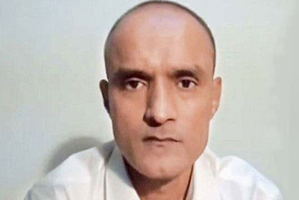
The International Court of Justice will hold public oral hearings in India v. Pakistan (Jadhav case) from 18 to 21 February 2019. Before they commence, the International Commission of Jurists (ICJ) has published a briefing paper to clarify the key issues and relevant laws raised in the case in a Question and Answer format.
The case concerns Pakistan’s failure to allow for consular access to an Indian national, Kulbhushan Sudhir Jadhav, detained and convicted by a Pakistani military court on charges of “espionage and sabotage activities against Pakistan.”
India has alleged that denial of consular access breaches Pakistan’s obligations under Article 36(1) of the Vienna Convention on Consular Relations (VCCR), to which both States are parties.
Pakistan has argued, among other things, that the VCCR is not applicable to spies or “terrorists” due to the inherent nature of the offences of espionage and terrorism, and that a bilateral agreement on consular access, signed by India and Pakistan in 2008, overrides the obligations under the VCCR.
ICJ’s Q&A discusses the relevant facts and international standards related to the case, including: India’s allegations against Pakistan; Pakistan’s response to the allegations; the applicable laws; and the relief the International Court of Justice can order in such cases.
Contact:
Frederick Rawski (Bangkok), ICJ Asia Pacific Regional Director, e: frederick.rawski(a)icj.org
Reema Omer (London), ICJ International Legal Adviser, South Asia t: +447889565691; e: reema.omer(a)icj.org
Additional information
While the case at issue is limited to denial of consular access under the VCCR, it engages other critical fair trial concerns that arise in military trials in Pakistan.
The International Commission of Jurists has documented how Pakistani military courts are not independent and the proceedings before them fall far short of national and international fair trial standards. Judges of military courts are part of the executive branch of the State and continue to be subjected to military command; the right to appeal to civilian courts is not available; the right to a public hearing is not guaranteed; and a duly reasoned, written judgment, including the essential findings, evidence and legal reasoning, is denied.
The case also underscores one of inherent problems of the death penalty: that fair trial violations that lead to the execution of a person are inherently irreparable.
Download the Q&A:
Pakistan-Jadhav case Q&A-Advocacy-Analysis brief-2019-ENG
Feb 13, 2019 | Multimedia items, News, Video clips
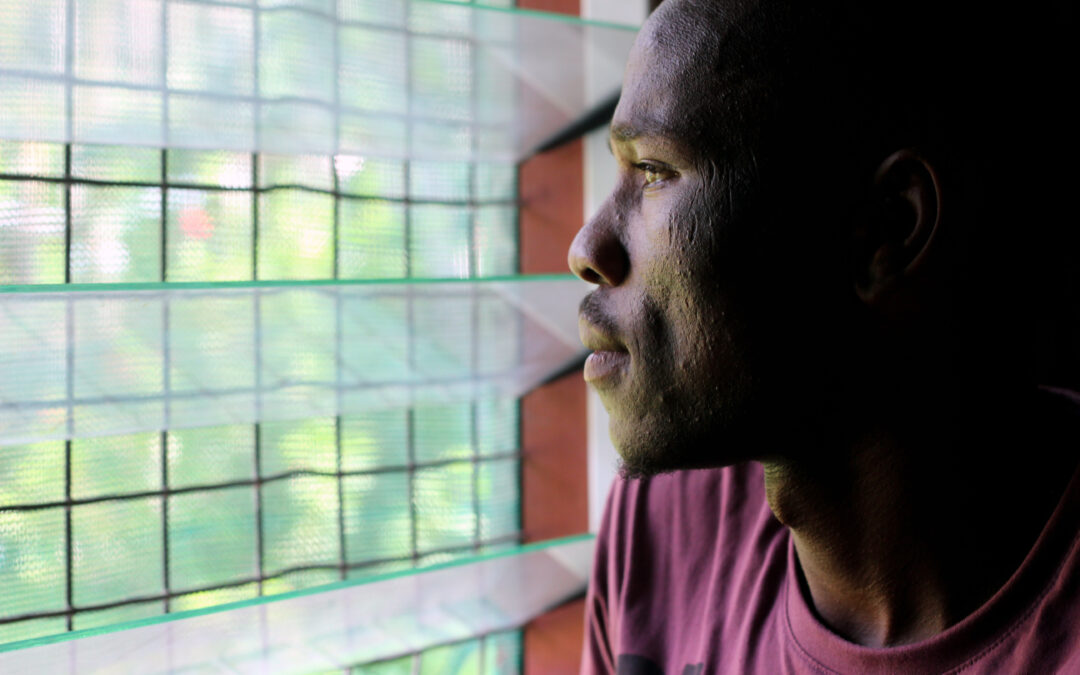
Sudanese refugee activist Abdul Aziz Muhamat is the 2019 Martin Ennals Award Laureate. He was among three finalists, selected last October by a jury of ten of the world’s leading human rights organizations, including the ICJ, together with Marino Cordoba Berrio (Colombia) and Eren Keskin (Turkey).
“This award sheds light on the very cruel refugee policy of the Australian Government. It also brings international attention to the dangers and ill-treatment faced by refugees all over the world, including in countries that claim they uphold the Refugee Convention,” said Abdul Aziz Muhamat.
The 2019 laureate was fleeing war in Darfour. In October 2013, he was forcibly transferred to the island of Manus (Papua New Guinea), as part of Australia’s “offshore” refugee policy, when the boat he was on was intercepted by the authorities.
More than five years on, he is still stranded on the island, like hundreds of refugees and asylum seekers, and subject to deprivation, harassment, humiliation and violence.
“This young man was only 20 when he first arrived on Manus island. Since then, he never stopped raising his voice for those who have been stripped of their most basic rights together with him. He showed extraordinary tenacity and courage, always resisting peacefully even after a police officer shot him in the leg,” said Dick Oosting, Chair of the Martin Ennals Foundation.
“The Australian Government must meet its international obligations and put an end to these inhumane practices,” he added.
Living conditions on Manus island have been denounced by human rights organizations.
“Men are dying, notably for lack of appropriate medical care. Some of them, including children, committed suicide. We need safety, we need freedom, we need hope. Opposing this cruel system helps preserve my self-esteem and my human dignity,” Abdul Aziz Muhamat said.
“I will continue to fight until all of us are safe and free,” he added.
The two other finalists of the 2019 Martin Ennals Award are Eren Kerskin (Turkey) and Marino Cordoba Berrio (Colombia).
A lawyer who has been engaged for over 30 years in advancing the rights of women, Kurds and LGBTI+ notably, Eren Kerskin was recently sentenced to twelve and a half years in prison for supporting the shuttered pro-Kurdish newspaper Özgür Gündem.
She has been accused of denigrating the Nation and insulting the President in her chronicles.
“Freedom of expression and freedom of thought are severely punished in Turkey nowadays. The government tolerates no dissenting voices. I know that by resisting we can change the world. Thank you for not forgetting us. Your solidarity and support give me the courage to continue the struggle,” she said.
Marino Cordoba Berrio is a leading figure within the Afro-Colombian community, which has been repeatedly stripped of its rights and lands.
For two decades, he has been struggling for the rights of his ethnic and other marginalized groups, at the risk of his own life in a country where more than 400 social leaders and human rights defenders have been killed in the past two years.
“Historically, we have suffered from political, economic and social exclusion. To seek and obtain justice for my people is crucial for our survival,” he said.
“Under the peace agreement and thanks to our efforts, ethnic groups’ rights are recognized and so is the need to protect them. It’s high time for the government of Colombia to meet its commitments and put an end to the escalating violence affecting our communities,” he added.
The Martin Ennals Award for human rights defenders is given out since 1994. It honours individuals who have shown outstanding commitment to the promotion and protection of human rights, despite the risks involved.
This award aims at shedding light on their situation and their work. It provides them with international recognition and protection, as well as financial support to pursue their activities.
The three finalists were honoured today during a ceremony organized by the City of Geneva.
The jury of the Martin Ennals Award comprises ten of the world’s leading human rights organizations: the ICJ, Human Rights Watch, Amnesty International, FIDH, Human Rights First, International Service For Human Rights, Brot für die Welt, Front Line Defenders, the World Organization Against Torture and HURIDOCS.
Contact:
Olivier van Bogaert, Director Media & Communications, ICJ representative in the MEA Jury, t: +41 22 979 38 08 ; e: olivier.vanbogaert(a)icj.org
Watch video of MEA Laureate 2019:
Watch the whole MEA 2019 Ceremony in Geneva:
Feb 12, 2019 | News
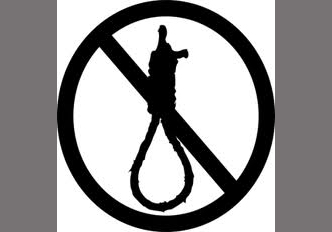
The ICJ has called on Sri Lanka’s President, Maithripala Sirisena, to retract his recent pronouncement that executions would resume in the country notwithstanding a moratorium on capital punishment that has lasted 43 years. The last execution was carried out in Sri Lanka in 1976.
“Resuming executions would be an egregious violation of Sri Lanka’s obligations under international human rights law, a serious threat to human rights in the country, and it would be inconsistent with the global trend towards the abolition of the death penalty,” said Frederick Rawski, ICJ’s Asia-Pacific Director.
Speaking in Parliament last week, President Sirisena vowed to resume executions of those convicted of “drug offences” as early as within the next two months.
The ICJ considers any resumption of executions in Sri Lanka as constituting a violation of international law and an appalling disregard for the international human rights system as a whole.
“At least 150 countries have now either abolished the death penalty or instituted an official or unofficial moratorium. There is a growing understanding around the world that the death penalty is an unacceptable assault on rights and dignity,” Fredrick Rawski added.
The ICJ opposes the death penalty in all circumstances – as it constitutes a violation of the right to life and its imposition constitutes per se cruel, inhuman, or degrading punishment.
The Human Rights Committee, the Treaty Body supervising the implementation of the International Covenant on Civil and Political Rights (ICCPR), by which Sri Lanka is bound, has recently made clear in its General Comment 36 on Right to life that, “it is contrary to the object and purpose of Article 6 [of the ICCPR, which enshrines the right to life] for States parties to take steps to increase de facto the rate and extent in which they resort to the death penalty”, and that, “States parties that are not yet totally abolitionist should be on an irrevocable path towards complete eradication of the death penalty, de facto and de jure, in the foreseeable future. The death penalty cannot be reconciled with full respect for the right to life, and abolition of the death penalty is both desirable and necessary for the enhancement of human dignity and progressive development of human rights.”
Moreover, the UN Human Rights Committee has made it clear that the imposition of the death penalty for “drug offenses” is incompatible with the Covenant.
The UN General Assembly has adopted repeated resolutions, most recently in December 2018, by overwhelming majority in calling for all retentionist States to observe a an immediate moratorium with a view to abolition.
It must be noted that Sri Lanka voted in favor of a moratorium on the use of the death penalty in the 2018 UN GA Resolution. This commitment should not be reversed, but upheld in practice instead, the ICJ says.
The ICJ calls on the Government of Sri Lanka to reject the resumption of executions and to do away with the death penalty once and for all. Instead of planning on resuming executions, the Sri Lankan authorities should focus on effective, evidence-based approaches to crime prevention in manners that conform to international human rights law and standards, such as formulating policies and legislation that address the underlying social and economic causes of criminality, which are also vital to ensuring stability and the rule of law.
The ICJ also urges Sri Lanka to immediately ratify the 2nd Optional Protocol to the International Covenant on Civil and Political Rights, which obligates State Parties to take all necessary measures to abolish the death penalty.
Feb 11, 2019 | News
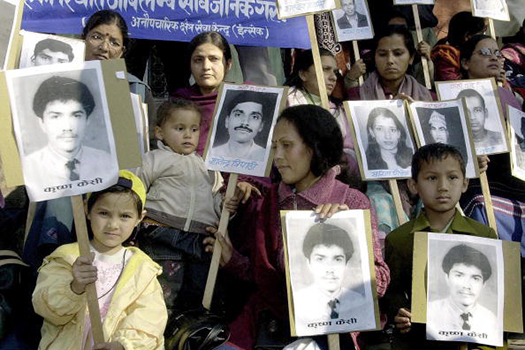
The ICJ, Amnesty International and TRIAL International today called for the Government of Nepal to commit to a transparent and consultative transitional justice process that complies with international law and the judgments of the Supreme Court of Nepal.
On 6 February, the Government of Nepal extended the mandates of the Truth and Reconciliation Commission (TRC) and the Commission on the Investigation of Enforced Disappearance of Persons (CIEDP) for an additional year and committed to the selection of new commissioners by April 2019.
Following the announcement, the ICJ, Amnesty International and TRIAL International voiced concerns about past approach to transitional justice and urged the Government to ensure that the next two months are used to get the flawed process on track.
The organizations warned that this should not become another missed opportunity to ensure that victims are provided the justice, truth and reparation that they so desperately seek.
“A further one-year extension will be meaningless if measures are not taken to secure the independence and impartiality of the commissions,” said Frederick Rawski, ICJ Asia Pacific Director.
“This can only be achieved through a transparent selection process driven by a genuine will to combat impunity – not just for conflict victims, but for future generations,” he added.
The three organizations reiterated their view that the process to date has failed to deliver justice, truth or reparation for victims of crimes under international law and gross human rights violations or establish laws and institutional safeguards to ensure that such crimes are never repeated.
The organizations underscored the need for independent, competent and impartial commissions, compliance with international law, and the meaningful participation of conflict victims, civil society and National Human Rights Commission in the design and implementation of the process.
“This is a great opportunity for Nepal to learn from its past, as well as experiences from other post-conflict societies, that the credibility of transitional justice process ultimately lies on the integrity, competence, independence and expertise of the commissioners. The independence of the Commission, together with a legal framework in accordance with international law, will make or break the success of the commitment to guarantee justice, truth and reparation,” said Biraj Patnaik, South Asia Director of Amnesty International. “The process for appointing new commissioners must be transparent and open to public scrutiny. Victims and civil society must have a robust opportunity to propose and vet candidates.”
The organizations also noted with disappointment that substantive legal concerns raised repeatedly by victims, civil society and the international human rights community have gone unanswered.
The government has not given a clear indication as to whether or how these concerns will be addressed.
“In addition to its obligation to ensure that conflict victims have access to an effective remedy and reparation, the authorities have a separate and independent obligation to investigate and if there is sufficient admissible evidence, prosecute those suspected of criminal responsibility in fair trials before ordinary civilian courts – and, if found guilty, punish them with appropriate penalties which take into account the grave nature of the crimes,” said Helena Rodríguez-Bronchú, Head of TRIAL International’s program in Nepal.
“These obligations are clearly established in international law, as well affirmed in ruling after ruling by the Supreme Court. It is about time that the Government stopped proposing measures that are clearly inconsistent with the letter and spirit of those judgements,” she added.
Concerns raised about existing, and proposed, legislation include: disparities between the definitions of specific crimes under international law and human rights obligations and violations under national, and international law; inadequate provisions to ensure that serious crimes under international law are subject to criminal accountability (including punishment proportionate to the seriousness of the crimes); and a reliance on compensation at the expense of other forms of reparation and remedy for conflict survivors and their families
The ICJ, Amnesty International and TRIAL International had previously submitted a legal analysis of draft transitional justice legislation circulated in 2018, including recommendations on how to ensure compliance with international law and good practices.