Apr 1, 2019 | News
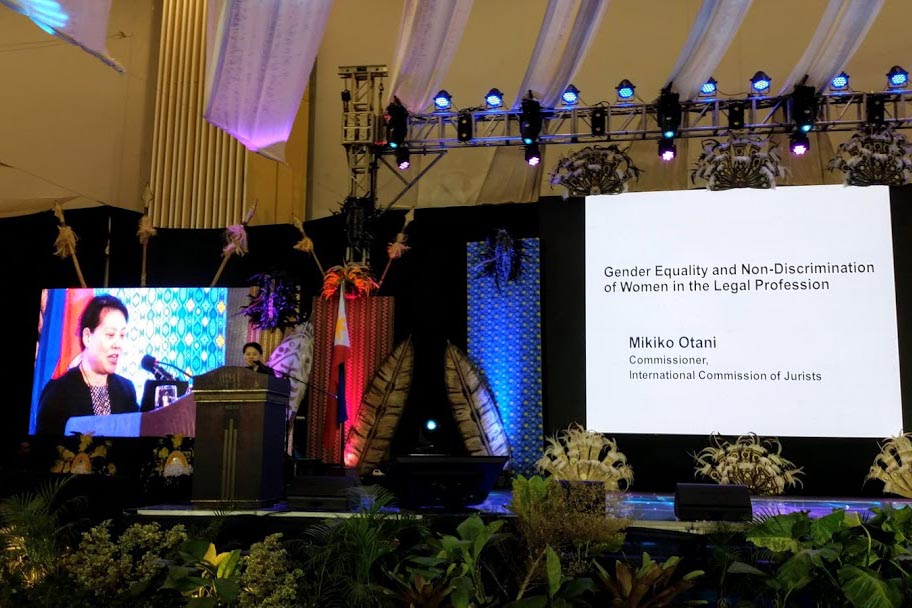
On 31 March, Mikiko Otani, ICJ’s Commissioner and a member of the UN Committee on the Rights of the Child, spoke to Filipino lawyers at the bi-annual National Lawyers’ Conference of the Integrated Bar of the Philippines (IBP), which took place at the Iloilo Convention Center, Iloilo City.
Mikiko Otani, who had been Chair of the Committee on International Human Rights of the Japan Federation of Bar Associations (JFBA) remains active in the JFBA, talked about the importance of advancing gender equality in the legal profession and the important initiatives of the JFBA on eliminating gender discrimination.
She noted that “female lawyers experience many forms of discrimination in the workplaces, practices, court rooms and bar associations.”
In countries all over the world, many formal barriers women used to face in entering the legal profession, including admission to law schools, the bar, have been eliminated.
However, women continue to face barriers, some of which are specific to the legal profession, but others common to women who work more generally.
Mikiko Otani noted that when she started practice as a lawyer in 1990, women applicants for jobs at law firms would often be asked during the interview whether they planned on getting married or having children.
Law firms preferred to hire male lawyers as they were thought to be unencumbered with looking after household matters, such as housekeeping and child care.
She recalled, “My colleagues questioned my decision to get married and have children almost immediately after becoming a lawyer while also continuing my practice as this was an unusual for women lawyers in Japan to do at that time. They felt that my decision to start a family at that point would be a hindrance to my career.”
She also talked about the bias observed in case assignment, where only male lawyers would be assigned to cases that required extensive traveling, while female lawyers would be often assigned to family cases, which are considered to be easy, unpopular or low-profile cases.
There was also frequent bias against female lawyers in promotion or offering partnership in law firms, contributing to a major gender gap in income between male and female lawyers.
In 2008, the JFBA formulated a Basic Plan which included the study of inequalities between male and female lawyers in Japan, finding ways to ensure a work-life balance for women, creating complaint handling bodies, and hosting trainings and educational activities in order to promote gender equality.
Mikiko Otani’s remarks resonated among many female lawyers in the Philippines, who shared in the discussion that followed that they face the same challenges.
“As lawyers, it is our responsibility to assist everyone, including women, in accessing justice,” said Marienne Ibadlit, a member of the Board of Governors of the IBP.
“We cannot be faithful to this responsibility if within our profession, we perpetuate gendered relationships and social inequalities that discriminate against women. A bar association that is committed to gender equality is a prerequisite to a justice system that does not discriminate against women and ensures the full enjoyment of women of their human rights.”
Contact:
Emerlynne Gil, Senior International Legal Adviser for Southeast Asia, t: +662 619 8477 (ext. 206) ; e: emerlynne.gil(a)icj.org
Mar 31, 2019 | News
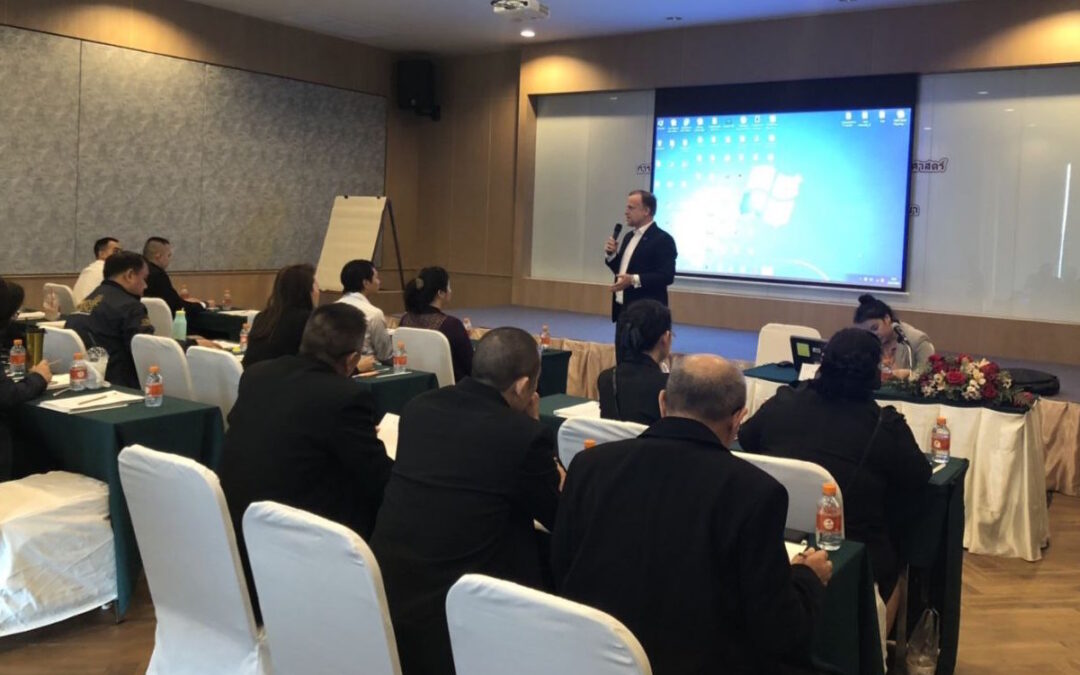
From 29 to 31 March 2019, the ICJ co-hosted a workshop in Ayutthaya province for authorities from Thailand on Human Rights, Investigation Techniques and Forensic Examination of Evidence. The event focused on how such investigations should be conducted in accordance with international human rights law and standards.
The workshop was co-hosted with Thailand’s Ministry of Justice and the United Nations Office of the High Commissioner for Human Rights (OHCHR).
The participants included 35 criminal investigators, public prosecutors, representatives of the Ministry of Justice’s Department of Special Investigation (DSI), the Central Institute of Forensic Science (CIFS), the Ministry of Defense, the National Anti-Corruption Commission and the Office of the Narcotics Control Board.
Kingsley Abbott, Senior Legal Adviser for Global Redress and Accountability at the ICJ and a member of the Working Group in revising the Minnesota Protocol, presented a summary of the international human rights legal framework applicable to the investigation of unlawful deaths and enforced disappearance.
He also introduced an outline of the revised Minnesota Protocol on the Investigation of Potentially Unlawful Death (2016), which was launched in Thailand on 25 May 2017.
The Protocol formed the core of the materials used at the workshop. He also addressed the use of telecommunication evidence as evidence at trial.
Other speakers included:
- Amornrat Lekwichai, Senior Professional Level Forensic Scientist from the CIFS, who addressed the use of telecommunication and digital evidence in criminal cases towards establishing the identity of suspects;
- Pornthip Rojanasunan, Adviser with the CIFS and a member of the Advisory Panel in revising the Minnesota Protocol, who spoke on forensic pathology and the need for independent autopsies in an independent and impartial investigative process;
- Badar Farrukh, Human Rights Officer from OHCHR, who addressed witness interviews and witness protection;
- Angkhana Neelapaijit, National Human Rights Commissioner and spouse of lawyer Somchai Neelapaijit, a victim of enforced disappearance; and
- Somchai Homlaor, a leading Thai human rights lawyer and member of several independent fact-finding commissions, who raised concerns about challenges for accountability for human rights abuses in Thailand’s criminal justice.
This workshop is part of the ICJ’s ongoing efforts to ensure the domestic implementation of international law and standards on the investigation of potentially unlawful deaths and enforced disappearances.
The ICJ has held several Workshops on the same topic including:
Regional Workshops
National Workshops
Contact
Kingsley Abbott, Senior Legal Adviser for Global Redress and Accountability, ICJ Asia Pacific Regional Office, t: +66 94 470 1345, e: kingsley.abbott@icj.org
Mar 25, 2019
An open letter to the UN Secretary General signed by 19 international NGOs welcomes his initiative to review United Nations operations in Myanmar, and calls for the review to be open and transparent.
At a time when the protection and promotion of human rights around the world is under increasing threat, a strong, transparent, effective, and accountable UN is essential.
Download the letter here: Myanmar-Letter UNSG-Advocacy-open letters-2019-ENG
Mar 20, 2019 | Advocacy, Non-legal submissions
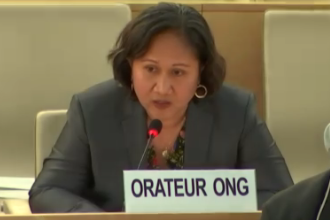
The ICJ today called at the UN for prompt establishment of a judicial accountability mechanism with international involvement, for Sri Lanka.The statement, delivered during an interactive dialogue on the OHCHR report on Sri Lanka at the Human Rights Council in Geneva, read as follows:
“The ICJ welcomes the comprehensive report of the OHCHR on promoting reconciliation, accountability and human rights in Sri Lanka (A/HRC/40/23). We share OHCHR’s observation that there is a lack of progress and absence of a comprehensive strategy for implementation of all commitments made under Resolution 30/1.
ICJ is particularly concerned about the lack of progress in the area of criminal accountability (as noted in Paragraph 27 of the report). We believe that there is an urgent need to establish a judicial mechanism with the involvement of foreign judges. We echo the sentiments of the OHCHR regarding the inability of the Sri Lankan courts, on their own, to address the impunity of security forces for crimes under international law.
Failure of the criminal justice system to effectively address emblematic cases (as reflected in Paragraph 38 of the report) clearly indicates the level of capacity and willingness on the part of the State even today to prosecute and punish perpetrators of serious crimes when they are linked to the security forces or other positions of power.
ICJ also notes that women are grossly under-represented in the judiciary in Sri Lanka, which prevents women human rights defenders and female victims from having confidence in the ordinary criminal justice system, impeding their full engagement and participation in pursuing accountability for crimes committed against them during the conflict and other transitional justice processes.
A judicial mechanism with the involvement of foreign judges is particularly urgent for women in conflict-affected areas who still live in a highly militarized environment and are compelled to live among their perpetrators – those who have been accused of war crimes including rape and other forms of sexual violence.
We therefore reject calls for a purely domestic mechanism. Indeed, the ICJ considers that the continuing failure of the Government to ensure justice means that referral to the International Criminal Court or the creation of another international mechanism to facilitate criminal accountability would be fully warranted. The draft resolution before this session of the Council, reaffirming all elements of resolution 30/1, thus already represents a deep compromise and anything less than the existing text would be wholly unacceptable.
Mar 15, 2019
Today, ICJ and Human Rights Lawyers’ Association (HRLA) submitted recommendations to the Ministry of Justice on Thailand’s draft National Action Plan on Business and Human Rights (‘draft NAP’), dated 14 February 2019, scheduled for public consultation between 15 February 2019 and 15 March 2019.
The organizations called for modifications to the draft NAP to ensure adequate legal and other protections for human rights defenders and their work, which was indicated as the identified as one of the NAP’s key priority areas.
The ICJ and HRLA welcomed the overall commitment expressed by the Thai Government, including the Ministry of Justice’s, to implement the United Nations Guiding Principles on Business and Human Rights (UNGPs) through the NAP.
The organizations expressed concern, however, at the removal of a commitment that had been included in earlier versions of the NAP to “push for an Anti- Strategic Litigation against Public Participation (SLAPP) law” from the current draft NAP.
This removal was justified in the draft NAP on the grounds that the Court of Justice had already introduced legal amendments to prevent SLAPP lawsuits, in particular by enacting revisions of the Criminal Procedure Code (Articles 161/1 and 165/2). The draft NAP also refers to certain powers of a public prosecutor as another means of preventing SLAPP lawsuits.
ICJ and HRLA indicated that these laws were inadequate to prevent judicial harassment of human rights defenders and called for the draft NAP to include concrete action with the force of law to protect individuals, and in particular human rights defenders, from judicial harassment, including through SLAPP lawsuits.
Background
Thailand is among the first countries in the ASEAN region to have begun the elaboration of a NAP. The UN Human Rights Council has stressed the importance of the development of National Action Plans by States to implement the UN Guiding Principles on Business and Human Rights, which include the obligation to provide protections for persons from any adverse human rights impact of business activity.
On 15 February 2019, the Ministry of Justice circulated a final draft of the NAP for public consultation.
Upon finalization of the draft following the consultation, the draft will be forwarded to the Office of the National Economics and Social Development Council for their consideration before being sent to the Cabinet for approval.
The draft NAP sets out 4 key priority areas including (1) labour; (2) land, environment and natural resources; (3) human rights defenders; and (4) cross border investment and multi-national enterprises.
The draft NAP has set out several action points aimed to address concerns regarding the above-noted key priority areas for the period of 5 years (2019-2023).
Thailand-SLAPP Analysis-Advocacy-Analysis brief-2019-ENG (analysis in English, PDF)
Thailand-SLAPP Analysis-Advocacy-Analysis brief-2019-THA (analysis in Thai, PDF)