Dec 2, 2018 | Events, News
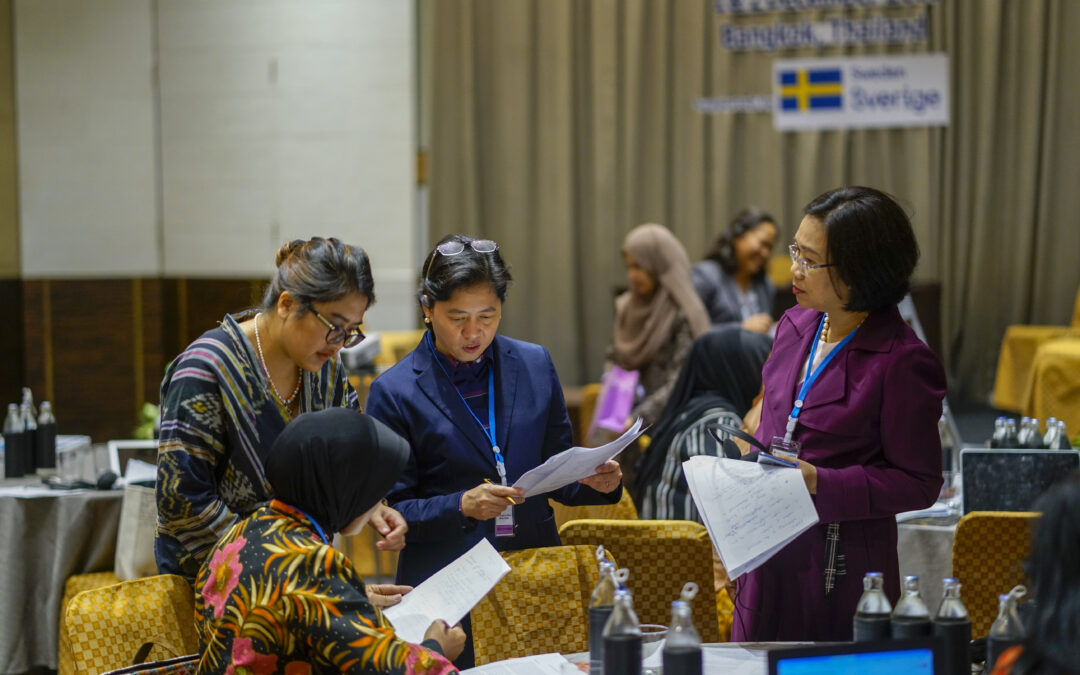
On 1-2 December 2018, the International Commission of Jurists (ICJ) held its 2018 Southeast Asia Regional Judicial Dialogue on enhancing access to justice for women in the region.
Participants included judges from Cambodia, Indonesia, Nepal, Pakistan, Philippines, Sri Lanka and Thailand.
The discussions, held in Bangkok, were focused around resources important for judges to aid in enhancing the capacity of their peers in eliminating gender discriminatory attitudes and behaviours towards women in their work. These resources include a training manual on the use of the Bangkok General Guidance for Judges in Applying a Gender Perspective, and a draft reference manual on women’s human rights and the right to a clean, healthy, safe and sustainable environment.
Frederick Rawski, ICJ’s Director of the Asia and the Pacific Programme, opened the dialogue by emphasizing how important it is for judges to be gender sensitive in their delivery of justice. This could only be done by applying a framework that gives primary attention on ensuring recognition of the applicable human rights, institutional support for the promotion of these rights, and accountability mechanisms for their implementation.
Roberta Clarke, Commissioner of the ICJ and Chair of the organization’s Executive Committee, noted that this judicial dialogue demonstrates the ICJ’s commitment to have a sustainable contribution to the implementation of international human rights standards at the domestic level. She hoped that the judges could contextualize the resources presented and bring these back to their countries for trainings of their peers.
This judicial dialogue is part of a joint project on access to justice for women that ICJ is implementing with UN Women.
Anna Karin Jatfors, UN Women-Asia Pacific’s Interim Regional Director shared that gender stereotypes and social norms which discriminate women are not unique in each country. She pointed out the importance of the ICJ and UN Women collaborating in this project to deconstruct this image to bring better access to justice to women in the region.
Overall, the dialogue was rich and substantive, with the full and active participation from all participating judges who shared their views and experiences on countering gender discrimination in cases before them. At the end of the judicial dialogue, the participating judges expressed strong interest to use the resources for capacity building initiatives of their peers in their own countries.
Contact
Emerlynne Gil, Senior International Legal Adviser, t: +662 619 8477 (ext. 206), email: Emelynne.gil(a)icj.org
Nov 26, 2018 | News
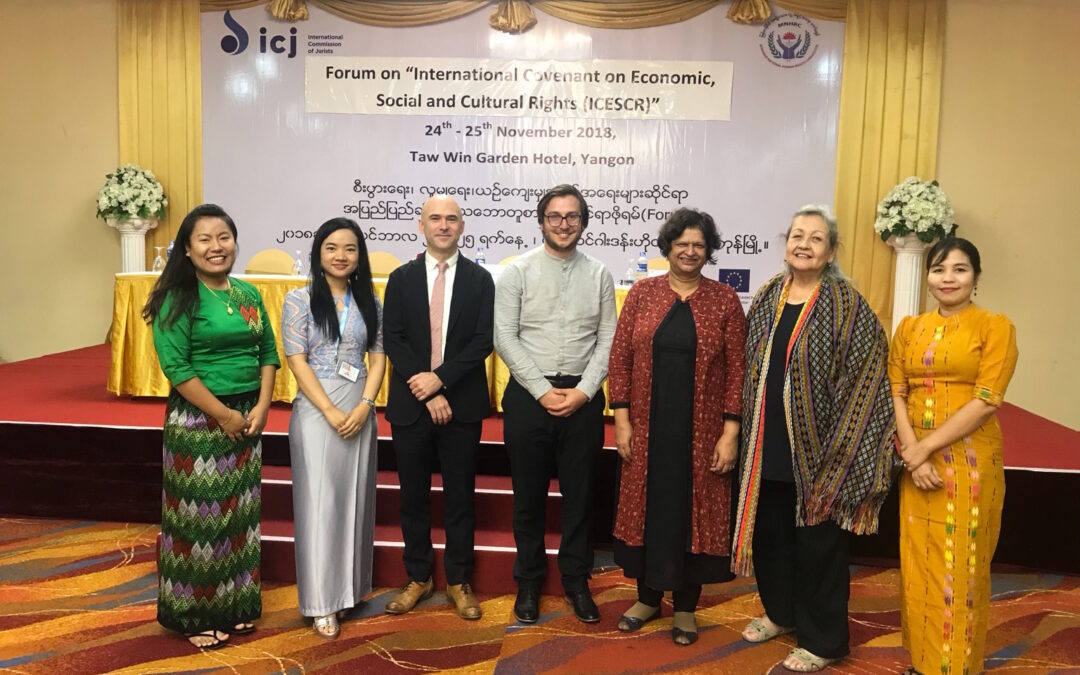
The ICJ convened a Forum of international legal experts and Myanmar civil society actors in Yangon from the 24 to 25 November 2018 on Myanmar’s obligations under the International Covenant on Economic, Social and Cultural Rights (ICESCR).
Representing each of Myanmar’s 14 States and Regions, more than 130 civil society members attended the event, which was co-hosted with the Myanmar National Human Rights Commission in collaboration with Dan Church Aid, Norwegian Church Aid, Equality Myanmar and the Local Resource Center.
The ICJ’s Asia Pacific Regional Director, Frederick Rawski, introduced the Forum objectives which were to raise awareness of the rights, obligations and reporting processes associated with Myanmar’s ratification of the ICESCR on 6 October 2017.
As a State Party to the ICESCR, Myanmar is obliged to respect, protect and fulfill a variety of human rights including the rights to: decent work, an adequate standard of living, adequate housing, food, water and sanitation, social security, health, and education.
The Chairperson of the UN Committee on Economic, Social and Cultural Rights, Virginia Brás Gomes, discussed the vital role civil society plays in documenting and providing information about human rights challenges, and advocating for law to be enforced and interpreted in compliance with the State’s international law obligations.
Virginia B. Dandan of the Philippines, a former Chairperson of the Committee, described the rights protected under ICESCR and highlighted the universality of human rights and the indivisibility of economic, social and cultural rights from other human rights including protection from discrimination.
Visiting Myanmar from the ICJ’s Southern Africa Office, legal adviser Timothy Fish Hodgson, ICJ Legal Adviser in the ICJ Africa Programme, discussed from a comparative perspective the justiciability of ESC rights in South Africa, and the roles lawyers and other civil society actors have played in progressing rights protections.
Legal advisers from the ICJ’s Myanmar Team moderated a series of panel discussions where civil society representatives discussed challenges and opportunities related to the realization of ESC rights in Myanmar.
Separate to this initiative, the visiting international experts also travelled to Nay Pyi Taw to engage with government. Myanmar’s first State report to the ESCR Committee is due in late 2019, also opening opportunities for civil society engagement.
This event was part of the ICJ’s ongoing effort to convene civil society actors to discuss the promotion and protection of human rights through legal mechanisms.
Nov 20, 2018 | News
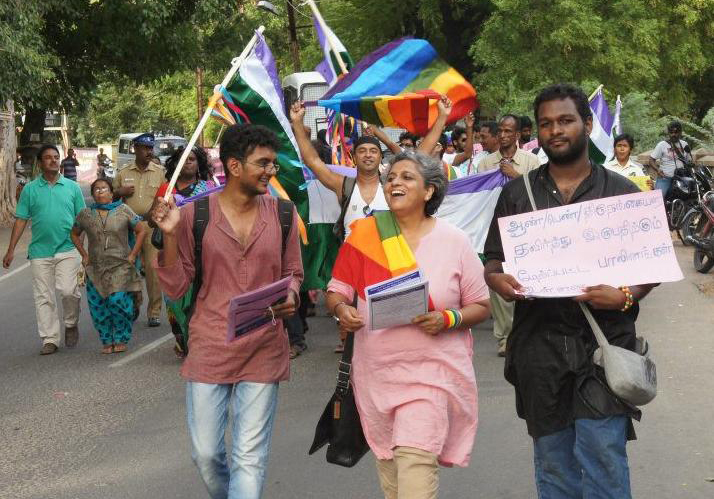
On the Transgender Day of Remembrance, the ICJ calls on all South Asian States to fulfill their international obligations to respect, protect and ensure the right to life of all transgender persons, including by investigating alleged violations of their right to life promptly, thoroughly and effectively.
While there has been some progress in protecting the human rights of transgender individuals through legislation and judicial decisions, in South Asia rampant violence from both state and non-state actors continues to place their lives at risk.
Most governments do not collect data on violence against transgender persons.
Trans Murder Monitoring, which records cases of murder of transgender persons based on accounts from individuals and civil society organizations, reports 2609 unnatural deaths of trans and gender-diverse persons across 71 countries between January 2008 and September 2018.
In South Asia, between 2008 and 2016, 58 transgender persons were reported murdered in India, 37 in Pakistan, 2 in Nepal, and 2 in Bangladesh.
“It is laudable that Pakistan, India and Nepal have taken measures to end discrimination against transgender persons, and have recognized their right to self-identify,” said Frederick Rawski, ICJ Asia-Pacific Director.
“However, violence, harassment, extortion, rape and murder of transgender persons continue to be committed. Police frequently refuse to file complaints, and are often themselves complicit in violence against transgender persons,” he added.
The judiciary has played an important role in protecting transgender rights in India, Nepal and Pakistan.
The Supreme Courts in all three countries have issued decisions recognizing transgender persons’ rights, including the right to self-identity one’s gender.
These decisions have acknowledged that transgender persons are particularly targeted with violence by state and non-state actors, and that police have largely failed to protect them from violence.
In some cases, the courts have ordered that new remedies be created under the law, and sought the enforcement of existing laws protecting transgender rights.
However, many of these decisions remain unimplemented, and violence against transgender people remains rampant in South Asia.
“The ICJ calls on all governments in the region to ensure that laws, policies and practices affecting transgender persons comply with international human rights law and standards,” Rawski said.
“All human rights abuses against transgender persons must be investigated, and the perpetrators brought to justice, including law enforcement officials who harass or abuse persons based on their gender identity,” he added.
Contact
Frederick Rawski, ICJ Asia Pacific Director, t: +66 644781121 ; e: Frederick.rawski(a)icj.org
Background
In India, in 2014, the Supreme Court in NALSA v. UOI recognized the right of transgender persons to self-identify their gender.
The Court has further acknowledged the existence of human rights violations against transgender persons at the hands of the police and private individuals and recommended that state and central government take steps to create public awareness about transgender persons’ rights.
Per a 2015 survey by the Kerala Government, “52% of the TGs [transgender people] are facing harassment from the police and “96% do not raise complaints against violence because of their gender identity”.
In Nepal, in 2007, the Supreme Court in Sunil Babu Pant v. Government of Nepal recognized the right of individuals to identify as male, female or “third gender”.
However, transgender persons continue to face arbitrary harassment and detention by security forces under laws like Public Offences Act, 1970, which allow for arrests without due process for up to 25 days.
This resulted in the Supreme Court of Nepal ordering law enforcement officials to desist from arresting persons based on their “personal interest or appearance,” though the decision remains largely unimplemented.
In Pakistan, in 2009, the Supreme Court directed the Government to recognize the human rights of transgender persons and subsequently, in 2018, the Parliament passed a law prohibiting discrimination against transgender persons.
The Transgender Persons (Protection of Rights) Act, 2018 of Pakistan prohibits harassment of transgender persons, including sexual, physical, mental and psychological harassment, and creates new remedies for complainants in addition to those available under the criminal justice system.
The effectiveness of the law remains to be seen, as police are often complicit in violence against transgender persons, particularly in extorting money from transgender women sex workers.
Read also
ICJ Practitioners’ Guide No. 4: Sexual Orientation, Gender Identity and International Human Rights Law, which provides legal practitioners, activists and policy-makers with detailed and practical references on international standards on sexual orientation, gender identity, gender expression, and sexual characteristics.
ICJ Comparative Law Casebook: Sexual Orientation, Gender Identity, and Justice, which provides legal practitioners, activists and policy-makers with a compilation of legal cases on sexual orientation, gender identity, gender expression and sex characteristics.
ICJ India 2017 Report: “Unnatural Offences” Obstacles to Justice in India Based on Sexual Orientation and Gender Identity, which provides a legal analysis of the discrimination and abuse faced by the LGBTI community in India based on over 100 interviews with LGBTI persons.
Nov 15, 2018 | News
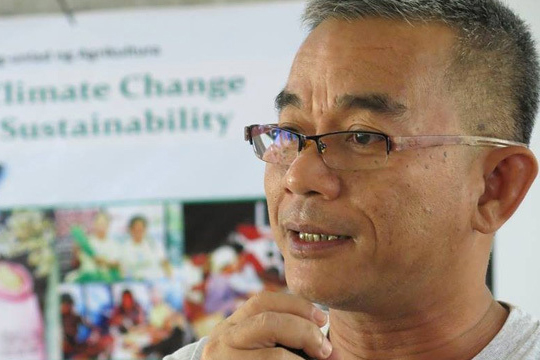
The ICJ and the Alternative Law Groups (ALG) today called on the Government of the Philippines to take immediate and effective action to addressing the apparently unlawful killing of Benjamin ‘Ben’ Ramos, a prominent lawyer and a founder of the National Union of People’s Lawyers (NUPL).
Benjamin Ramos was shot by two unidentified men in the public plaza of Barangay 5, Kabankalan City on 6 November 2018.
The ICJ and ALG call on the Government of the Philippines to conduct a thorough, prompt, impartial, and independent investigation into the killing of Benjamin Ramos.
Benjamin Ramos, in his work with the NUPL, had previously provided legal assistance to the families of the victims of the ‘Sagay 9 massacre’, which involved the killing of nine sugarcane farmers from the National Federation of Sugar Workers by unidentified armed men on 20 October 2018 in Negros Occidental, a province in the central part of the Philippines.
Given the sensitive nature of the work of Benjamin Ramos, which involved confronting powerful interests, it is important that any investigation consider the suspected links between that work and his killing.
“It is essential for the proper and effective functioning of the administration of justice that lawyers are kept safe as they fulfill their duties to protect the rights of their clients and promote the cause of justice,” said Emerlynne Gil, ICJ’s Senior International Legal Adviser.
As affirmed by the UN Basic Principles on the Role of Lawyers, governments must ensure that lawyers are able to perform all their professional functions without “intimidation, hindrance, harassment or improper interference.” In addition,“[w]here the security of lawyers is threatened as a result of discharging their functions, they shall be adequately safeguarded by the authorities”.
The organizations note that there have been at least thirty-four (34) lawyers killed since 2016, under the administration of President Rodrigo Duterte.
“The rising number of killings of lawyers is very concerning and alarming; it is an attack not only on individual lawyers but on the justice system as whole. The Philippine government must take immediate and proactive measures to ensure the safety of lawyers as they conduct their professional duties,” said Maria Generosa Mislang, National Coordinator of ALG.
Contact:
Emerlynne Gil, ICJ Senior International Legal Adviser, t: +662 619 8477 (ext. 206) ; e: emerlynne.gil(a)icj.org
Nov 5, 2018 | News
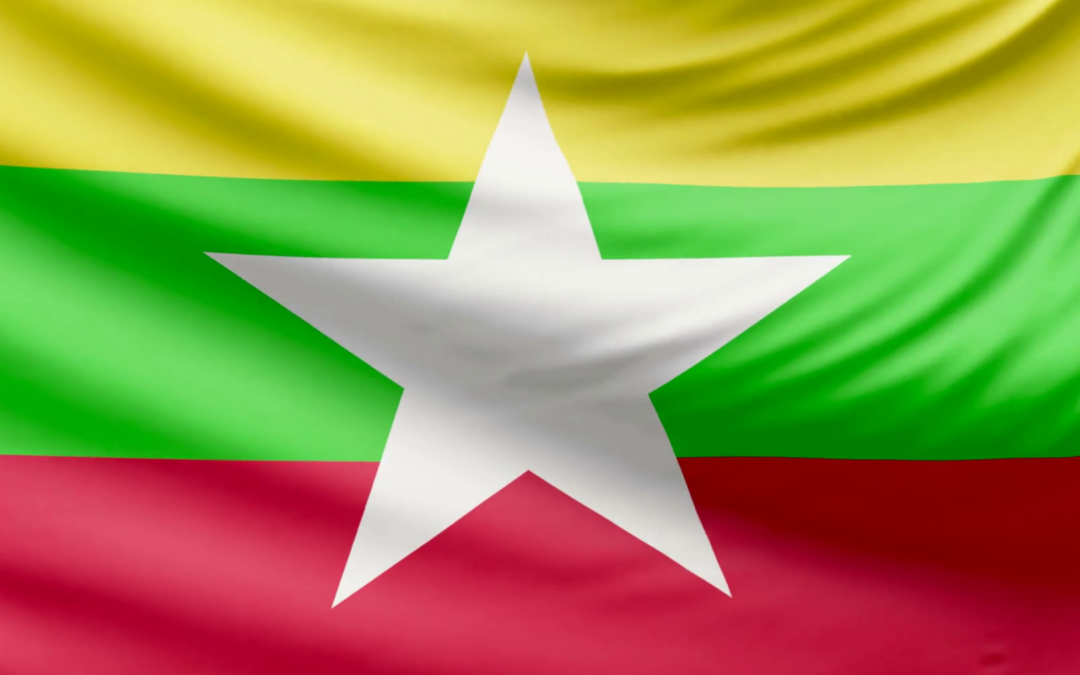
The ICJ convened a two-day workshop from 3rd to 4th November 2018 in Yangon, to enhance understanding of legal protections of the right to freedom of thought, conscience, religion or belief in Myanmar.
Freedom of thought, conscience and belief, often referred to as the right to freedom of religion of belief (FoRB) is considered by many to be one of the foundations of a democratic society.
The workshop was aimed at discussing State regulation of religion or belief in Myanmar and included some 40 human rights defenders, lawyers and members of religious groups, from across the country.
ICJ legal adviser Sean Bain introduced the right to FoRB under international law and standards – particularly Article 18 of the Universal Declaration of Human Rights, and Article 18 of the International Covenant on Civil and Political Rights. Mr Bain also discussed the complementarity of these articles with other rights, such as the right to freedom of expression, and highlighted the limitation clauses in the international treaties which provide a framework for resolving some of the tensions that can arise in specific cases.
Michelle Yesudas, a Malaysian human rights lawyer, shared good practices and lesson learned from application of strategic litigation in FoRB related cases in Malaysian context and spoke about potential approaches and strategies that could be adapted in Myanmar context to push the legislative reform and enforcement of the law.
The ICJ’s legal researcher Dr. Ja Seng Ing and national legal Adviser Advocate Daw Hnin Win Aung jointly facilitated two panel discussions on challenges in free practice of religion or belief specifically focusing on the worship places and Freedom of Expression.
Based on their own independent research, senior legal scholars and human rights defenders from Myanmar also provided their perspectives on national challenges, particularly the absence of the State fulfilling its responsibilities to protect FoRB in Myanmar. Advocate Daw Zar Li Aye discussed available legal remedies and encouraged legal advocacy strategies to ensure protections under the law in Myanmar.
The participants raised a number of notable issues on addressing identified obstacles to the free practice of religion or belief included the need for annulling discriminatory notifications restricting the rights to practice religion freely, the need for safe space to continue the dialogue between FoRB activists, other human rights defenders and lawyers on strategic litigation.
Participants at the conference also recognized the opportunity presented before them in advancing freedom of religion or belief in Myanmar and committed to working collectively to enhance this right.
This event is part of the ICJ’s ongoing effort to convene civil society actors including lawyers to discuss critical human rights issues in Myanmar with a view to advancing the protection of human rights in the country.