Feb 13, 2019 | Multimedia items, News, Video clips
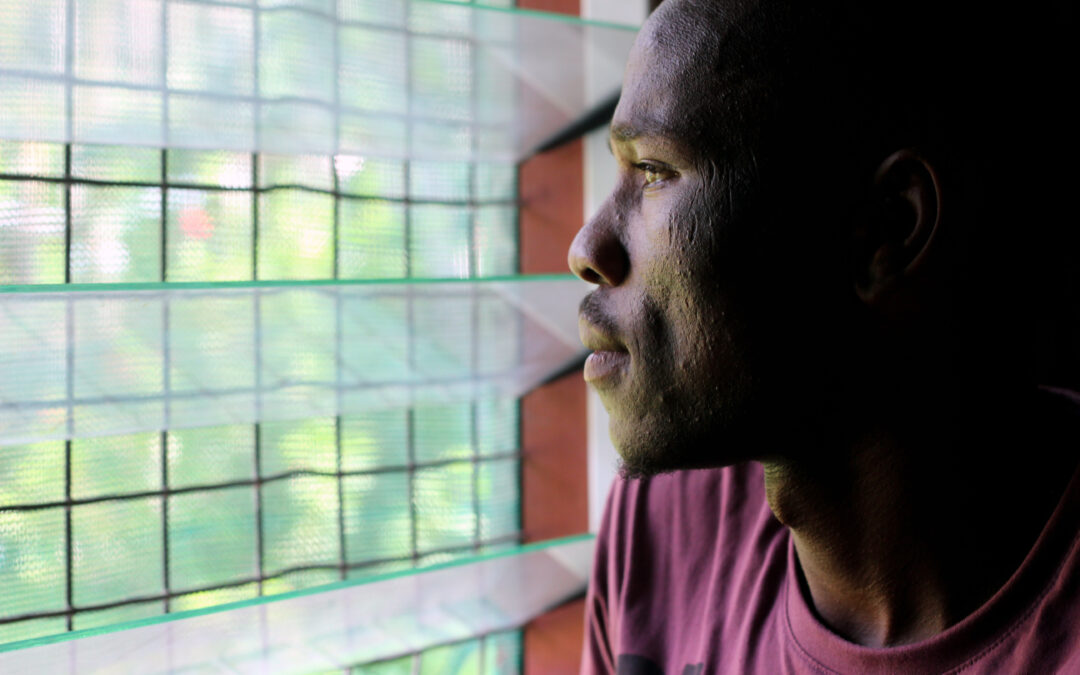
Sudanese refugee activist Abdul Aziz Muhamat is the 2019 Martin Ennals Award Laureate. He was among three finalists, selected last October by a jury of ten of the world’s leading human rights organizations, including the ICJ, together with Marino Cordoba Berrio (Colombia) and Eren Keskin (Turkey).
“This award sheds light on the very cruel refugee policy of the Australian Government. It also brings international attention to the dangers and ill-treatment faced by refugees all over the world, including in countries that claim they uphold the Refugee Convention,” said Abdul Aziz Muhamat.
The 2019 laureate was fleeing war in Darfour. In October 2013, he was forcibly transferred to the island of Manus (Papua New Guinea), as part of Australia’s “offshore” refugee policy, when the boat he was on was intercepted by the authorities.
More than five years on, he is still stranded on the island, like hundreds of refugees and asylum seekers, and subject to deprivation, harassment, humiliation and violence.
“This young man was only 20 when he first arrived on Manus island. Since then, he never stopped raising his voice for those who have been stripped of their most basic rights together with him. He showed extraordinary tenacity and courage, always resisting peacefully even after a police officer shot him in the leg,” said Dick Oosting, Chair of the Martin Ennals Foundation.
“The Australian Government must meet its international obligations and put an end to these inhumane practices,” he added.
Living conditions on Manus island have been denounced by human rights organizations.
“Men are dying, notably for lack of appropriate medical care. Some of them, including children, committed suicide. We need safety, we need freedom, we need hope. Opposing this cruel system helps preserve my self-esteem and my human dignity,” Abdul Aziz Muhamat said.
“I will continue to fight until all of us are safe and free,” he added.
The two other finalists of the 2019 Martin Ennals Award are Eren Kerskin (Turkey) and Marino Cordoba Berrio (Colombia).
A lawyer who has been engaged for over 30 years in advancing the rights of women, Kurds and LGBTI+ notably, Eren Kerskin was recently sentenced to twelve and a half years in prison for supporting the shuttered pro-Kurdish newspaper Özgür Gündem.
She has been accused of denigrating the Nation and insulting the President in her chronicles.
“Freedom of expression and freedom of thought are severely punished in Turkey nowadays. The government tolerates no dissenting voices. I know that by resisting we can change the world. Thank you for not forgetting us. Your solidarity and support give me the courage to continue the struggle,” she said.
Marino Cordoba Berrio is a leading figure within the Afro-Colombian community, which has been repeatedly stripped of its rights and lands.
For two decades, he has been struggling for the rights of his ethnic and other marginalized groups, at the risk of his own life in a country where more than 400 social leaders and human rights defenders have been killed in the past two years.
“Historically, we have suffered from political, economic and social exclusion. To seek and obtain justice for my people is crucial for our survival,” he said.
“Under the peace agreement and thanks to our efforts, ethnic groups’ rights are recognized and so is the need to protect them. It’s high time for the government of Colombia to meet its commitments and put an end to the escalating violence affecting our communities,” he added.
The Martin Ennals Award for human rights defenders is given out since 1994. It honours individuals who have shown outstanding commitment to the promotion and protection of human rights, despite the risks involved.
This award aims at shedding light on their situation and their work. It provides them with international recognition and protection, as well as financial support to pursue their activities.
The three finalists were honoured today during a ceremony organized by the City of Geneva.
The jury of the Martin Ennals Award comprises ten of the world’s leading human rights organizations: the ICJ, Human Rights Watch, Amnesty International, FIDH, Human Rights First, International Service For Human Rights, Brot für die Welt, Front Line Defenders, the World Organization Against Torture and HURIDOCS.
Contact:
Olivier van Bogaert, Director Media & Communications, ICJ representative in the MEA Jury, t: +41 22 979 38 08 ; e: olivier.vanbogaert(a)icj.org
Watch video of MEA Laureate 2019:
Watch the whole MEA 2019 Ceremony in Geneva:
Feb 12, 2019 | News
The ICJ has called on Sri Lanka’s President, Maithripala Sirisena, to retract his recent pronouncement that executions would resume in the country notwithstanding a moratorium on capital punishment that has lasted 43 years. The last execution was carried out in Sri Lanka in 1976.
“Resuming executions would be an egregious violation of Sri Lanka’s obligations under international human rights law, a serious threat to human rights in the country, and it would be inconsistent with the global trend towards the abolition of the death penalty,” said Frederick Rawski, ICJ’s Asia-Pacific Director.
Speaking in Parliament last week, President Sirisena vowed to resume executions of those convicted of “drug offences” as early as within the next two months.
The ICJ considers any resumption of executions in Sri Lanka as constituting a violation of international law and an appalling disregard for the international human rights system as a whole.
“At least 150 countries have now either abolished the death penalty or instituted an official or unofficial moratorium. There is a growing understanding around the world that the death penalty is an unacceptable assault on rights and dignity,” Fredrick Rawski added.
The ICJ opposes the death penalty in all circumstances – as it constitutes a violation of the right to life and its imposition constitutes per se cruel, inhuman, or degrading punishment.
The Human Rights Committee, the Treaty Body supervising the implementation of the International Covenant on Civil and Political Rights (ICCPR), by which Sri Lanka is bound, has recently made clear in its General Comment 36 on Right to life that, “it is contrary to the object and purpose of Article 6 [of the ICCPR, which enshrines the right to life] for States parties to take steps to increase de facto the rate and extent in which they resort to the death penalty”, and that, “States parties that are not yet totally abolitionist should be on an irrevocable path towards complete eradication of the death penalty, de facto and de jure, in the foreseeable future. The death penalty cannot be reconciled with full respect for the right to life, and abolition of the death penalty is both desirable and necessary for the enhancement of human dignity and progressive development of human rights.”
Moreover, the UN Human Rights Committee has made it clear that the imposition of the death penalty for “drug offenses” is incompatible with the Covenant.
The UN General Assembly has adopted repeated resolutions, most recently in December 2018, by overwhelming majority in calling for all retentionist States to observe a an immediate moratorium with a view to abolition.
It must be noted that Sri Lanka voted in favor of a moratorium on the use of the death penalty in the 2018 UN GA Resolution. This commitment should not be reversed, but upheld in practice instead, the ICJ says.
The ICJ calls on the Government of Sri Lanka to reject the resumption of executions and to do away with the death penalty once and for all. Instead of planning on resuming executions, the Sri Lankan authorities should focus on effective, evidence-based approaches to crime prevention in manners that conform to international human rights law and standards, such as formulating policies and legislation that address the underlying social and economic causes of criminality, which are also vital to ensuring stability and the rule of law.
The ICJ also urges Sri Lanka to immediately ratify the 2nd Optional Protocol to the International Covenant on Civil and Political Rights, which obligates State Parties to take all necessary measures to abolish the death penalty.
Feb 11, 2019 | News
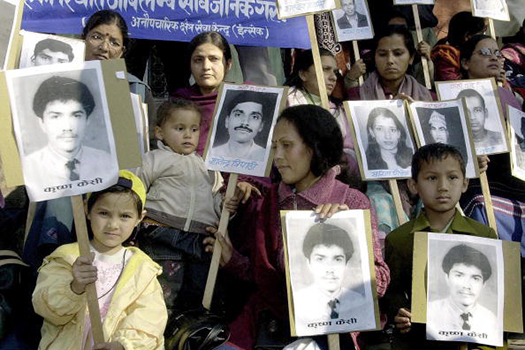
The ICJ, Amnesty International and TRIAL International today called for the Government of Nepal to commit to a transparent and consultative transitional justice process that complies with international law and the judgments of the Supreme Court of Nepal.
On 6 February, the Government of Nepal extended the mandates of the Truth and Reconciliation Commission (TRC) and the Commission on the Investigation of Enforced Disappearance of Persons (CIEDP) for an additional year and committed to the selection of new commissioners by April 2019.
Following the announcement, the ICJ, Amnesty International and TRIAL International voiced concerns about past approach to transitional justice and urged the Government to ensure that the next two months are used to get the flawed process on track.
The organizations warned that this should not become another missed opportunity to ensure that victims are provided the justice, truth and reparation that they so desperately seek.
“A further one-year extension will be meaningless if measures are not taken to secure the independence and impartiality of the commissions,” said Frederick Rawski, ICJ Asia Pacific Director.
“This can only be achieved through a transparent selection process driven by a genuine will to combat impunity – not just for conflict victims, but for future generations,” he added.
The three organizations reiterated their view that the process to date has failed to deliver justice, truth or reparation for victims of crimes under international law and gross human rights violations or establish laws and institutional safeguards to ensure that such crimes are never repeated.
The organizations underscored the need for independent, competent and impartial commissions, compliance with international law, and the meaningful participation of conflict victims, civil society and National Human Rights Commission in the design and implementation of the process.
“This is a great opportunity for Nepal to learn from its past, as well as experiences from other post-conflict societies, that the credibility of transitional justice process ultimately lies on the integrity, competence, independence and expertise of the commissioners. The independence of the Commission, together with a legal framework in accordance with international law, will make or break the success of the commitment to guarantee justice, truth and reparation,” said Biraj Patnaik, South Asia Director of Amnesty International. “The process for appointing new commissioners must be transparent and open to public scrutiny. Victims and civil society must have a robust opportunity to propose and vet candidates.”
The organizations also noted with disappointment that substantive legal concerns raised repeatedly by victims, civil society and the international human rights community have gone unanswered.
The government has not given a clear indication as to whether or how these concerns will be addressed.
“In addition to its obligation to ensure that conflict victims have access to an effective remedy and reparation, the authorities have a separate and independent obligation to investigate and if there is sufficient admissible evidence, prosecute those suspected of criminal responsibility in fair trials before ordinary civilian courts – and, if found guilty, punish them with appropriate penalties which take into account the grave nature of the crimes,” said Helena Rodríguez-Bronchú, Head of TRIAL International’s program in Nepal.
“These obligations are clearly established in international law, as well affirmed in ruling after ruling by the Supreme Court. It is about time that the Government stopped proposing measures that are clearly inconsistent with the letter and spirit of those judgements,” she added.
Concerns raised about existing, and proposed, legislation include: disparities between the definitions of specific crimes under international law and human rights obligations and violations under national, and international law; inadequate provisions to ensure that serious crimes under international law are subject to criminal accountability (including punishment proportionate to the seriousness of the crimes); and a reliance on compensation at the expense of other forms of reparation and remedy for conflict survivors and their families
The ICJ, Amnesty International and TRIAL International had previously submitted a legal analysis of draft transitional justice legislation circulated in 2018, including recommendations on how to ensure compliance with international law and good practices.

Feb 7, 2019 | Advocacy, Non-legal submissions
The ICJ has submitted a written statement on Sri Lanka to the Human Rights Council ahead of its 40th Session in Geneva.
Almost ten years after Sri Lanka emerged from a period of conflict and massive human rights violations, the Government of Sri Lanka still has largely failed to implement its human rights obligations and commitments as reflected in Resolution 30/1.
The ICJ statement focuses on two of four transitional justice mechanisms which the Government committed to establish under the Resolution: (a) the judicial mechanism with special counsel to investigate violations of human rights and international humanitarian law; and (b) the office of missing persons. It highlights how female victims of war are uniquely impacted by the Government’s failure to implement the commitments made before the UNHRC and underscores the importance of holistically including women when such measures are implemented.
Recommendations:
The ICJ considers that the gravity and character of the crimes under international law committed in Sri Lanka, and the failure of the Government of Sri Lanka to meet its obligations and commitments to ensure justice for such crimes including as provided for in resolution 30/1, means that referral to the International Criminal Court or the creation of another international mechanism to facilitate criminal accountability would be fully warranted. If however the Council does not choose to pursue these options at this stage, the ICJ urges the Council at minimum to:
- Continue the monitoring of Sri Lanka through the adoption of a new resolution to ensure that the Government complies with all its obligations and commitments as reflected in resolution 30/1.
- Provide for OHCHR to develop, with the Sri Lankan Government, an implementation strategy with definitive timelines to ensure that the time afforded under the new resolution is utilised to expedite the implementation of measures assured under Resolution 30/1.
- Encourage Member States to exercise universal jurisdiction in order to bring perpetrators to justice.
The ICJ urges the Government of Sri Lanka to:
- Take immediate measures to establish the judicial mechanism with international involvement as contemplated under operative paragraph 6 of Resolution 30/1. The mechanism should ensure gender parity, be accessible for women in civil society, and allow female victims to fully participate in the process.
- Spread awareness regarding the importance of certificates of absence and confirm to the community that issuance of a certificate will not result in the end of efforts to find the person.
- Ensure an overall gender strategy is integrated in all other transitional justice mechanisms that are yet to be established so that structural injustices against women, especially in terms of discrimination and lack of participation, are addressed.
(full text of submission, in PDF: UN-HRC40-SriLanka-WrittenStatement-2019-EN)

Jan 30, 2019
The ICJ today, alongside dozens of other non-governmental organizations, called on the UN Human Rights Council to adopt a resolution addressing the situation in China, at its upcoming March 2019 session.
The NGOs urge a resolution that would call on China, among other things:
- to provide independent international human rights experts with unfettered access to all parts of the country, including areas populated by ethnic and religious minorities;
- to promptly reform national security legislation to meet international standards, and to stop using such laws in ways that violate human rights;
- to release individuals — including human rights defenders and lawyers among others — unjustly or arbitrarily detained.
The letter reads as follows:
30 January 2019
At upcoming session of Human Rights Council, States should pass resolution to address human rights violations in the People’s Republic of China
Your Excellency,
The past year was marked by vitally important monitoring and review of China’s human rights situation by the United Nations human rights system. The upcoming session of the UN Human Rights Council provides a key opportunity to reinforce the issues raised over the last year, and express collective concern about worsening rights abuse in China and the government’s failure to follow through on its obligations and commitments.
Considerable information has been available in the last year for governments to deepen their understanding of the situation in the country, spanning two UN reviews and nearly two dozen expert letters or opinions, including a full paragraph in the annual update from the UN High Commissioner for Human Rights. Nonetheless, the Chinese state, at the direction of the Chinese Communist Party, continues to suppress dissent and undermine efforts to hold it accountable to its obligations under international agreements.
Millions in the country face dire abuses of their fundamental human rights – be they members of ethnic groups, practitioners of Islam, Tibetan Buddhism or Christianity, human rights defenders, feminists, petitioners, lawyers, journalists, professors or students. Uyghurs and Tibetans are particularly targeted with discriminatory policies and practices. Furthermore, these abuses increasingly affect individuals and communities beyond China’s borders.
In light of this, the international community must push with one voice for change. We urge your government to contribute to and support a resolution on the human rights situation in China.
In doing this, you will join with others to make clear that no State’s development model or economic and political influence can exempt it from its international human rights obligations. If China seeks to be a responsible member of the United Nations and global actor, it should be open to and engage with criticism, rather than seek to deflect or discredit views with which it disagrees.
Such a resolution and any other joint action at the Council should:
- urge prompt, unfettered and independent access to all parts of the country, in particular Uyghur, other Turkic Muslim and Tibetan areas, by independent international human rights experts, including the UN High Commissioner for Human Rights and relevant UN Special Rapporteurs;
- demand an end to the abuse of national security legislation as a means of criminalising the work of human rights defenders, freedoms of expression, association, religion or belief and subverting due process, and call on China to seek technical assistance from UN experts to this end, including at the Office of the High Commissioner for Human Rights (OHCHR).
- call for the immediate release of any and all individuals subjected to unlawful and unjustified deprivation of liberty, in particular those held extra-legally or in extended pre-trial detention, and provide remedies and reparations to address harsh treatment, at times including torture, and loss of livelihoods.
- express support for the OHCHR and UN Country Team to take steps to expand, improve and regularise monitoring and reporting of the situation in China.
Resisting efforts by China to shield itself from international scrutiny, analysis, and reporting is essential to preventing widespread impunity for violations which, in some cases and based on available reporting, may amount to crimes against humanity. This resistance has the greatest, and perhaps only, chance of success when conducted jointly, and when backed by a multi-pronged multilateral and bilateral effort.
We therefore urge you to take advantage of this moment, and the platform of the Human Rights Council, to convey to China the need to open itself to international monitoring and reporting, and the need for rapid and drastic improvement of its human rights performance across all civil, cultural, economic, political, and social rights.
In so doing, you will demonstrate your commitment to supporting the Chinese, Tibetan and Uyghur human rights communities – those most central to sustainable change, and yet those most vulnerable in the struggle for it. You will also send a clear message to the Chinese government that such abuses cannot be tolerated or ignored, and that the international community will defend the universality of human rights.
Please rest assured, your Excellency, of our highest consideration, and our willingness to engage with you on these issues in the days and weeks to come.
Sincerely,
- Asian Forum for Human Rights and Development (FORUM-ASIA)
- Asociación Cultural Tibetano-Costarricense
- China Human Rights Accountability Center
- China Labour Bulletin
- Christian Solidarity Worldwide
- CIVICUS
- Core Group for the Tibetan Cause
- Free Tibet
- Frontline Defenders
- Grupo de Apoio ao Tibete
- Human Rights in China
- Humanitarian China
- International Campaign for Tibet
- International Commission of Jurists
- International Federation for Human Rights (FIDH)
- International Service for Human Rights
- International Tibet Network Secretariat
- Lawyers for Lawyers
- Lawyer’s Rights Watch Canada
- LUNGTA – Actief voor Tibet
- Network of Chinese Human Rights Defenders
- PEN America
- Safeguard Defenders
- Students for a Free Tibet
- Students for a Free Tibet Denmark
- Swedish Tibet Kommitten
- The Rights Practice
- Tibet House, Moscow
- Tibet Initiative Deutschland
- Tibet Justice Center
- TIBET LIVES
- TibetMx Querétaro
- Tibet Society UK
- Tibet Support Group Netherlands
- Tibet Watch
- Tibetan Youth Association Europe
- Uyghur Human Rights Project
- West Africa Human Rights Defenders Network (ROADDH)
- World Organisation Against Torture (OMCT)
- World Uyghur Congress
Relevant Background
The below points summarize key updates from the last six months and provide additional detail for the substance of a resolution. It is important to note that joint action should not preclude continuing the positive practice of raising the overall deterioration of human rights in China through bilateral statements under the full range of dialogues and general debates on the Council’s agenda.
- In August 2018, a review by the Committee on the Elimination of Racial Discrimination declared that western China’s Xinjiang region was akin to a ‘no-rights zone’, and urged the government to take prompt action to disclose information about internment camps and to release the up to one million Uyghurs, Kazakhs and other Muslim minorities arbitrarily detained there.
- In her update to the September 2018 session of the Human Rights Council, the UN High Commissioner on Human Rights Michelle Bachelet echoed the Committee’s concerns, noting ‘deeply disturbing allegations of large-scale arbitrary detentions of Uighurs and other Muslim communities, in so called re-education camps across Xinjiang’ and adding that her Office has also received ‘reports… of patterns of human rights violations in other regions’. She requested access for her Office to all regions of China.
- At the Universal Periodic Review of China in November 2018, the consistency of recommendations related to the need to improve respect for minority rights in general, and in particular address serious violations in Xinjiang and Tibet, was remarkable. Similarly, key issues of interest to the diverse human rights community in mainland China – freedom of expression and opinion, freedom of religion or belief, civil society space, ‘residential surveillance in a designated location’, and protections for LGBTI individuals – were clearly articulated.
- Over 2018, the UN Special Procedures issued at least 21 official communications on China, on issues ranging from access to education and cultural rights for Uyghurs and Tibetans; to due process violations, including risk of torture and suppression of the legal profession; to forced evictions and occupational safety risks for electronics workers. Also in 2018, the Working Group on Arbitrary Detention adopted at least two opinions, concerning two citizen journalists and three lawyers, deeming their detentions in China arbitrary under international human rights law.
- Naming specific individuals is critical; this contributes to sustained attention and improved conditions. Those who have been the subject of Communications by Special Procedures and, in some cases, referred to in the Concluding Observations of UN treaty bodies, include: Huang Qi, Li Yuhan, Jiang Tianyong, Qin Yongmin, Tibetan language advocate Tashi Wangchuk, Uyghur intellectual Ilham Tohti, and human rights lawyer Wang Quanzhang, sentenced after a closed trial on 26 December 2018 to four and a half years imprisonment for subversion of State power.
- An additional Communication by 10 Special Procedures, issued in August 2018, called for the removal of legal provisions permitting ‘residential surveillance in a designated location’, echoing concerns of the Committee against Torture that this constitutes de facto incommunicado detention.
The letter may be downloaded in PDF format here: UN-HRC40-OpenLetter-China-2019
The ICJ has repeatedly raised concerns about violations of rights of human rights lawyers in China. See for instance: