Sep 7, 2018
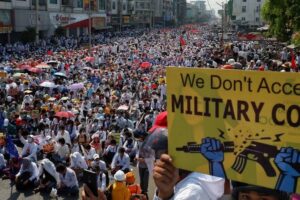
On 30 May 2018 the Government of Myanmar announced its latest “International Commission of Enquiry” (ICOE) to investigate human rights violations in Rakhine State.
Its creation follows at least eight other special government inquiries and boards conducted since 2012 in Rakhine State alone.
In a five-page legal briefing, the International Commission of Jurists (ICJ) assesses the inquiry in reference to standards on the conduct of investigations.
The ICJ finds that the ICOE cannot reasonably be seen as having any chance of being independent, impartial, or making an effective contribution to justice or accountability for the crimes under international law. To the contrary, giving any recognition to it is likely to undermine and delay effective international measures for justice and accountability.
On 28 August the spokesperson for the Office of the President stated that:
“We have formed the Independent Commission of Enquiry to response [sic] to false allegations made by the UN Agencies and other international communities.”
Indeed, the Chairperson of the ICOE stated at a press conference, that:
“[T]here will be no blaming of anybody, no finger-pointing of anybody… saying you’re accountable.”
Such prejudicial statements confirm the conclusion of the United Nations Independent International Fact-Finding Mission (IIFFM), that:
“The Government’s recently-created Commission of Inquiry will not and cannot provide a real avenue for accountability, even with some international involvement. The impetus for accountability must come from the international community.”
Crimes against humanity and war crimes have been committed in Myanmar, and an investigation of evidence of the crime of genocide is warranted, according to the summary report of the UN IIFFM, published on 27 August 2018.
Throughout Myanmar the rule of law is severely undermined by a lack of accountability for perpetrators of rights violations; lack of access to remedies and reparation for victims; and persistent challenges to the independence of the justice system.
In current circumstances it is impossible to rely on any national courts, prosecution services, or commissions of inquiry in Myanmar to deliver justice or accountability of security forces in relation to human rights violations constituting crimes under international law.
The UN Security Council should refer the situation to the International Criminal Court or a similarly constituted international tribunal without delay.
The UN Human Rights Council should promptly establish a robust International Impartial and Independent Mechanism (IIIM) or similar mechanism, to collect and analyse evidence for future prosecutions; action should be taken by the Council at its September 2018 session – waiting for or deferring to the UN General Assembly to act would risk further delaying or denying justice for victims, including because key criminal evidence could be irretrievably lost, destroyed, or deteriorate in the meantime.
Contact
Frederick Rawski, Asia and the Pacific Director, frederick.rawski(a)icj.org
Legal briefing
Myanmar-COI cannot deliver justice or accountability-Advocacy-Analysis brief-2018-ENG (full text, PDF)
Myanmar-COI cannot deliver justice or accountability-Advocacy-Analysis brief-2018-BUR (full text in Burmese, PDF)
Sep 6, 2018 | News
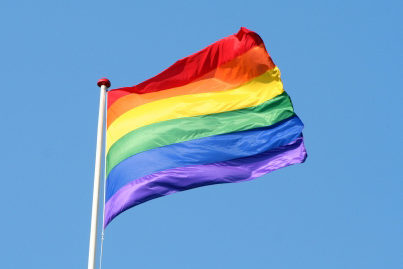
The ICJ welcomed the Supreme Court’s judgment in Navtej Singh Johar et al v. Union of India and others, which effectively ends the threat to a large segment of the Indian population that they will be held criminally liable for exercising their human rights.
The Court has issued a long-overdue ruling that the criminalization of consensual same-sex relationships under Section 377 violates the Indian Constitution, and is in breach of India’s obligations under international law. This long-awaited judgment testifies to the work of activists and lawyers in India, who have shown the potential of the law to affirm human rights and equality.
“This judgment will not only have an impact in India. Its influence should extend across the world. The ICJ hopes that it will provide an impetus for other countries, especially those of the Commonwealth of Nations, to revoke similar provisions that criminalize consensual sexual relations,” ICJ Asia Pacific Director Frederick Rawski stated.
The Court underscored that provisions of Section 377 contravened international law and standards on equality, privacy, non-discrimination and dignity guaranteed in international human rights treaties to which India is a party. These include the International Covenant Civil and Political Rights and International Covenant on Economic Social and Cultural Rights.
The Court also noted that the Yogyakarta Principles, which address sexual orientation and gender identity in international law, reinforce these protections. This is a vital jurisprudential recognition that LGBTI persons are entitled to full equality, and protection of their rights under India’s Constitutional and international human rights law.
In the judgement, which reverses the December 2013 Koushal decision, the Court held that discrimination based on sexual orientation is a violation of fundamental rights to autonomy, privacy, equality, dignity, and non-discrimination. It underscored that decriminalization of homosexuality is only the first step and that LGBTI persons are entitled to equal citizenship in all its manifestations. The Court also recommended that wide publicity be given to judgment to ensure de-stigmatization of identity through sensitization training on barriers to access to justice faced by LGBTI persons.
“Even a landmark decision by the Indian Supreme Court cannot alone end the discrimination against people based on their sexual orientation or gender identity. It is time for the Indian Parliament to conduct wide-ranging review of existing legal framework, repeal discriminatory laws, and address other gaps in the law that prevent LGBT persons from fully exercising their rights,” Rawski added.
Background
For background, see the ICJ’s July 2018 Briefing Paper on Navtej Singh Johar et al. v. Union of India and Others, and its February 2017 report, “Unnatural Offences”: Obstacles to Justice in India Based on Sexual Orientation and Gender Identity.
Contact
Maitreyi Gupta (Delhi), ICJ International Legal Advisor for India
e: maitreyi.gupta(a)icj.org, t: +91 7756028369
Sep 6, 2018 | Communiqués de presse, Nouvelles
La CIJ s’est félicitée de l’arrêt rendu par la Cour suprême dans l’affaire Navtej Singh Johar et al v. Union of India and others. Cet arrêt met fin à la crainte d’une grande partie de la population indienne d’être tenue pénalement responsable de l’exercice de ses droits.
La Cour a rendu la décision, attendue depuis longtemps, que la criminalisation de relations consenties entre personnes du même sexe enfreint l’article 377 la Constitution indienne, et est contraire aux obligations de l’Inde envers le droit international.
Ce jugement tant attendu témoigne du travail des activistes et des avocats en Inde, qui ont démontré le pouvoir de la loi pour réaffirmer les droits de l’Homme ainsi que l’égalité.
«Ce jugement aura non seulement un impact en Inde mais son influence devrait s’étendre à travers le monde. La CIJ espère que cela incitera d’autres pays, en particulier ceux du Commonwealth, à révoquer des dispositions similaires qui criminalisent les relations sexuelles consenties », a déclaré le directeur de la CIJ pour l’Asie-Pacifique, Frederick Rawski.
La Cour a souligné que les dispositions de l’article 377 contrevenaient au droit international et aux normes internationales en matière d’égalité, de respect de la vie privée, de non-discrimination et de dignité garantis dans les traités internationaux relatifs aux droits de l’Homme auxquels l’Inde est partie prenante.
Il s’agit notamment du Pacte international relatif aux droits civils et politiques et du Pacte international relatif aux droits économiques, sociaux et culturels.
La Cour a également relevé que les Principes de Yogyakarta, qui traitent de l’orientation sexuelle et de l’identité sexuelle en droit international, renforcent ces protections.
Il s’agit d’une reconnaissance jurisprudentielle essentielle selon laquelle les personnes LGBTI ont droit à la pleine égalité et à la protection de leurs droits en vertu du droit constitutionnel indien et du droit international des droits de l’Homme.
Dans l’arrêt, qui annule la décision Koushal de décembre 2013, la Cour a estimé que la discrimination fondée sur l’orientation sexuelle est une violation des droits fondamentaux à l’autonomie, à la vie privée, à l’égalité, à la dignité et à la non-discrimination.
Elle a souligné que la dépénalisation de l’homosexualité n’est qu’un premier pas et que les personnes LGBTI ont droit à une citoyenneté égale dans toutes ses formes.
La Cour a également recommandé qu’une large publicité soit accordée au jugement afin de garantir la dé-stigmatisation de l’identité sexuelle grâce à une formation de sensibilisation sur les obstacles à l’accès à la justice rencontrés par les personnes LGBTI.
«Même une décision historique de la Cour suprême indienne ne peut à elle seule mettre fin à la discrimination à l’égard des personnes en raison de leur orientation sexuelle ou de leur identité sexuelle. Il est temps pour le Parlement indien de procéder à un examen approfondi du cadre juridique existant, d’abroger les lois discriminatoires et de remédier aux autres lacunes de la loi qui empêchent les personnes LGBT d’exercer pleinement leurs droits », a ajouté M. Rawski.
Pour plus d’informations (disponibles uniquement en anglais):
Briefing Paper on Navtej Singh Johar et al. v. Union of India and Others (ICJ, July 2018)
Unnatural Offences”: Obstacles to Justice in India Based on Sexual Orientation and Gender Identity (ICJ, February 2017)
Contact
Maitreyi Gupta (Delhi), conseillère juridique internationale de la CIJ en Inde, e: maitreyi.gupta(a)icj.org, t: +91 7756028369
Sep 4, 2018 | News
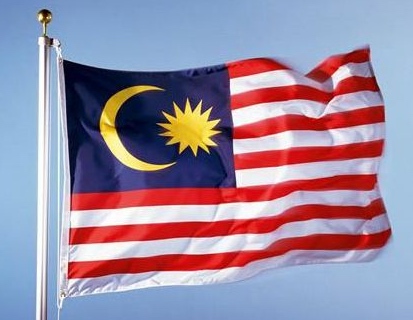
The ICJ today condemned the public caning of two women, a punishment imposed upon them by the Terengganu High Court after conviction on charges of ‘attempting to have sexual intercourse’.
The ICJ called on the Government of Malaysia to immediately abolish the practice of caning as it constitutes a form of cruel, inhuman or degrading punishment prohibited under international human rights law and standards.
Furthermore, it also called on the Government to ensure that its laws, policies and practices at the local, state, and federal levels are in full compliance with its international legal obligations, including under the Convention on the Elimination of all forms of Discrimination against Women (CEDAW).
On 3 September 2018, two women, aged 23 and 33, were publicly caned in front of a hundred people in Terengganu, a coastal state of Malaysia, located northeast of Kuala Lumpur.
The two women were convicted under Section 30 of the Syariah Criminal Offences (Terengganu) Enactment 2001, for the crime of ‘Musahaqah’ (sexual relations between female persons).
“This punishment is a clear violation of Malaysia’s obligations to prevent, prohibit and prosecute all forms of torture and other cruel, inhuman or degrading treatment or punishment. The Government of Malaysia should immediately abolish the practice of corporal punishment, which has been condemned by international authorities such as the UN Human Rights Council’s Special Rapporteur on torture,” said Emerlynne Gil, ICJ’s Senior International Legal Adviser.
“It is equally deplorable that Malaysia continues to criminalize consensual same sex relations. The criminalization of private consensual sexual activities – whatever the sex, gender identity and sexual proclivities of those involved, and whatever the actual sexual practices – violates international human rights law. It also undermines women’s enjoyment of their rights to privacy, personal integrity, and equality,” she added.
The Human Rights Committee has said that criminalizing private sexual acts between consenting adults constitutes an arbitrary interference with privacy and cannot be justified.
It has also observed in a number of Concluding Observations that the criminalization of private consensual sexual activities between adults of the same sex violates the prohibition of discrimination, and the right of equality before the law.
The ICJ also notes that early this year, the CEDAW Committee recommended to Malaysia to “take effective measures to ensure that civil law and Syariah law are in full compliance with the provisions of the Convention at local, state, and federal levels” so as to guarantee the rights of all women throughout the country.
The ICJ calls on the Government of Malaysia to abide by its obligations under international law and follow through with its commitment to human rights, non-discrimination and equality by abolishing the sentence of caning and the criminalization of consensual same sex relations in the country.
Contact
Emerlynne Gil, ICJ Senior International Legal Adviser, t: +66 840923575, e: emerlynne.gil(a)icj.org
Background
On 8 April 2018, religious state authorities arrested the two women who were in a car and accused them of preparing to ‘commit sexual acts’, which is an offense in the State of Terengganu, under the Syariah Criminal Offences (Terengganu) Enactment 2001. The women pleaded guilty to the offence without being represented by a lawyer and did not appeal their case.
On 12 August 2018, the two women pleaded guilty and were sentenced by the Terengganu Shariah to a fine of RM3,300 ($800 USD) and six strokes of caning for attempting to have sexual intercourse.
This is the first case of caning of women for ‘Musahaqah’ (sexual relations between female persons) crime and its attempt in Malaysia and it marks a steady decline in Malaysia’s commitment to protect the rights of its sexual minorities and the members of the LGBTIQA community.
In Malaysia’s Criminal Procedure Code, under Federal law, it states that
“No sentence of whipping shall be executed by installments, and none of the following persons shall be punishable with whipping: (a) females;”
Malaysia’s Federal Constitution provides that Islamic law falls under the matters of State law, with the exception of the Federal States.
It is concerning that the Syariah legal system in Malaysia continues to carry out caning in a manner that is discriminatory against women, and women sexual minorities, as seen in the 2010 case, where three women were found guilty of ‘illicit sex’ by the Kuala Lumpur Syariah Court, as well as the continuing use of Syariah legal enactments to harass, intimidate and prosecute the transgender community in Malaysia.
Sep 3, 2018 | News
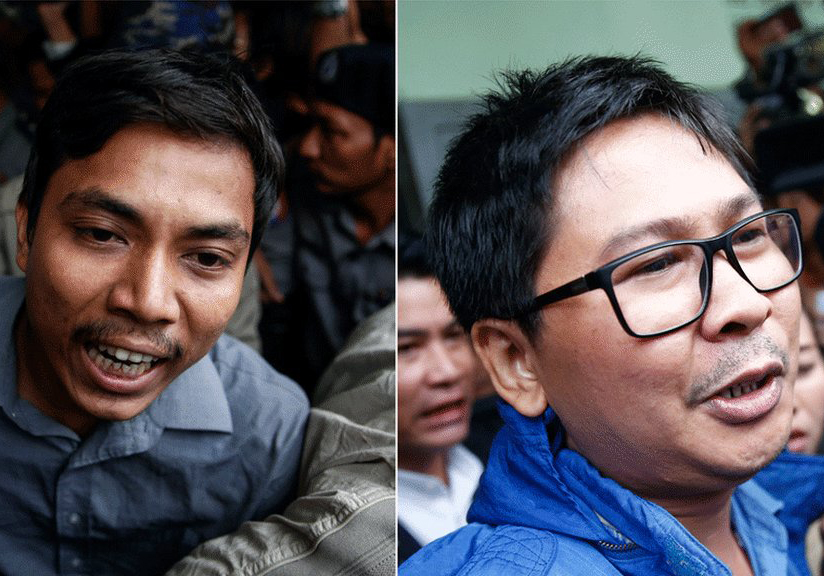
The Yangon District Court’s decision today to sentence Reuters journalists Wa Lone and Kyaw Soe Oo to seven years’ imprisonment for violating the Official Secrets Act deals a massive blow to human rights and the rule of law in Myanmar, said the ICJ.
“The Court’s decision effectively punishes these two courageous journalists for exposing human rights violations, following a grossly unfair trial,” said Frederick Rawski, Asia Pacific Director for the ICJ.
“The decision is a miscarriage of justice that inflicts needless suffering on them and their families, threatens freedom of expression, damages Myanmar’s global standing, and undermines its justice institutions all at once,” he added.
The ICJ has monitored the case since the journalists’ initial detention in December 2017.
As previously noted by the ICJ, the detention and trial has violated numerous basic fair trial guarantees.
The prosecutors had a duty to drop charges and the judge should have dismissed the case given the lack of evidence and the unlawfulness of detention because of fair trail rights violations.
“The case is emblematic of how the justice system ends up reinforcing rather than challenging military impunity,” said Rawski.
“The result undermines government claims that it can deliver accountability for human rights violations on its own, and does nothing to build trust that justice system can act independently and impartially after emerging from decades of military rule,” he added.
Members of security forces generally enjoy impunity for the perpetration of human rights violations, including for crimes under international law.
The ICJ has previously reported that victims and their families, as well as journalists, often face retaliation for publicizing human rights violations by the military.
Wa Lone and Kyaw Soe Oo were arrested in December 2017, and held incommunicado for nearly two weeks, before being charged under the colonial-era Official Secrets Act for allegedly possessing documents related to the operations of security forces in northern Rakhine State, during “clearance operations.”
The two reporters had been reporting on human rights violations in Rakhine State, including the killing of Rohingya by the military in Inn Dinn Village.
In a report issued just last week, the UN Independent International Fact Finding Mission found that security forces had perpetrated crimes under international law during these operations, including crimes against humanity and possibly the crime of genocide.
The detention and prosecution of anyone, including journalists, based solely on the collection and publication of evidence relevant to serious human rights violations, is a violation of international law and standards on freedom of expression, the right to participation in public affairs and on the role of human rights defenders.
Legal options remaining for the journalists include appealing of today’s decision, and requesting a Presidential amnesty.