Oct 26, 2018 | News
At a media event in Bangkok, Thailand, today, the ICJ reiterated its call for Turkey to work with the United Nations to establish a special independent mechanism to carry out an investigation into the killing of Khashoggi with a view to identifying the perpetrators.
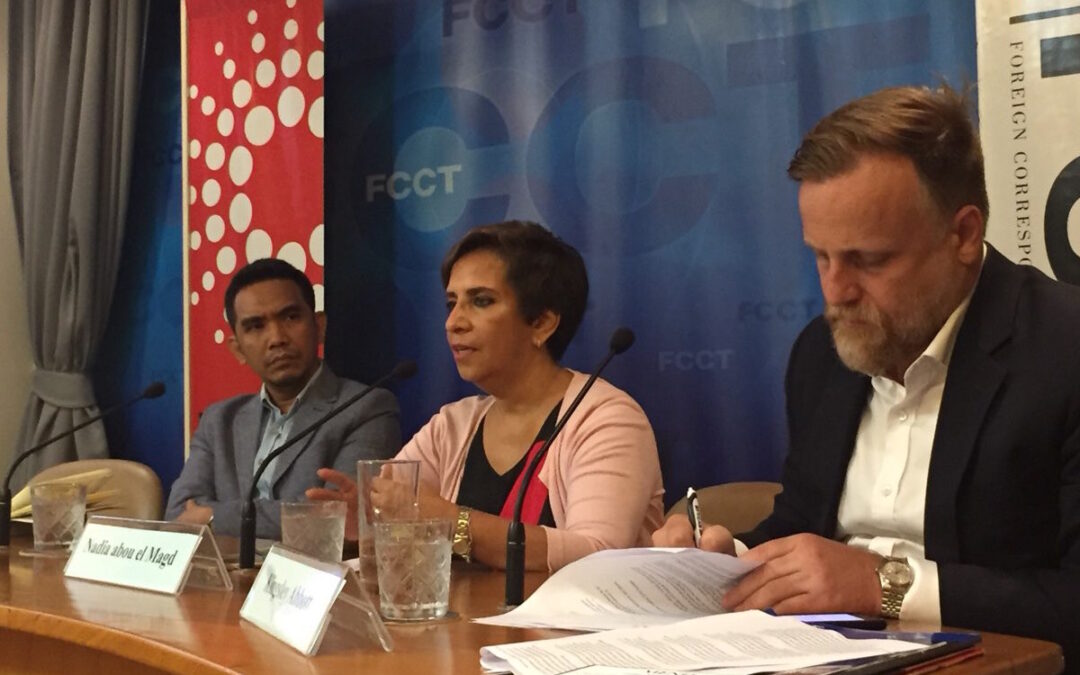
The Foreign Correspondents Club of Thailand (FFCT) in Bangkok hosted a special panel discussion entitled Death of a journalist – Fallout from the killing of Jamal Khashoggi, which was attended by approximately eighty journalists, diplomats and club members.
On the panel, Kingsley Abbott, ICJ Senior Legal Advisor for Global Accountability, began by making two positive observations, namely that there exists a clear international legal framework which applies to cases of suspected unlawful deaths including extra-judicial executions and enforced disappearance; and that a considerable amount of information about Khashoggi’s fate appears to be available.
He set out the international legal framework that applies to violations of the right to life noting the state duty to conduct a prompt independent, impartial, effective and transparent investigation consistent with the UN Principles on the Effective Prevention and Investigation of Extra-legal, Arbitrary and Summary Executions and the revised 2016 Minnesota Protocol on the Investigation of Potentially Unlawful Death.
Kingsley Abbott noted that in nearly all cases where there is reasonable suspicion of unlawful death, an autopsy should be performed and called for Khashoggi’s body or remains to be produced.
Kate Vigneswaran, ICJ Senior Legal Adviser, Middle East and North Africa (MENA) Programme, discussed options for accountability in the MENA region, in particular in Saudi Arabia, Turkey, Egypt and the United Arab Emirates.
She noted that Saudi Arabia provided little to no opportunity for meaningful justice given executive and Royal Court control over the judiciary and prosecutors. She further highlighted Saudi Arabia’s targeting of critics exercising their right to freedom of expression through criminal prosecutions, abductions and enforced disappearances, and egregious fair trial rights violations in the criminal justice system. She went on to state that similar human rights violations in Egypt and the United Arab Emirates make them unlikely credible options for accountability.
She also noted some concerns about aspects of the justice system in Turkey and in that regard said it was too early to determine whether the conduct of investigation and prosecution of the perpetrators in that country would meet international standards.
Other speakers included Nadia abou el Magd, who has 30 years’ experience as a journalist and commentator covering the Middle East, working mainly for the Associated Press, and Dr. Muhammad Ilyas Yahprung from the Faculty of Political Science, Ramkhamheang University, who focuses on Muslim World Issues.
The panel was moderated by Anneliese Mcauliffe who has worked as a journalist across Asia and the Middle East for over two decades.
Contact:
Kingsley Abbott
Kate Vigneswaran
Senior Legal Adviser
Middle East and North Africa Programme
Phone: +31624894664
Email: kate.vigneswaran(a)icj.org
Twitter: @KateVigneswaran
Oct 24, 2018 | Comunicados de prensa, Noticias
Eren Keskin (Turquía), Marino Cordoba Berrio (Colombia) y Abdul Aziz Muhamat (Papua Nueva Guinea / Australia) competirán por este prestigioso premio otorgado a los defensores de los derechos humanos que han demostrado una profunda compromiso y afrontan altos riesgos personales. La CIJ es miembro del jurado.
Los finalistas han sido seleccionados por la Comunidad Internacional de Derechos Humanos (los miembros del jurado son la CIJ, Amnesty International, Human Rights Watch, Human Rights First, International Federation for Human Rights, World Organisation Against Torture, Front Line Defenders, EWDE Germany, International Service for Human Rights y HURIDOCS).
Los galardonados son seleccionados porque han demostrado un profundo compromiso con los derechos humanos, a menudo trabajando bajo amenaza de encarcelamiento, tortura o algo peor. El reconocimiento internacional otorgado por el Premio, además de elevar su perfil y su trabajo, a menudo proporciona una protección significativa.
El Premio Martin Ennals 2019 se entregará el 13 de febrero de 2019 en una ceremonia organizada por la Ciudad de Ginebra, que durante muchos años ha apoyado firmemente el Premio.
Marino Córdoba Berrio (Colombia)
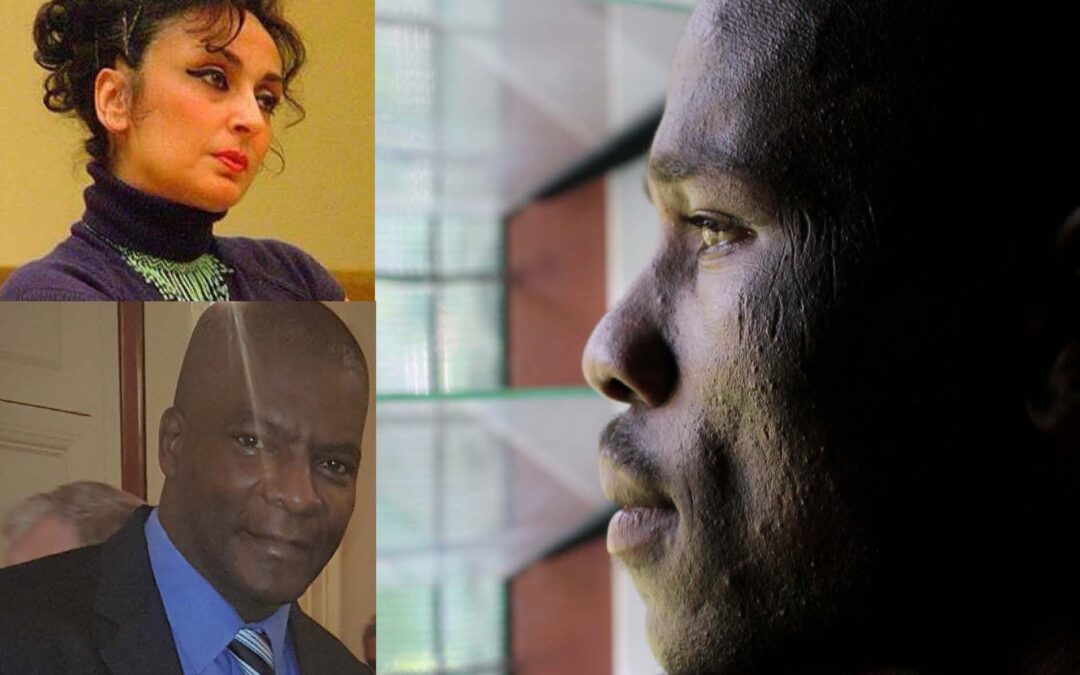
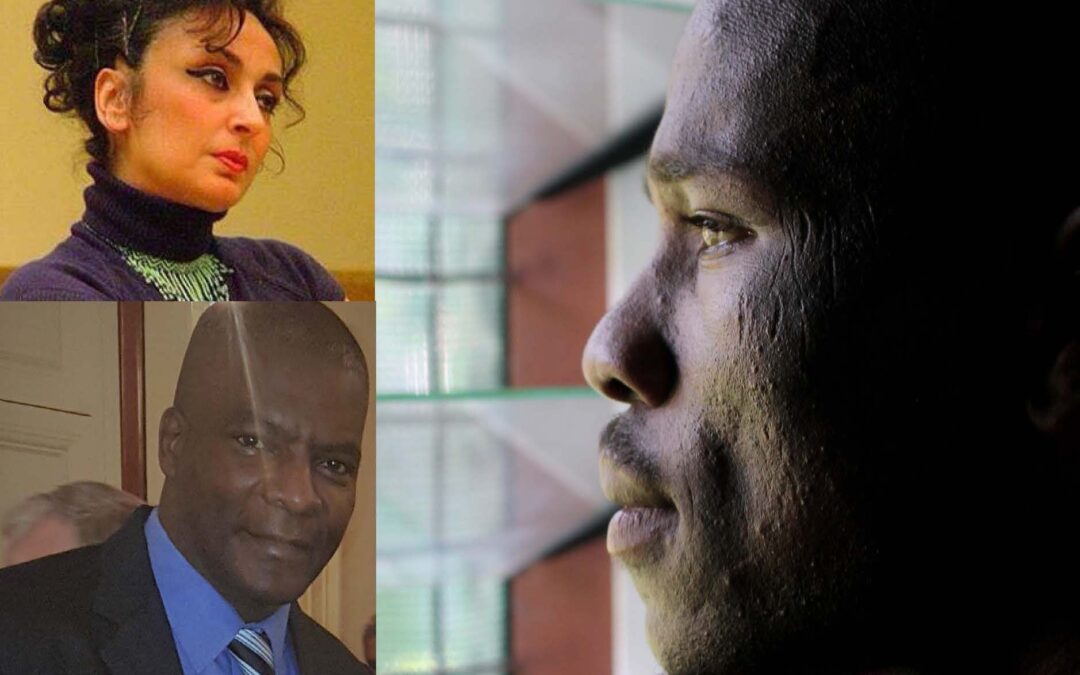
Miembro de la comunidad afro-colombiano, Marino Córdoba Berrio (abajo a la izquierda en la foto) dirigió a su comunidad al enfrentar la pérdida de sus tierras ante poderosos intereses comerciales, en particular en la tala de bosques y la minería.
Después de trabajar con éxito para obtener el reconocimiento legal de los derechos sobre la tierra de su comunidad, gran parte de su comunidad fue expulsada por la fuerza en 1996.
Las amenazas y los ataques constantes lo llevaron a buscar Asilo Político en los Estados Unidos en 2002, donde construyó una red de partidarios en apoyo a su comunidad y la paz.
Regresó a Colombia en 2012 y desde entonces viene trabajando para garantizar inclusión de las comunidades étnicas en el acuerdo de paz, en particular como miembro de la “Comisión Étnica para la Paz y la Defensa de los Derechos Territoriales” que proporciona información a medida que se implementa el acuerdo de paz.
Él ha recibido regularmente amenazas de muerte y está bajo seguridad constante.
Afirmó que: “históricamente hemos sido excluidos política, social y económicamente, desproporcionadamente afectados por la discriminación estatal, también afectados por la crueldad de la guerra, por lo que proporcionar medidas de superación e inclusión del pueblo Afrocolombiano es una responsabilidad primordial del Estado. Creo en el poder de mi mente y en mis manos como un factor determinante para hacer lo correcto por la paz, por lo tanto, la justicia que se aplique a mi pueblo es crucial para su supervivencia, por lo que está en nuestras manos promover cambios justos y humanos, aun en momentos de constantes persecución y asesinatos de líderes importantes y soñadores en mi país y, aun por encima de mi propia vida. Si este esfuerzo implica exponer mi vida creo que será siempre con amor a mi causa y a mi gente”.
Eren Keskin (Turquía)
Eren Keskin (parte superior izquierda de la foto) es un abogado y activista de derechos humanos.
Durante más de treinta años, ella ha luchado por los derechos y libertades fundamentales en Turquía, especialmente por los Kurdos, las mujeres y la comunidad LGBTI.
En el contexto del empeoramiento de la situación de los derechos humanos en Turquía, Keskin se encuentra una vez más en el centro de los intentos de intimidación.
Como parte de una campaña de solidaridad para apoyar al periódico Özgür Gündem, Keskin sostuvo el título de “editor en jefe” del periódico desde 2013 hasta 2016, cuando fue clausurado por las autoridades.
El 30 de marzo de 2018, fue condenada y sentenciada a 12,5 años de cárcel por haber publicado artículos que se consideraba que habían “degradado” a la nación turca e “insultado” al presidente turco. Actualmente está libre mientras se apela el caso.
Ella afirmó: “Defender los derechos humanos no es fácil en nuestro territorio. Estoy siendo procesado con 143 cargos por mi solidaridad con un periódico de la oposición en el contexto de la libertad de expresión. Los premios internacionales y la solidaridad tienen características “protectoras” y tranquilizan a quienes estamos en sociedades represivas. También nos da un impulso moral y ayuda a nuestra motivación para la lucha. Gracias por no olvidarnos. Tu solidaridad y protección significan mucho”.
Abdul Aziz Muhamat (Papua Nueva Guinea / Australia)
Abdul Aziz Muhamat (Aziz, en la derecha en la foto), de Sudán, es un defensor convincente e incansable de los derechos de los refugiados.
En busca de asilo, se encuentra recluido en detención de inmigrantes en Australia en la isla Manus, Papúa Nueva Guinea, desde octubre de 2013, cuando las autoridades australianas interceptaron su barco.
Aziz ha visto morir a sus amigos. Ha recibido disparos de la policía local. También fue enviado a una prisión local por negarse a comer en protesta por la crueldad y el sufrimiento infligido a otros.
Aziz es una de las principales voces públicas entre los hombres detenidos en la isla Manus.
A pesar de la ubicación aislada, ha expuesto las duras condiciones allí a través de podcasts y entrevistas con los medios. Él ha pagado un precio por esto, ya que es visto como un “líder de la banda” tanto por parte de PNG como de las autoridades australianas.
Ella declaró: “Mi trabajo para exponer este sistema cruel me ayuda a preservar mi autoestima y la dignidad humana inherente. Me ayuda a luchar por los derechos de cada refugiado en todo el universo, lo que haré hasta mi último aliento. No siempre es fácil cuando se vive en condiciones de miedo y persecución. Sin embargo, incluso bajo la maquinaria más aplastante del estado, el coraje se levanta una y otra vez, porque el miedo no es el estado natural y haré todo lo posible para seguir adelante”.
Contactos
Olivier van Bogaert, Director de comunicación de la CIJ, miembro del jurado, t: +41 22 979 38 08 ; e: olivier.vanbogaert(a)icj.org
Michael Khambatta, Director, Fundación Martin Ennals, t: +41 79 474 8208 ; e: khambatta(a)martinennalsaward.org
COL-Marino Cordoba Bio-News-2018-SPA (biografía completa de Marino Córdoba Berrio, en PDF)
TUR-Eren Keskin_Bio-News-2018-ENG (biografía completa de Eren Keskin, en inglés, PDF)
AUS-Abdul Aziz Muhamat Bio-News-2018-ENG (biografía completa de Abdul Aziz Muhamat, en inglés, PDF)
Oct 24, 2018 | Communiqués de presse, Nouvelles
Eren Keskin (Turquie), Marino Córdoba Berrio (Colombie) et Abdul Aziz Muhamat (Papouasie-Nouvelle-Guinée / Australie) se disputeront ce prix prestigieux remis aux défenseur(e)s des droits de l’Homme ayant fait preuve d’un profond engagement et confronté(e)s à de grands risques personnels. La CIJ est membre du jury.
Oct 24, 2018 | News
The three finalists who will compete for this prestigious award given to human rights defenders having shown deep commitment and facing great personal risk are: Eren Keskin (Turkey), Marino Córdoba Berrio (Colombia) and Abdul Aziz Muhamat (Papua New Guinea/Australia). The ICJ is member of the MEA Jury.
The finalists were selected by the International Human Rights Community (members of the jury are the ICJ, Amnesty International, Human Rights Watch, Human Rights First, International Federation for Human Rights, World Organisation Against Torture, Front Line Defenders, EWDE Germany, International Service for Human Rights and HURIDOCS).
Nominees and laureates of the Martin Ennals Award for Human Rights Defenders (MEA) are human rights defenders that have demonstrated a deep commitment to human rights, often working under threat of imprisonment, torture, or worse.
The international recognition provided by the Award, on top of raising their profile and their work, often provides significant protection.
The 2019 Martin Ennals Award will be presented on 13 February 2019 at a ceremony hosted by the City of Geneva, which for many years has strongly supported the Award.
Eren Keskin (Turkey)
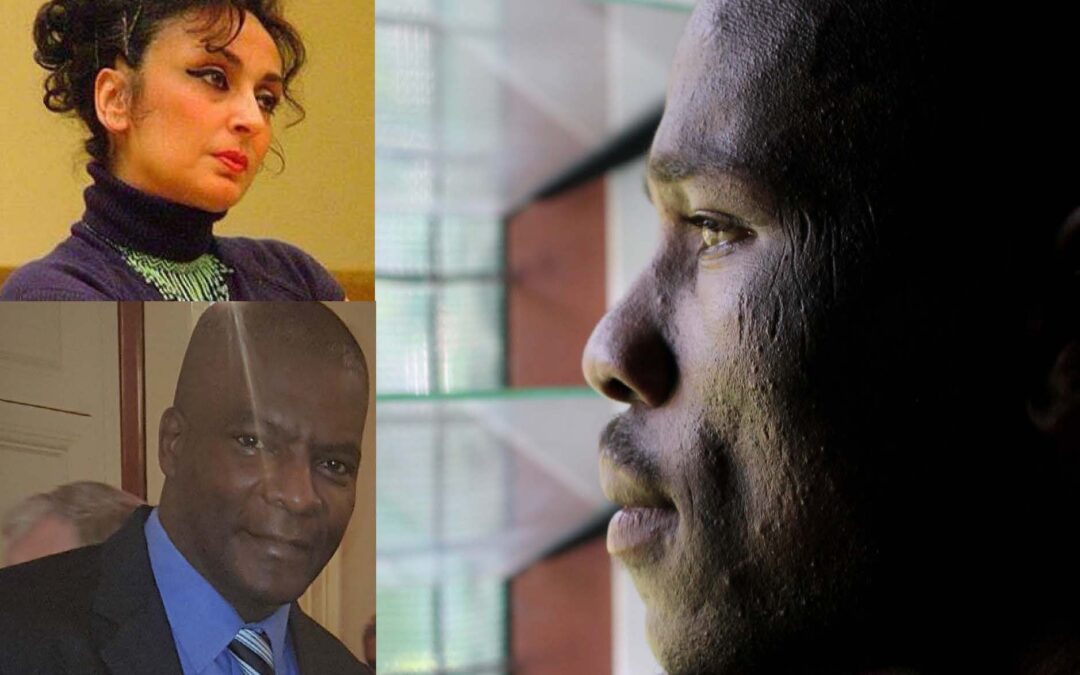
Eren Keskin (upper left corner of the picture) is a lawyer and human rights activist.
For more than thirty years, she has struggled for fundamental rights and freedoms in Turkey, especially for the Kurds, women and the LGBTI+ community.
Within the context of the worsening human rights situation in Turkey, Keskin is once again at the centre of intimidation attempts.
As part of a solidarity campaign to support the Özgür Gündem newspaper, Keskin held the title of “editor-in-chief” of the newspaper from 2013 to 2016, when it was closed by the authorities.
On 30 March 2018, she was convicted and sentenced to 12.5 years in jail for having published articles deemed to have “degraded” the Turkish nation and “insulted” the Turkish president.
She is currently free while the case is appealed.
She said: “To defend human rights is not easy in our territory. I am being prosecuted with 143 charges for my solidarity with an opposition newspaper in the context of freedom of expression. International awards and solidarity have “protective” characteristics and reassure those of us in repressive societies. It also it gives us a morale boost and helps our motivation for the struggle. Thank you for not forgetting us. Your solidarity and protection mean so much.”
Marino Córdoba Berrio (Colombia)
A member of the Afro-Colombian ethnic group, Marino Córdoba Berrio (bottom left corner of the picture) led his community as they faced the loss of their land to powerful commercial interests, notably in logging and mining.
After successfully working towards the legal recognition of their community’s land rights, much of his community was driven out by force in 1996.
Constant threats and attacks drove him to seek asylum in the United States in 2002 where he built a network of supporters.
He returned to Colombia in 2012 and worked to ensure a role for ethnic communities in the peace agreement, notably as a member of “Ethnic Commission for Peace and the Defense of Territorial Rights ” that provides input as the peace agreement is implemented.
He has regularly received death threats and is under constant armed guard.
He said: “We have historically been excluded politically, socially and economically, also affected by war, providing measures of overcoming is a primary responsibility of the State. I believe in the power of my mind and my hands as a determinant to do what is right, therefore the justice that is applied to my people is crucial for their survival. It is also in our hands to promote those changes so this effort involves exposing my own life.”
Abdul Aziz Muhamat (Papua New Guinea/Australia)
Abdul Aziz Muhamat (Aziz, on the right-hand side of the picture), from Sudan, is a compelling and tireless advocate for refugee rights.
Seeking asylum, he has been held in Australian immigration detention on Manus Island, Papua New Guinea since October 2013, when his boat was intercepted by the Australian authorities.
Aziz has seen friends die. He has been shot at by local police. He was also sent to a local prison for refusing to eat in protest at the cruelty and suffering being inflicted on others.
Aziz is one of the primary public voices among the men held on Manus Island. Despite the isolated location, he has exposed the harsh conditions there through podcasts and media interviews.
He has paid a price for this as he is seen as a “ring leader” by both the PNG and Australian authorities.
He stated: “My work to expose this cruel system helps preserve my self-respect and inherent human dignity. It helps me fight for the rights of every refugee around the universe, which I’ll do until my last breath. It is not always easy when living under conditions of fear and persecution. Yet even under the most crushing state machinery, courage rises up again and again, for fear is not the natural state and I will do everything to keep going.”
Contact
Olivier van Bogaert, Director Media & Communications, ICJ representative in the MEA Jury, t: +41 22 979 38 08 ; e: olivier.vanbogaert(a)icj.org
Michael Khambatta, Director, Martin Ennals Foundation, t: +41 79 474 8208 ; e: khambatta(a)martinennalsaward.org
TUR-Eren Keskin_Bio-News-2018-ENG (Eren Keskin full bio in PDF)
COL-Marino Cordoba Bio-News-2018-ENG (Marino Córdoba Berrio full bio in PDF)
AUS-Abdul Aziz Muhamat Bio-News-2018-ENG (Abdul Aziz Muhamat full bio in PDF)
Oct 21, 2018 | News
On 21 October, the ICJ, together with Cross Cultural Foundation (CrCF), organized a lawyers’ meeting in Bangkok on the admissibility of evidence in the context of application of special security laws in Thailand.
Attendees included 30 human rights lawyers, paralegal officers, documentation officers, human rights defenders and journalists from Bangkok and other regions in Thailand.
The objectives of the meeting were:
- To discuss about the challenges that lawyers currently face regarding the admissibility of evidence in criminal proceedings, both in law and in practice, in the context of existing special security laws. These laws include the Martial Law, Emergency Decree, and the Internal Security Act that are applied in the southern border provinces, and certain repressive National Council for Peace and Order (NCPO) Orders that are applied nationwide;
- To discuss how to address the adverse effects on human rights and the administration of justice as a consequence of the implementation of these laws and how lawyers, members of civil society, and other stakeholders, at national and international levels, may work together to address such challenges; and
- To gather recommendations from participants and discuss future advocacy strategies to tackle identified challenges.
The ICJ’s Legal Memorandum on Hearsay Evidence and International Fair Trial Standards was used as one of the main reference materials during the meeting.
A main recommendation of the Workshop, echoed the ICJ’s assessment in the Legal Memorandum, namely that Thailand should review existing standards in all special security laws and relevant articles in the Criminal Procedure Code regarding the admissibility of evidence that are not compatible with international fair trial standards to ensure safeguards required to protect individuals from unfair trials.
Read also
Thailand : legal memorandum – hearsay evidence and international fair trial standards