Mar 8, 2018 | News
The Sri Lankan government must act swiftly and in line with human rights to prosecute those responsible for recent communal violence.
Particularly for attacks against the minority Muslim community in Kandy district, while avoiding the abusive practices of the past, said the ICJ today.
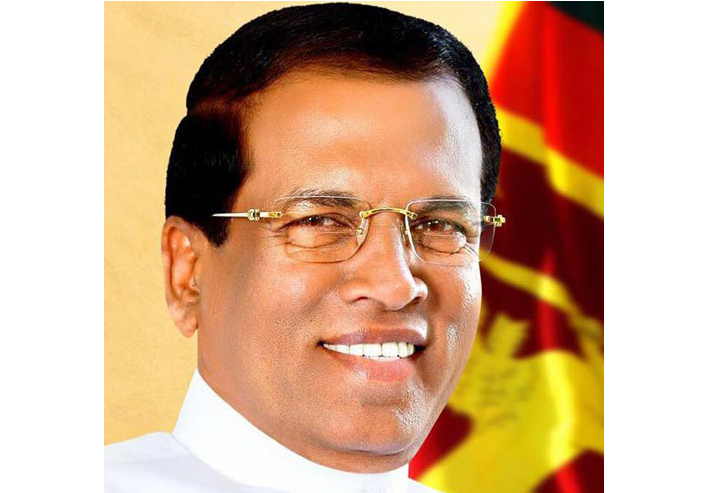
Sri Lanka’s President, Maithripala Sirisena, proclaimed an island-wide state of emergency on 6th March 2018, following a curfew imposed in several areas since Monday.
The action came following a spate of attacks against members of the Muslim community that was spreading in the Kandy district, following attacks in Ampara last week, in Gintota in 2016, and Aluthgama in 2014.
“The government must show that it will bring to account those who have incited communal violence, particularly notorious figures who have been emboldened by the pervading impunity to preach hatred openly and publicly. The arrest of key suspects yesterday is a start and convictions must follow,” said Frederick Rawski, ICJ’s Asia director.
“But the government must ensure that its investigation is impartial and effective and follows due process of the law,” he added.
The ICJ called upon the government of Sri Lanka to swiftly prosecute those responsible for inciting and carrying out the communal violence using existing legal provisions in the Penal Code and the ICCPR Act, the latter of which prohibits advocating “national, racial or religious hatred that constitutes incitement to discrimination, hostility or violence.”
The ICJ is concerned that the Emergency Regulations issued by the President through powers under the Public Security Ordinance, confer excessively broad powers on the army and the police to search, arrest and investigate.
“Given Sri Lanka’s experience of Emergency Regulations, the government should ensure that these regulations are time-bound and comply with Sri Lanka’s international human rights obligations, including under the International Covenant on Civil and Political Rights,” said Rawski.
The government has further restricted access to selected instant messaging applications and social media platforms “as an extraordinary but temporary response to limit the increasing spread of hate speech and violence through social media websites and phone messaging applications.”
“Blocking social media and other communication channels, even with the best of intentions, typically has the negative effect of restricting affected persons from seeking assistance, journalists from reporting around the situation and may actually undermine efforts to counter violence and hate speech. Any such measures should be narrowly targeted and limited in time,” said Rawski.
“A better approach would be for the Sri Lankan government to aggressively push back against these hateful narratives by demonstrating in actions as well as its rhetoric that Sri Lanka is a diverse country in which all of its citizens’ rights are respected and protected equally,” he added.
Background
Chapter XVIII of the Constitution and the Public Security Ordinance of Sri Lanka empowers the President to make emergency regulations in the interest of ‘public security and the preservation of public order or for the maintenance of supplies and services essential to the life of the community.’ Sri Lanka has a history of governance using emergency powers, which in the past has posed a challenge for democratic governance and human rights, providing law enforcement with wide powers, circumventing ordinary checks and balances.
The President, while justifying circumstances that led to his proclamation of a state of emergency, has stated that he “has given special instructions the Police and the tri-forces to take action in terms of these regulations, in a lawful manner in good faith while ensuring minimum disturbance to the life and well-being of people, in conformity with Fundamental Human Rights of people.”
Mar 5, 2018 | Advocacy, Non-legal submissions
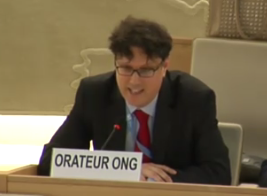
The ICJ today delivered an oral statement to the UN Human Rights Council, on transitional justice, prevention and impunity, highlighting the continuing problem of impunity in Nepal.
The statement, which was made during a clustered interactive dialogue with the Special Rapporteur on the promotion of truth, justice, reparation and guarantees of non-recurrence and the Special Adviser of the Secretary-General on the Prevention of Genocide, read as follows:
“The International Commission of Jurists (ICJ) remains deeply concerned by continuing impunity for gross human rights violations in many parts of the world, which undermines the potential for transitional justice to contribute to prevention as outlined in the Joint Study (A/HRC/37/65).
For example, in Nepal, more than ten years after the civil war, political expediency has trumped calls for justice and accountability. There has been near absolute impunity for those responsible for serious crimes under international law.
Transitional justice mechanisms – the Truth and Reconciliation Commission (TRC) and Commission on Investigation of Disappeared Persons (CoID) – have fallen short of international standards, both in their constitution and their operation, despite repeated orders by the Supreme Court of Nepal to enforce the standards.
The Commissions’ deeply flawed mandates, among other problems, allow them to recommend amnesties for gross human rights violations. In addition, their non-consultative, uncoordinated and opaque approach to their work has also created distrust with all major stakeholders, including conflict victims and members of civil society.
The Government continues to flout its obligation, both pursuant to the Supreme Court’s orders and under international law, to enact domestic legislation to criminalize serious crimes in accordance with international standards.
As highlighted by in the Joint study, turning a blind eye on past atrocities signals that some perpetrators are above the law, which further discredits State institutions and “breeds a (long-standing) culture of impunity in which atrocities may become ‘normalized’, rendering prevention significantly more difficult.” (para 43)
That, indeed, is the experience in Nepal: continuing impunity for gross human rights violations perpetrated during the conflict is one of the major obstacles to the creation of a stable and legitimate democratic government and lies at the heart of the rule of law crisis in the country. Ending impunity is essential to preventing further violations.”
Video of the statement is available here:
The delegation of Nepal exercised its right to reply later in the day. Its reply is here:
The ICJ oral statement complements a related written statement by the ICJ at the session.
Feb 27, 2018 | Events, News
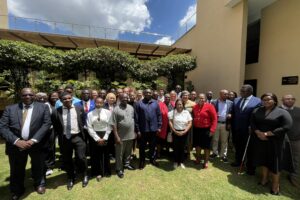
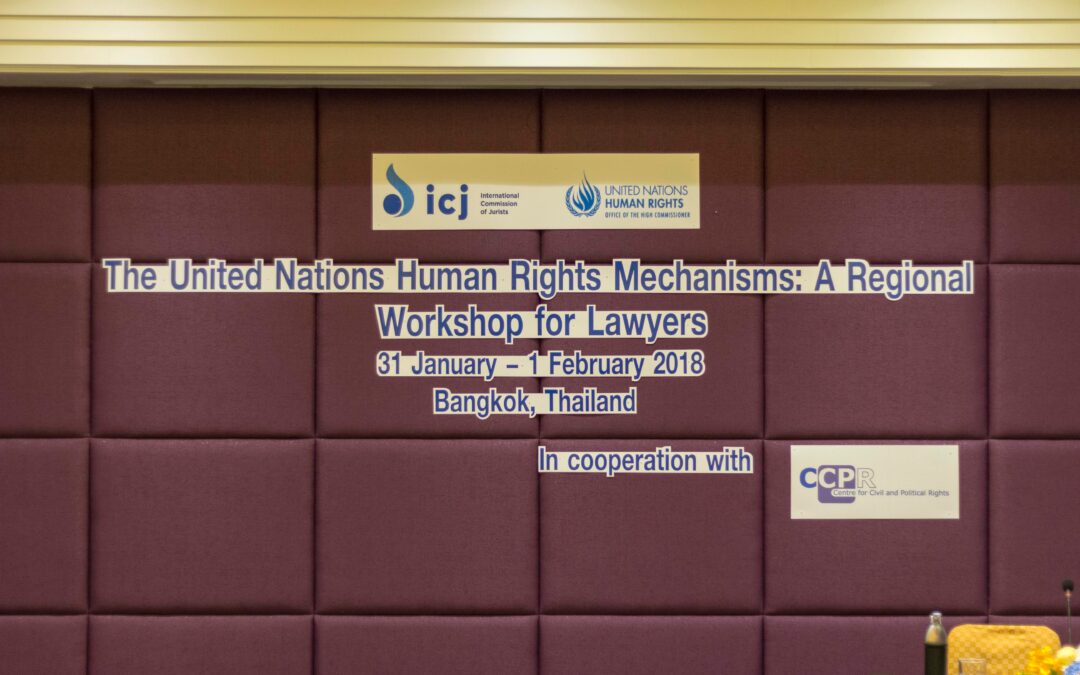
The ICJ, in collaboration with the UN High Commissioner for Human Rights Regional Office for South-East Asia (OHCHR), and the Centre for Civil and Political Rights, organised a workshop for lawyers from southeast Asia, on engaging with UN human rights mechanisms.
The two-day workshop provided some thirty lawyers from Thailand, Cambodia, Vietnam, and Lao PDR with knowledge, practical skills and expert advice about UN human rights mechanisms, with the participants themselves sharing their own experiences and expertise.
In addition to explaining what the UN mechanisms are and how they work, the workshop discussed how lawyers can use the outputs of UN human rights mechanisms in their professional activities, as well as how to communicate with and participate in UN human rights mechanisms in order to ensure good cooperation and to best serve the interests of their clients.
Sessions were introduced by presentations by the ICJ’s Main Representative to the United Nations in Geneva and OHCHR officials, followed by discussions and practical exercises in which all participants were encouraged to contribute questions and their own observations.
A special discussion of effective engagement of lawyers with Treaty Bodies was led by Professor Yuval Shany, a member of the Human Rights Committee established to interpret and apply the International Covenant on Civil and Political Rights (ICCPR).
The workshop also aimed to encourage the building of relationships and networks between the lawyers from across the region.
The workshop forms part of a broader project of awareness-raising and capacity-building for lawyers from the region, about UN mechanisms.
A similar workshop was held in January 2017 for lawyers from Myanmar.
The project has also published (unofficial) translations of key UN publications into relevant languages, and is hosting lawyers in a mentorship programme in Geneva.
More details are available by contacting UN Representative Matt Pollard (matt.pollard(a)icj.org) or by clicking here: https://www.icj.org/accesstojusticeunmechanisms/
Feb 26, 2018
In a private letter sent to select UN member states, nearly 20 human rights organizations called for clear and concrete actions to denounce China’s current rollback in respect for human rights at the UN Human Rights Council, which opens its session in Geneva today.
The groups highlight five cases of human rights defenders that would benefit from further pressure being brought to bear on the Chinese government. They include:
– Liu Xia, a poet kept under house arrest after the death of her husband, Nobel laureate Liu Xiaobo, in July 2017;
– Wang Quanzhang, a rights lawyer held incommunicado since July 9, 2015;
– Gui Minhai, a Swedish citizen arbitrarily detained in China since he vanished from Thailand in October 2015;
– Tashi Wangchuk, a Tibetan cultural rights and education advocate who has been detained more than two years on charges of inciting separatism; and
– Yu Wensheng, a prominent human rights lawyer disbarred, then arbitrarily detained, in January 2018.
The report of the UN Special Rapporteur on Human Rights Defenders, Mr Michel Forst, to the current Human Rights Council session, describes the dire situation for human rights lawyers and other defenders in China (see paragraphs 277 to 297 of the report.
‘These are just five cases among hundreds, if not more. Taken together, they show that the ferocious crackdown on human rights defenders, including lawyers, that has intensified since President Xi Jinping assumed power continues unabated’, say the authors of the letter.
‘The Human Rights Council should take further steps to show China that undermining key legal protections for freedoms of expression and association and the rights to a fair trial, not to mention disappearing or arbitrarily detaining dissenting voices, is unacceptable behaviour – especially for a would-be “global leader”’.
In March 2016, twelve States presented a historic joint statement focused on the human rights situation in China. Following President Xi’s consolidation of power at the 19th Party Congress in November 2017, a renewed commitment to a joint statement condemning China’s human rights violations has never been more timely.
The organisations urge the governments to call for the release of all arbitrarily detained individuals; condemn the use of ‘residential surveillance in a designated location’, which the UN Committee against Torture has said ‘may amount to incommunicado detention in secret places,’; and promptly grant relevant UN experts unhindered access to all parts of the country.
‘The Council’s credibility is based on its ability to act swiftly and effectively to address human rights situations and to uphold universal values. However, this has come under attack in recent years, particularly from China and likeminded governments’.
‘In this context, it is critical for countries to demonstrate their commitment to the protection and promotion of human rights in China, and to defend the values underlying the international human rights system’.
This year is particularly important, as human rights defenders inside and outside China prepare for the country’s next Universal Periodic Review, scheduled for November 2018.
The letter to governments concludes: ‘For human rights defenders to have the courage to engage in this important process, with all the risks that it entails, it’s critical that they know that they are not alone’.
China – UNHRC Accountability -Advocacy-Open letter – 2018 – ENG (full report in PDF)
Feb 15, 2018 | News
Thailand should immediately cease misusing criminal and civil defamation laws to legally harass victims, human rights defenders and journalists who raise allegations of torture or other ill-treatment, the ICJ said today.
Yesterday, the Director of the Internal Operations Security Command (ISOC) Region 4, Lt. Gen. Piyawat Nakwanich, reportedly authorized Lt. Col. Seathtasit Kaewkumuang to lodge defamation complaints against Isma-ae Tae, a founder of Patani Human Rights Organization (HAP).
ISOC is responsible for security operations in Thailand’s deep South.
“It is astonishing that after all of the Government’s repeated commitments to address allegations of torture and protect victims and human rights defenders, ISOC is now misusing the justice system to legally harass an alleged victim of torture,” said Kingsley Abbott, the ICJ’s Senior International Legal Adviser for Southeast Asia.
“Thailand should immediately stop these defamation complaints against Isma-ae Tae and ensure an investigation that meets international law and standards is conducted into all allegations of torture or other ill-treatment without delay,” he added.
The accusations relate to a TV program entitled “Policy by People” that aired on the Thai PBS channel on 5 February 2018 in which Isma-ae Tae described being tortured and ill-treated by Thai soldiers when he was a student in Yala, located in Thailand’s restive deep South.
Criminal defamation in Thailand carries a maximum penalty of two years imprisonment and a fine of up to 200,000 Baht (USD $6,300).
The imposition of harsh penalties such as imprisonment or large fines under these laws has the effect of discouraging victims of torture or other ill-treatment from coming forward to seek the remedies and reparations to which they are entitled under international human rights law binding on Thailand, the ICJ said.
The complaints were made against the backdrop of a ruling by the Supreme Administrative Court on 19 October 2016, which ordered the Royal Thai Army and the Defence Ministry to pay 305,000 baht (USD $9,700) compensation to Isma-ae Tae, after it found he was “physically assaulted” during detention and had been illegally detained for nine days – exceeding the limit of seven days permitted under Martial Law Act B.E. 2457 (1914) (Martial Law).
“Even more astonishing is that a superior Thai court has already found that the military physically assaulted Isma-ae Tae and awarded him compensation, which only serves to highlight the injustice of these complaints”, added Abbott.
In 2008, Isma-ae Tae was arrested pursuant to Martial Law and allegedly tortured in order to purportedly extract a confession in relation to a national security case. To date, no perpetrators have been brought to justice.
Contact
Kingsley Abbott, Senior International Legal Adviser, ICJ Asia Pacific Programme, t: +66 94 470 1345, e: kingley.abbott@icj.org
Thailand-Isma-ae Tae defamation case-News-Press releases-2018-ENG (full story with additional information, in PDF)
Thailand-Isma-ae Tae defamation case-News-Press releases-2018-THA (Thai version of full sory, in PDF)
Read also
Thailand: ICJ welcomes decision to end proceedings against human rights defenders who raised allegations of torture
Thailand: ICJ welcomes dropping of complaints against human rights defenders but calls for investigation into torture
Thailand: stop use of defamation charges against human rights defenders seeking accountability for torture
Thailand: immediately withdraw criminal complaints against human rights defenders
Further reading on the Draft Prevention and Suppression of Torture and Enforced Disappearance Act
UN Committee against Torture: ICJ and TLHR’s joint submission on Thailand
Thailand: ICJ, Amnesty advise changes to proposed legislation on torture and enforced disappearances
Thailand: ICJ commemorates international day in support of victims of enforced disappearances
Thailand: pass legislation criminalizing enforced disappearance, torture without further delay