Sep 11, 2017 | News
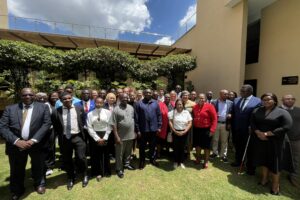
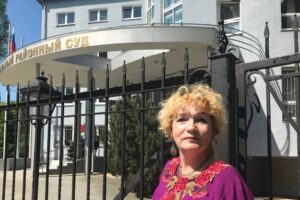
The Government of Myanmar must do everything in its power to respect and protect human rights during military operations in northern Rakhine State, said the ICJ today.
These military operations have reportedly resulted in widespread unlawful killing and the displacement of more than 200,000 people in response to attacks attributed to ARSA.
The ICJ called on Myanmar’s government to act as swiftly as possible to address the root causes of violence, discrimination and under-development in Rakhine, as well as for enhanced engagement by the international community in efforts to effectively address the situation, and to take measures to ensure that security operations are conducted in accordance with international human rights standards.
The military operations follow attacks by ARSA on August 25 on police posts and a military base in which at least 12 police, military and government officials were killed, along with a large number of attackers (according to government figures).
In the wake of the attacks on 25 August, the military launched what it has termed as a “clearance operation,” and the government announced that parts of northern Rakhine State have been designated as a “military operations area.”
“The attacks attributed to ARSA constitute serious crimes for which individual perpetrators should be brought to account through fair trials conducted in accordance with international standards,” said Sam Zarifi, ICJ’s Secretary General.
“But ‘clearance operations’ carried out by the Tatmadaw (Myanmar’s military) in an unlawful manner, and allegations of serious human rights violations, many amounting to crimes under international law, are on an entirely different scale and cannot be justified in the name of security or countering terrorism. These allegations must be promptly investigated in light of the Tatmadaw’s decades-long record of grave human rights violations and impunity throughout Myanmar,” he added.
“The Tatmadaw is responsible for the conduct of security operations in Rakhine as in other parts of the country, but the entire government remains responsible for upholding its international legal obligations to protect the rights of everyone living in Rakhine State – including the Rohingya Muslim communities that constitute the overwhelming majority of the population in the areas most affected by the violence,” Zarifi said.
“We also urge the State Counsellor Aung San Suu Kyi to use her immense electoral popularity and moral stature to push for full respect for human rights for the Rohingya as well as all others in Rakhine State.”
In the wake of the attacks on 25 August, the military launched what it has termed as a “clearance operation,” and the government announced that parts of northern Rakhine State have been designated as a “military operations area.”
These terms are not clearly prescribed in Myanmar’s laws, but in practice seem to be used to grant the military authority to ignore legal protections afforded under the country’s constitution and international standards.
“Whatever descriptive cover may be used to describe security operations, they must scrupulously respect international standards on the use of force.” Zarifi said.
“Myanmar’s government has the right, indeed the obligation, to protect all people in its jurisdiction from attacks by armed groups, but it must do so in conformity with international law. Experience from around the world has shown that greater respect for rule of law and human rights is the most effective response to terrorism,” he added.
This was unfortunately not the case following the arrests and detentions carried out during the military operations that followed attacks in October 2016.
Many of these arrests appear arbitrary and unlawful, as detainees were not given access to legal counsel, and deaths in custody have not been properly investigated.
Similar violations by the military have been documented recently in Shan and Kachin States.
Government authorities must ensure that arrest and detention in the context of the current operations in Rakhine State be conducted in accordance with national and international law, and respect the rights to liberty, freedom from arbitrary detention and a fair trial.
The most effective way for the government to respond to allegations of abuse by the security forces both in Rakhine and elsewhere in the country would be to take well-founded allegations seriously, and ensure that they are promptly, impartially and thoroughly investigated and those responsibility are brought to justice.
It is an unfortunate fact that investigations and prosecutions of human rights violations are rarely undertaken in regular courts, as national laws shield security forces from public criminal prosecutions, often by using military or special police courts.
Zarifi further said: “Ending the military’s impunity would establish much needed confidence in the government’s commitment to upholding the rule of law.”
“One immediate way to illustrate this commitment would be to cooperate with the UN Fact Finding Mission, which the ICJ and other organizations called for earlier in the year, to investigate allegations of human rights violations and abuses in Myanmar.”
“There are paths forward for the government to both respond to allegations of rights violations, and to show its commitment to finding solutions to the unacceptable state of affairs in Rakhine State.”
Myanmar-RakhineStateCrisis-PressReleases-2017-ENG (full press release)
Sep 3, 2017 | News
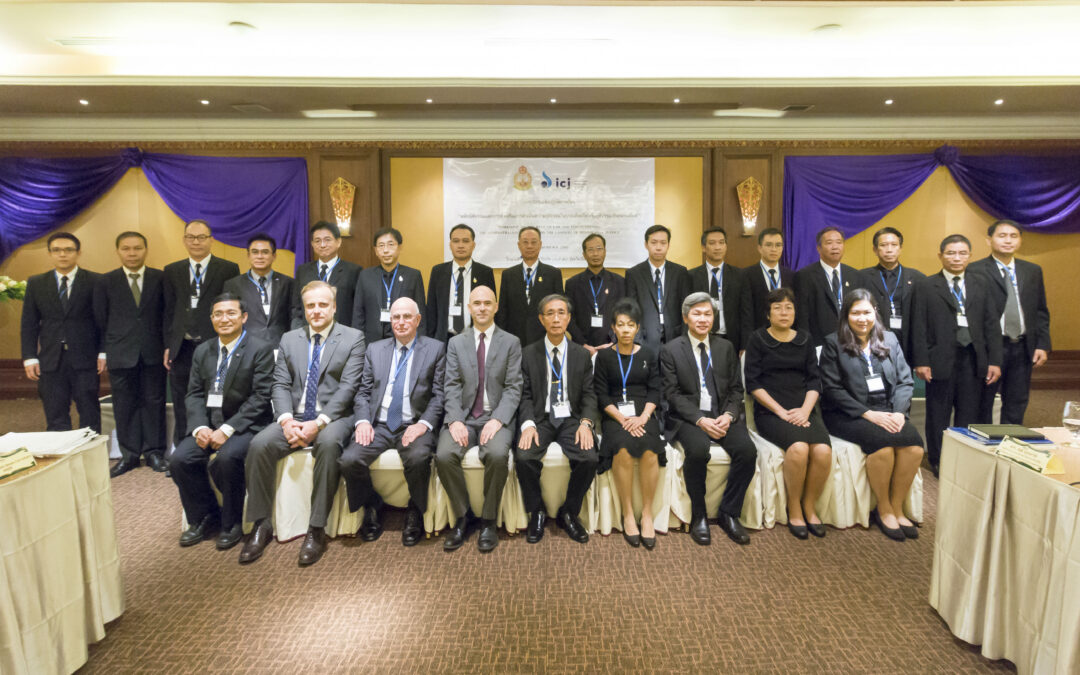
On 2 and 3 September, the ICJ held a workshop on “the Rule of Law and Strengthening the Administration of Justice in the Context of Restorative Justice” for members of the Thai judiciary.
The workshop was held in Chiang Mai.
Twenty-two judges attended the workshop, with an observer from the Thailand Institute of Justice (TIJ).
The objective of the workshop was to discuss how to best apply international standards of restorative justice within Thailand’s justice system.
Restorative justice is based on the fundamental principle that criminal behavior not only violates the law, but also injures victims and the community.
A restorative process is any process in which the victim and the offender and, where appropriate, any other individuals or community members affected by a crime participate together actively in the resolution of matters arising from the crime, with the help of a facilitator.
Frederick Rawski, Regional Director of ICJ Asia and the Pacific, recognized in his opening statement that implementation of restorative justice, including constructive non-custodial sentencing and measures, could assist in combating the problem of overcrowding in detention facilities in the North of Thailand, particularly with respect to drug-dependent offenders.
The workshop made reference to the United Nations Declaration of Basic Principles on the Use of Restorative Justice Programmes in Criminal Matters, which was adopted by the United Nations Economic and Social Council in 2002.
Speakers at the Workshop included Chief Justice Somnuk Panich from Office of the Chief Justice Region V, who formally opened the workshop, Judge Dr. Dol Bunnag, Presiding Judge of Intellectual Property and International Trade Court, who summarized the landscape of restorative justice in Thailand, and Judge Sir David James Carruthers from New Zealand, an international expert on restorative justice in New Zealand.
ICJ’s Senior International Legal Adviser Kingsley Abbott moderated the two-day workshop.
The ICJ ended the workshop with a statement reiterating its commitment towards working with Thailand’s judiciary to strengthen the rule of law and administration of justice in Thailand.
Sep 1, 2017 | News
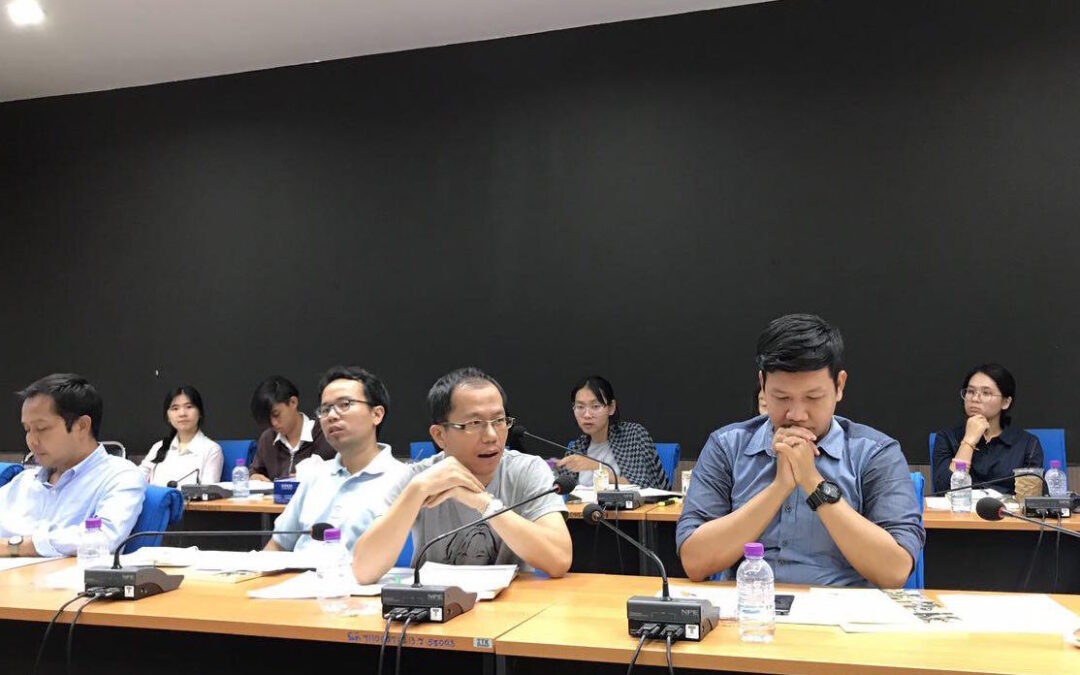
On 1 September, the ICJ, in collaboration with Chiang Mai University’s Faculty of Law and Chiang Mai University’s Center for Ethnic Studies and Development under its Faculty of Social Science, conducted a workshop on how effectively to conduct trial observation.
Participants in the Workshop included undergraduate and postgraduate students and lecturers from Chiang Mai University, lawyers and representatives from Thai civil society organizations.
The workshop was held at Chiang Mai University’s Faculty of Law campus.
The objective of the workshop was to provide participants with an overview of international law and standards governing right to a fair trial and due process in the administration of criminal justice.
The workshop used the ICJ’s Practitioners Guide No. 5, the Trial Observation Manual for Criminal Proceedings, as the basis of training.
The workshop trained participants on practical preparation techniques before undertaking trial observations, critical elements of trial observations, drafting of trial observation reports, general international legal standards governing fair trials, international legal standards applicable to arrest and pre-trial detention in criminal proceedings and international legal standards applicable to trial proceedings.
The speakers at the workshop were Kingsley Abbott, ICJ Senior International Legal Adviser, Southeast Asia and Sanhawan Srisod, ICJ Associate National Legal Adviser, Thailand.
Aug 30, 2017 | News
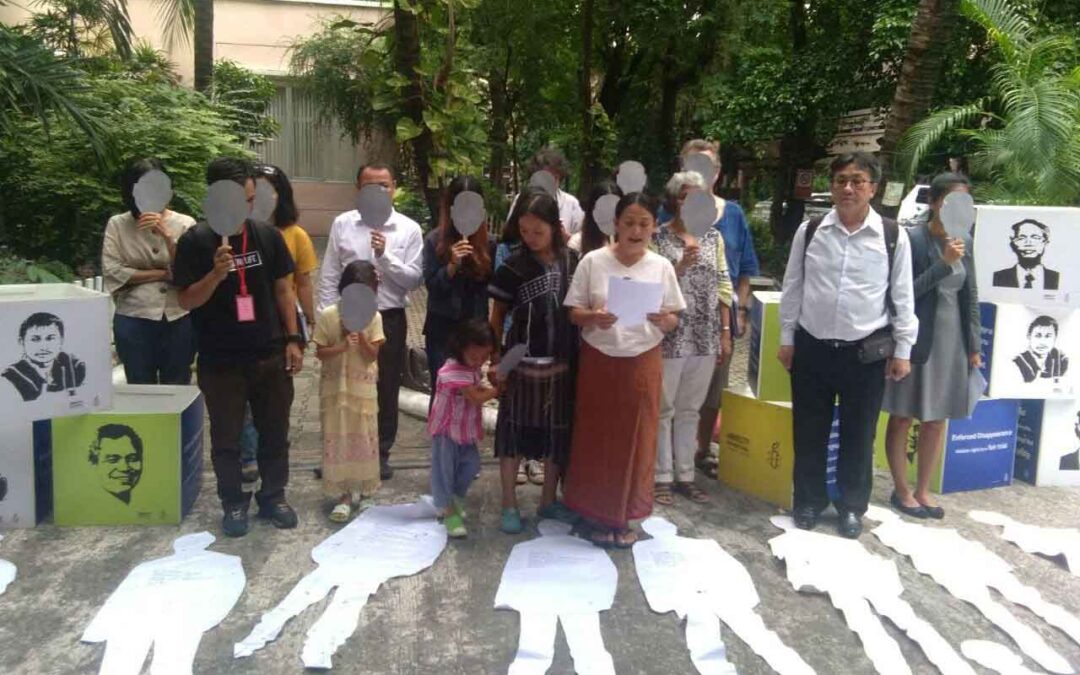
On 30 August, the ICJ co-hosted an event in Bangkok, Thailand, named “International Day of the Victims of Enforced Disappearance: Human Rights Defenders & the Disappeared Justice”.
The event began with opening remarks by South-East Asia’s Regional Representative of the United Nations Office of the High Commissioner for Human Rights (OHCHR) Cynthia Veliko.
Thereafter, Kingsley Abbott, ICJ Senior International Legal Adviser, spoke in a panel discussion about enforced disappearances in Thailand, highlighting the need for Thailand to comply with its human rights obligations under international law.
This panel discussion also included Ms. Oranuch Phonpinyo, Community Representative, forensics expert Dr. Pornthip Rojanasunan and former National Human Rights Commissioner Dr. Niran Pitakwatchara.
In a second panel discussion held during the event, speakers included Ms. Phinnapha Phrueksaphan, Victim Representative, Ms. Angkhana Neelapaijit, National Human Rights Commissioner and Victim Representative, Ms. Nareeluc Pairchaiyapoom from Thailand’s Ministry of Justice and prominent human rights lawyer Mr. Somchai Homlaor.
The event focused on the lack of progress in Thailand with regard to investigating cases of apparent enforced disappearance and called for the Royal Thai government to amend and pass legislation criminalizing torture, ill-treatment and enforced disappearance without further delay.
Thailand is a State party to the International Covenant on Civil and Political Rights (ICCPR), the Convention against Torture and other Cruel, Inhuman or Degrading Treatment or Punishment (CAT) and has signed, but not yet ratified, the International Convention for the Protection of All Persons from Enforced Disappearance (ICPPED).
The other organizers of the event were OHCHR’s South-East Asia Regional Office, the Cross Cultural Foundation (CrCF), Human Rights Lawyers Association (HRLA), the Esaan Land Reform Network, Amnesty International Thailand, Thailand’s Ministry of Justice and the Association for the Prevention of Torture (APT).
Copies of an open letter sent by the ICJ and other human rights groups to the Royal Thai government on 30 August were distributed to the event’s participants.
Contact
Kingsley Abbott, ICJ Senior International Legal Adviser for Southeast Asia, kingsley.abbott(a)icj.org
See the full open letter here in English and Thai
Read also
Ten Years Without Truth: Somchai Neelapaijit and Enforced Disappearances in Thailand
Aug 30, 2017
The ICJ and other human rights groups sent an open letter to the Royal Thai Government on the 2017 International Day of the Victims of Enforced Disappearances.
The ICJ, Amnesty International, Human Rights Watch, the International Federation for Human Rights (FIDH), Thai Lawyers for Human Rights and the Cross Cultural Foundation express concern at the continuing delay in the amendment and enactment of the Draft Prevention and Suppression of Torture and Enforced Disappearance Act (‘Draft Act’) and the lack of progress in investigating cases of apparent enforced disappearance in Thailand.
The letter urged the Royal Thai government to amend the Draft Act to comply with Thailand’s international human rights obligations and pass it without further delay.
The joint open letter also highlighted the apparent enforced disappearances of Somchai Neelapaijit and Porlajee “Billy” Rakchongcharoen and called for the effective, impartial and independent investigation of these cases and all other cases of enforced disappearance, torture and other ill-treatment in Thailand.
The letter concluded by making seven recommendations to the Royal Thai Government, including to:
1. Ratify the ICPPED and accede to the Optional Protocol to the Convention against Torture;
2. Prioritize the amendment of the Draft Act to bring it in line with international law and thereafter enact it without further delay;
3. Ensure that the DSI effectively implements its obligation to independently, impartially and effectively investigate all reported cases of enforced disappearance, including the alleged enforced disappearance of Somchai Neelapaijit until such time as his fate or whereabouts is established; any individual who has knowledge of the fate or whereabouts of Somchai Neelapaijit or any other alleged victim of enforced disappearance must divulge it immediately;
4. Ensure that the DSI investigates the case of the apparent enforced disappearance of Porlajee “Billy” Rakchongcharoen independently, impartially and effectively until such time as his fate or whereabouts is established;
5. Provide the family victims in both cases with access to effective remedies and reparations, including regular updates on the status of the investigations;
6. Ensure, in the cases of Somchai Neelapaijit and Porlajee “Billy” Rakchongcharoen, that if investigations result in sufficient admissible evidence, those who are reasonably suspected of responsibility are prosecuted in fair proceedings without resort to the death penalty; and
7. Implement the recommendations of the Human Rights Committee as stated in its Concluding Observations on Thailand in 2017, to “bring its legislation and practices into compliance with article 9” of the ICCPR, by ending the practice of arbitrarily detaining persons incommunicado, and to ensure “guarantees against incommunicado detention enumerated in the Committee’s general comment No. 35 (2014) on liberty and security of person”.
Background
Thailand has ratified the International Covenant on Civil and Political Rights (ICCPR) and the Convention against Torture (CAT). In January 2012, Thailand also signed the International Convention for the Protection of All Persons from Enforced Disappearance (ICPPED), reflecting a commitment to prevent and prohibit the crime of enforced disappearance.
On 10 March 2017, Thailand’s National Legislative Assembly approved the ratification of the ICPPED.
However, the Royal Thai Government has not yet set a clear time frame for depositing the treaty with the United Nations Secretary-General as required.
Contact:
Kingsley Abbott, ICJ Senior International Legal Adviser (Bangkok), e: kingsley.abbott(a)icj.org
Olivier van Bogaert, ICJ Director Media & Communications (Geneva), e: olivier.vanbogaert(a)icj.org
Download:
Thailand-ED Day letter-Advocacy-open letters-2017-ENG (full letter in Englsih, PDF)
Thailand-ED Day letter-Advocacy-open letters-2017-THA (full letter in Thai, PDF)
Read also:
ICJ new report No more ‘missing persons’: the criminalization of enforced disappearance in South Asia