Apr 26, 2017 | News
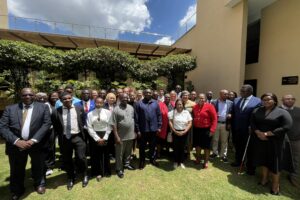
Mohamed Zaree (Egypt, photo), FreeThe5KH (Cambodia) and Karla Avelar (El Salvador) will compete for this prestigious award given to human rights defenders who have shown deep commitment and face great personal risk. The ICJ is member of the MEA Jury.
Selected by the International Human Rights Community (members of the jury are the ICJ, Amnesty International, Human Rights Watch, Human Rights First, International Federation for Human Rights, World Organisation Against Torture, Front Line Defenders, EWDE Germany, International Service for Human Rights and HURIDOCS), the final nominees for the Martin Ennals Award for Human Rights Defenders (MEA) are known:
- Mohamed Zaree is the Egypt Country Director for the Cairo Institute for Human Rights Studies (CIHRS), responsible for CIHRS’s legal research, media outreach and national advocacy. CIHRS’s work was influential in the Arab world particularly Egypt, which resulted in death threats to its director. This forced the CIHRS executive director and regional staff to move abroad to continue their work. Mohamed chose to stay and is now banned from travel. He is a legal scholar coordinating research to challenge laws designed to limit NGOs activities working on human rights, such as freedom of expression and assembly. He is widely seen a unifying figure bringing together the human rights community in Egypt to advocate with a common approach.
- FreeThe5KH are five Human Rights Defenders who have been in pre-trial detention for almost one year. This is linked to their work with the Cambodian Human Rights and Development Association (ADHOC). International bodies like the UN Working Group on Arbitrary Detention and UN Special Rapporteurs have repeatedly called for their immediate and unconditional release, and a stop to judicial harassment of human rights defenders in Cambodia based on their legitimate human rights work. This comes in the context of an increasingly severe crackdown on civil society and the political opposition in Cambodia.
- Karla Avelar, a transgender woman in El Salvador, grew up on the streets of San Salvador, suffering discrimination, violence, exploitation, and rape. She was imprisoned when she defended herself, and then regularly abused by fellow prisoners with the knowledge and even participation of the prison authorities. With three others, she founded COMCAVIS TRANS, which was created to represent, defend, and promote the human rights of LGBTI persons, with a focus on those living with HIV, as she does. She works to change legislation and the authorities’ practices, by holding them publicly to account.
Mohammed Zaree said: “Our hopes were high following the Egyptian revolution in 2011; we don’t know how the situation has instead deteriorated to such an extent. Today, we are battling human rights violations that are worse than before 2011, and challenging the normalization and acceptance of these atrocities.”
“Killing almost 1000 citizens in few hours, arresting almost 40,000 others, innocents dying in Egyptian prisons; is not the norm and we will not allow it to become so. We human rights defenders are fighting these abuses at risk of indefinite imprisonment,” he added.
The main award of the human rights movement, and as such labelled as the Nobel Price for human rights, the Martin Ennals Award aims to protect human rights defenders through increased visibility.
The Award will be presented on 10 October 2017 at a ceremony hosted by the City of Geneva.
Contact
Olivier van Bogaert, Director Media & Communications, ICJ representative in the MEA Jury, t: +41 22 979 38 08 ; e: olivier.vanbogaert(a)icj.org
Michael Khambatta, Director, Martin Ennals Foundation, t: +41 79 474 8208 ; e: khambatta(a)martinennalsaward.org
Background information
Egypt-MEA Finalists 2017 MZaree Bio-2017-ENG (Mohammed Zaree bio, in PDF)
Cambodia-MEA 2017 Finalists FreeThe5KH Bio-2017-ENG (FreeThe5KH backgrounder, in PDF)
Salvador-MEA 2017 Finalists KAvelar Bio-2017-ENG (Karla Avelar bio, in PDF)

Apr 26, 2017 | News
The ICJ today condemned the conviction and sentencing of Siti Noor Aishah Atam for possessing twelve books allegedly associated with terrorist groups, an act which is criminal under Malaysia’s Penal Code.
The ICJ calls for her immediate release from detention and for the authorities to take steps to quash or reverse her conviction.
The Kuala Lumpur High Court found Siti Noor Aishah Atam guilty under Section 130JB(1)(a) of the Penal Code which prohibits any “possession, custody or control of any item associated with any terrorist group or the commission of a terrorist act” and sentenced her to five years of imprisonment.
Siti Noor Aishah Atam contended that she was using the supposedly proscribed books for her thesis as a graduate student at Universiti Malaya, where she majored in Islamic Studies.
The High Court indicated, however, that they were applying the standard of strict liability to this case, meaning that the particular reason a person may have of possessing the books should not be taken into account.
If a person is found to have these books in their possession, for whatever reason, he or she will be penalized under the provision.
“The prosecution and conviction of Siti Noor Aishah Atam by Malaysian authorities is a violation of her right to freedom of expression, which includes the right to seek, receive, and impart information,” said Emerlynne Gil, ICJ’s Senior International Legal Adviser for Southeast Asia.
The ICJ notes that while the right to freedom of expression is not absolute, any restriction must be provided by law and be strictly necessary for a limited number of purposes, such as national security.
Any restriction must also be formulated with sufficient precision to enable an individual to regulate his or her conduct accordingly.
“The law under which Siti Noor Aishah Atam had been convicted is overly vague, since nobody would know what books or other material would be impermissible. The law is also certainly overbroad – having the effect of preventing potentially important academic research,” said Gil.
The twelve books found in the possession of Siti Noor Aishah Atam have not been specifically banned by the Malaysian government.
Indeed, these books may easily be bought at any number of bookstores in the country.
This unjust verdict illustrates the need for urgent legal reform, including the repeal or modification of Section 130JB(1)(a) of the Penal Code.
The ICJ also noted with profound concern that Siti Noor Aishah Atam has been subjected to prolonged detention under multiple laws, namely the Security Offences (Special Measures) Act 2012 (SOSMA) and Prevention of Crime Act 1959 (POCA).
“The Malaysian authorities appear to be abusing SOSMA and POCA by invoking them alternately to keep Siti Noor Aishah Atam in detention. This constitutes a denial of her right to be free from arbitrary detention,” Gil said.
The ICJ had previously called for the abolition of SOSMA, POCA, and similarly abusive laws.
Contact:
Emerlynne Gil, ICJ’s Senior International Legal Adviser, t: +66 840923575 ; e: emerlynne.gil(a)icj.org
Background
Siti Noor Aishah Atam is a former graduate student at Universiti Malaya, majoring in Usuluddin (Akidah) or Islamic Studies.
On 22 March 2016, the police raided the residence of Siti Noor Aishah Atam and arrested her.
She was taken into custody and detained for 28 days under SOSMA at an undisclosed detention facility while her trial was ongoing.
On 25 July 2016, she pleaded not guilty and stated that the books were used for her thesis on terrorism.
On 29 September 2016, the Kuala Lumpur High Court acquitted Siti Noor Aishah Atam.
The High Court had pointed to the Ministry of Home Affairs’ failure to ban the twelve books as one of the key reasons behind the acquittal.
On the day of her acquittal, she was again arrested and detained under POCA for 60 days and was subsequently ordered to be put under house arrest for two years.
In March 2017, the prosecution appealed the High Court’s decision. This allowed authorities to subject Siti Noor Aishah Atam to continued remand under SOSMA.
She was then detained in Kajang Prison until her conviction and sentencing today.

Apr 20, 2017 | News
Nepali authorities should immediately take effective steps to enforce the landmark Kavre district court murder verdict for the 2004 torture and killing of teenage Maina Sunuwar, the ICJ, Amnesty International, and Human Rights Watch said today.
On 16 April 2017, the Kavre district court sentenced three army officers to life imprisonment for the murder of Maina Sunuwar, a 15-year-old girl (photo) who was tortured in army custody and died as a result in February 2004.
Maina’s killing took place during the decade-long armed conflict between the Maoists and government forces that ended in 2006.
A court martial in 2005 found that Maina had died in army custody, convicted the three officers of torture and murder, but only sentenced the three perpetrators to six months’ imprisonment for minor offences, and promptly released them on grounds that they had already served the six months while confined to army barracks during the period of investigation.
“These convictions are an important development in Nepal’s slow-paced justice system’s ability to deal with grave conflict-era human rights abuses,” said Sam Zarifi, the ICJ’s Secretary General.
“What we need now is for the government to demonstrate its commitment to the rule of law and enforce them,” he added.
The trial before the Kavre district court took place in the absence of any of the four accused, despite repeated court summonses, including an arrest warrant, to notify them of the charges and compel them to appear in court.
The three accused army officers who were convicted of Maina Sunuwar’s murder, Bobi Khatri, Amit Pun and Sunil Adhikari, are no longer in the army and are believed to have fled abroad after the court martial proceedings.
The fourth accused, who was acquitted, Major Niranjan Basnet, is still in the army and was repatriated to Nepal from a UN peacekeeping assignment in Chad in 2009 due to the indictment against him.
Maina Sunuwar’s case has become emblematic of the shortcomings in Nepal’s justice system that have repeatedly frustrated efforts of Nepali conflict victims to secure justice for wartime abuses.
Maina Sunuwar’s mother first filed a report with the police in November 2005.
Since then, there have been numerous procedural and political hurdles, and a lack of cooperation by the military as it sought to protect its own.
An arrest warrant issued in 2008 was never enforced by Nepali authorities, with the police telling the court they were unable to trace them.
“Maina Sunuwar’s case was a true test case for the Nepal criminal justice system, but the government has a habit of simply ignoring court orders,” said Brad Adams, Asia director of Human Rights Watch. “This is the first sign of hope for victims after more than ten years since the end of the conflict—and now we need to see all those convicted of murder behind bars.”
The human rights organizations expressed concern that the government might refuse to seek to take measures to enforce the Kavre court’s verdict given its prior record on this and thousands of other conflict-era cases.
In a disturbing example, the police have yet to implement a 13 April 2017 Supreme Court order to arrest Bal Krishna Dhungel, a Maoist politician convicted of a 1998 murder.
Dhungel has yet to serve out his life sentence handed down by the courts.
The court gave the police a week to execute its order and present Dhungel before it.
“The Kavre district court has done its job, reaffirming the independence of the judiciary from political and military pressure, and holding perpetrators of serious crimes committed during the conflict to account,” said Biraj Patnaik, Amnesty International South Asia Regional Office Director. “Now the authorities must do their job by breaking with the practice of successive past governments that ignore and undermine the courts’ decisions. We expect the government to promptly implement this week’s ruling.”
Contact
Nikhil Narayan, ICJ’s South Asia Senior International Legal Adviser, e: Nikhil.narayan@icj.org
Sam Zarifi, ICJ’s Secretery General, e: sam.zarifi@icj.org
Apr 7, 2017
An opinion editorial by Sean Bain, ICJ Legal consultant in Myanmar.
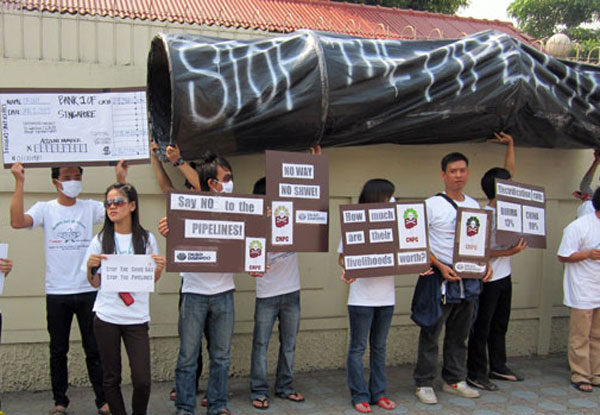
About 20,000 residents of Kyaukphyu Township in Rakhine State are at risk of losing their land and livelihoods because of land acquisition for developing a Special Economic Zone (SEZ).
The land acquisition, initiated by the previous Union Solidarity and Development Party government, involves more than 1,800 acres (about 728 hectares) covering nine village tracts.
Research by the ICJ shows this land acquisition does not comply with Myanmar’s land laws.
Nor does the process comply with international standards on involuntary resettlement, which are recognized in national law.
The land acquisition for the Kyaukphyu SEZ therefore risks repeating the human rights violations associated with the development of the Dawei and Thilawa SEZs.
In its new report Special Economic Zones in Myanmar and the State Duty to Protect Human Rights the ICJ shows how the Kyaukphyu project illustrates broader problems with the design and implementation of laws governing the development of SEZs in Myanmar.
Based on expert legal analysis and interviews with over 100 stakeholders, including those in the government and private sector, the research found that the 2014 SEZ Law does not conform to Myanmar’s international law obligations to protect human rights.
The ICJ has called for a suspension of land acquisition at Kyaukphyu and for a halt to further work in SEZs until the 2014 Law has been amended to protect human rights and enable investment in line with the government’s commitments to sustainable development.
Established by the SEZ Law, the legal framework for Myanmar’s SEZs incorporates national laws including those governing land and the environment.
Legal procedures for land acquisition, environmental impact assessments and involuntary resettlement all fully apply in the zones.
For example, a developer may obtain an SEZ permit only after approval from the Ministry of Natural Resources and Environmental Conservation, in accordance with environmental conservation laws.
Land acquisition must be carried out in compliance with legal procedures, including those prescribed in the 1894 Land Acquisition Act.
The 2015 Environmental Impact Assessment Procedure also requires that development projects conform to international standards on involuntary resettlement.
This means land acquisition should occur only after the completion of resettlement planning for residents facing displacement.
The SEZ Law establishes a special governance structure for the administration of SEZs.
Independent of the Myanmar Investment Commission and the 2016 Myanmar Investment Law, these special government bodies are tasked to supervise and coordinate investment and development in the zones.
Other government actors also play critical roles: the Ministry of Home Affairs carries out land acquisition while Ministry of Natural Resources and Environmental Conservation oversees the EIA procedure.
Although SEZ bodies, particularly the site-specific management committees, exercise significant authority to direct development, the SEZ Law does not establish clear responsibilities for the coordination of land acquisition and EIAs.
Nor does the SEZ Law establish responsibilities for the protection of human rights or provide for accountability for adverse human rights impacts.
In practice, in Myanmar’s SEZs, critical legal procedures tend to be ignored or, if applied, not coordinated or properly followed.
At Kyaukphyu, the ICJ found that authorities have not complied with key provisions of the Land Acquisition Act.
The ICJ is unaware of any resettlement planning conducted in line with international standards. An EIA has not yet started.
Yet plans for land acquisition appear to be well advanced for the initial Phase 1 development area, covering 250 acres (101ha).
Land acquisition in this instance would be unlawful under national laws and constitute forced eviction, a violation of human rights and illegal under international law.
The rights of local residents can be legally protected in SEZs by aligning the SEZ Law with the State’s international human rights law obligations.
Amendments are required to establish specific duties and accountabilities for the SEZ bodies to protect human rights, and to clarify differentiated responsibilities for coordinating and carrying out involuntary resettlement.
Clear lines of accountability will be critical to guide and direct government bodies and departments, as well as companies, to follow the law.
Legal reform is a necessary and practical way for the National League for Democracy-led Government to uphold its commitments to human rights, sustainable development and the rule of law in SEZs.
The recently promulgated Myanmar Investment Law, governing investment outside the zones, provides a highly relevant and realistic example for reform of the SEZ Law.
While imperfect, the drafting process included public consultations with civil society and business groups.
Consultations resulted in a much-improved law that better protects Myanmar’s people and provides greater certainty for investors.
The government can break from the past by ensuring that economic development projects benefit Myanmar’s people, rather than rushing to facilitate projects that result in human rights violations and ultimately undermine sustainable development.
Further development of SEZs, and related investment agreements, should wait until legislative arrangements are in place to facilitate the full protection of human rights in the zones.
Mar 30, 2017
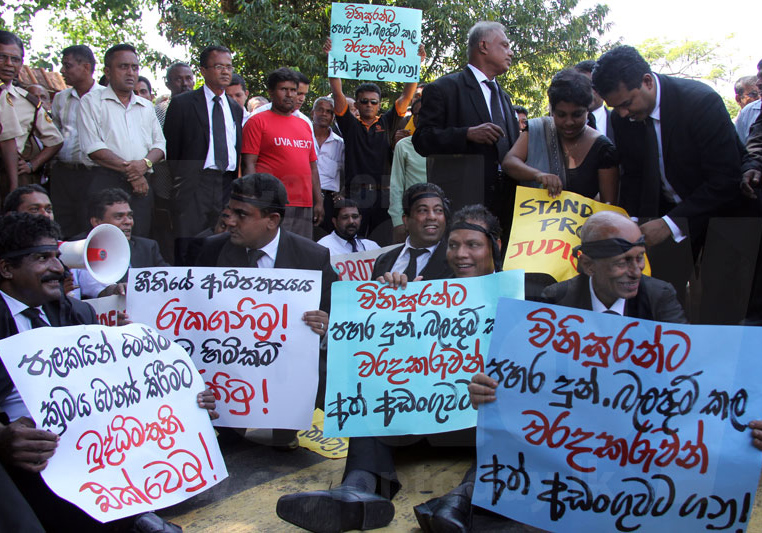
Sri Lanka’s criminal justice system must undergo serious reform in line with international human rights standards in order to provide justice for victims of human rights abuses, the ICJ said in a discussion paper released today.
In a discussion paper titled Challenges to Accountability for Human Rights Violations in Sri Lanka: A Synopsis of Findings from a Meeting with Lawyers and Human Rights Defenders in Colombo, November 2016, the ICJ has identified priorities for action raised by Sri Lankan lawyers and human rights defenders during a workshop on accountability for human rights violations and abuses held in Colombo, Sri Lanka, in November 2016.
“After decades of undue political interference with judicial institutions by authoritarian regimes, the Sri Lankan criminal justice system as a whole has been weakened and is simply not equipped with the capacity or will to adequately pursue accountability for gross human rights cases,” said Nikhil Narayan, South Asia Senior International Legal Adviser for the ICJ.
“It is crucial that Sri Lanka embarks on real systemic reform of the criminal justice system, both legal and administrative, to strengthen its ability to deal with human rights violations and reverse the deteriorating public faith and credibility in the justice sector,” he added.
The issues raised by participants during the workshop in November 2016 echoed many of those identified in the ICJ’s prior studies, reflecting the ongoing and unaddressed systemic challenges that practitioners continue to face today, despite the change of government and perception that the adjudication of human rights cases is seamless.
This discussion paper highlights several key concerns raised by the participants, all of whom are human rights lawyers and defenders. These include:
- the public’s lack of faith in the criminal justice system anchored to the lack of will and ability to investigate, prosecute, and adjudicate human rights violations;
- the gaps in the legal framework to address serious human rights violations;
- questions as to the independence of State actors involved in the judicial system;
- undue delays in pending cases, the lack of functional independence and impartiality of the Attorney General’s Office; and,
- the poor processes and non-transparency in recent legal reform initiatives.
“Our workshop provided a stark reminder that, despite the end of the war nearly a decade ago, the same structural deficiencies in the criminal justice system that existed during the conflict continue to obstruct real justice and accountability for human rights abuses, both conflict-era and ongoing,” Narayan said.
“Particularly now, at a time when the Sri Lankan State at all levels is trying to convince both the domestic and international audience that the existing criminal justice system is sufficiently capable of adjudicating cases of gross human rights abuses stemming from the conflict as part of the transitional justice process, human rights lawyers and defenders in Sri Lanka have issued a counter-point to these claims,” he added.
The discussion paper concludes with the identification and prioritization of key strategies for criminal justice reform that could help address these challenges, including:
- Clarifying the role of the Attorney General’s Office, including strengthening its functional independence and impartiality;
- Strengthening the independence and impartiality of the judiciary;
- Strengthening the functional independence of the police;
- Incorporating gross human rights violations amounting to crimes under international law as specific offences in Sri Lankan law in line with international standards;
- Strengthening the functional independence and impartiality of independent constitutional commissions such as the Human Rights Commission of Sri Lanka and the National Police Commission, among others;
- Encouraging and supporting the Bar Association of Sri Lanka in taking a stronger public advocacy role on human rights and rule of law; and,
- Greater public awareness-raising of law reform initiatives.
Contact
Nikhil Narayan, South Asia Senior International Legal Adviser, e: Nikhil.narayan(a)icj.org
Background
The November 2016 workshop was the first of two colloquia to discuss ongoing challenges faced in promoting greater accountability for human rights violations and abuses through the Sri Lankan criminal justice system.
The second colloquium was held with Sri Lankan high court judges in Colombo in January 2017. The outcome of the judges’ colloquium will be published in a discussion paper next month.
The ICJ has previously published several reports, including in 2010 and 2012, documenting the deep politicization and capacity deficit of the Sri Lankan judiciary and criminal justice system in dealing with gross human rights violations and abuses.
Sri Lanka-FCO Accountability 1-Advocacy-Analysis brief-2017-ENG (full paper in PDF)