Women profiles: Imrana Jalal
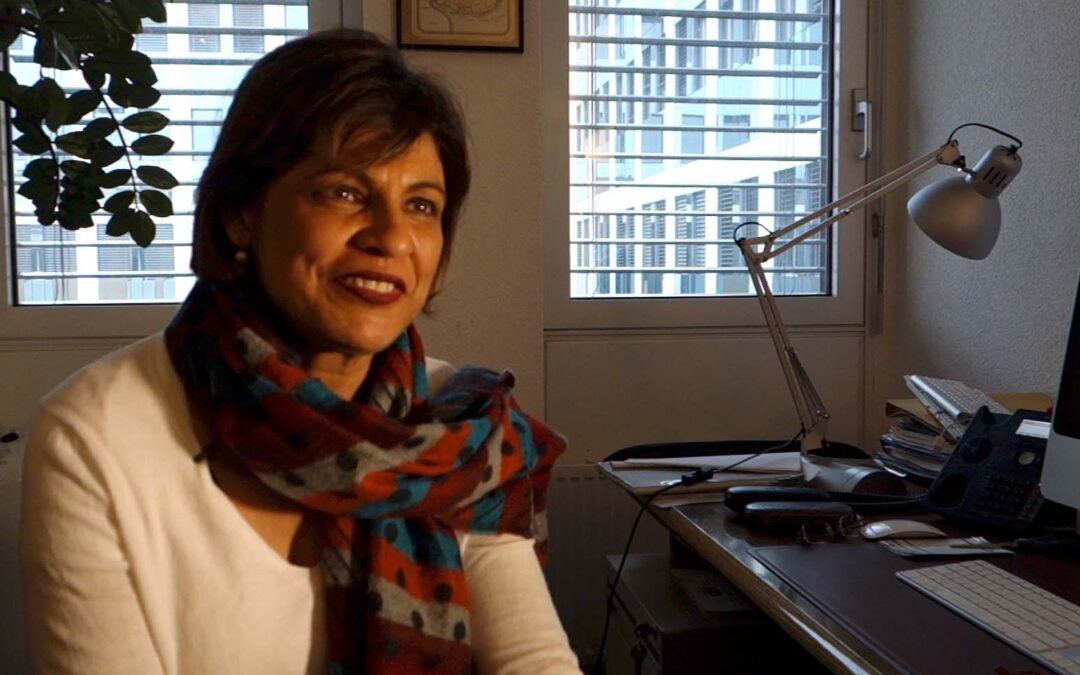
The ICJ continues its series of women’s rights defender profiles with an interview with Imrana Jalal, an ICJ Executive Committee member, focussing on her motivations for women’s rights work.

The ICJ continues its series of women’s rights defender profiles with an interview with Imrana Jalal, an ICJ Executive Committee member, focussing on her motivations for women’s rights work.
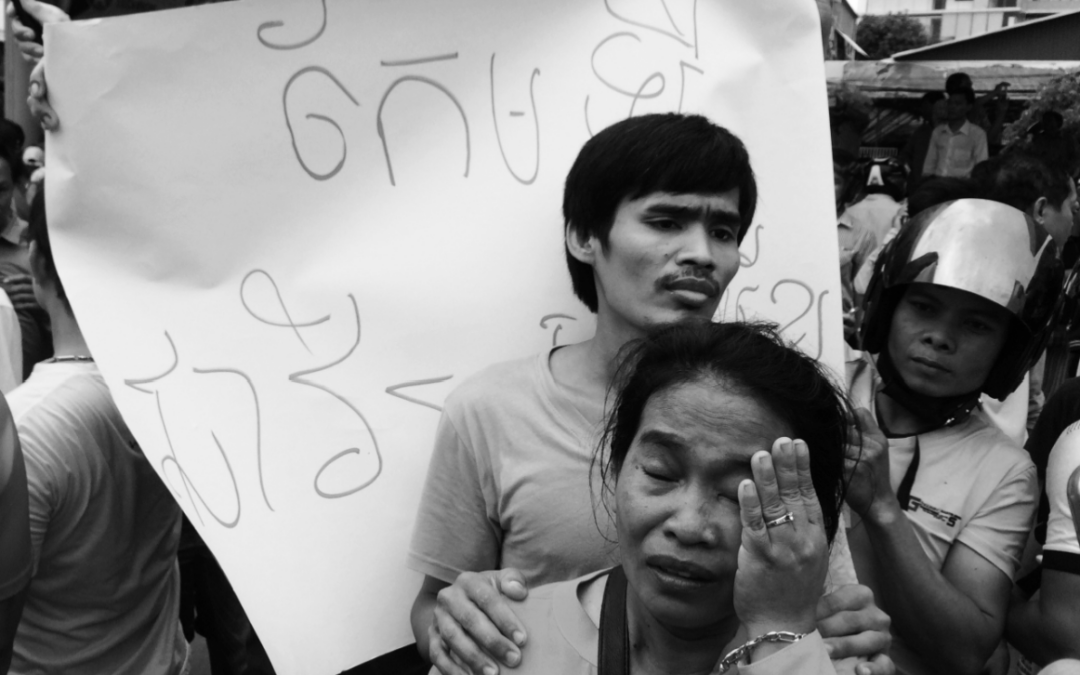
Cambodia should continue to investigate the killing of prominent political commentator Kem Ley in order to address key aspects of the case that appear to have been inadequately investigated, said the ICJ, Amnesty International, and Human Rights Watch today.
On 23 March 2017, the Phnom Penh Municipal Court found Oeuth Ang guilty of the premeditated murder of Kem Ley on 10 July 2016 and sentenced him to life imprisonment.
Prior to the half-day trial, which took place on 1 March 2017, the authorities released almost no information about the investigation.
“The trial revealed that the investigation appeared to be deficient in several important respects,” said Kingsley Abbott, the ICJ Senior International Legal Adviser who observed the trial.
“Until there is an independent, impartial and effective investigation to establish whether anyone else was involved in the killing, the victims of this serious crime, including Kem Ley’s wife and children, will be unable to obtain justice,” he added.
Even the very identity of the defendant was at issue. At trial, Oeuth Ang maintained he is 39-years-old, unmarried, and named “Chuob Samlab” – which translates in English as “Meet to Kill” – from Banteay Meanchey province.
However, the prosecutor submitted that based on the fingerprint on the ID card of Oeuth Ang, he is satisfied that the defendant is in fact Oeuth Ang, married, born in 1972, from Siem Reap province.
“The proceedings may have established that Oeuth Ang pulled the trigger, but the investigation does not seem to have considered whether someone else loaded the gun,” said Champa Patel, the Amnesty International Director for Southeast Asia and the Pacific. “It is clear that the authorities want to close the book on this case and move on but failures in the investigation of this heinous act can only serve to compound the injustice already suffered by the family of Kem Ley”.
The hearing commenced at 8:40 and concluded at 13:00. After Oeuth Ang gave evidence, ten witnesses gave oral testimony including two Caltex workers, seven officials who were involved in the investigation in different capacities, and a doctor who examined Kem Ley’s body at the scene of death.
Official reports and the statements of several witnesses were also read into evidence, and the prosecution played eight videos from different locations, including one captured by a closed circuit television (CCTV) camera inside the Caltex station where Kem Ley was killed.
Kem Ley’s widow, who was named as a civil party, did not appear at the trial but her civil party statement was read into evidence.
“The authorities’ failure to investigate so many clear gaps in the defendant’s story and the court’s unwillingness to examine them suggest that a quick conviction rather than uncovering all involved was the main concern,” said Phil Robertson, Deputy Asia Director at Human Rights Watch. “Kem Ley’s family have been outspoken in their disbelief that Oeuth Ang was solely responsible for the murder, and the trial’s conduct lends credence to their skepticism.”
Contact
Kingsley Abbott, ICJ Senior International Legal Adviser for Southeast Asia, t: +66 94 470 1345 ; email: kingsley.abbott(a)icj.org
Cambodia-KemLey Verdict-News-Press releases-2017-ENG (full story, in PDF)
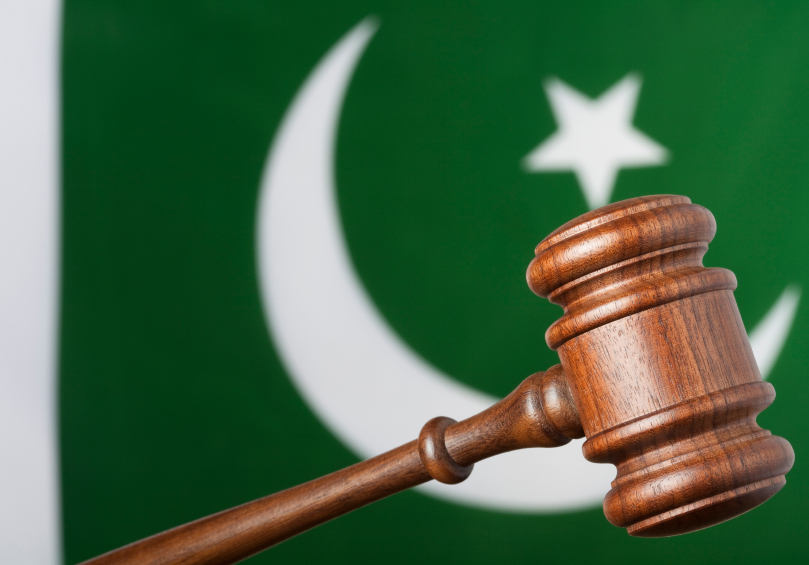
The ICJ urged the Pakistan government to withdraw its proposal to reinstate and widen the scope of military trials for civilians.
“Bringing back military courts is an attempt to deflect attention from the real issue: the Government’s failure to enact reforms to strengthen the criminal justice system during the two years the 2015-2017 military courts were in operation,” said Sam Zarifi, ICJ’s Asia Director.
Bills to amend the Constitution of Pakistan and the Army Act, 1952, to extend the jurisdiction of military courts to try a wide variety of terrorism-related offences, were introduced before the National Assembly (lower house of parliament) on Friday, 10 March.
The “terrorism-related” offences include, among others: abducting any person for ransom; raising arms of waging war against Pakistan; causing any person injury of death; using or designing vehicles for terrorist attacks; creating terror or insecurity in Pakistan; and attempting, aiding or abetting any of these acts.
The new amendments are also applicable in all cases where the accused commit “grave and violent acts against the State”. The mandatory requirement to belong to a group that uses “the name of religion or sect”, as introduced by the 21st Amendment and corresponding amendments to the Army Act introduced in 2015, is no longer applicable.
“The expansion of military courts’ jurisdiction over all ‘grave and violent acts against the State’ creates the possibility that these courts could be used against a wide variety of people, including those who are legitimately exercising their rights to speech, association, and assembly,” added Zarifi.
According to the preambles of the bills, an “extraordinary situation” and a “grave and unprecedented threat to the integrity of Pakistan” still exist in the country, and military courts are being revived because they “yielded positive results in combatting terrorism” in the two years they were in operation.
“The military courts have not had any positive results in combating terrorism, given the country’s ongoing problem with acts of terrorism and armed insurgents,” said Zarifi. “Instead, military trials of civilians have further eroded the rule of law and weakened the government’s legitimacy in providing justice and defending the rights of people in Pakistan.”
Background
Military courts constituted under the 21st Amendment convicted 274 people in the two years during which they were in operation, from 7 January 2015 to 6 January 2017. Of those 274 convictions, 161 people were sentenced to death and 113 people were given prison sentences. At least 17 people given death sentences have been executed by hanging. The enabling legislation for these courts lapsed on 6 January 2017 pursuant to a two-year sunset clause.
The ICJ recalled that the use of military courts to try civilians is inconsistent with international standards.
The ICJ has documented serious fair trials violations in the operation of military courts including: denial of the right to counsel of choice; failure to disclose the charges against the accused; denial of a public hearing; failure to give convicts copies of a judgment with evidence and reasons for the verdict; and a very high number of convictions based on “confessions” without adequate safeguards against torture and ill treatment.
Contacts
Sam Zarifi, ICJ Asia Pacific Regional Director (Bangkok), t: +66 807819002; e: sam.zarifi(a)icj.org
Reema Omer, ICJ International Legal Adviser for Pakistan (London), t: +447889565691; e: reema.omer(a)icj.org
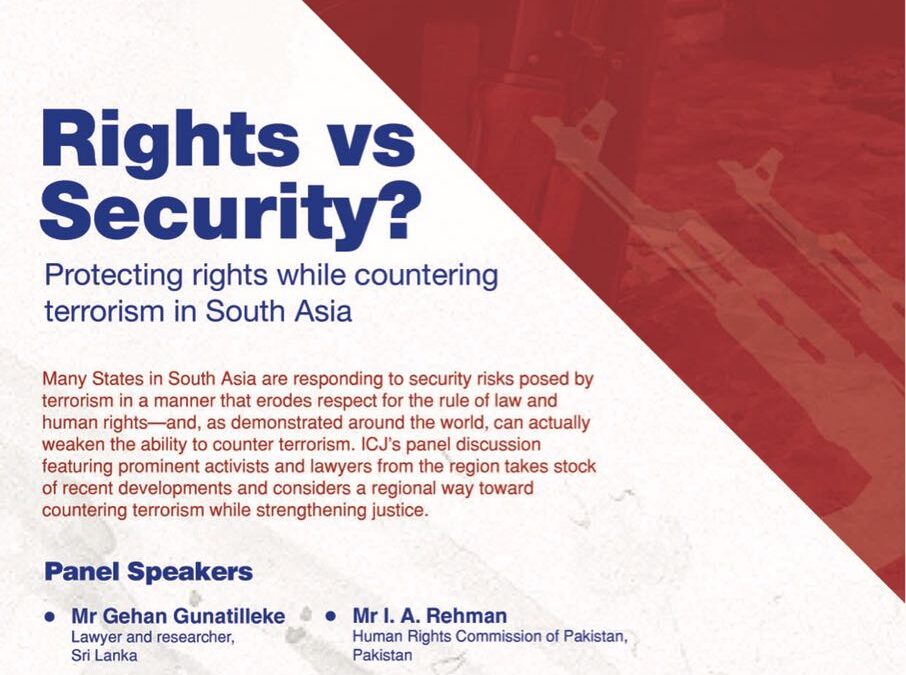
The ICJ and the Human Rights Commission of Pakistan are convening a side event at the UN Human Rights Council, entitled “Rights vs Security? Protecting human rights while countering terrorism in South Asia”.
The event takes place 15 March 2017, 12:00-13:00, Palais des Nations, Room XXI
Many States in South Asia are responding to security risks posed by terrorism in a manner that erodes respect for the rule of law and human rights—and, as demonstrated around the world, can actually weaken the ability to counter terrorism. ICJ’s panel discussion featuring prominent activists and lawyers from the region takes stock of recent developments and considers a regional way toward countering terrorism while strengthening justice.
Panelists:
Mr I. A. Rehman: Human Rights Commission of Pakistan (Pakistan)
Mr Adilur Rahman Khan: Odhikar (Bangladesh)
Mr Gehan Gunatilleke: Lawyer and researcher (Sri Lanka)
Ms Sanhita Ambast: Human rights lawyer (India)
Moderator:
Mr Massimo Frigo: International Commission of Jurists
A flyer may be downloaded here.
The ICJ today delivered a joint NGO oral statement to the UN Human Rights Council on the need in Myanmar for an international Commission of Inquiry and for an independent and self-governing legal profession.
In the statement, the International Commission of Jurists, joined by the International Bar Association’s Human Rights Institute and Lawyers’ Rights Watch Canada, welcomed the report of the Special Rapporteur on the situation for human rights in Myanmar, and her recommendation for a Commission of Inquiry to investigate persecution of Rohingya and other minorities in Rakhine State.
Since 9 October 2016, Myanmar’s security forces have reportedly targeted Rohingya during “clearance operations” which have no basis in law. Attacks against women, men, and children allegedly have involved extrajudicial killings; enforced disappearances; torture and other ill-treatment including rape and other sexual violence; hundreds of arbitrary arrests and detentions; forced displacement; and looting and destruction of homes, food and other property.
To date, authorities in Myanmar appear to have been unwilling or unable to investigate abuses or hold perpetrators accountable. Several national investigation commissions have lacked impartiality and independence. National judicial and law enforcement authorities lack capacity and independence to address this situation. Accordingly, we urge Council to adopt a resolution at this session establishing an international, independent Commission of Inquiry to assess facts, identify causes and perpetrators, and issue recommendations including remedies for victims.
The recent killing of lawyer U Ko Ni, who strongly advocated against religious discrimination and for inter-communal peace, must be subject to a prompt, impartial and effective investigation capable of identifying all those responsible and holding them accountable in a fair trial. It also underscores the urgent need for an independent and self-governing legal profession in Myanmar, enabled to uphold human rights and the rule of law without fear.
The statement may be downloaded in PDF format here: HRC34-OralStatement-Myanmar-2017
 Tunisia: Quash sham conviction and sentence of judges’ association President, Anas Hmedi
 The UN Human Rights Council makes significant but limited progress in addressing human rights around the world, as atrocities multiply in the Middle East and elsewhere
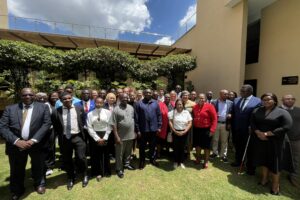 ICJ hosts an African Regional Convening in Kenya on Transformative Equality Jurisprudence
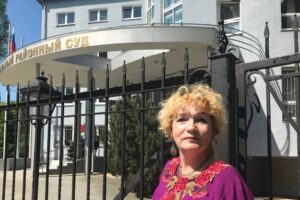 Russian Federation: Arbitrarily detained human rights lawyer Maria Bontsler must be released