Apr 29, 2016
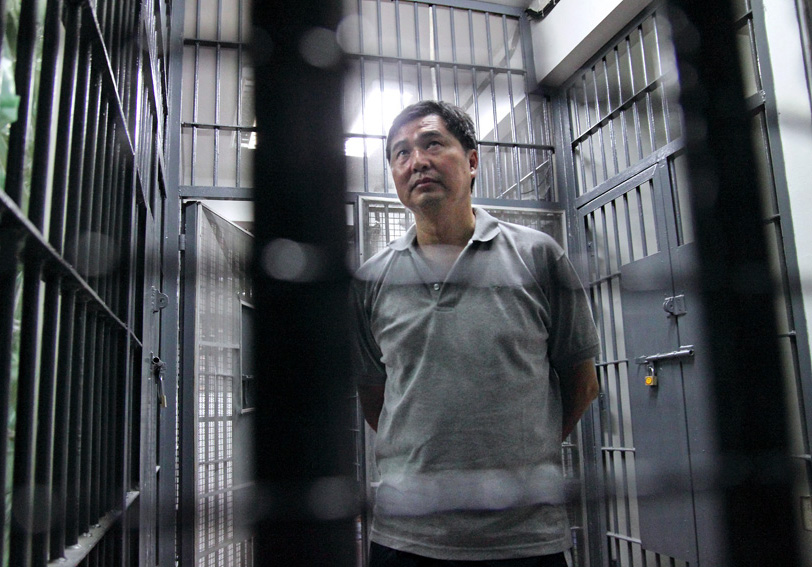
On the eve of the five-year anniversary of his detention, the ICJ and other international organizations condemn the ongoing and arbitrary deprivation of liberty of human rights defender Somyot Phrueksakasemsuk and call on Thailand’s authorities to immediately and unconditionally release him.
Somyot, 54, is currently incarcerated in Bangkok’s Remand Prison, where he is serving a 10-year sentence following his conviction on charges of lèse-majesté under Article 112 of Thailand’s Criminal Code. Article 112 states that “whoever defames, insults or threatens the King, the Queen, the Heir to the throne or the Regent shall be punished with imprisonment of three to 15 years.”
This imprisonment is in addition to one more year, which was an earlier suspended sentence for defamation in another case.
Several UN human rights monitoring bodies have voiced concern over Somyot’s deprivation of liberty. In an opinion issued on 30 August 2012, the UN Working Group on Arbitrary Detention (WGAD) affirmed that Somyot’s detention was arbitrary. The WGAD called on Thai authorities to release Somyot and award him compensation.
A former labor rights activist and magazine editor, Somyot was arrested on 30 April 2011, five days after he launched a petition campaign to collect 10,000 signatures required for a parliamentary review of Article 112.
On 23 January 2013, the Bangkok Criminal Court sentenced him to 10 years in prison on two counts of lèse-majesté.
Somyot was convicted for allowing the publication of two satirical articles in the now-defunct magazine Voice of Taksin, of which he was the editor.
The articles were authored by someone else and deemed by the Thai authorities to have insulted King Bhumibol Adulyadej.
On 19 September 2014, the Court of Appeal upheld the Bangkok Criminal Court’s lèse-majesté conviction of Somyot.
The Court of Appeal failed to notify Somyot, his lawyer, and his family members that the hearing would take place on that day.
On 19 November 2014, Somyot filed an appeal to the Supreme Court against his conviction.
Somyot’s conviction and his detention do not comply with Thailand’s international legal obligations. Article 19 of the International Covenant on Civil and Political Rights (ICCPR), to which Thailand is a state party, provides that everyone has the right to freedom of expression.
This right includes “freedom to seek, receive, and impart information and ideas of all kinds.”
In its authoritative General Comment on Article 19, the UN Human Rights Committee (HRC), the body that monitors compliance with the provisions of the ICCPR by state parties, has affirmed that “all public figures, including those exercising the highest political authority such as heads of state and government, are legitimately subject to criticism and political opposition.”
The HRC specifically expressed concern regarding lèse-majesté laws and stated that “imprisonment is never an appropriate penalty” for defamation.
On 23 September 2014, the UN Office of the High Commissioner for Human Rights (OHCHR) voiced its disappointment over the Court of Appeal’s ruling that upheld Somyot’s conviction.
On 11 August 2015, OHCHR urged Thailand to amend the “vague and broad” lèse-majesté law to bring it in line with international human rights standards.
OHCHR also called for the immediate release of all those who had been jailed for the exercise of their right to freedom of expression.
We also condemn the flaws and delays in the judicial proceedings against Somyot and the courts’ repeated refusals to grant him bail.
Somyot has unsuccessfully petitioned for bail 16 times – the last time in November 2014.
Somyot is one of the few lèse-majesté defendants who have appealed their convictions up to the Supreme Court.
Somyot has maintained his innocence and has refused to plead guilty.
In consideration of the very high conviction rate in Thailand’s lèse-majesté trials, most defendants plead guilty in order to obtain a significant reduction of their prison sentence and become eligible to apply for a pardon from the palace.
We urge the Thai government to end the persecution of Somyot and immediately set him free to return to his wife and family.
In addition, we call on the Thai government to provide Somyot adequate compensation and effective remedy for the arbitrary deprivation of his liberty.
Thailand-Somyot Joint Statement-Advocacy-Open letters-2016-ENG (full text in PDF)
Apr 27, 2016 | News
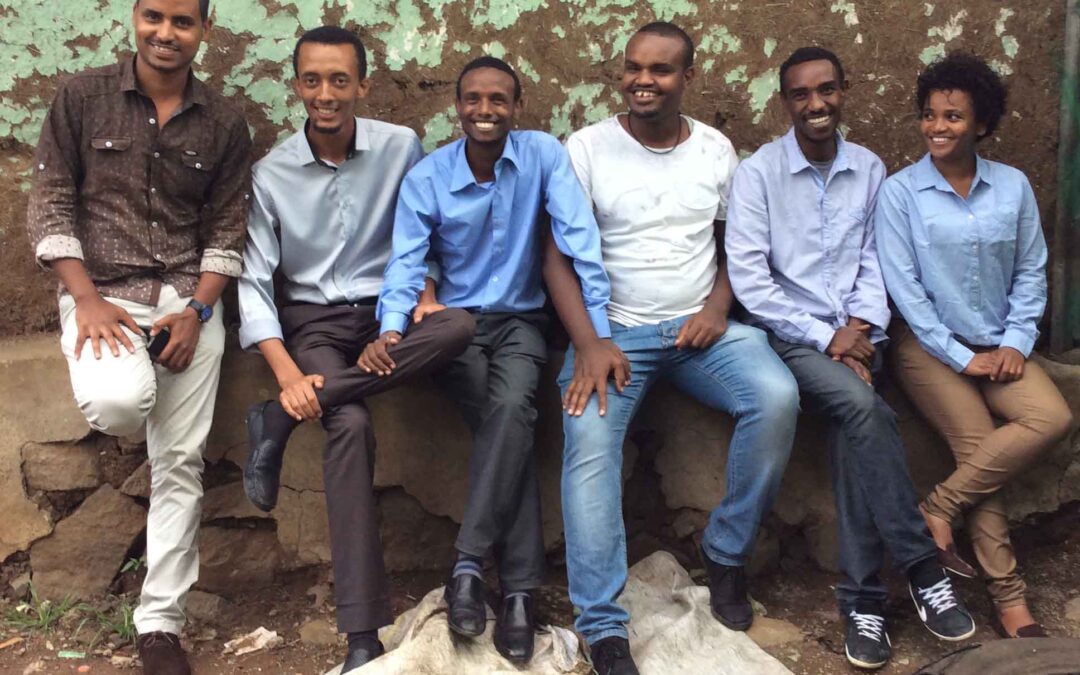
The three human rights defenders selected for the award are Zone 9 Bloggers (Ethiopia), Ilham Tohti (China) and Razan Zaitouneh (Syria). The ICJ is member of the MEA Jury.
The Martin Ennals Award for Human Rights Defenders (MEA) is the main award of the human rights movement and as such can be labelled as the Nobel Price for human rights.
It is a unique collaboration among ten of the world’s leading human rights organizations to give protection to human rights defenders worldwide.
This award is selected by the International Human Rights Community (members of the jury are ICJ, Amnesty International, Human Rights Watch, Human Rights First, International Federation for Human Rights, World Organisation Against Torture, Front Line Defenders, EWDE Germany, International Service for Human Rights and HURIDOCS).
It is given to Human Rights Defenders who have shown deep commitment and face great personal risk.
The aim of the award is to highlight their work and protect them through increased visibility.
The MEA Award 2016 will be presented on October. 11th at a ceremony hosted by the City of Geneva.
Kality prison in Ethiopia, which holds many journalists and political prisoners, has 8 zones. Zone 9 Bloggers selected their name as a symbol for Ethiopia as a whole where political freedoms are severely restricted.
They write opinion pieces and feature articles that focus on the constitution, economic, educational and cultural issues. They document human rights abuses and violations of law by both state and non-state actors.
Furthermore, they shed light on the situation of political prisoners in Ethiopia.
Two weeks after creating their blog, it was blocked. Two years later six of its members (photo) were arrested and charged with terrorism.
Although they have now been released, three are in exile while those still in Ethiopia are banned from travel.
They said: “We are extremely humbled to be nominated for the Martin Ennals Award. This recognition raises our visibility enough to increase our safety, and also shows that the World is the home of the same family. It is proof that when one part of the world is silenced, the rest will speak on behalf of it. This recognition will definitely motivate us to push forward on our struggle to create a better Ethiopia where human rights are respected.”
A renowned Uyghur intellectual in China, Ilham Tohti has worked for two decades to foster dialogue and understanding between Uyghurs and Han Chinese.
He has rejected separatism and sought reconciliation based on a respect for Uyghur culture.
Beginning in 1994, he began to write about problems and abuses in Xinjiang, which led to official surveillance.
From 1999 to 2003 he was barred from teaching, after posting information on Uyghurs who had been arrested, killed and “disappeared” during and after protests. Ilham Tohti was arrested on January 15, 2014.
He was charged with separatism and sentenced to life imprisonment after a two-day trial.
A prominent human rights lawyer, activist, and journalist in Syria, Razan Zaitouneh has dedicated her life to defending political prisoners, documenting crimes against humanity, and helping others free themselves from oppression. This resulted in a travel ban in 2002.
Following the beginning of the conflict in 2011, she founded the Violations Documentation Center (VDC), which documents the death toll and ill-treatment in Syria’s prisons.
On December 9, 2013, a group of masked gunmen stormed the VDC office in Douma, near Damascus, and kidnapped Razan along with her husband, Wael Hamada, and two colleagues. Their whereabouts remain unknown.
Contact:
Olivier van Bogaert, Director Media & Communications, ICJ representative in the MEA Jury, t: +41 22 979 38 08 ; e: olivier.vanbogaert(a)icj.org
Michael Khambatta, Director, Martin Ennals Foundation, t: +41 79 474 8208 ; e: khambatta(a)martinennalsaward.org

Apr 26, 2016
The ICJ and 32 other human rights groups are calling on the Vietnamese authorities to carry out a prompt, impartial, independent and effective investigation into allegations that Tran Thi Hong, a member of the Vietnamese Women for Human Rights (VNWHR) was tortured.
Vietnam-Joint Statement Tran Thi Hong-Advocacy-open letters-2016-ENG (full tex, in PDF)
Apr 18, 2016 | Advocacy, Non-legal submissions
The ICJ and Thai Lawyers for Human Rights provided a joint submission to the UN Human Rights Committee for its consideration during the adoption of a list of issues for the examination of the Second Periodic Report of Thailand under the International Covenant on Civil and Political Rights.
During its 117th Session, from 30 June to 25 July 2016, the Committee will prepare and adopt a List of Issues on Thailand.
These issues will be put to the Government of Thailand for formal response ahead of the Committee’s full examination of Thailand’s Second Periodic Report during the Committee’s 119th Session, the exact dates of which have yet to be confirmed but which is expected to take place in March 2017.
The ICJ and Thai Lawyers for Human Rights’ joint submission raises matters and suggests concrete questions to be put to the Government of Thailand concerning the following issues:
– Thailand’s derogation under Article 4 of the Covenant;
– Torture and other ill-treatment, enforced disappearances and custodial deaths in disputed circumstances; and
– Thailand’s new institutional and legal framework since the coup d’état, which severely restricts the exercise of Covenant rights within the country and in particular the recent introduction of the National Council for Peace and Order’s (NCPO) Head Order 13/2016, which grants members of the military wide-ranging law enforcement powers to ‘prevent and suppress’ 27 ‘crimes’, together with blanket immunity from prosecution.
THAILAND-JOINT ICJ TLHR HRC LOI SUBMISSION-Advocacy-non legal submission-2016-ENG (full text in PDF)
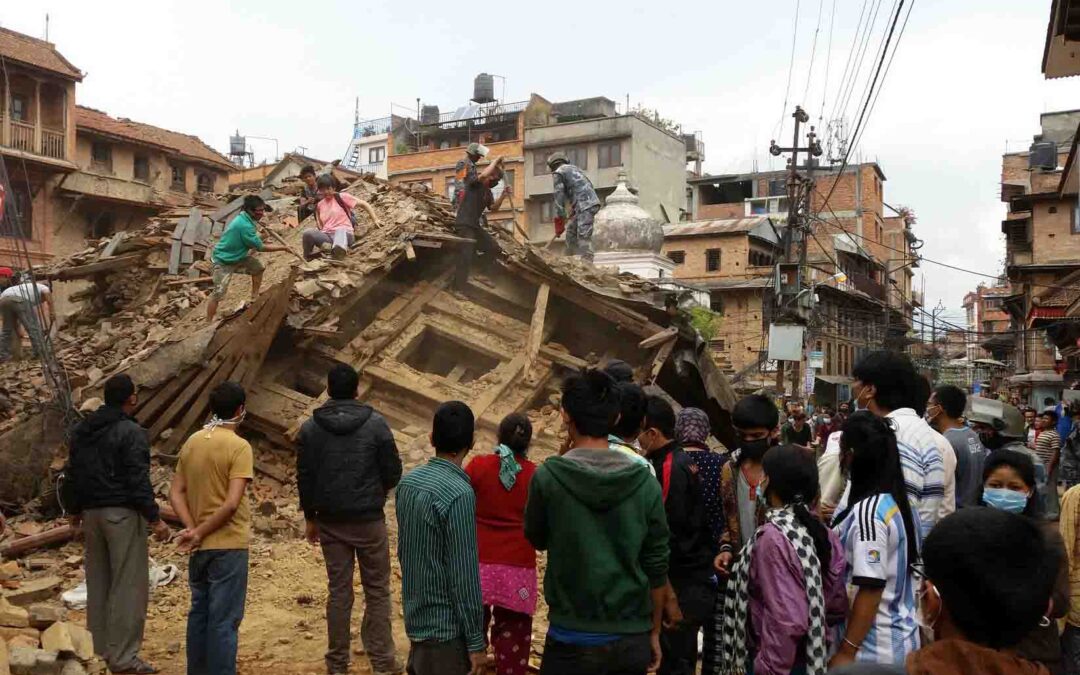
Apr 15, 2016 | News
The Nepal government should immediately stop all intimidation and harassment of the National Human Rights Commission (NHRC) and its staff and respect its independence in line with international standards, the ICJ and other rights groups said today.
The attempts to intimidate the NHRC are a direct contradiction of the United Nation’s Principles relating to the Status of National Institutions (the Paris Principles) as well as Nepal’s constitution, the ICJ Amnesty International and Human Rights Watch said.
According to the commissioners and confirmed by independent media accounts, on April 3, 2016, Prime Minister K.P. Sharma Oli summoned the National Human Rights Commission chair, Anup Raj Sharma, and other commissioners to question them about the NHRC’s statement delivered by Commissioner Mohna Ansari during the Universal Periodic Review (UPR) of the human rights situation in Nepal before the UN Human Rights Council in Geneva in March.
In its statement, the commission highlighted various ongoing human rights concerns, including discriminatory citizenship provisions in the new constitution, the continued failure to properly investigate alleged unlawful killings and excessive use of force during protests in the Terai region in 2015, violations of the economic, social, and cultural rights of earthquake victims (photo), and the need for credible transitional justice for conflict victims.
“As the principal independent constitutional body mandated to promote and protect human rights in the country, the NHRC plays a vital role in ensuring governmental accountability, and was well within its authority under both the Nepali Constitution and international standards when it delivered its submission to the UN Human Rights Council during the UPR,” said Nikhil Narayan, ICJ’s South Asia Senior Legal Adviser.
“The PM’s blatant attempt to intimidate the NHRC members for that submission is a flagrant violation of the government’s basic obligation to ensure the NHRC’s ability to carry out its work independently and without undue interference,” he added.
While it is entirely appropriate for the prime minister, like other stakeholders, to consult with the NHRC, such exchanges should be conducted with due respect for the legitimate exercise of the institution’s constitutional mandate, independently and free of undue interference or intimidation, the rights organizations said.
NHRC members present at the meeting uniformly expressed the sentiment that Oli, through his aggressive questioning and reprimanding of the commissioners over the contents of certain sections of its submission, was trying to intimidate the commission and in particular Commissioner Ansari, at whom the questioning appeared exclusively directed.
“The line and manner of questioning, including insinuations of bias and a lack of neutrality, particularly those aimed at Commissioner Ansari, the public face of the NHRC in Geneva, revealed an intent not of clarification, but intimidation that seeks to limit the role and effectiveness of the NHRC,” said Champa Patel, director of the South Asia Regional Office at Amnesty International.
Based on media accounts, discussions between the commissioners and the prime minister reflected an apparent attempt by the prime minister to discredit the commission’s statement by portraying it as the personal views of Commissioner Ansari alone or those of a nongovernmental organization.
Sharma promptly rebutted this characterization in a public statement on April 10, clarifying that “the statement delivered by NHRC Spokesperson Ansari at the UPR session was that of the commission and not her own,” and that “[i]mpunity has affected the overall promotion and protection of human rights.”
Amnesty International, Human Rights Watch, and the ICJ have consistently and repeatedly highlighted rights concerns similar to those the commission expressed in its UPR submission. The prime minister and government of Nepal should implement without delay the commission’s recommendations concerning discriminatory constitutional provisions, impunity for perpetrators of Terai violence on all sides, ensuring justice in the process of transition, and protecting the rights of earthquake victims.
The prime minister and the government of Nepal must publicly state that they will respect and guarantee the independence and integrity of the National Human Rights Commission, as the principal constitutionally mandated human rights body in the country, in accordance with international standards.
“The prime minister overstepped his authority, and his attempts to intimidate and intervene in the work of the NHRC contravene the Paris Principles, which clearly provide for the establishment of autonomous and independent institutions,” said Meenakshi Ganguly, South Asia director at Human Rights Watch. “The prime minister seems unwilling to recognize that the NHRC acts independently and is not an arm of the executive, subject to governmental dictates.”
Contact:
Nikhil Narayan, ICJ’s South Asia Senior Legal Adviser, t: +97-7-981-318-7821 ; e: nikhil.narayan(a)icj.org
Sam Zarifi, ICJ’s Asia Director, t: +66-807-819-002 ; e: sam.zarifi(a)icj.org
Additional information:
The Paris Principles set out internationally agreed upon standards designed to guide the work of national human rights institutions in a credible, independent and, effective manner. Crucially, the Paris Principles define the role, composition, status, and functions of these bodies, which include engaging with the UN and regional institutions and states’ obligation to ensure their real independence through a broad mandate, adequate funding, and an inclusive and transparent appointment process.
Furthermore, the UN Declaration on the Right and Responsibility of Individuals, Groups and Organs of Society to Promote and Protect Universally Recognized Human Rights and Fundamental Freedoms (Declaration on Human Rights Defenders) reaffirms the right of human rights defenders and institutions to advocate for human rights at the national and international level, including by engaging with the UN and other intergovernmental organizations.