Mar 16, 2016 | Advocacy, Non-legal submissions
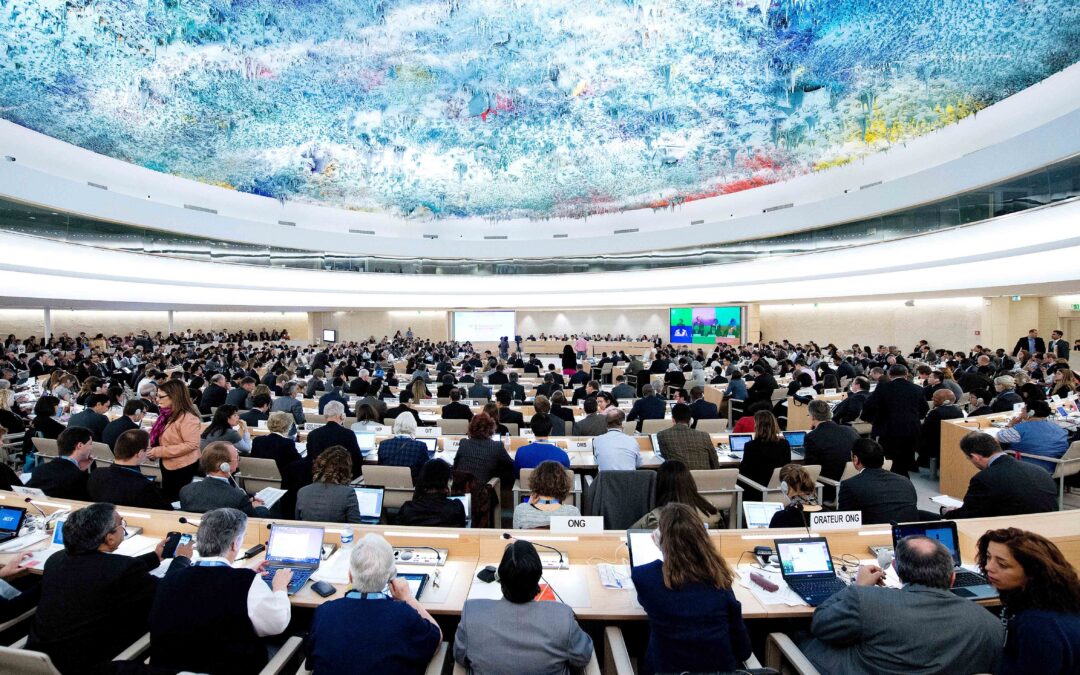
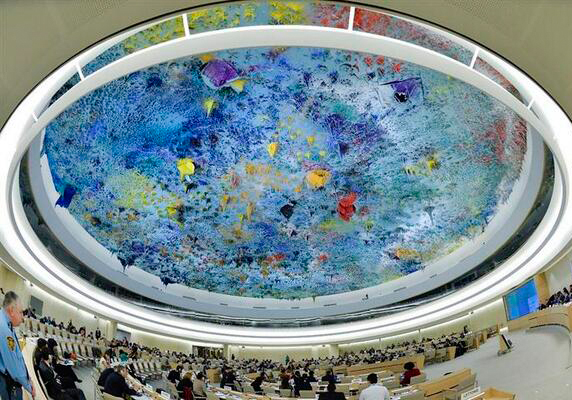
The ICJ today delivered an oral statement to the UN Human Rights Council, on the Universal Periodic Review of Nepal.
“The ICJ is concerned that the Government of Nepal has yet to implement many of the recommendations it accepted during the first UPR cycle, including several that reflect its international legal obligations regarding the new Constitution, investigation and prosecution of serious crimes, and establishment of credible transitional justice mechanisms.
The police continue to refuse to investigate conflict-era cases even when explicitly ordered by courts to do so. The transitional justice commissions do not enjoy the support of the victims and human right organizations, a year into their two-year mandate. Victims’ rights to truth, justice and reparation are not being respected, protected and fulfilled.
More than 59 persons, including 10 police personnel, were killed during recent protests, but as yet we are not aware of any impartial and effective investigation of the killings.
Many serious crimes under international law, including torture and enforced disappearance, still are not recognised as crimes under the Nepali penal code.
The ICJ therefore calls upon the Government to reconsider its position, and to accept and implement the UPR recommendations arising from this cycle, relevant to:
- Strengthening the constitutional protection of human rights;
- Amending the Truth and Reconciliation Commission Act, 2014, in line with international standards and Supreme Court orders;
- Establishing a credible transitional justice process;
- Preventing, investigating, and responding effectively to any use of excessive force by security forces;
- Ensuring prompt, independent and impartial investigations and, prosecution in cases of unlawful killings, whether the perpetrators are security forces or protesters;
- Amending the Penal Code to explicitly incorporate serious crimes under international law; and
- Ratifying relevant treaties, and accepting requests for visits of the Working Group on Enforced Disappearances, and Special Rapporteur on the right to truth.”
A more detailed written statement may be downloaded in PDF format here: HRC31-Advocacy-WrittenStatement-Nepal-2016
Mar 15, 2016 | News
Today’s acquittal of the only person facing charges for the killing of lands rights activist Chai Bunthonglek, highlights the urgent need for the Thai Government to protect human rights defenders in the country, said the ICJ today.
In addition to Chai Bunthonglek, a member of the Southern Peasant Federation of Thailand (SPFT), three other SPFT activists have been killed since 2010: Montha Chukaew and Pranee Boonrat in 2012 and Somporn Pattanaphum in 2010.
No one has been prosecuted for these three killings, reportedly due to insufficient evidence obtained by the police.
“The result in this case underscores the pressing need for the Department of Special Investigations to investigate the pattern of killings of land rights activists in southern Thailand,” said Kingsley Abbott, ICJ International Legal Adviser for Southeast Asia.
Chai Bunthonglek was killed on 11 February 2015. All four SPFT activists killed since 2010 had been advocating for the land rights of poor farmers who are in a dispute with the Government and a palm oil company operated by Jiew Kang Jue Pattana Co. Ltd.
“Today’s acquittal means that no-one has been held accountable for the killing of Chai Bunthonglek, representing another failure to bring to justice those responsible for crimes against human rights defenders and, in particular, those trying to uphold social and economic rights in Thailand,” said Abbott.
“The ICJ calls on the Thai Government to ensure justice and effective remedies for human rights defenders.”
On 15 March, the Viangsra Provincial Court acquitted Santi Wanthong, who was accused of driving the motorcycle from which Chai Bunthonglek, 61-years-old, was shot six times and killed in front of his family in Klong Sai Pattana in Surat Thani Province.
Two other suspects initially arrested for the crime were not indicted.
The DSI has the power to assume jurisdiction over “special” criminal cases including complex cases that require special inquiry, crimes committed by organized criminal groups, and cases where the principal suspect is “an influential person.”
The trial court held today that prosecution witnesses could not properly identify the defendant, and that a cap and gun collected from his house could not be positively identified as belonging to the man who had been involved in attacking Chai Bunthonglek.
Chai Bunthonglek’s family intends to appeal the verdict, the ICJ has been told. They have 30 days to file an appeal.
Witnesses in the case, as well as members of SPFT, have expressed their fear of further attacks. Suraphon Songru, member of the Steering Group of the SPFT, told the ICJ: “the perpetrators – which the community believe may be linked to the local authorities in the area – are still out there, which means another killing could take place.”
The ICJ called on Thai authorities to ensure the safety of all witnesses and ensure the safety of all human rights defenders, including members of SPFT, in Surat Thani.
Background
Santi Wanthong was formally indicted on the following charges: murder of another person (section 288 of the Thai Criminal Code); jointly premeditated murder (section 289 of the Thai Criminal Code); possession of a firearm without a permit (section 371 of the Thai Criminal Code); and possession of ammunition for a firearm without a permit (sections 7, 8 and 72 of the Gun, Ammunition, Explosive Substance, Firework and Artificial Gun Weapon Act).
SPFT was formed in 2008 and campaigns for the right to agricultural land in the Khlong Sai Pattana and Permsub area, in Surat Thani Province and other areas in the region.
Thailand is a state party to the International Covenant on Economic, Social and Cultural Rights (ICESCR) and had its review before the Committee of the ICESCR in June 2015, where the killings of land rights defenders was particularly noted. The Committee urged Thailand to “adopt all measures necessary to protect human rights activists, including those working to defend economic, social and cultural rights, from any and all acts of intimidation, harassment and killings and to ensure that perpetrators of such acts are brought to justice.” The obligation to protect the right to life and other rights of human rights defenders working on economic, social and cultural rights, and to take effective criminal proceedings in response to such crimes, is also an obligation of Thailand under the International Covenant on Civil and Political Rights, and is recognized in numerous UN standards on protection of human rights defenders.
Contact
Kingsley Abbott, International Legal Adviser for Southeast Asia, t +66 94 470 1345 ; e: kingsley.abbott(a)icj.org
Thailand-Chai case-News-2016-THA (full text in Thai, PDF)
Mar 15, 2016
An opinion piece by Reema Omer, ICJ International Legal Adviser for Pakistan.
Nearly a century after the Legal Practitioners’ Act was amended to remove the legal bar on women from practicing law in India, women lawyers and judges in Pakistan have come a long way.
However, significant challenges still remain that impede women’s access to positions of leadership in the legal profession.
It is time that all institutions of the State recognize the importance of women’s full and equal participation in the legal profession for the fulfillment of equality, social justice, and human rights in the country.
This means also that as a matter of priority, they must act to dismantle the barriers that contribute to women’s exclusion from positions of leadership.
The amendments to the Legal Practitioners’ Act in 1923 were a response to the refusal of high courts in Calcutta and Patna to allow qualified women lawyers to practice in courts as they were considered “unfit for the duties of the legal profession.”
Opposing the Bill at the time, Maulvi Mian Asjad-ul-ulah from Bhagalpur Division, said in the legislative assembly such an amendment would be antithetical to justice, as “susceptibility to female charms” would make male judges and witnesses partial towards women advocates, and in the long-run, women would “take the practice away from men.”
Another member of the legislative assembly, Khan Bahadur Abdur Rahim Khan from the North-West Frontier Province, supported the Bill because “the presence of ladies as barristers in court will make the judges and the barristers behave themselves.”
Sentiments constituting similarly pernicious gender stereotyping are still being repeated in Pakistan almost 100 years later.
For example, Maulana Sherani, the chairperson of the Council of Islamic Ideology, said last year that only women over the age of 40 could become judges as that is when “women no longer remain attractive or marriageable.”
Similarly, in a private conversation, a retired judge of the Supreme Court said that because of their “caring and sensitive nature”, women were unsuitable for “hard legal matters” and if they are to practice, they should focus their practice on “softer” areas of the profession, such as family law.
Perhaps unsurprisingly, such attitudes have contributed to the near-exclusion of women from positions of authority and leadership in Pakistan’s legal profession and the judiciary.
As highlighted by the Human Rights Commission of Pakistan at a recent conference on International Women’s Day, Pakistan is the only country in South Asia to have never had a woman Supreme Court judge (India, Nepal, Bangladesh and Sri Lanka have all had women serve in their highest courts), and only seven out of Pakistan’s 120 High Court judges (5.8 per cent) are women.
Even in the district judiciary, where women are appointed judges in greater numbers, the representation of women judges sharply decreases with seniority (and hence authority).
In Punjab, for example, while 20 percent civil judges are women, the figure drops to five percent in senior civil judges.
Similarly, while seven per cent of additional district and sessions judges are women, the number of district and sessions judges, who have executive and judicial control over their districts, is only two percent.
The Bar too shows similar gender imbalance. Since its inception in 1973, the 25-members Pakistan Bar Council, the highest regulatory body for lawyers in the country, has never had a woman member.
Bar associations fare better, but there too Asma Jahangir is the only lawyer to have been elected as President of the Supreme Court Bar Association.
Yet, the government and the judiciary still do not recognize women’s under-representation in the legal profession as a problem and reform is nowhere to be seen on their agendas.
The Supreme Court’s comprehensive National Judicial Policy, 2009, for example, highlighted a number of issues impeding the proper functioning of the judiciary.
Gender disparity was not even mentioned once in the policy.
There are many reasons for women’s under-representation in the legal profession.
Some reflect the general obstacles and discriminatory societal attitudes towards women that permeate other areas of their professional and private life. There is, for example, now greater acceptance of women’s education, but women as professionals are still viewed with suspicion.
Where women work, there is greater opposition towards women entering traditionally “male” professions such as the law.
And where women choose to practice as lawyers, the expectation often is that they will discontinue once they get married and have children.
Similar to other fields, Muslim women from elite backgrounds are better able to gain acceptance and success than their counterparts from less privileged backgrounds or religious minority groups.
Some challenges faced by women lawyers and judges, however, are more specific to the legal profession.
Many of these issues affect women’s participation in the legal profession globally, as was highlighted at a conference convened by the International Commission of Jurists (ICJ) on the equal participation of women in the judiciary in December 2013.
First, there are no clear criteria on the basis of which the Judicial Commission nominates candidates for positions in the high court and Supreme Court.
In the larger context of sexism in the legal profession, such lack of transparency often works to the detriment of women.
Second, sexual and other forms of harassment continue to be pervasive in the legal profession.
The judiciary and the Bar are largely unaccountable institutions and complaints of sexual harassment against lawyers and judges are rarely investigated.
And third, because of the traditional notion of the law as a “male” profession, there is lack of will, even resentment, towards making any kind of accommodation for women lawyers and judges, from separate toilets in courtrooms, to maternity leave and childcare.
Article 25 of Pakistan’s constitution provides that there shall be no discrimination on the basis of sex.
The UN Convention on the Elimination of Discrimination against Women (CEDAW), which Pakistan acceded to in 1996, obligates States to take measures to ensure women’s full participation in public life.
Beyond CEDAW, the Beijing Declaration and Programme of Action, adopted in 1995 at the Fourth World Conference on Women and endorsed by Pakistan, outlines that States must “ensure that women have the same right as men to be judges, advocates or other officers of the court” and “commit themselves to establishing the goal of gender balance… in the judiciary, including, inter alia, setting specific targets and implementing measures to substantially increase the number of women with a view to achieving equal representation of women and men, if necessary through positive action.”
As Prime Minister Nawaz Sharif finalizes his government’s National Women’s Empowerment Policy, it is time the under-representation of women in the legal profession and judiciary is given due recognition, and in line with Pakistan’s international legal obligations, steps are taken as a matter of urgency to remove discriminatory barriers keeping women from senior positions in the field.