Mar 10, 2016 | News
The ICJ welcomes the decision of the Magistrate Court to dismiss the charges against Lena Hendry for her involvement in 2013 screening of No Fire Zone: The Killing Fields of Sri Lanka, an award-winning human rights documentary on the civil war in Sri Lanka.
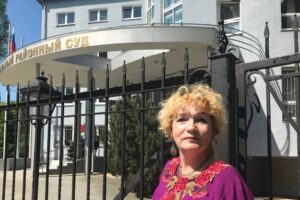
Magistrate Mohamad Rehab Mohd Aris determined that the prosecution failed to prove a prima facie case against Lena Hendry (photo).
As a consequence, she did not have to enter her defense.
“We welcome the decision of the Magistrate’s Court to clear Lena Hendry from all charges,” said Emerlynne Gil, ICJ’s Senior International Legal Adviser.
“We must emphasize though that subjecting Lena Hendry in the first place to criminal prosecution simply for screening this documentary violated her human rights and contravenes Malaysia’s obligations to uphold freedom of expression,” she added.
“We should remember that the provision in the Film Censorship Act 2002 used against Lena Hendry remains on the books and still operative. It can still be used to stifle the voices of other human rights defenders in Malaysia,” Gil further said.
Lena Hendry was charged under section 6(1)(b) of the Film Censorship Act 2002 for allegedly showing the film without prior authorization by the Board of Censors.
The said provision prohibits any person to circulate, exhibit, distribute, display, manufacture, produce, sell, or hire any film or film publicity material that has not been approved by the Board of Censors.
If Lena Hendry had been found guilty, she could have faced a fine of up to RM30,000 (approximately US$6,900) and/or a sentence of up to three years imprisonment.
The ICJ reiterates its call to the Government of Malaysia to safeguard freedom of expression and uphold the right of individuals to elaborate and disseminate information, including on questions of public import and the documentation of human rights abuses.
Contact:
Emerlynne Gil, Senior International Legal Adviser for Southeast Asia, t: +66 840923575 ; e: emerlynne.gil@icj.org
Mar 9, 2016 | News
The recent decision of the Thai Supreme Court in the case of the enforced disappearance of Somchai Neelapaijit demonstrates Thailand must urgently ratify the Convention against Enforced Disappearance and enact domestic laws consistent with the Treaty, said the ICJ today.
On 29 December 2015, the Supreme Court of Thailand upheld the acquittals of five police officers charged with gang-robbery and coercion. These charges related to Somchai’s abduction and the taking of his property.
The authorities have blamed the failure to charge anyone to date with Somchai’s actual enforced disappearance or presumed death, in part, on the absence of physical remains.
The Supreme Court further held that Somchai Neelapaijit’s wife, Angkhana Neelapaijit, and his children could not participate in the proceedings as plaintiffs as, under Thai law, it had to be shown that Somchai Neelapaijit was either injured or killed such that he could not represent himself.
The Court reasoned that this was not the case as “it is not currently known whether or not Mr. Somchai is alive” and the accused had only been charged with gang-robbery and coercion.
“The Supreme Court decision does not in any way end Somchai’s case,” said Sam Zarifi, ICJ’s Asia Director.
“The Thai government is obliged to seek and provide truth and justice for Somchai and his family,” he added.
The Department of Special Investigations (DSI), often described as the FBI of Thailand, has been conducting an ongoing investigation into Somchai Neelapaijit’s fate or whereabouts since 2005.
“The glacial pace of the DSI’s investigation and unfortunate decision of the Supreme Court after all these years is heart-breaking,” said Zarifi.
Before the United Nations Human Rights Council in May 2008, the Royal Thai Government pledged “to do its utmost and leave no stone unturned in order to bring to justice the case of Mr Somchai.”
“But to do its ‘utmost’ to resolve this case, Thailand must take urgent and concrete steps to ratify the Convention against Enforced Disappearance and pass domestic laws that retrospectively recognize enforced disappearance as a distinct offence and the full rights of victims, including family members,” Zarifi added.
Promisingly, the Ministry of Justice is in the process of drafting a Prevention and Suppression of Torture and Enforced Disappearance Bill, which, in a draft seen by the ICJ, defines and criminalizes enforced disappearance and torture in Thailand.
Contacts
Sam Zarifi, ICJ Regional Director, Asia-Pacific Programme, t: +66807819002 ; e: sam.zarifi(a)icj.org
Kingsley Abbott, International Legal Adviser for Southeast Asia, t +66 94 470 1345 ; e: kingsley.abbott(a)icj.org
Additional information
Angkhana Neelapaijit, now Commissioner of the Thai Human Rights Commission, told the ICJ: “The decision of the Supreme Court acquitting the five accused and denying my children and me the right to participate in the proceedings shows that victims of enforced disappearance have nowhere to turn to obtain justice in Thailand. It is clear that nothing will change until Thailand urgently ratifies the Convention against Enforced Disappearance and amends its laws to ensure the rights of victims are upheld.”
Thailand signed, but has not yet ratified, the Convention Against Enforced Disappearance in January 2012. Pending the ratification, Thailand must desist from any acts that would defeat the objective and purpose of the Convention, which among other things places an obligation on State Parties to make enforced disappearance a criminal offence, to thoroughly and impartially investigate cases, bring those responsible to justice and treat family members of a ‘disappeared’ person as victims in their own right.
Forthcoming event
On 11 March 2016, the ICJ, together with Amnesty International (Thailand), Human Rights Watch, and the Justice for Peace Foundation will hold “a discussion on enforced disappearance in Thailand focusing on the recent decision of the Supreme Court in Somchai Neelapaijit’s case and the draft Prevention and Suppression of Torture and Enforced Disappearance Bill” to mark the 12-year anniversary since Somchai Neelapaijit “disappeared” on 12 March 2004.
Date: 11 March 2016
Time: 10.00am -12.00pm
Location: The Sukosol Hotel, room Kamolthip 3, Sriayutthaya Road, Bangkok
The speakers will be:
- Angkhana Neelapaijit
- Kingsley Abbott, International Legal Advisor, the International Commission of Jurists
- Sunai Phasuk, Senior Researcher, Human Rights Watch
- Laurent Meillan, Acting Representative, Office of the High Commissioner for Human Rights Office for South-East Asia
- A representative from the Department of Rights and Liberty Protection, Ministry of Justice
Related readings
To mark the 10-year anniversary of Somchai Neelapaijit’s “disappearance”, the ICJ released a report Ten Years Without Truth: Somchai Neelapaijit and Enforced Disappearances in Thailand, in which it documented the tortuous legal history of the case.
On 11 December 2015, the ICJ published an English version of its Practitioners Guide “Enforced Disappearance and Extrajudicial Execution: Investigation and Sanction”, originally published in Spanish in March 2015.
Thailand-Somchai disap anniversary 2016-News-Press releases-2016-THA (full text in Thai, PDF)
Mar 4, 2016 | Advocacy, Non-legal submissions
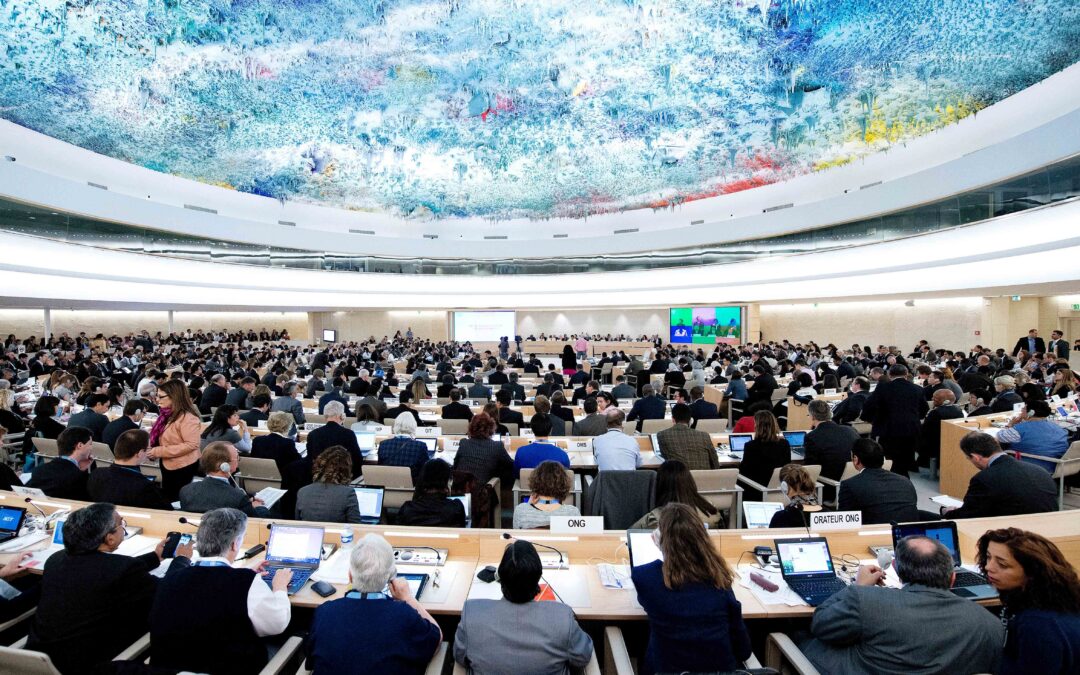
The ICJ prepared an oral statement on the situation of human rights defenders in Malaysia, for today’s interactive dialogue at the Human Rights Council with the UN Special Rapporteur on the situation of human rights defenders.
The statement could not be delivered in the limited time available for civil society statements; its text is set out below:
ICJ Oral Statement in the Interactive Dialogue with the Special Rapporteur on the situation of human rights defenders, Mr. Michel Forst
SITUATION OF HUMAN RIGHTS DEFENDERS IN MALAYSIA
3 March 2016
“The International Commission of Jurists (ICJ) welcomes the report of the Special Rapporteur on the situation of human rights defenders.
The work of human rights defenders is particularly under challenge in States where governments have conferred on themselves sweeping powers to restrict human rights on grounds of national security. One example, as reflected in the Special Rapporteur’s “Observations on communications” (UN Doc A/HRC/31/55/Add.1), is the situation of human rights defenders in Malaysia.
The ICJ welcomes the Attorney General’s decision to drop sedition charges against law lecturer Dr. Azmi Sharom; however, the Sedition Act and the Peaceful Assembly Act are still being abused to harass human rights defenders and others. Most recently, the High Court of Malaysia sentenced activist Hishamuddin Rais to nine months in jail for sedition, for calling for peaceful protest against the results of the 2013 general election on the basis that it was not transparent. Maria Chin Abdullah and Jannie Lasimbang, organizers of the Bersih 4.0 peaceful assembly calling for good governance, were charged under the Peaceful Assembly Act for allegedly omitting to inform the police about the assembly. There have reportedly been at least 91 cases of arrests, charges or investigations for sedition during 2015, and more than 30 cases of arrests under the Peaceful Assembly Act since 2013. Most, if not all, of these people are human rights defenders, including Eric Paulsen, the Director of Lawyers for Liberty, Adam Adli, a human rights activist, and Mandeep Singh, the Secretariat Manager of Bersih.
Unless repealed or drastically revised, these laws will continue to facilitate sweeping and arbitrary repression of freedoms of expression, assembly and association of human rights defenders, under the flag of national security. This contravenes the UN Declaration on Human Rights Defenders and numerous other resolutions of the Human Rights Council and General Assembly, including General Assembly resolution 70/161, adopted by the General Assembly in December with Malaysia voting in favor. Among other things, resolution 70/161 urged States ensure that human rights defenders are able to exercise the rights to freedom of opinion, expression, peaceful assembly and association, which are essential for the promotion and protection of human rights; and it emphasized that national security measures must not hinder the work and safety of individuals engaged in promoting and defending human rights.
In this context, the ICJ would like to ask the Special Rapporteur to comment on the obligations of governments to repeal or amend legislation that allows for abusive arrest or prosecution of human rights defenders on grounds such as “national security”, “sedition” or for not giving prior notice of assemblies.”
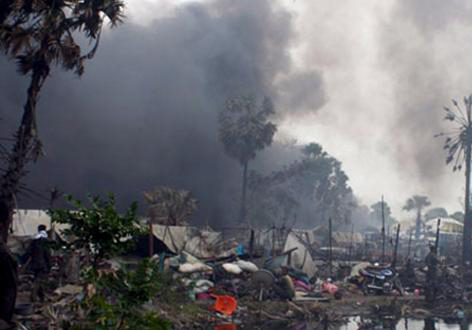
Feb 23, 2016
An opinion piece by Nikhil Narayan, ICJ’ South Asia Senior Legal Adviser.
“The regime has changed, but the system remains the same; how can we expect justice from them?,” asked a Tamil nun who survived the brutal conflict between the Sri Lankan Government and the Tamil Tigers in Vavuniya district in Sri Lanka’s Northern Province.
Her sentiments echo a growing sense of skepticism shared by many in the country’s north and east in the willingness and ability of the Sri Lankan State to deliver justice and accountability for victims of the conflict and their families.
Interviews with local lawyers, activists, victims and victims’ families during my recent visit to the north and east reinforced the importance of ensuring a credible transitional justice process that will provide a genuine remedy to victims and survivors, and in so doing restore public confidence in the State.
Achieving this credibility requires, among other things, the participation of a majority of foreign judges, prosecutors, lawyers and investigators in any proposed special tribunal created to address alleged war crimes, crimes against humanity and other serious human rights violations committed by all sides during the conflict.
Since the new government came to power a little over a year ago, Sri Lanka has taken some important and welcome steps towards national reconciliation.
Particularly, victims’ hopes for justice were bolstered by the government’s apparent acceptance of the September 2015 report of the UN High Commissioner for Human Rights documenting alleged serious human rights violations and abuses committed by all sides to the conflict.
The Sri Lankan government even co-sponsored the subsequent Human Rights Council resolution, which affirmed the importance of the participation of foreign judges, prosecutors, lawyers and investigators to ensure the credibility of a “judicial mechanism” as part of the justice and accountability process.
But the government has yet to demonstrate any concrete initiatives towards fulfilling this promise of accountability.
Recent statements emanating from various quarters of the government have fed mistrust among victims in the war-affected north and east.
President Sirisena’s January 2016 BBC interview, in which he emphatically rejected the possibility of foreign participation in a proposed accountability mechanism, alarmed many.
Equally troubling were his comments expressing full confidence in the existing justice system and questioning the UN report’s allegations of war crimes committed by the Sri Lankan Army.
Prime Minister Wickremesinghe’s statements only a few days later during his visit to Jaffna to mark Thai Pongal, that the majority of missing persons should be considered deceased, also did not go unnoticed.
Families of the disappeared have the right to know, to the extent possible, the whereabouts of their family members.
The PM’s message suggesting knowledge and admission of their fate, but without further details, left families wanting; I was told more than once that the PM’s statement on the missing was “hurtful” to the families of the disappeared.
Lawyers, activists and medical officers dealing with ongoing human rights cases complained that it is common for such cases to drag on for as much as 10 years due to delays in the police investigative stage, as well as further delays in prosecuting the case by the Attorney General’s department if and when the investigation is concluded.
When asked whether these delays were due to lack of political will or capacity, I consistently received some form of non-verbal response amounting to: “Take your pick.”
Police also remain inadequately trained in investigative methodology, continuing to rely almost exclusively on confessions, often elicited by torture or other forms of coercion.
Under the current government, the climate of fear in the north and east has no doubt markedly improved; under the prior regime, for instance, I myself would not have been able to visit, move around and conduct interviews as freely as I did.
At the same time, surveillance, threats and intimidation have not ended completely.
Victims and lawyers in cases involving the armed forces as alleged perpetrators still face intimidation and obstruction of investigations.
Sri Lanka has had a long and well-documented history of creating domestic commissions of inquiry into serious human rights violations during the conflict, none of which has been successful in adequately addressing issues of impunity, justice or truth-seeking.
The ICJ has for the past thirty years documented the gradual erosion of judicial independence under successive governments, and the resulting culture of impunity in the justice system.
In its 2010 report, for example, the ICJ highlighted the failure of the criminal justice system, as well as the many commissions that have been established, to satisfy the State’s obligations to its citizens due to an absence of State accountability, limitations in the investigative and prosecutorial system and limitations in the law.
While the new government has taken some steps to address this, most notably with the restoration of the Constitutional Council, much more work remains to be done.
In such a context, the existing justice system is poorly equipped to handle cases of gross human rights violations and violations of international humanitarian law, including alleged war crimes and crimes against humanity, that will require not only highly technical forensic evidentiary and investigative expertise, but will also involve specific prosecutorial and judicial capacity to deal with issues of modes of liability such as command responsibility for superior officers.
The nun in Vavuniya told me: “We want them to accept responsibility, tell us the truth, and then we can have reconciliation; it is not about revenge.”
The call by domestic and international human rights activists and observers for an accountability process that involves, as a minimum prerequisite, the meaningful participation of a majority of foreign judges and other personnel is very simply a matter of restoring public trust in the rule of law in the country, through a credible, impartial, independent, victim-centric transitional justice process that effectively addresses victims’ right to truth, justice, remedy and reparation, and on whose foundation the country can move forward with genuine reconciliation.
The GOSL can take a significant step towards bridging this trust gap in the immediate term by reaffirming in no uncertain terms its commitment to the promises to which it voluntarily agreed in Geneva last year, including its recognition: that “accountability is essential to uphold the rule of law and to build confidence in the people of all communities of Sri Lanka in the justice system[;]” that “a credible justice process should include independent judicial and prosecutorial institutions led by individuals known for their integrity and impartiality;” and, of “the importance of participation in a Sri Lankan judicial mechanism, including the special counsel’s office, of Commonwealth and other foreign judges, defence lawyers and authorized prosecutors and investigators”.

Feb 19, 2016 | News
The ongoing incommunicado detention of human rights defenders Nguyễn Văn Đài and Lê Thu Hà must end, said today seven human rights groups, including the ICJ. It violates their right to freedom from torture and other cruel, inhuman or degrading treatment or punishment.
All charges against Nguyễn Văn Đài and Lê Thu Hà, should be withdrawn and they should be immediately and unconditionally released, the organizations added.
An incommunicado detention is one in which a detainee is held without access to the outside world, particularly to family, lawyers, courts and independent doctors. The practice of incommunicado detention violates key rights of persons deprived of liberty and facilitates torture and other ill-treatment. Prolonged periods of incommunicado detention can themselves constitute a violation of the prohibition on torture and other ill-treatment.
Nguyễn Văn Đài and Lê Thu Hà were arrested on 16 December 2015 and charged under Article 88 of the Penal Code, ‘Conducting propaganda against the state’. All efforts by family and legal counsel to visit the pair since their arrests have been denied.
Vietnam-Release prisoners-News-webstory-2016-ENG (full story, in PDF)