
Sep 21, 2015 | Advocacy, Non-legal submissions
Today, the ICJ and Thai Lawyers for Human Rights (TLHR) made a joint submission to the Human Rights Council’s Working Group on the Universal Periodic Review in advance of the Human Rights Council’s review of Thailand in April/May 2016.
In their submission, the ICJ and TLHR expressed concern about the following issues:
(1) the impact of the new legal and institutional framework, imposed since the May 2014 coup d’état, on human rights in Thailand;
(2) instances of suspected enforced disappearance and torture; and
(3) issues concerning international human rights instruments and mechanisms.
A copy of the submission can be found here:
THAILAND-UPR SUBMISSION FINAL AS LODGED-Advocacy-Non legal submission-2015-ENG (full text in PDF)

Sep 16, 2015 | News
Myanmar’s government must end the practice of appointing newly retired military officials as judicial officers to its courts and ensure that the judiciary carries out its functions as a separate branch and independent of the Executive, said the ICJ today.
At least 20 former military officers who have just recently resigned from the military were reportedly appointed as vice director generals to the country’s Supreme Court this month.
They will be performing administrative functions but according to section 310 of the Myanmar Constitution will be in line for senior judicial appointments at the state or regional level after 5 years or sooner if the President considers them to be ‘eminent jurists’.
“One of the fundamental aspects of an independent, impartial and accountable judiciary is the appointment of judges, through proper procedures, on the basis of their legal competencies,” said Sam Zarifi, ICJ’s Asia Director. “The process for appointing and promoting judges must be transparent and ensure judicial independence and impartiality.”
A group of leading members of the Myanmar bar launched a “yellow ribbon” campaign last Friday in Yangon to protest the practice of assigning military officers to serve as judicial officers.
“The process of selecting these officers and assessing their legal qualifications is totally opaque,” Zarifi added. “The lawyers wearing yellow ribbons are emphasizing the belief of people in Myanmar that strengthening the rule of law is essential to guaranteeing justice and the country’s political and economic development, so it’s important to improve the judiciary’s qualifications and increase public trust.”
The Supreme Court of Myanmar launched its Strategic Plan 2015-2016, citing “judicial independence and accountability” as one of its key strategy areas.
The UN Basic Principles on the Independence of the Judiciary provide that that “Persons selected for judicial office shall be individuals of integrity and ability with appropriate training or qualifications in law.”
“The Myanmar judiciary is trying to shake off decades of interference from the Executive branch in order to assert its proper role as defender of the rights of people in Myanmar, and it can’t do so without a clear and transparent appointment and promotion process,” Zarifi said.
An exposition and analysis of international law and standards are available in English and Myanmar language in the ICJ’s authoritative Practitioners’ Guide on the Independence and Accountability of Judges, Lawyers and Prosecutors.
Contact:
Sam Zarifi, ICJ Regional Director for Asia and the Pacific, t: +66 807819002; e: sam.zarifi(a)icj.org
Vani Sathisan, ICJ International Legal Adviser for Myanmar, t: +95 9250800301; e: vani.sathisan(a)icj.org

Sep 14, 2015 | News
The ICJ expressed disappointment over the decision made today by the Malaysian Federal Court to refer human rights defender Lena Hendry for trial, after dismissing the constitutional challenge on section 6(1)(b) of the Film Censorship Act 2002.
The ICJ said this provision is being applied in a manner inconsistent with the right to freedom of expression, which includes the right to seek and impart information of all kinds.
“The decision by the Federal Court is incompatible with the commitment to the rule of law and respect for human rights which was expressed by Malaysia during its last Universal Periodic Review at the UN Human Rights Council in 2013,” said Sam Zarifi, ICJ’s Regional Director for Asia and the Pacific.
“Lena Hendry is clearly a human rights defender and Malaysia has the special duty not only to respect her right to freedom of expression, but to protect her exercise of this right through the exposure of human rights violations in Sri Lanka,” he added.
The constitutional challenge was brought by the lawyers of Lena Hendry who was charged under section 6(1)(b) of the Film Censorship Act 2002 for screening the film “No Fire Zone: the Killing Fields of Sri Lanka” on 3 July 2013.
Authorities allege that she violated section 6(1)(b) of the law for showing a film that had not been approved by the Board of Censors.
The lawyers of Lena Hendry are now preparing for the trial before the Magistrate’s Court.
The ICJ calls on the Government of Malaysia to drop all charges against Lena Hendry and to undertake steps to make its laws consistent with the country’s obligations and commitments under international law.
Background:
Section 6(1)(b) of the Film Censorship Act 2002 states that “No person shall circulate, exhibit, distribute, display, manufacture, produce, sell, or hire any film or film publicity material, which has not been approved by the Board [of Censors].”
On 14 September 2015, the Federal Court of Malaysia dismissed the constitutional challenge on Section 6(1)(b) of the Film Censorship Act 2002. The question posed to the Federal Court was: “Whether section 6(1)(b) of the Film Censorship Act 2002 read together with section 6(2)(a) violates Article 10 read together with Article 8(1) of the Federal Constitution and therefore should be struck down and void for unconstitutionality.”
The Federal Court answered the question in the negative and ordered that the case be sent back to the High Court. The High Court, in turn, will transfer the matter back to the Magistrate’s court for trial. The Magistrate’s Court is where the matter initially originated.
If convicted, under section 6(2)(a) Lena Hendry could be fined up to RM30,000 (approximately US$6,900) and/or sentenced to up to three years imprisonment.
The right to freedom of expression is guaranteed in the Federal Constitution of Malaysia under Section 10(1)(a), which states that “every citizen has the right to freedom of speech and expression.”
The Universal Declaration of Human Rights and the UN Declaration on Human Rights Defenders also affirm the duty of all states to respect and facilitate freedom of expression, particularly as regards information or opinions about human rights.
Contact:
Emerlynne Gil, Senior International Legal Adviser of ICJ for Southeast Asia, t: +66 840923575 ; e: emerlynne.gil(a)icj.org
Sep 14, 2015 | Advocacy, Non-legal submissions
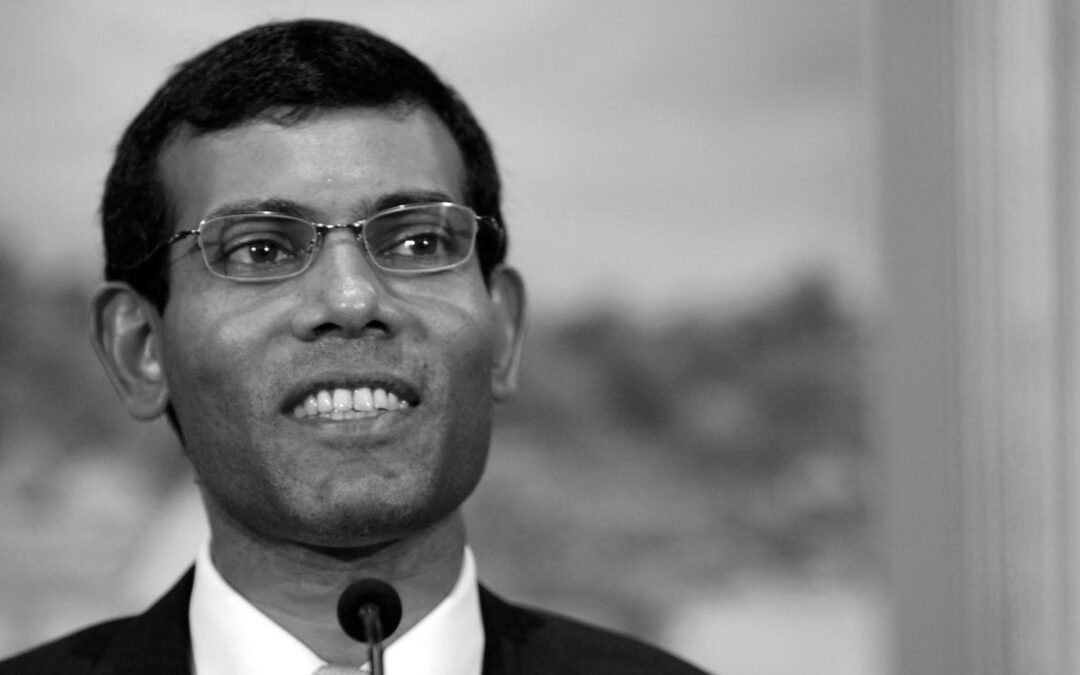
In advance of the UN Human Rights Council’s adoption of the outcome of its review of the Maldives’ human rights record as part of the Universal Periodic Review (UPR) process, the ICJ has submitted a written statement.
It highlights the Maldives’ failure to accept and implement a number of member states’ UPR recommendations.
In particular, the ICJ pointed out the urgent need for Maldives to accept and implement recommendations regarding the following issues, among others:
- Strengthening the independence and impartiality of the judiciary;
- Strengthening the independence and impartiality of the Judicial Service Commission;
- Strengthening the National Human Rights Commission, in accordance with the Paris Principles;
- Strengthening women’s representation in the judicial profession;
- Immediately releasing former president Mohamed Nasheed and other political prisoners, and ensuring the fairness of any further legal proceedings in such cases; and
- Safeguarding freedom of expression and media, association and peaceful assembly by investigating cases of human rights abuse and violations against journalists, civil society and human rights defenders, and taking effective measures to prevent further abuses
The Council will consider member states’ UPR recommendations for the Maldives during its 30th session on 24 September 2015, ahead of which the Maldives government will be expected to formally respond and indicate which of the recommendations it will commit to implement.
Sep 11, 2015
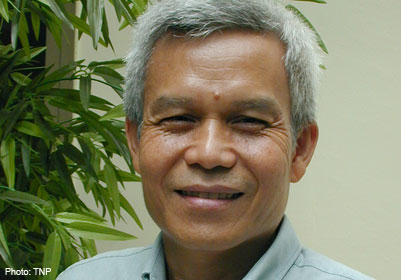
Today marks 1,000 days since prominent Lao civil society leader Sombath Somphone “disappeared” at a police checkpoint on a busy street in Vientiane.
We, the undersigned organizations, reiterate our call for the Lao government to intensify its efforts to conduct a prompt, impartial, and effective investigation into Sombath’s apparent enforced disappearance, to determine his fate or whereabouts, and to take the necessary measures to bring those responsible to justice.
At the second Universal Periodic Review (UPR) of Laos, held in Geneva on 20 January 2015, 10 states made recommendations to Laos to investigate Sombath’s disappearance. In addition, five states raised questions about the issue.
We are dismayed by the Lao authorities’ failure to provide any specific information on the status and progress of the investigation since 7 June 2013.
This failure has occurred despite the government’s claim in June 2015, during the UPR process, that it was “still thoroughly conducting” an investigation into Sombath’s “whereabouts.”
It is not enough for Laos to simply assert it is still investigating the case. Laos’ international legal obligations require it to carry out a prompt investigation and to keep Sombath’s family informed on the progress and status of the investigation.
We are troubled by the Lao government’s continued refusal to accept external assistance regarding the investigation of Sombath’s enforced disappearance.
The government has ignored important recommendations made by several human rights organizations despite an official statement that it is “ready to receive suggestions from any interested parties” regarding the investigation.
We also decry the Lao government’s refusal to disclose any information concerning all other victims of enforced disappearances in the country.
To this day, the fate or whereabouts of at least 13 individuals, including three student leaders who were arrested on 26 October 1999 for organizing a peaceful pro-democracy protest in Vientiane remain unknown.
On 29 September 2008, Laos signed the International Convention for the Protection of All Persons from Enforced Disappearance (ICPPED).
However, almost seven years on, the government has made no demonstrable progress towards the ratification of the treaty.
We urge the Lao government to immediately ratify the ICPPED, incorporate its provisions into the country’s legislation, and effectively comply with its treaty obligations.
In January 2016, Laos will assume the Chair of the Association of Southeast Asian Nations (ASEAN).
The government’s protracted failure to resolve the case of Sombath’s enforced disappearance is a clear dereliction of its international obligations, which seriously undermines Vientiane’s attempts to gain credibility as a rights-respecting member of the regional bloc.
We call on Laos to undertake prompt, impartial, and effective investigations into Sombath’s case and all other outstanding cases of enforced disappearances and provide effective remedies and reparation to all victims pursuant to its international legal obligations, including under the International Covenant on Civil and Political Rights (ICCPR) and the Convention against Torture (CAT), and ratify the ICPPED.
Signed:
- ALTSEAN-Burma
- ASEAN Parliamentarians for Human Rights (APHR)
- Asian Federation Against Involuntary Disappearances (AFAD)
- Civil Rights Defenders
- FIDH (International Federation for Human Rights)
- Focus on the Global South
- Forum-Asia
- International Commission of Jurists (ICJ)
- Justice for Peace Foundation
- Lao Movement for Human Rights (LMHR)
- Sombath Initiative