Jun 19, 2015 | Advocacy, Non-legal submissions
Today, the ICJ made a submission to the Human Rights Council’s Working Group on the Universal Periodic Review in advance of the Human Rights Council’s review of Singapore.
In its submission, the ICJ expressed concern about the following:
(1) corporal punishment;
(2) the death penalty;
(3) the continued criminalization of consensual same-sex relations;
(4) corporate accountability for companies registered in Singapore; and
(5) international human rights instruments and mechanisms.
A copy of the submission can be found here:
Singapore-ICJ UPR-Advocacy-non legal submission-2015-ENG
Jun 19, 2015
An opinion piece by James Tager, a Harvard Satter Fellow with the International Commission of Jurists in Bangkok, Thailand.
Observers have been surprised to see the National Human Rights Commission of Thailand (NHRCT) recently solicit candidates for new Commissioners. That’s because the NHRCT’s very existence is at risk right now.
As part of the general deterioration of Thailand’s human rights situation after the coup d’etat of May 2014, the drafters of the country’s new Constitution have proposed to ‘merge’ the NHRCT with the Office of the Ombudsman. This move would end the already weak NHRCT’s ability to function as an effective National Human Rights Institution (NHRI).
The UN and human rights advocates inside and outside the country are calling on Thailand to stop the merger of the NHRCT and the Ombudsman, and to bring selection procedures for new Commissioners in line with international standards governing NHRIs.
Who sits on the NHRCT is a key determinant of whether the body will be effective.
The Thai government should halt the selection process until the selection of new Commissioners conforms to these international standards.
Even before the suggested merger, the NHRCT has often failed to take a strong position on many human rights issues in the country.
Despite these problems, the NHRCT remains part of the framework of human rights protection for Thailand, receiving hundreds of human rights complaints every year.
Given its flaws, it might seem that any attempt to ‘reform’ the NHRCT would be welcome.
But the proposed merger will only weaken the NHRCT, precisely at a time when Thailand’s military junta has given itself sweeping, unchecked powers and invoked a series of repressive laws that have facilitated human rights violations, including the rights to a fair trial and to freedom of expression and assembly.
The merger plan fails to recognize that the NHRCT and the Ombudsman have very different functions. The Office of the Ombudsman has a mandate that extends only to the misuse of power by State officials, has no competence to investigate a situation or violation without first receiving a complaint, and may invoke only national law carrying out its work.
In contrast, the NHRCT has a mandate to examine human rights violations and situations, has powers of investigation which the Office of the Ombudsman lacks, and is guided not only by national laws but also international human rights law and standards.
The new draft Constitution would fuse these two institutions together without clarifying the scope and contours of the new body’s mandate.
Instead, the planned merger threatens to create an institution with weakened powers, restricted authority, and a hazy focus.
Not only is the proposed merger objectionable for what it threatens to change, but also for what it threatens to keep: with only small alterations, the current draft Constitution maintains the same opaque and government-controlled appointment process for new Ombudsman/Commissioners, with little consultation with broader society.
The merger proposal comes at a time when the NHRCT’s independence and credibility has already come under question on the world stage.
The NHRCT, like all officially recognized national human rights institutions, receives its accreditation from the International Coordinating Committee of National Institutions for the Promotion and Protection of Human Rights (ICC), an international body comprising NHRIs across the world.
In October 2014, the ICC recommended that the NHRCT be downgraded from “A” status to a “B” because it does not comply with the Paris Principles, the international standards governing the proper functioning of all NHRIS, including their independence and effectiveness.
The NHRCT has until the end of October 2015 to demonstrate that it has taken sufficient steps to comply fully with the Principles, or the Commission’s downgrade will take effect.
If Thailand takes action now to reform the selection procedures for new Commissioners, such a step could go a long way towards Thailand keeping its “A” status. In contrast, the ICC has already declared that it would construe the proposed merger as further evidence of the need to downgrade the NHRCT.
The ICC may consider the merger as an indication that the NHRCT has been effectively dissolved, leaving Thailand without a genuine NHRI in the eyes of the international community.
Either action would seriously harm the Thai government’s already battered human rights standing. The Thai government frequently refers to the NHRCT’s work at international gatherings when it is trying to burnish its international image, but a downgraded Commission will no longer be able to present to the UN Human Rights Council or vote within ICC meetings.
The Commission will be treated as an observer, rather than an organization in good standing, in its presentation around the world, including during its engagement with the UN Human Rights Council.
Thailand’s NHRCT needs reform, but these reforms should strengthen the body’s ability to operate independently and to protect human rights. A welcome first step would be the immediate reformation of the selection process for new Commissioners.
Instead of submerging the NHRCT into the institution of the Ombudsman, the Thai government should make it a stronger monitor and advocate for human rights in the country.
Jun 18, 2015
An opinion piece by Leong Tsu Quin, ICJ Associate International Legal Adviser.
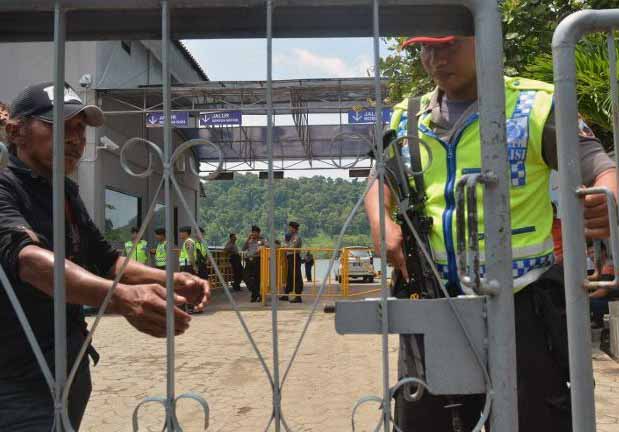
From 4 to 5 June 2015, the ICJ held a workshop with Indonesian lawyers that we would much rather not have had at all: discussing how to handle death penalty cases in light of the country’s resumption of executions.
Until President Widodo Jokowi suddenly embraced the death penalty, its horrific practice seemed to be on its way out in Indonesia: between 1999 and 2014, only 27 executions took place in the country, and in 2012 Indonesia even dropped its formal opposition to a United Nations General Assembly resolution calling for a moratorium on the use of the death penalty (Indonesia had since 2007 been voting ‘no’; in 2012 it abstained).
All this has changed under President Jokowi, as he has allowed 14 persons to be executed by firing squad since he took power.
All those executed this year had been convicted of drug-related offenses.
Indeed, President Jokowi says that the death penalty is needed to address drug use, claiming in an Al Jazeera interview this year that 4.5 million Indonesians require rehabilitation, and 50 persons die each day from drugs.
Even if this shocking estimate of the scale of the drug problem were accurate, any argument that the death penalty is therefore lawful and justified would be categorically wrong, for reasons we explain later.
But it is becoming more and more urgently clear that President Jokowi’s numbers themselves are deeply flawed and simply unreliable.
A coalition of Indonesian academics and experts, writing in the world’s most prominent medical journal The Lancet earlier this month, had expressed “serious concerns about the validity of” the government’s estimates, and called on the government to “invest in the collection of better quality data on the scale and nature of drug use in Indonesia” through a transparent, peer-reviewed process.
The flimsiness of the numbers that President Jokowi has been using to justify a growing number of executions was really brought home to us by one of the participants in our workshop, Claudia Stoicescu, a PhD candidate at the University of Oxford.
She explained that the Jokowi administration’s claims were based on faulty research, reportedly a 2008 study by the National Narcotics Agency (BNN) and the University of Indonesia.
She told us that the study used poorly-defined classifications, inappropriate recruitment methods, and definitions of addiction that are inconsistent with accepted criteria for drug dependence.
The number of deaths per day, for instance, was determined by surveying 2,143 students, workers and general households who were asked questions such as: ‘how many friends use drugs’ and ‘how many died because of drugs’, rather than the more accurate method of extrapolating based on existing mortality data such as overdose or AIDS-related deaths.
The Lancet article also called on President Jokowi to establish a drug policy based on empirical evidence, rather than resorting to forced rehabilitation and punitive measures.
According to the group, existing studies assessing drug policies and reform proposals showed that a punitive law-enforcement approach is not effective in reducing the prevalence of drug use.
It is equally important, though, to underscore that not only do President Jokowi’s arguments for the death penalty lack any reliable evidence, they are simply irrelevant to and incompatible with Indonesia’s obligations under international law.
Governments, leading UN and other legal experts, and civil society organizations, from around the world, have concluded that the death penalty constitutes a denial of the right to life and is a form of cruel, inhuman or degrading punishment, and is therefore never justified.
Even those who disagree accept that the death penalty is prohibited for anything other than “the most serious crimes” (murder and the like), and then only after a trial meeting the highest international standards of fairness.
In this regard, in 2013 Indonesia was reviewed by the UN Human Rights Committee, which assesses states’ compliance with a key human rights treaty ratified by Indonesia, the International Covenant on Civil and Political Rights (ICCPR).
The Committee confirmed that Indonesia’s use of the death penalty for drug offences violated the treaty as such offences do not meet the “most serious” threshold.
The Committee called for a halt to all executions in Indonesia, but emphasized that at minimum the law should be changed to ensure that crimes involving narcotics were not amenable to the death penalty. It further urged Indonesia to consider commuting all death sentences imposed on persons convicted for drug crimes.
Participants in our workshop highlighted grave failings in trial processes in Indonesia, such as failing to provide translation to allow the accused to understand the proceedings, a fundamental requirement under the ICCPR.
Further examples of how executions in Indonesia violate human rights included authorities proceeding with execution despite their client having been diagnosed with mental illness; and, frightfully, that some individuals shot by firing squad experienced minutes of pain and suffering before finally passing away.
Indonesia is now one of the outliers in the global community for being one of the few countries in the world that continues to apply the death penalty to drug-related offences.
President Jokowi’s stance on drug traffickers is at odds with the facts, with the law, and with global trends – approximately 160 Member States of the United Nations that have either abolished the death penalty or introduced moratoriums.
Jokowi must immediately reverse this unlawful and ineffective approach by halting all scheduled executions and moving Indonesia back toward abolishing this dreadful practice.
Jun 9, 2015 | News
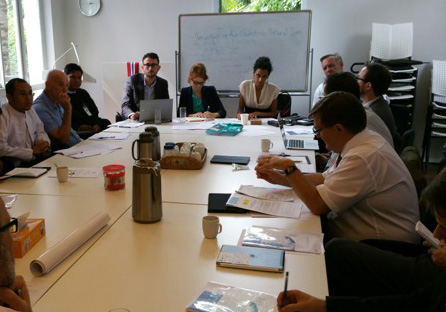
The ICJ today organized a diplomatic dialogue, in advance of the Universal Periodic Review (UPR), with ambassadors and high-level diplomatic representatives, to share the state of human rights in Myanmar.

Jun 8, 2015 | News
While the constitution of Pakistan’s first National Commission for Human Rights is welcome, the Commission risks being toothless unless its powers are extended to investigate human rights violations allegedly committed by the security agencies, the ICJ warned today.
The ICJ was informed that members of the National Commission for Human Rights were notified on 20 May 2015, three years after the National Commission for Human Rights Act was passed in June 2012.
“The establishment of a national human rights commission is a much-needed step for the promotion and protection of human rights in Pakistan,” said Sam Zarifi, ICJ’s Asia Director. “But for the new Commission to be able to assist the people of Pakistan, who face tremendous violations of their rights in terms of civil, political, social, economic, and cultural rights, it must be able to address the conduct of the country’s powerful military and security agencies.”
Under the National Commission for Human Rights Act, the Commission’s powers include investigating human rights violations, suo motu or on petition; visiting detention centers to ascertain the legality of the detention of detainees and ensure detainees are treated according to law; reviewing and suggesting amendments to Pakistan’s constitutional and legal framework on human rights; making recommendations for the effective implementation of international human rights treaties; and developing a national plan of action for the promotion and protection of human rights.
The law provides that while inquiring into complaints under the Act, the Commission shall have all powers of a civil court, including summoning and ensuring attendance of witnesses, receiving evidence on affidavits; and discovery and production of documents.
However, the Commission’s mandate is very limited where the armed forces or security agencies are accused of committing human rights violations, the ICJ says.
The law specifically states that “the functions of the Commission do not include inquiring into the act or practice of the intelligence agencies”.
Where the armed forces are accused of human rights violations, the Commission is only authorized to seek a report from the Government and make recommendations.
“The Commission’s restricted mandate over the armed forces, and especially the intelligence agencies, is of grave concern given that Pakistan’s military and intelligence services are accused of perpetrating gross human rights violations, including enforced disappearances, extrajudicial killings, and torture and ill-treatment,” Zarifi said. “A human rights commission that does not have jurisdiction over abuses by these actors risks being toothless and ineffective – and worst, a cover for continuing government inaction in response to these violations.”
“With these exceptions in place, it seems questionable that the Commission will get accreditation by the International Coordinating Committee of NHRIs, which is a requirement for a National Human Rights Institution to be recognized internationally,” he added. “The Pakistani government should ensure that the Commission complies with international standards so it can help protect and promote the rights of all people in Pakistan.”
Additional Information:
Justice (r) Ali Nawaz Chohan was appointed as the Chairperson of the Commission. Other members include one representative from each province; one representative each from the Islamabad Capital Territory and the Federally Administered Tribal Areas; the Chairperson of the National Commission on the Status of Women; and a member belonging from a religious minority community.
The UN Principles relating to the Status of National Institutions (Paris Principles) provide the minimum standards required by national human rights institutions to be considered credible and effective, and get accreditation by the International Coordinating Committee of NHRIs. Section 3 (a) (ii) of the Paris Principles states that a NHRI should have the power to hear a matter without higher referral over “any situation of violation of human rights which it decides to take up”.
Section 4 of the National Commission on Human Rights Act, 2012, provides the following procedure for appointment of members of the Commission: the Federal Government invites nominations for commissioners through public notice; the Prime Minister and Leader of the Opposition scrutinize the nominations; and the Prime Minister and Leader of the Opposition forward three names for each member of the commission to a parliamentary committee for confirmation. The law provides that the parliamentary committee would comprise of two members of the National Assembly (lower house) and two members of the Senate (upper house) –with two members each from the government and two from the opposition.
Contact:
Sam Zarifi, ICJ Asia Pacific Regional Director (Bangkok), t: +66 807819002; e: sam.zarifi(a)icj.org
Reema Omer, ICJ International Legal Adviser for South Asia (London), t: +44 7889565691; e: reema.omer(a)icj.org