Apr 20, 2013 | Advocacy, News, Non-legal submissions
The ICJ today condemned the execution by the Government of Taiwan of six prisoners, convicted on charges of murder, on 19 April 2013. It follows the earlier execution of six convicted persons in December 2012.
Twenty-one executions have been carried out in Taiwan since April 2010, shattering a de facto moratorium of the death penalty that had been respected by the Government since December 2005.
“The Government of Taiwan’s execution of 12 people in the last six months constitutes a serious and unacceptable assault on the right to life and human dignity”, said Alex Conte, Director of the ICJ International Law & Protection Programmes. “These executions also place Taiwan at odds with the international community, which has adopted with increasingly large majorities since December 2007 the UN General Assembly resolutions calling for a worldwide moratorium on executions”, Conte added.
This new round of executions are especially lamentable in light of the encouraging step recently taken by the country to invite an international group of experts to review the measures adopted by the Government to promote and protect human rights. The recommendations to the Government of Taiwan, formulated by those experts, and welcomed by the ICJ and other rights groups, included intensifying efforts towards the abolition of capital punishment and the recommendation that Taiwan “as a first and decisive step, immediately introduces a moratorium on executions in accordance with the respective resolutions of the UN General Assembly”.
The ICJ believes that the use of the death penalty constitutes a violation of the right to life and the right not to be subjected to cruel, inhuman or degrading punishment.
ICJ and other rights groups encourage Taiwan on domestic implementation of human rights (see ICJ and other rights groups’ statement on Taiwan’s human rights review process)
Apr 14, 2013 | News
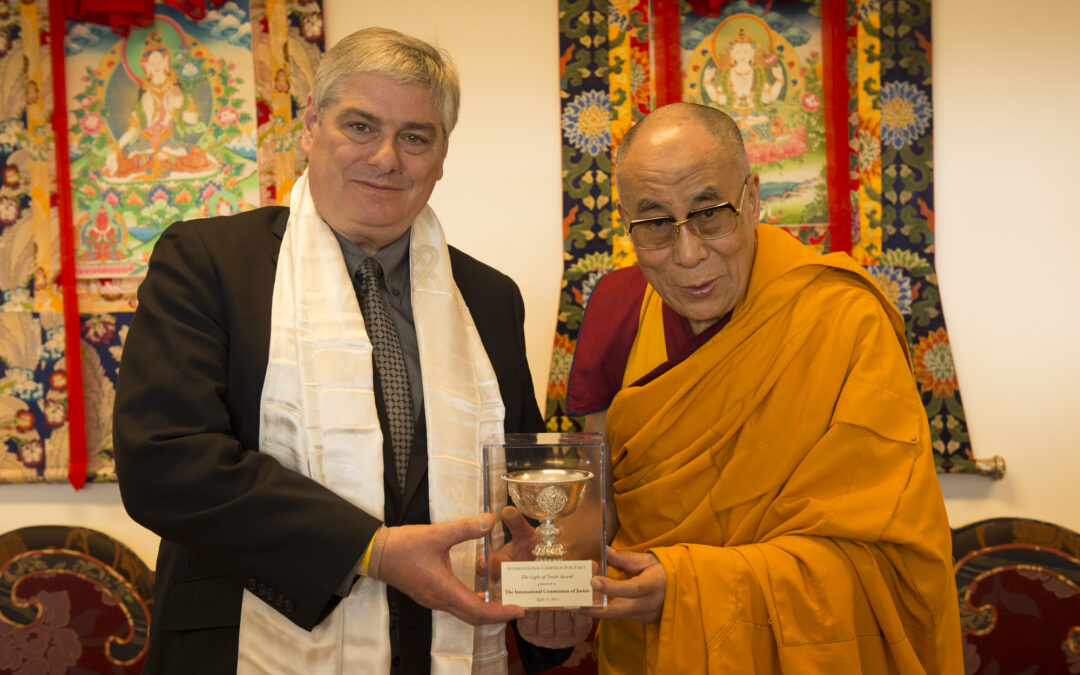
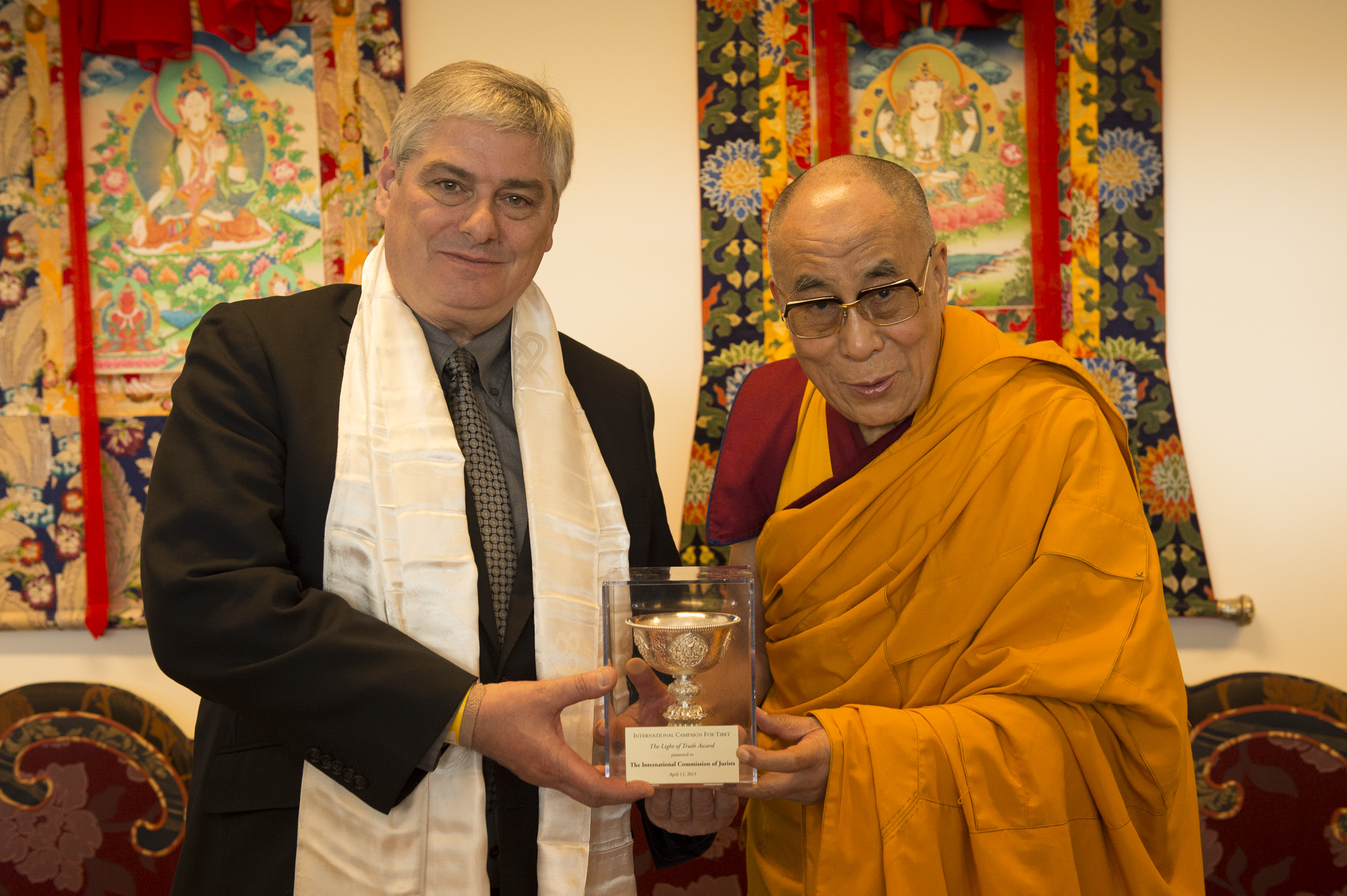 The Dalai Lama honoured ICJ Secretary General Wilder Tayler with the Light of Truth Award in recognition of ICJ’s consistent support of the Tibetan cause over six decades.
The Award was presented to Wilder Tayler at a ceremony in Fribourg, Switzerland, on Saturday 13 April 2013.
The International Campaign for Tibet (ICT) presented the Light of Truth Award to individuals and institutions who have made significant contributions to the public understanding of Tibet and the struggle for human rights and democratic freedoms for the Tibetan people.
The ICJ was awarded for its reports documenting the experience, trials and tribulations of Tibetan people at the hands of Chinese forces, and drawing attention to the rights of Tibetans.
“You cannot imagine the outpouring of emails I have received even from very old members of the ICJ and the pride and joy in receiving the recognition of the work of ICJ by the Tibetan community, by His Holiness, by the solidarity organizations. Really it has been so moving,” said ICJ Secretary General Wilder Tayler (photo). “This prize will be dedicated to the late Nick Howen, my immediate predecessor and very dear friend who passed away quite tragically three years ago. Nick was a devoted activist of the Tibet cause; he not only put a lot of hours, he actually put his life at risk when there was need of it in order to pursue the cause, to bring information out of Tibet.”
The award itself is an antique Tibetan butter lamp, symbolizing the light that each recipient has shed on the Tibet issue.In addition to the ICJ, the Light of Truth Award 2013 was given to four other honorees, including ICJ Honorary Member Theo van Boven.
Professor van Boven is a Dutch jurist and professor emeritus in international law, a former UN Rapporteur on Torture and served as ICJ Vice-President in the 1990s. He was awarded for putting the spotlight on Tibet within and beyond the United Nations system.
Other awardees include Professor Dr. Christian Schwarz-Schilling, former German Minister and Parliamentarian, who has been working in a low-key manner for many years on the issue of the Tibetan-Chinese relationship; Ms. Sigrid Joss-Arnd, the longest-standing member of the Swiss Red Cross officials who was involved in helping Tibetans in the diaspora from the early 1960s; and Mr. Robert Ford, CBE, for his tireless advocacy on Tibet for more than half a century. Mr Ford is the only Westerner who was given official ranking in the Tibetan government before 1950 and he was imprisoned by the Chinese authorities for nearly five years.
“All of you have been long-standing friends and supporters of Tibet, for which we are immeasurably grateful. As you know, the spirit of the Tibetan people is undiminished and the power of truth remains strong,” the Dalai Lama said at the ceremony.
The Light of Truth Award is the most prestigious award in the Tibet movement and has been presented by His Holiness the Dalai Lama, on behalf of the ICT, for many years.
Previous recipients include Archbishop Desmond Tutu, the late Václav Havel, Chinese scholar and writer Wang Lixiong, and film director Martin Scorsese.
Photo/Manuel Bauer
Apr 8, 2013
 An opinion piece by Sam Zarifi, ICJ’s Asia-Pacific Regional Director and Benjamin Zawacki, ICJ Senior Legal Adviser for Southeast Asia.
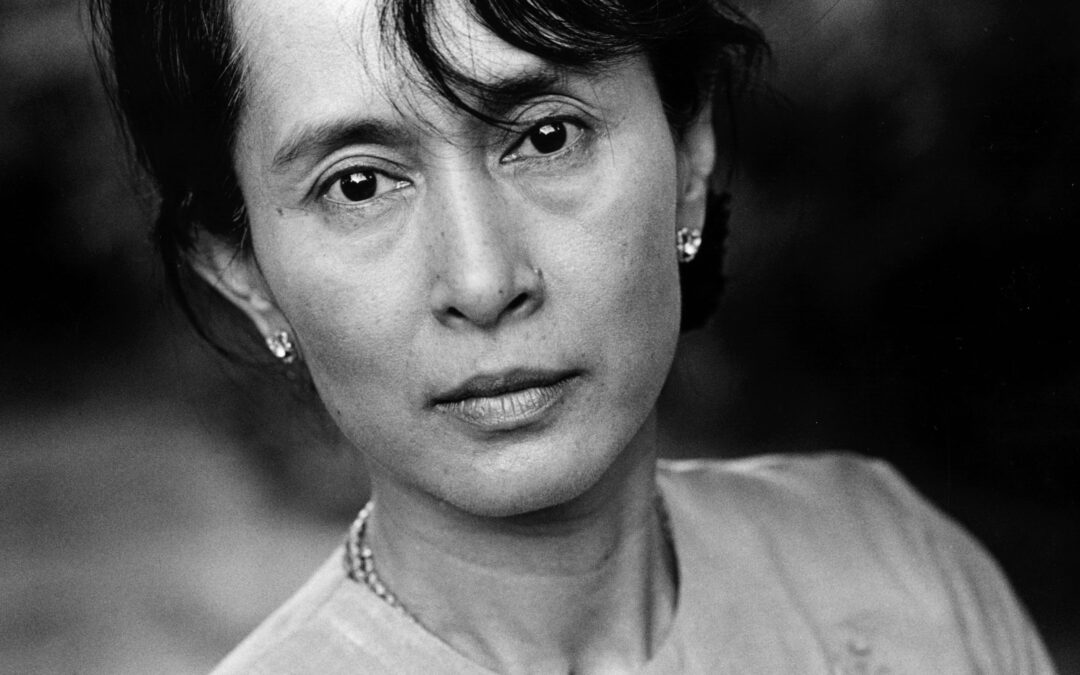
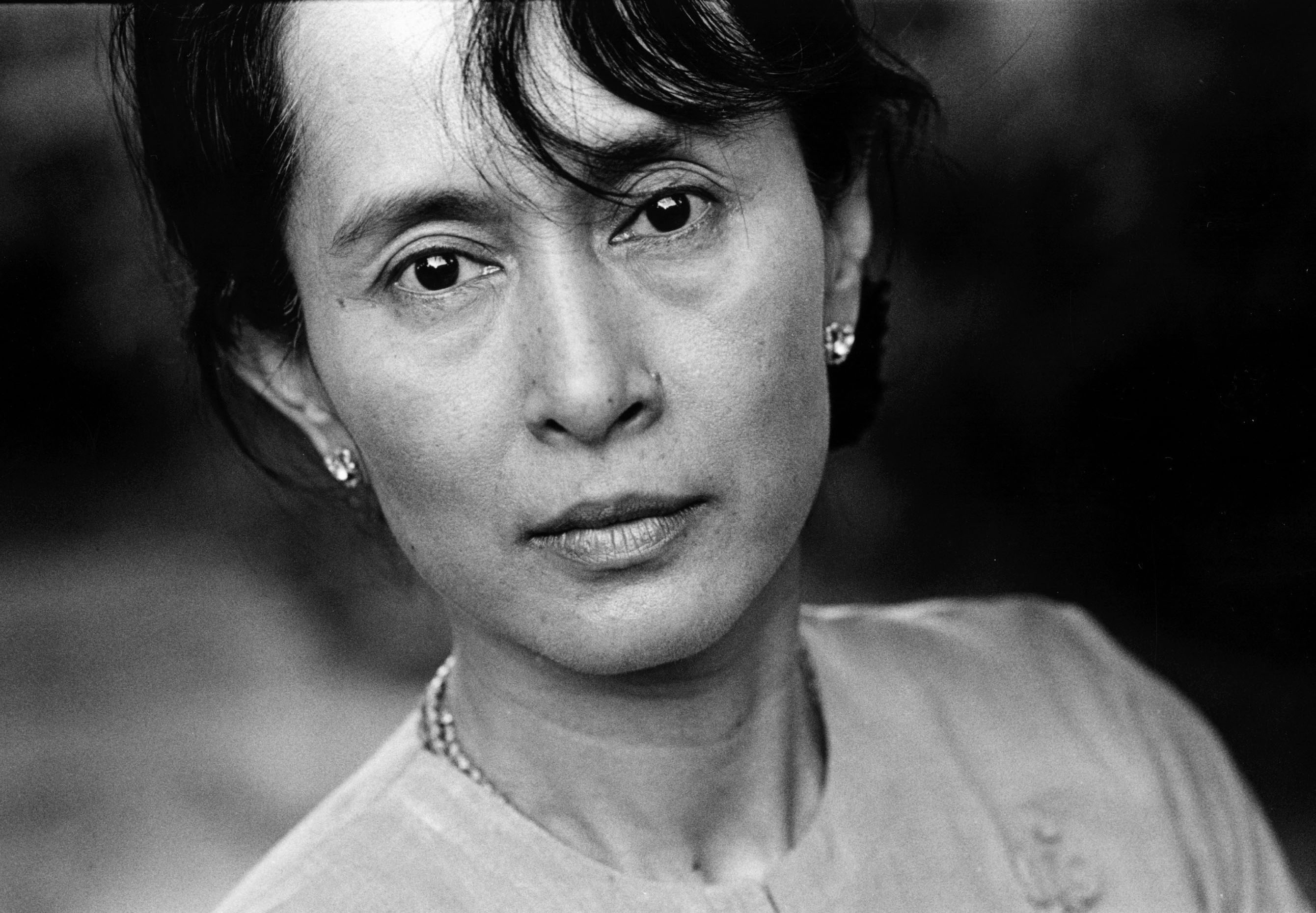
The controversy surrounding Aung San Suu Kyi (photo) and a joint-venture copper mine project in Myanmar should give prospective foreign investors pause.
It should also prompt the international community to help the country establish a legal regime on which both investors and the people of Myanmar can rely for protection of their rights.
A government-backed investigation into the mine project, chaired by Suu Kyi, concluded that security forces used chemicals against villagers protesting against it.
It also recommended additional impact assessments, and either increased compensation or the return of farmland allegedly taken via fraud and coercion.
But, crucially, it concluded that the project should continue. Villagers vehemently disagreed and vowed to pursue a lawsuit.
Myanmar’s government has a duty to protect workers, consumers, landholders and indigenous people against rights violations.
Despite recent steps, however, there are not enough lawyers, judges and others adequately trained to monitor economic activity and provide accountability for violations of laws governing corporate action.
Corporations have a strong interest in supporting the development of robust accountability mechanisms in Myanmar.
Many now considering investing participate in a global corporate citizenship initiative known as the UN Global Compact, which asks its members to take action prior to investing, such as human rights and environmental impact assessments, and to monitor business activity once under way.
Yet all the compact’s “commitments” are non-binding. And even strict adherence would not serve as a defence for companies accused of committing human rights and environmental violations.
Increasingly, transnational corporations may be held legally responsible for abuses in the country where they occurred, and also in their home country.
Western companies are the most vulnerable, but the copper mine case shows Asian enterprises are not immune: the mine’s other joint-venture partner is the Chinese Wan Bao mining company, a subsidiary of weapons manufacturer Norinco.
The copper mine controversy also shows that the line between “government” and “company” in Myanmar can be blurry; large joint ventures often include the military-owned Union of Myanmar Economic Holdings Company.
Indeed, the army is deeply involved in many companies and has a long record of human rights and humanitarian law violations.
In one landmark case, villagers sued Unocal in a US court for complicity in security forces’ human rights violations during the construction of the Yadana gas pipeline.
The case was settled in 2004 before a final decision on liability was reached. What made it significant – and still relevant – is that the US law used is not limited to US corporations.
The Unocal case was allowed to progress in the US because the courts found that the judicial system in Myanmar was not independent of the military government of the time and therefore could not provide a proper venue for a lawsuit.
Today, despite ongoing legal reform, there is a long way to go to rebut this finding.
The copper mine case presents an opportunity for the judiciary to demonstrate whether it can render just decisions.
Investment in Myanmar, if done lawfully and with reliable legal remedies, can be a strong force for good.
The international community should support Myanmar’s reformers in making this happen.

Apr 8, 2013 | News
On 5 April, Vietnam’s Hai Phong court sentenced Doan Van Vuon and three of his male relatives to imprisonment sentences ranging from two to five years, for attempted murder. The ICJ condemns this decision.
Mr. Doan’s wife and sister-in-law received suspended sentences in the form of 18 and 15 months respectively for resisting persons in the performance of their official duties.
Vuon, along with his brothers Doan Van Quy and Doan Van Sinh, as well as Sinh’s son Doan Van Ve, were initially arrested on 5 January 2012 for injuring four policemen and two soldiers with homemade weapons when more than 100 security forces tried to forcibly evict them from their fish farm in a district approximately 90 kilometres from Hanoi.
The four men had remained in detention for more than a year waiting for the commencement of last week’s trial.
Under Article 9(3) of the International Covenant on Civil and Political Rights, which Vietnam is a signatory to, states that “anyone arrested or detained on a criminal charge shall be brought promptly before a judge…and be entitled to trial within a reasonable time or to release”.
“Pre-trial detention should only be used in criminal proceedings as a last resort, and for the shortest possible time period, when required to meet the needs of justice,” said Emerlynne Gil, ICJ’s International Legal Advisor for Southeast Asia in Bangkok. “The prolonged period of detention in this case is detrimental as it could possibly have violated the defendants’ presumption of innocence and due process.”
During the trial, it was concerning to note that all the judges involved in the case were members of the ruling Vietnamese Communist Party and were carrying out their judicial duties under the central government’s directions.
Article 14 of the ICCPR further guarantees that a person is “entitled to a fair and public hearing by a competent, independent and impartial tribunal established by law”.
“Vietnam’s blatant disregard of the right to fair trial violates not only their international law obligations, but also the proper administration of justice in a criminal proceeding,” said Emerlynne Gil.
The ICJ also observed that the court’s judgment failed to incorporate the fact that the defendants had acted in such a manner only as an attempt to defend and protect their land, which was legitimately given to them by the Vietnamese government in 1993.
The right to receive a reasoned judgment is an inherent principle in safeguarding fair trial rights and it is the general rule that court rulings must include the essential findings, evidence and legal reasoning.
“The failure to adhere to the minimum international fair trial standards reveals Vietnam’s serious lack of commitment towards upholding the rule of law and protecting human rights in the country; a violation most certainly not in line with the profile of a country wishing to obtain a seat at the UN Human Rights Council 2014-2016 tenure,” Gil added.
In the event of an appeal, the ICJ calls that the Vietnamese Court of Appeal be consistent with the international basic judicial guarantees and the principles of independence, impartiality and competency.

Apr 5, 2013 | News
The ICJ urged the Cambodian Bar Association to make it clear that its new Code of Ethics, launched today, does not restrict the freedom of lawyers to express their opinions.
Article 17 of the new Code of Ethics states (in an informal translation by the ICJ) that “All interventions made publicly or through public media by lawyers in their capacity as lawyers may be permitted only within the framework of strict compliance with the duties of the legal profession. Such interventions require diligence.”
This language replaces Article 15 of the 1995 Code, which demanded all lawyers in Cambodia to “inform” or “consult” the Bar President before making media statements.
“The language of the new Article 17 is an improvement over the old Code, but it is ambiguous and raises fears that lawyers will not be able to exercise their right to express their opinions freely,” said Emerlynne Gil, ICJ’s International Legal Advisor on Southeast Asia. “The Cambodian Bar Association must clarify that under Article 17, lawyers, like all others, can address important legal and policy issues publicly and openly.”
The ICJ asserted that the Bar Association must clearly and publicly state that Article 17 shall not be construed to mean that lawyers must seek permission prior to engaging in public activities in their professional capacity.
The ICJ also expressed concern over the previous statements made by the Bar Association implying that lawyers could be sanctioned for expressing certain views of the country’s laws or legal reforms. During a press conference on 15 March 2013, the Bar Association said that the purpose of Article 17 was to prevent lawyers from misinterpreting the law and thus “making society chaotic”.
“The best means of increasing public awareness of the laws and strengthening the rule of law is to encourage greater public discussion,” said Emerlynne Gil. “Disagreements about the meaning of laws are part of the nature of the legal process and should be encouraged publicly.”
The ICJ recognizes the grave difficulties of facing the legal system in Cambodia, where fewer than 1000 active lawyers must provide services for a population of more than 14 million people. “We share the Cambodian Bar Association’s concerns about the need to uphold the professional competence and integrity of its members,” said Emerlynne Gil. “However, this concern should be addressed through efforts to improve legal education expertise rather than limiting the right of lawyers to freedom of expression.”
For questions and clarifications, please contact Ms. Emerlynne Gil, International Legal Adviser for Southeast Asia, tel. no. +662 619 8477, fax no. +662 6198479 or emerlynne.gil@icj.org