Jan 30, 2013 | News
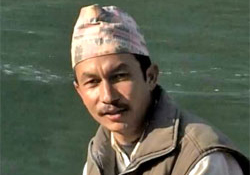 The Nepali government must ensure that the case of the 2004 killing of journalist Dekendra Thapa (photo) can proceed without further political interference, the ICJ said today.
“Political interference into an ongoing criminal investigation constitutes a fundamental attack on the rule of law in Nepal,” said Frederick Rawski, ICJ Nepal Country Representative. “The Government must ensure that there are no further attempts to subvert the course of justice.”
On 11 January, Nepal’s Attorney General, Mukti Pradhan, sent a written instruction to the local police and prosecutor not to move forward with the investigation and prosecution.
In response to a petition challenging the instruction, on 16 January, the Supreme Court ordered both Prime Minister Baburam Bhattarai and the Attorney General not to intervene in the ongoing investigation.
The Home Ministry subsequently ordered the transfer of officials involved in the investigation, and the Prime Minister himself has made public statements calling for the suspects to be released pending the much-delayed formation of a promised truth commission.
“It is now the obligation of the justice system to ensure due process and the right to a fair trial,” Rawski added. “This is an opportunity for Nepal to illustrate the political will exists to address past human rights violations, and that the country’s judiciary can provide justice for the victims while protecting the rights of the defendants.”
Dekendra Thapa was allegedly tortured and buried alive by Maoist cadres in 2004 during the country’s decade-long civil war, which ended in 2006.
The case was finally submitted to a District Court yesterday (January 28, 2013) by the District Attorney of Dailekh in Mid-Western Nepal. The Dailekh District Attorney has charged nine people alleged to be involved.
Five of the suspects have been arrested and produced before the district court.
“Dekendra Thapa was one of the thousands of civilians whose deaths have gone without proper explanation or justice,” said Rawski. “Thanks to the courageous decision of the local authorities to proceed with this case, there is now an opportunity for the Nepali justice system to begin answering the demands for justice.”
Contact:
In Kathmandu, Frederick Rawski, ICJ Nepal Country Representative : t +977-984-959-7681
In Bangkok, Sam Zarifi, ICJ’s Asia Director: t +66-807-819-002
Photo credit: Dhurba Basnet

Jan 23, 2013
Today, senior judges and eminent jurists from around the world joined together, calling on the Government of Sri Lanka to reinstate the legal Chief Justice Dr Shirani Bandaranayake.
An open letter issued by the Centre for the Independence of Judges and Lawyers of the International Commission of Jurists (ICJ) was sent to the Honorable Speaker of Parliament Chamal Rajapakse and H.E. President Mahinda Rajapakse, condemning the removal of Chief Justice Dr Shirani Bandaranayake as unconstitutional and in contravention of international standards on judicial independence.
The letter emphasized that an independent and impartial judiciary is essential for the protection of human rights, the rule of law, good governance and democracy.
It says: “The irremovability of judges is a main pillar of judicial independence. Judges may be removed only in the most exceptional cases involving serious misconduct or incapacity. And in such exceptional circumstances, any removal process must comport with international standards of due process and fair trial, including the right to an independent review of the decision.”
The impeachment process, and subsequent removal of the legal Chief Justice disregarded international standards of judicial independence and minimum guarantees of due process and fair trial.
“The Rajapakse Government has brought Sri Lanka on the path toward authoritarian rule, dismantling the system of checks and balances and eviscerating judicial independence,” said Wilder Tayler, ICJ Secretary General.
The Government’s conduct is a flagrant violation of the core values of the Commonwealth of Nations, notably the Latimer House Principles on the Three Branches of Government 2003.
The Latimer House Principles require the State to uphold the rule of law by protecting judicial independence and maintaining mutual respect and cooperation between Parliament and the Judiciary.
The Commonwealth Magistrates’ and Judges’ Association endorsed the letter.
In recent days, lawyers and advocates, opposing the impeachment have allegedly been sent threatening letters from a group identified as the Patriotic Taskforce.
The group has targeted the lawyers as traitors. Civil society groups have also been targeted in smear campaigns in the media. The Chief Justice has voiced concern for her and her family’s safety, calling on the international media to “…look after the three of us.”
“Sri Lanka must act immediately to guarantee the security of persons who have been the subject of threats or intimidation and must initiate prompt, thorough and impartial investigations into such allegations,” Tayler added.
The ICJ’s Centre for the Independence of Judges and Lawyers and the undersigned jurists urge H.E. President Mahinda Rajapakse and Speaker of Parliament Chamal Rajapakse to act immediately to restore the independence of the judiciary by reinstating the legal Chief justice Dr. Shirani Bandaranayake.
CONTACT:
Sam Zarifi, ICJ Asia-Pacific Regional Director, (Bangkok), t: +66(0) 807819002; sam.zarifi(at)icj.org
Sheila Varadan, ICJ Legal Advisor, South Asia Programme, (Bangkok), t: +66 857200723; sheila.varadan(at)icj.org
Sri Lanka-ICJ Open letter impeachment Chief Justice-openletters-2012 (full text in pdf)
Jan 21, 2013 | News
 The ICJ calls on the ASEAN Intergovernmental Commission on Human Rights (AICHR) to take an active role in determining the fate and whereabouts of Sombath Somphone, a community leader in Laos.
The ICJ also calls on the AICHR to fulfill its mandate under Article 4, paragraph 1.11 of its Terms of Reference, and develop a common position and strategy for tackling the serious problem of enforced and involuntary disappearances in the ASEAN region.
This position must aim towards hastening the resolution of cases of enforced and involuntary disappearances in the region, as well as effectively preventing these violations in the future.
Sombath Somphone is the founder and former director of the Participatory Development Training Center (PDTC) and 2005 recipient of the prestigious Ramon Magsaysay Award for Community Leadership.
He also led Laos’ civil society groups in participating at the Asia-Europe People’s Forum (AEPF) held in October 2012.
He was last seen being stopped by local police at the Thadeau police station on 15 December 2012, at around 5:00pm.
His family has no information on his fate or whereabouts to this day.
“It should be an urgent concern for the AICHR to give sustained priority to this case and it should vigorously encourage the government of Laos to make every effort to locate him,” said Sam Zarifi, Regional Director of the ICJ for Asia and the Pacific.
“The AICHR should seize this case as a chance to address the issue of enforced and involuntary disappearances in the ASEAN,” Zarifi added. “It should use its mandate to formulate a common position on this issue, to push governments to resolve cases of enforced and involuntary disappearances in the region.”
Following his “disappearance”, the AEPF requested ASEAN parliamentarians to conduct a mission to Laos to investigate the case.
To that end, three parliamentarians from the Philippines, Indonesia, and Malaysia traveled to Laos from 13 to 15 January 2013 and spoke to high-level representatives of government about the “disappearance” of Sombath Somphone.
One of the parliamentarians, Mr. Charles Santiago, observed that the government of Laos had evinced no political will to resolve this case.
He noted the half-hearted efforts of police in investigating this case, as illustrated by the fact that they had only called in twice Ng Shui Meng, Sombath Somphone’s wife, since her husband had been missing.
On both occasions, she was asked questions irrelevant to the case, such as how long they had been married, whether or not they had children, and where they reside.
The parliamentarians made it clear that finding Sombath Somphone, a well-known civil society leader, is crucial.
As pointed out in a public statement by Mr. Walden Bello, the parliamentarian from the Philippines, “the immediate surfacing of Mr. Sombath is in the interest of all parties, of Mr. Sombath and his family, of the Lao PDR, and of the ASEAN.”
The ICJ recalls that all States, including Laos, have an obligation to conduct a prompt, thorough and independent investigation wherever there are reasonable suspicions of enforced or involuntary disappearance.
The ICJ also emphasizes that resolving the case of Sombath Somphone is important not only for Laos, but also for the ASEAN as a region.
His citation for the Ramon Magsaysay Award for Community Leadership indicates he is recognized for “his hopeful efforts to promote sustainable development in Laos by training and motivating its young people to become a generation of leaders.”
His work not only benefits the people of Laos, but also contributes to the aspiration of ASEAN as expressed in its Charter, which is that of ensuring “sustainable development for the benefit of present and future generations and to place the well-being, livelihood and welfare of the peoples at the center of the ASEAN community building process.”
Sombath Somphone is the kind of leader integral to the realization of this vision of the ASEAN.
Contact:
Emerlynne Gil, International Legal Advisor, International Commission of Jurists, Bangkok; m: +66 840923575, email: emerlynne.gil@icj.org

Jan 15, 2013 | News
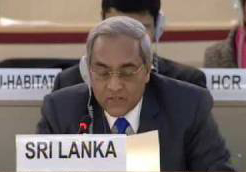 The appointment of former Attorney General Mohan Peiris (photo) as Sri Lanka’s new Chief Justice raises serious concerns about the future of the Rule of Law and accountability in the country, the ICJ said today.
Mohan Peiris has served in a variety of high-level legal posts in the past decade, always playing a key role in defending the conduct of the Sri Lankan government.
He served as Sri Lanka’s Attorney-General from 2009 to 2011. Since then he has served as the legal adviser to President Mahinda Rajapakse and the Cabinet.
“During his tenure as Attorney-General and the government’s top legal advisor Mohan Peiris consistently blocked efforts to hold the government responsible for serious human rights violations and disregarded international law and standards,” said Sam Zarifi, ICJ’s Asia director.
“Mohan Peiris’ appointment as the new Chief Justice, after a politically compromised and procedurally flawed impeachment, adds serious insult to the gross injury already inflicted on Sri Lanka’s long suffering judiciary.”
The International Commission of Jurists, in its recent report on impunity in Sri Lanka, highlighted Mohan Peiris’ lack independence as Attorney-General, noting the alarming number of cases involving prominent politicians that were withdrawn during his tenure.
In November 2011, as Attorney General, Peiris told the UN Committee Against Torture in Geneva that political cartoonist Prageeth Ekneligoda, believed to have been subjected to enforced disappearance in January 2010, had actually left Sri Lanka. In June 2012, Peiris admitted to a court in Colombo that this claim was groundless.
“ICJ condemns this appointment as a further assault on the independence of the judiciary and calls on the Sri Lankan government to reinstate Chief Justice Shirani Bandaranayake. If there are grounds for questioning the Chief Justice’s actions, they should be pursued following due process and a proper impeachment process.”
CONTACT:
Sam Zarifi, ICJ Asia-Pacific Regional Director, Bangkok, t:+66 807819002; email: sam.zarifi(at)icj.org
Sheila Varadan, ICJ Legal Advisor, South Asia Programme, Bangkok, t: +66 857200723; email: sheila.varadan(at)icj.org
NOTE:
In a statement today (see below), Justice Bandarayanake strongly denied all the charges against her and asserted her status as the legal Chief Justice of Sri Lanka’s supreme court. She said: “The accusations leveled against me are blatant lies. I am totally innocent of all charges…Since it now appears that there might be violence if I remain in my official residence or my chambers I am compelled to move…”
Sri Lanka-CJ final speech-2012 (full statement, in pdf)
Read also:
ICJ condemns impeachment of Sri Lanka’s Chief Justice
Sri Lanka’s Parliament should reject motion to impeach Chief Justice
Impeachment of Sri Lankan Chief Justice: Government must adhere to international standards of due process
Jan 14, 2013
An opinion piece by Frederick Rawski, ICJ Nepal Country Representative, and Paul Seils, Vice President of the International Centre for Transitional Justice.
Rather than resist UK efforts to implement its obligations under international law, the Nepali government should develop a transitional justice programme to provide truth, justice and reparations.
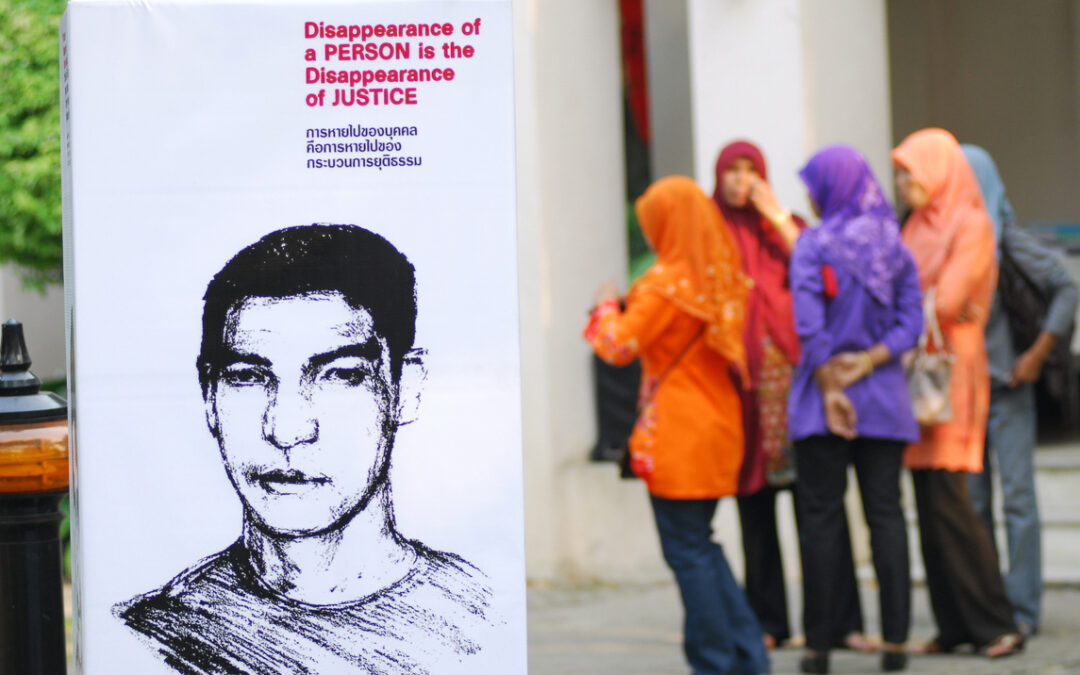
As attested by last week’s arrest in the United Kingdom of Kumar Lama, a Nepali Army Colonel suspected of torture, the government of Nepal’s failure to pursue truth and accountability for conflict-era violations can have serious consequences.
If victims of serious human rights violations are unable to obtain an effective remedy in Nepal and the government continues to ignore their rights to truth, justice, and reparations, they will inevitably seek other avenues, including the pursuit of perpetrators in other countries.
Rather than resisting UK efforts to implement its obligations under international law, the Nepali government should develop a full transitional justice programme and redouble its efforts to provide truth, justice and reparations inside the country.
Nepal’s 10-year armed conflict between the Communist Party of Nepal- Maoist and state security forces saw systematic violations of international human rights law and serious breaches of international humanitarian law.
Some 13,000 people were killed, thousands more were tortured and displaced. Approximately 1,300 persons remain missing or disappeared.
Six years on, in spite of specific provisions in the peace agreement, the government of Nepal has failed to initiate investigation into the past.
Following Col Lama’s arrest, the Nepali government has again insisted that it will meet its international obligations by establishing a truth commission.
Three points to clarify
It is in this context that we write to clarify three points relating to transitional justice processes that are often misunderstood.
First, the state’s acknowledgement of the truth about conflict-era crimes is a right of victims and Nepali society as a whole, not a matter of charity. The state has a duty to fulfil the right to the truth, which must be done through an official mechanism in order to ensure official recognition.
Second, the search for truth, if carried out in good faith, can support efforts to achieve other rights of conflict victims, including to justice, reparations and the guarantee of non-reoccurrence.
Third, the work of a truth commission does not substitute for prosecutions of war crimes, crimes against humanity or other serious crimes under international law, including cases of torture, as alleged to have been perpetrated by Col Lama.
The search for truth is based on the right of victims, their families and society to know how and why terrible violations of human rights took place.
What happened? Who allowed these things to happen? And what have been the consequences for victims and families? The state has a duty to answer these questions, and victims have a right to search for and demand answers. For this reason there should be continued pressure for an official truth mechanism that complies with international law and incorporates best practice.
The Nepal government’s latest proposal, an ordinance for a combined disappearance and truth commission, does not satisfy these requirements.
Instead, it opens the way to a back-door route to amnesty for perpetrators of serious crimes and possible coerced “reconciliation”.
However, this does not mean that prospects for a truth commission should be written off. Rather, the ordinance should be withdrawn and efforts renewed to strengthen proposals, in consultation with civil society, to establish at the earliest opportunity a credible, effective and independent truth mechanism, or mechanisms.
Measures needed
However, an integrated transitional justice process means that truth seeking must be accompanied by measures to act on this knowledge-measures including criminal trials and reparations that contribute to preventing violations from taking place again.
The UN’s Un Special Rapporteur on the promotion of truth, justice, reparation and guarantees of non-recurrence of serious crimes and gross violations of human rights, Pablo de Greiff, has emphasised this point.
He has called on states to resist the tendency to think of transitional justice as ” a soft form of justice” and warned against selectivity about which measures to pursue.
In Nepal, criminal investigations and prosecutions can and should proceed with or without a truth commission.
Unlike many other countries in transition, Nepal has the advantage of a functioning judiciary that has taken courageous decisions on important conflict-era cases. Likewise, measures to reform institutions, including the removal of individuals suspected of involvement in human rights violations, do not depend on the establishment of a truth commission.
Nepal’s Supreme Court already ruled in August 2012 that the promotion of security officials should depend on their human rights record.
Victims in Nepal continue their efforts to search for and speak the truth, as witnessed by frequent events to remember the ” disappeared “, commemorate the dead and petition the courts. Yet despite repeated commitments, the Nepal government has yet to deliver.
Elsewhere when official’s processes have stalled or there has been a lack of confidence in them, civil society has initiated unofficial truth projects.
Because they are not alternatives to officials truth-seeking, they do not in any way limit or relieve the state of its obligations to guarantee the right to truth.
Rather, two decades of global experience shows that unofficial efforts can put additional pressure on the state to fulfil its duty regarding victims’ rights.
How? By raising voices publicly and providing solid documentation about serious crimes and their consequences.
The impact may be small on a national scale, but for individuals, it can mean an assertion of their own dignity and that of their loved ones.
Equally important, they help to maintain these crimes and the need for redress in the public agenda.
For the sake of these victims, their families and Nepali society as a whole, Nepal must not let up on efforts to establish official truth – seeking processes, advance court-ordered prosecutions and create a reparation programme.
Contrary to the views of some, pursuing justice is not about vengeance, but rather about moving forward on the path to a stable democracy, where individuals can trust state institutions knowing that their rights are protected.