Mar 29, 2012 | Advocacy, Non-legal submissions
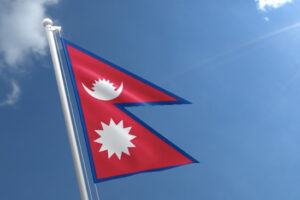
The ICJ made a written statement on Nepal to the Human Rights Council during its 19th session in Geneva.
More than five years since the end of the armed conflict in Nepal, international monitoring mechanisms established to scrutinise progress in the peace process in the country have effectively ceased to function, despite the failure to conclude the peace process and establish the agreed-upon transitional justice mechanisms.
The ICJ statement focuses on amnesty provisions in transitional justice legislation; proposed pardons, and the appointment of alleged rights violator to Government; and lack of investigations and withdrawal of cases.
Nepal-Written statement ICJ-non-judicial submission-2012 (full text in English, PDF)

Mar 29, 2012 | Advocacy, Non-legal submissions
The ICJ made a written statement on national commissions of inquiry in South Asia at the Human Rights Council’s 19th session.Although national commissions of inquiry can contribute towards States’ fulfilment of their international human rights obligations when established in line with international standards and best practices, they are all too often found wanting and frequently designed to continue a culture of impunity for serious human rights violations and to weaken the rule of law.
In a written statement to the Human Rights Council during its 19th session in Geneva, the ICJ raised the issue of the relationship between national commissions of inquiry in South Asia with the criminal justice system, and the question of political will and adherence to international standards.
Written statement ICJ-non-judicial submission-2012 (full text in English, PDF)

Mar 21, 2012 | News
 The ICJ and Justice for Peace Foundation (JPF) held a multi-stakeholder roundtable dialogue on women’s access to justice in Bangkok, Thailand on 19 and 20 March 2012.
The event marked an important stage in the ongoing ICJ-JPF initiative on women’s access to justice in Thailand.
It convened a group of experts from accross Thailand to discuss and review a draft ICJ-JPF report on the obstacles to justice women continue to face in Thailand.
Participants included women human rights defenders, lawyers, representatives of NGOs and academic experts.
When released the ICJ-JPF will capture and explore the accounts of barriers received from stakeholders accross Thailand through extensive field research accross the country during 2011.
It will identify a series of responsive recommendations endorsed by roundtable participants.
Mar 13, 2012 | News
The ICJ is concerned at the lack of transparency in the process, which could undermine universal human rights standards.

Feb 23, 2012
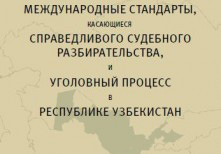 This ICJ publication provides a systematic overview of the international law and standards and Uzbekistan law relating to fair trial and due process in the criminal domain.
International Fair Trial Standards and Criminal Procedure in Uzbekistan, an ICJ publication on fair trial standards with a specific country focus, provides a systematic overview of the international law and standards and Uzbekistan law relating to fair trial and due process in the criminal domain. Its main sources are international law, standards and jurisprudence developed by human rights protection bodies at the universal and regional level as well as national criminal legislation of Uzbekistan. It is the first attempt to provide a comprehensive analysis of criminal procedure and trial with regard to Uzbekistan and in the region, and it is the first such comparative study of domestic proceedings and international standards pertaining to fair trial.
Uzbekistan-fair trial standards-publication-2012-rus