
Sri Lanka: ICJ report documents ‘Crisis of Impunity’
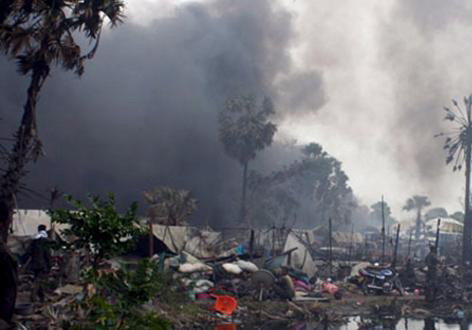 The Sri Lankan government must immediately cease its assault on the independence of the judiciary, the ICJ said in a new report.

The Sri Lankan government must immediately cease its assault on the independence of the judiciary, the ICJ said in a new report.

 The ICJ has brought to the attention of the Universal Periodic Review (UPR) mechanism issues concerning the independence and impartiality of the judiciary in Bangladesh, as well as other key issues to be addressed in the review of Bangladesh’s compliance with international human rights.
From 22 April to 3 May 2013, the Human Rights Council’s Working Group on the UPR will consider the situation of human rights in Bangladesh. Ahead of the Working Group’s review of Bangladesh, the ICJ has made a submission in which it has made suggested recommendations concerning:
Bangladesh-UPR16-StakeholderSubmission-legal submission (2012) (download full submission in PDF)
Bangladesh-UPR16-AdvocacyNote-NonLegalSubmission-2013 (download advocacy note in PDF)
Bangladesh-UPR16-ComparisonChart-NonLegalSubmission-2013 (download comparison with first cycle UPR of Bangladesh)

At the invitation of the Government of Taiwan and Covenant Watch, a coalition of NGOs in Taiwan, the ICJ led a three-day training programme in Taipei, Taiwan, on the UN treaty body periodic reporting process.
As a territory not recognised by the international community as a sovereign state, Taiwan is not a member of the United Nations in its own right. The UN Secretary General has consequently been unable to accept Taiwan’s deposit of instruments of accession to the International Covenant on Civil and Political Rights (ICCPR) and the International Covenant on Economic, Social and Cultural Rights (ICESCR). The UN Human Rights Committee and Committee on Economic, Social and Cultural Rights have similarly been unable to review Taiwan’s initial reports under the ICCPR and ICESCR.
Taiwan has therefore initiated a parallel review process, whereby two Committees of Independent Experts will review the implementation of the provisions of the ICCPR and ICESCR in Taiwan. The ICJ delivered training in Taipei from 29 to 31 October 2012 on the treaty body review process and the way that Taiwanese civil society and the Government may engage in this parallel review process.
Taiwan-TBReviewProcess-TrainingAgenda (2012) (download training agenda in PDF)
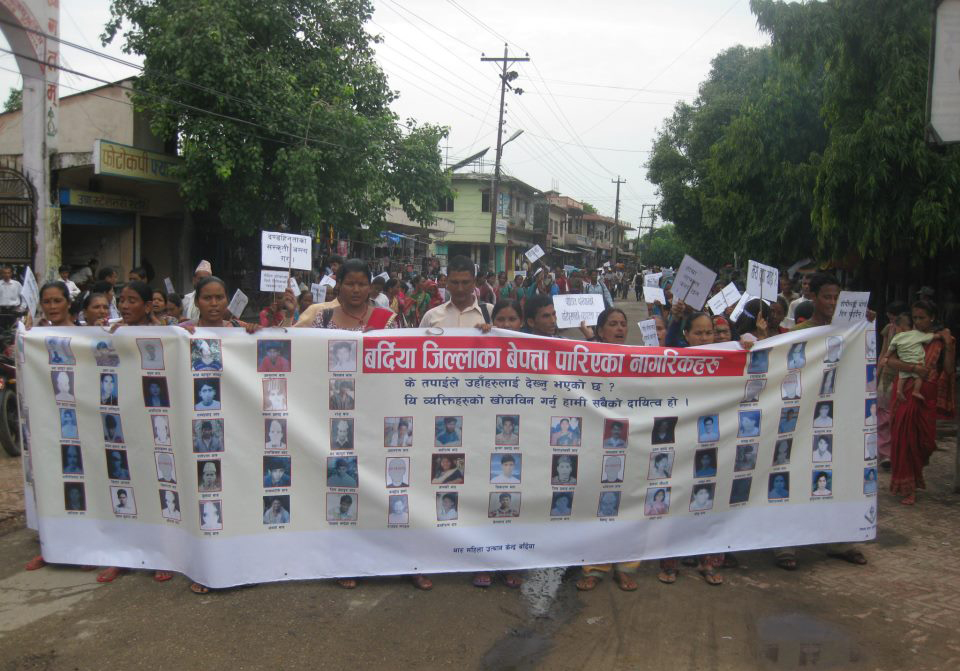 Nepal’s government must ensure accountability for the thousands of violations perpetrated by security forces and Maoists during the country’s civil war, as documented in a new report by the UN, the ICJ said today.
In a Briefing Paper “ Compromising Justice: Nepal’s Proposed Ordinance on Commission on Disappeared Persons, Truth and Reconciliation (2012)” issued today, the ICJ highlighted recent efforts by the Nepali government to undermine accountability by weakening proposed transitional justice mechanisms and promoting suspected violators.
The ICJ also welcomed the report by the Office of the High Commissioner on Human Rights (OHCHR) conflict-era human rights violations, released against the direct protest of the Government of Prime Minister Baburam Bhattarai. The “OHCHR Conflict Report” documents approximately 9000 violations, with responsibility pointing to both the State and the Maoists.
“This sobering report chronicles the devastating human impact of the human rights and humanitarian law violations that continue to burden the victims and their families,” said Sam Zarifi, ICJ’s Asia director. “We applaud the OHCHR but also urge it and the international community to not relegate this report to the shelf, but to ensure that it is introduced at all levels as a basis for advocating for truth, justice, and reparations.”
“This report is all the more important as it comes against the backdrop of systematic efforts by Nepal’s government to avoid accountability and in fact to reward some of those suspected of serious violations,” Zarifi said.
ICJ’s Briefing Paper “ Compromising Justice: Nepal’s Proposed Ordinance on Commission on Disappeared Persons, Truth and Reconciliation (2012)” highlighted the serious shortcomings of a proposed Ordinance issued by the Cabinet that backtracks on previous commitments to justice included in the country’s 2006 Comprehensive Peace Accord, the 2007 Constitution, as well as decisions of the Supreme Court.
ICJ reiterated its strong condemnation of the promotion of Kuber Singh Rana to IGP of the Nepal Police 13 September 2012, and of Raju Basnet to Brigadier General 4 October 2012. Both men have been implicated by the country’s Supreme Court in decisions ordering full investigations of their culpability.
“Instead of supporting the Nepali criminal justice system and the promised transitional justice mechanisms, the Nepali government is actively reneging on its promises to the Nepali people to provide truth, accountability and reconciliation,” Zarifi said.
As reaction has mounted against the promotions by national and international actors, the ICJ also noted with concern the growing climate of intimidation faced by judges, lawyers and human rights defenders.
There are credible reports of intimidating phone calls against those contesting the promotions.
Public demonstrations on 7 and 9 October 2012 were met with unnecessary use of force by the police, including lathi charges resulting in over a dozen injuries.
“Nepal’s international supporters should press the government to meet its commitments and its obligations under international law,” Zarifi said. “Meanwhile, all countries have an obligation to cooperate in investigation and prosecution of any individuals facing credible allegations of serious violations of international human rights law and humanitarian law, including prosecution of suspected perpetrators under the doctrine of universal jurisdiction.”
Contact:
In Kathmandu, for ICJ, Govinda Sharma: t +977-985-106-1167
In Bangkok, for ICJ Asia-Pacific, Sam Zarifi: t +66-807-819-002
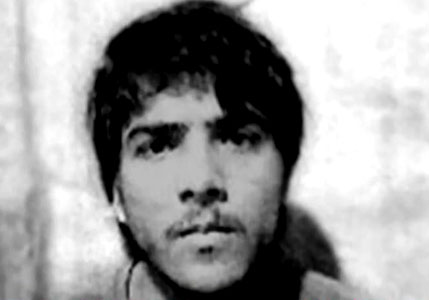
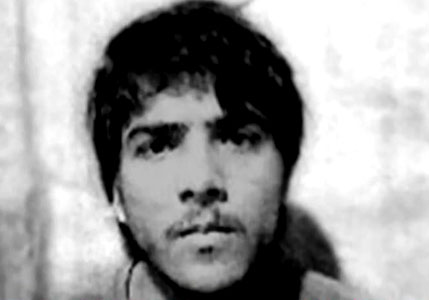 On the tenth annual World Day against the Death Penalty, the ICJ urges the President of India to grant clemency to Mohammed Ajmal Amir Kasab.
“There is no doubt that Kasab’s crimes were heinous causing immeasurable suffering but execution is not the answer,” said Sam Zarifi, ICJ Asia Pacific Regional Director. “Putting him to death would be a significant step backwards for India. It would end the eight-year hiatus on executions and disregard the call in repeated UN General Assembly Resolutions that all States should observe an immediate moratorium on the death penalty with a view towards full abolition.”
October 10, 2012 is the World Day against the Death Penalty. The ICJ considers the death penalty to constitute a violation of the right to life and a form of cruel and inhuman punishment.
The ICJ calls on all countries to abolish the death penalty.
“The death penalty violates the inherent dignity of the person,” Zarifi added. “And as we have seen in India as well as all over the world, it is not possible to administer capital punishment without some degree of inconsistency, subjectivity and arbitrariness.”
More than 150 of 192 United Nations member states have either abolished the death penalty or do not practice it.
In South Asia, Nepal abolished the death penalty in its 1997 Constitution and Sri Lanka has not carried out an execution since 1976.
Kasab, a 25-year old Pakistani national, was sentenced to the death for his role in the Mumbai terrorist attack in 2008.
The Supreme Court confirmed Kasab’s death sentence on 29 August 2012, upholding the judgment of the Bombay High Court on 21 February 2011 and the sentence handed down by a lower court in May 2010. On 18 September 2012, Kasab sent a four-line handwritten mercy plea to the President of India.
The Maharashtra Home Ministry recommended rejecting the mercy plea on 24 September 2012 and Governor of Maharashtra, K Sankaranarayan, advised the same on 29 September 2012. The petition has now been forwarded to the Union Government.
CONTACT:
Sam Zarifi, ICJ Asia-Pacific Regional Director, t: +41(0)22 979 38 00; sam.zarifi(at)icj.org
Sheila Varadan, ICJ Legal Advisor, South Asia Programme, t: +66 857200723; sheila.varadan(at)icj.org
 HRC63: ICJ and Partners Call on Cambodia to Halt Impunity for Human Rights Violations, Including Transnational Repression
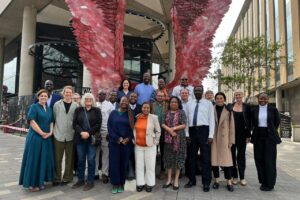 Africa Region: Human Rights Defenders and Lawyers Propose Means to Strengthen Access to Redress for Victims of Human Rights Atrocities
 Europe: Experts stress the role of intermediaries in access to justice for children with disabilities
 HRC63: ICJ and HRW Call for Protection of Black African Migrants, Refugees and Asylum Seekers in Tunisia and Libya