Jan 21, 1990
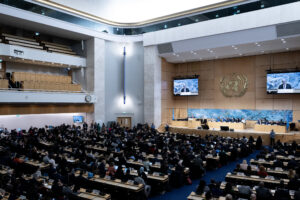
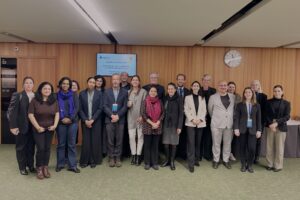
On 20 – 21 January 1990, the ICJ’s Centre for the Independence of Judges and Lawyers organised, in collaboration with the United Nations Centre for Human Rights, a seminar on the Independence of the Judiciary in India in New Delhi.

Dec 1, 1989
Impunité, crimes contre l’humanité et disparitions forcées.
ICJ Review-43-1989-fra (Texte complet en PDF)

Dec 1, 1989
The purpose of the Review is to focus attention on the problems in regard to which lawyers can make their contribution to society in their respective areas of influence and to provide them with the necessary information and data.
This edition features articles on:
- Human rights in the world:
-
-
-
-Israeli-Occupied Territories
-
-
-UN Sub-Commission on Discrimination and Minorities
-
-UN Human Rights Committee
-
-Realization of social and economic rights – the minimum threshold approach, by Asbjørn Eide
-
-Judges and lawyers in the USSR – changing perceptions, by Fali Nariman
-
-The impact of the official secrets act 1989 in the UK, by Norman Marsh
-
-“Death Row Phenomenon” held in inhuman treatment by Gino Naldi
-
-Terrorism, politics and law
ICJ Review-43-1989-eng (full text in English, PDF)
ICJ Review-43-1989-spa (full text in Spanish, PDF)

Dec 1, 1989
A discussion paper prepared by the Australian Section of the ICJ on the human rights consequences of the Cambodian genocide.
This analysis was produced after a visit to Cambodia by Daniel Brezniak, a member of the Executive Committee of the Australian ICJ. The paper argues that invasion and the use of force in international law can be justified in some situations and that the Vietnamese invasion of Cambodia may be justified in some situations and that the Vietnamese invasion of Cambodia be just such a situation.
Cambodia-the cambodian road-thematic report-1989-eng (full text in English, PDF)

Nov 10, 1989
The CIJL intervenes with governments in cases of harassment or persecution and works with the United Nations in setting standards for the independence of judges and lawyers.