Oct 27, 2020
An opinion piece by Boram Jang, Legal Adviser at the ICJ Asia & the Pacific Programme
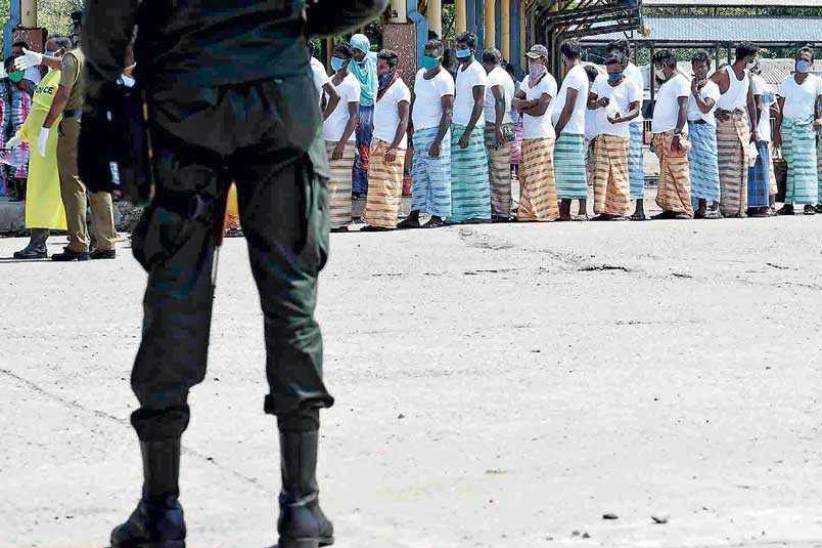
On 15 October 2020, the Sri Lankan authorities imposed a curfew in parts of Katunayake Free Trade Zone (KFTZ) after hundreds of workers at the Brandix Fashion Ware factory in Minuwangoda tested positive for COVID-19. More than 1500 people connected to the garment factory have been infected with COVID-19 since October 9, and four factories, Chiefway Katunayake, Next Manufacturing, Naigai and Okaya Lanka, shut down.
Many KFTZ workers migrate from rural areas in Sri Lanka, and live in overcrowded boarding houses with minimum facilities. Some of these also accommodate pregnant women and mothers with their children. In an attempt to control the spread of Covid-19, the military was called in on 11 October to round-up workers, late at night and early in the morning, to forcibly take them to makeshift quarantine centers.
According to the media and civil society reports, soldiers raided the workers’ boarding rooms, telling them they had five to ten minutes to pack their bags. The workers boarded crowded buses and headed for quarantine centers which were not established according to procedures established by law.
Trade unions and human rights activists spoke out that during this course of action by military, the workers were not informed where the center was located nor provided with protective masks. They weren’t allowed to speak at all and children were separated from their mothers.
When the workers arrived at the center, they were given some food, which many workers found inedible. The facility itself had not been cleaned, toilets were flooded and unsanitary, and no polymerase chain reaction (PCR) tests had been conducted on any of the workers upon their admission to the center. In short, the military-led response to the threat of infection ended up subjecting the workers to greater threat of contagion as well as numerous indignities.
A more sensible way forward is to ensure that responses to the pandemic comply with human rights principles, especially as we hear of more accounts of inappropriate or heavy-handed military behavior in reaction to this public health crisis.
The manner in which the Sri Lankan government and the military have handled the recent outbreak among the workers has been deeply troubling. The lack of clear information provided to the workers, unsafe transportation, unsanitary quarantine facilities established without a legal basis, and failing to conduct tests prior to loading workers onto buses and upon admission to the center, and absence of judicial oversight is in clear violation of basic COVID-19 regulations adhered by the government.
At the heart of all these problems, a heavily militarized and politicized COVID-19 response lies.
In March, Sri Lanka’s first case of COVID-19 was reported. The government set up the National Operation Centre for Prevention of COVID-19 Outbreak (NOCPCO) to prevent the spread of the disease. However, instead of putting a medical professional or civil officer in charge of the Centre, the Rajapaksa government picked Lieutenant General Shavendra Silva, an alleged war criminal, to head the NOCPCO.
Silva was the commander of the 58th Division of the Sri Lankan Army, which was identified by multiple UN investigatory bodies as having been involved in the commission of serious crimes and human rights violations during the last stages of Sri Lanka’s decades-long armed conflict which ended in 2009.
President Rajapaksa has also appointed retired and currently serving military officials to other key public sector positions including the Secretary of the Ministry of Health, the Director General of the Disaster Management Centre, and the Director General of the Customs Department.
After delaying for several weeks, a countrywide curfew was suddenly declared on March 20 without adequate steps to supply essentials goods and medicines to the people. The President also gave full powers to the police to arrest people for violating curfew.
More than Over 60,000 people have been arrested for alleged curfew violations and although most them had been released on bail, the police stated that they will be prosecuted on the advice of the Attorney General’s Department when the normal court proceedings begin once the COVID-19 epidemic is over.
The violators can be prosecuted in magistrate court and if convicted, can be imprisoned up to six months and fined up to Rs. 2000. Lawmakers argued about the curfew’s legality, but it continued to be enforced in several regions, as part of the state’s coronavirus containment strategy.
The military may have to conduct law enforcement functions during a state of emergency such as public health crisis. As the UN human rights guidance provided, the military may only be deployed in a law enforcement context for limited periods and specifically defined circumstances.
When the military conducts law enforcement functions, they should be subordinate to civilian authority and accountable under civilian law, and are subject to standards applied to law enforcement officials under international human rights law.
However, in Sri Lanka now, there is no public discussion or transparency about the actions and decisions of the military during the Covid-19 response. All decisions related to the public health crisis are being made by the NOCPCO with Silva at the helm, without any judicial or Parliamentary oversight, nor any public institutional processes informing those decisions and holding him accountable to them.
Vulnerable ethnic and religious groups are acutely affected by the militarization of the public health response. Tamil organizations and politicians have continuously called for the demilitarization of the North-East. Having the military to oversee the public health policy and to act as the State’s first responders also normalize military occupation, exacerbate the existing ethnic divides, and further deteriorate human rights in Sri Lanka.
Most of the quarantine facilities are located in the North and East of the country, which still remain occupied by the Sri Lankan military.
Despite local concerns about locating quarantine centers in areas already subject to ethnic and political tensions, the government ignored the local concerns and turned schools and educational establishments in the Northern and Eastern Provinces into the quarantine centers.
Furthermore, Muslims in Sri Lanka, have also complained about inappropriate State policies and violations of their freedom to worship. The government mandated compulsory cremations for Muslims who had died after contracting the virus, going against Islamic burial practices and World Health Organisation (WHO) guidelines.
While certain limitations on human rights may be undertaken to confront the public health crisis, such limitations, in keeping with the Siracusa Principles, must be for a specific public health purpose, established by law, non-discriminatory and necessary and proportionate to addressing public health.
Sri Lanka’s involvement of the military at every level, with limited parliamentary and civilian oversight raises serious human rights and rule of law concerns. Public health officials have expressed disagreements with medical authorities in terms of statistics and strategy for managing the outbreak.
The government will only be able to implement successful public health measures and maintain public support and confidence when its policies in response to the pandemic are evidence-based, human rights compliant, and transparent.
Download the Op-Ed in Tamil and Sinhala.
Homepage photo credit: Shehan Gunasekara
First published in Daily FT on 27 October: http://www.ft.lk/opinion/Sri-Lanka-Vulnerable-groups-pay-the-price-for-militarisation-of-COVID-19-response/14-708073
Oct 27, 2020 | News
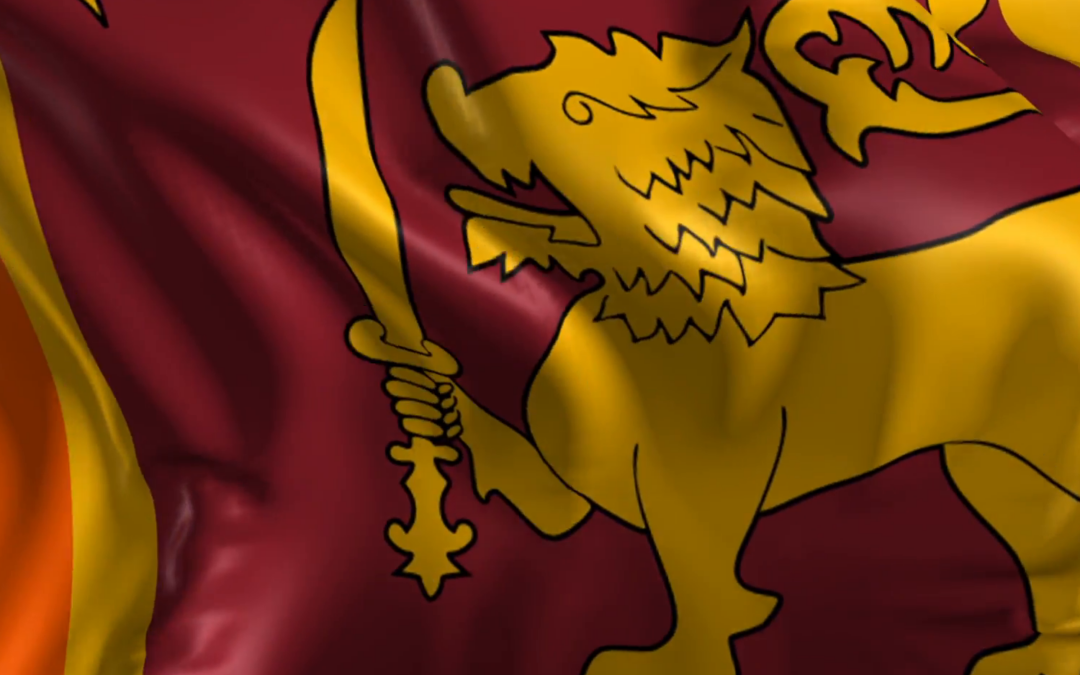
The ICJ today condemned the adoption of amendments to the Sri Lankan Constitution, which serve to expand the powers of the President, while encroaching on the powers of the parliament and courts.
The 20th Amendment to the Constitution was passed into law on 22 October, with 156 of the 225 parliamentarians voting in favour of the amendment, after a mere two-day debate, overruling the Opposition’s request for at least four days of deliberation.
The ICJ noted that the Amendment undoes most of the reforms brought about by the 19th Amendment adopted only in 2015. Critically, it introduces judicial appointment procedures which are incompatible with principles of the justice by reintroducing the Parliamentary Council, consisting only of political actors.
That body serves to merely advise the President, regarding appointments to the judiciary and other key public institutions.
The 20th amendment gives the President sole and unfettered discretion to appoint all judges of the superior courts. Under international standards, appointments to the judiciary should not be vested solely with the executive.
Given the gravity of the constitutional changes, the ICJ expressed regret that the Government had suspended Standing Order 50 (2), which requires every bill to be referred to the relevant Sectoral Oversight Committee for consideration prior to being debated in parliament.
“It is appalling that Constitutional amendments with such far reaching consequences on the constitutional governance of the country were rushed through in such haste, especially at a time Sri Lanka battles with its largest COVID-19 outbreak to date,” said Ian Seiderman, ICJ’s Legal and Policy Director.
The ICJ welcomes the alteration made to some of the problematic provisions of the 20th Amendment Bill during Committee Stage, particularly in relation to presidential immunity and the time period within which the president can dissolve Parliament.
The ICJ nonetheless is particularly concerned with the decision of the Minister of Justice to introduce entirely new provisions at Committee Stage, particularly in relation to the increase of the number superior court judges. The Supreme Court Bench will be increased from 11 to 17 and Court of Appeal from 12 to 20. These substantive amendments were not part of the gazetted 20th Amendment bill, the provisions of which were challenged before the Supreme Court by as many as 39 petitioners.
“While an increased number of judges may reduce court delays and expedite the judicial process, introducing substantive amendments such as this at Committee Stage is problematic at multiple levels,” Seiderman added.
“Sneaking in substantial changes at the last stage of the legislative process where there is no opportunity for public comment or judicial review is not consistent with democratic processes under the rule of law.”
Oct 27, 2020
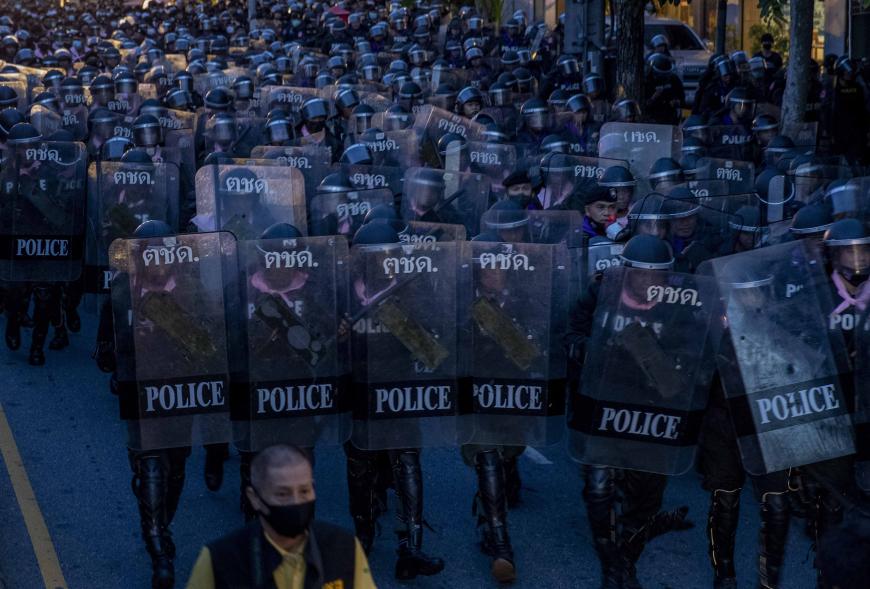
The ICJ today published a legal briefing analyzing the implementation of Thailand’s Emergency Decree on Public Administration in Emergency Situation B.E. 2548 (2005) in response to protests in 2020.
The ICJ welcomed the Thai government’s decision on 22 October 2020 to lift the Serious Emergency Situation in Bangkok but said the longstanding Emergency Decree of 2005 and emergency measures taken recently are non-compliant with Thailand’s international human rights obligations.
The legal briefing looks at restrictions in law and practice that were imposed under the Decree between 15 and 22 October 2020, after the “serious emergency situation” was declared by Thailand’s Prime Minister, in light of international human rights law.
The ICJ in the legal briefing recommends that Thailand should remove the criminal liability for the protesters who are prosecuted or at risk of prosecution under the Emergency Decree for merely exercising their rights to freedom of expression and assembly as guaranteed under international and Thai law.
During the protests between 13 and 22 October 2020, at least 90 people, including protest leaders, have reportedly been arrested, mostly for violating the Emergency Decree.
The ICJ urges Thailand to ensure that affected populations shall have access to judicial remedies in respect of alleged violations under the emergency laws. The regulations, notifications, decisions and actions of officials exercising powers under the emergency law during the “serious emergency situation” must be subject to review by the courts, and ensure the affected persons’ right to access to an effective remedy.
The legal briefing also underscores the need for Thailand to repeal and amend several provisions of the Emergency Decree.
The legal briefing focuses on four primary areas of concern, namely:
- the emergency power;
- the limited scrutiny by the courts;
- legal immunity from prosecution; and
- emergency decree measures.
Thailand is still under a nationwide state of emergency as part of the COVID 19 restrictions.
Background
On 15 October 2020, Thailand’s Prime Minister invoked the Emergency Decree declaring a “serious emergency situation” in the areas of Bangkok in response to the student-led anti-government protests that took place between 13 and 15 October 2020. Protesters called for the Prime Minister’s resignation, constitutional amendment and reform of the monarchy.
The Prime Minister, General Prayuth Chan-ocha, claimed that the declaration of the serious emergency situation was necessary to “end the situation in an efficient and prompt manner, to ensure compliance with the law, and to sustain national order and public interest”.
The restrictions included: prohibition of a gathering of five or more people, dissemination of publications or any means of communication containing texts which intend to distort information and instigate fear among the population. The competent officials, who may not be law enforcement officials, are, among other powers, authorized to arrest and detain persons suspected of having a role in causing the emergency situation, or being an instigator, a propagator, a supporter of such act or concealing relevant information relating to the act which caused the emergency situation; summon any person to report to the competent official; seize or attach arms, goods, consumer products, chemical products or any other materials; and prohibit any act or any instruction to perform an act to the extent that is necessary for maintaining the security of the state, the safety of the country or the safety of the population.
Nevertheless, protests in Thailand have continued despite government ban and efforts by the authorities to prevent them. On 16 October 2020, it was reported that polices forcibly dispersed peaceful protesters at Pathumwan intersection in Bangkok in which thousands of people, including many students, took part. Officials forcibly dispersed the protestors by using water cannons – which, according to the UN Guidance On Less-Lethal Weapons in Law Enforcement, should only be used in situations of serious public disorder where there is a significant likelihood of loss of life, serious injury or the widespread destruction of property. The water was laced with blue dye and an undisclosed chemical irritant to drive back protesters.
The state of serious emergency situation in Bangkok was lifted on 22 October 2020 by the Prime Minister, saying that the situation had eased and the violence was at an end.
In the legal briefing, the ICJ expressed concerned that the emergency declaration in response to the protests had activated provisions of the 2005 Decree that remain non-human rights compliant. The Decree has been used to impose a blanket restriction on freedom of expression and assembly by imposing a general ban on peaceful public demonstrations.
Download
Legal Briefing in English and Thai.
Further reading
Thailand: measures under the Emergency Decree to address the COVID-19 outbreak must conform to international law
More Power, Less Accountability: Thailand’s New Emergency Decree, August 2005
Implementation of Thailand’s Emergency Decree in Thailand’s Three Southern Provinces, July 2007
Oct 13, 2020 | Advocacy, News, Non-legal submissions
On 12 October 2020, the ICJ made a submission to the Human Rights Council’s Working Group on the Universal Periodic Review in advance of the Human Rights Council’s review of Singapore in May 2021.
In its submission, the ICJ expressed concern about the following issues:
(i) Freedom of expression online;
(ii) The death penalty;
(iii) Corporal punishment; and
(iv) International human rights instruments.
The ICJ further called upon the Human Rights Council and the Working Group on the Universal Periodic Review to recommend that Singapore ensure, in law and in practice, the right to freedom of expression online, the right to life and the absolute prohibition against cruel, inhuman or degrading treatment or punishment; and become a party to core international human rights instruments, including the International Covenant on Economic, Social and Cultural Rights, the International Covenant on Civil and Political Rights, the Convention Against Torture and Other Cruel, Inhuman or Degrading Treatment or Punishment, the International Convention on the Protection of the Rights of All Migrant Workers and Members of Their Families and the International Convention for the Protection of All Persons from Enforced Disappearance, as well as the existing Optional Protocols to some of these treaties.
The submission is available in PDF here.
Oct 9, 2020
An opinion piece by Michelle Yesudas, Legal Adviser, ICJ Asia-Pacific Programme and Rachel Chhoa-Howard, Researcher on Malaysia at Amnesty International.
For decades, Malaysia’s treatment of migrant workers and refugees has wavered between tacit acceptance, neglect, and outright hostility. And the current situation is the lowest point in years.
Refugees and migrant workers have emerged as the government’s favoured excuse for the rise in Covid-19 cases. Most recently, the Prime Minister has attributed the spike in Sabah’s rise in cases to undocumented migrant workers, despite reports of high-profile individuals ignoring quarantine restrictions in droves following state elections.
At a National Security Council meeting at the beginning of this month, the prime minister further stated that to combat the virus, more detention centres that house undocumented migrant workers should be built.
In a recent Information Note on Covid-19, the UN stated that governments have a greater duty to protect people who are in detention. This should be done through “avoiding overcrowding and ensuring hygiene and sanitation in prisons and other detention centres,” among other measures.
Despite this, the practice of arresting, detaining and eventually deporting people alleged to have breached immigration law continues, raising the heightened risk of the disease spreading amongst detainees, as well as spilling over into the general community.
A dangerous shift in government policy
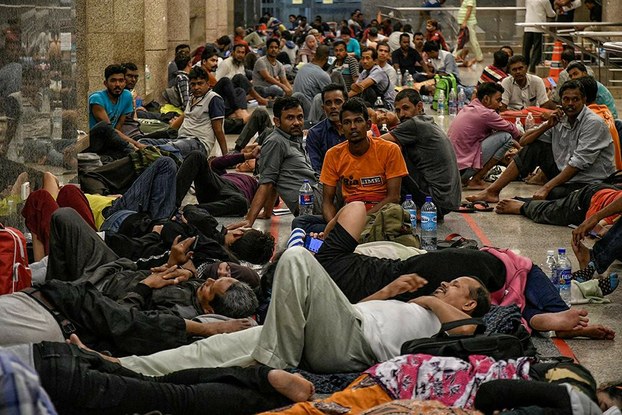
This announcement is just the latest attack on refugee and migrant communities, using the pretext of Covid-19 and weaponised laws to cause untold misery. In recent months, operations by police and immigration officials have seen hundreds of people rounded up and placed in squalid and overcrowded immigration detention facilities, where the risk of contracting Covid-19 is far higher.
Indeed, following raids, immigration detention facilities recorded hundreds of new cases and saw clusters of infections within weeks.
Meanwhile, the coastguard and military pushed away boats of desperate Rohingya people risking their lives to reach the country, or otherwise detained and charged them with immigration offences. Ismail Sabri, Malaysia’s Defence Minister, announced publicly, that Rohingyas have “no status” in the country, despite previous governments being continuously vocal on its support and solidarity with Muslim Rohingyas since 2016.
Home Minister Hamzah Zainudin later added that the government does not recognise the documentation provided by the UN High Commissioner for Refugees (UNHCR) to these refugees, despite prior agreement that bearers of UNHCR cards would be afforded relative protection.
Malaysian authorities are also cracking down on those who publicly voiced concern and exposed the arbitrary, sweeping laws — on immigration and free speech — that make this toxic state of affairs possible.
In July this year, authorities investigated two Al Jazeera journalists from Australia involved in the making of a documentary shedding light on the appalling treatment of migrant workers and refugees amid the Covid-19 lockdown in Malaysia.
The government detained Rayhan Kabir — a Bangladeshi migrant worker featured in the documentary — for weeks. Since then, police have raided Al Jazeera’s offices in Kuala Lumpur and deported Kabir back to his home country. Other critical voices, including the founder of a refugee support organisation, have also faced harassment from the authorities.
The government has used Covid-19 as an opportunity to radically redefine its position on the acceptance of refugees. It’s most recent crackdown highlights the fact that without proper domestic laws protecting the human rights of migrants and refugees, people live in daily fear of exploitation, arbitrary arrest, detention and other human rights abuses.
An inadequate law at the heart of this inhumane policy
The arrest and detention of migrant workers and refugees emphasizes the problematic provisions of Malaysia’s Immigration Act. Under the Act, senior immigration officers have wide powers of search and arrest, which may be used to harass migrants. It also provides for the imprisonment, often indefinitely, of those in breach of local immigration laws in detention centres.
The Immigration Act has been used to sentence migrants to whipping, which is a cruel, inhuman, and degrading punishment prohibited under international human rights law. Furthermore, broadly-worded provisions of the Immigration Act provide the Director General of Immigration with arbitrary powers to revoke and alter the immigration status of non-citizens, such as the two Al Jazeera journalists whose work permits were not renewed.
In addition, Malaysian authorities have used the Immigration Act to arrest, detain and criminally charge a group of Rohingya refugees that arrived by boat and sentence them with the cruel punishment of whipping.
In June this year, the Langkawi Magistrates Court handed down a decision under Section 6 of the Immigration Act, to punish 27 Rohingya men with whipping and seven months in jail for entering Malaysia without valid documentation. Fortunately, following an outcry, the Alor Setar High Court overturned this decision.
However, there are no safeguards to ensure other Rohingya refugees will not face the same threat, in the future.
Time for change
Clearly, Malaysia’s law and policies do not fulfill its international obligations on migrants and refugees. In fact, they are driving them to despair. Caught between the risk of arrest and unemployment, several people are reported to have committed suicide.
It should not take a global health emergency for the Malaysian government to review its policies on the criminalisation of those who fall foul of the Immigration Act, however there is no better time for the government to do so.
Instead of criminalising people, the government should coordinate across ministries and agencies and work with civil society organisations to amend legislation as well as informal guidelines and policies that fall far below international standards.
Malaysia must also ratify international conventions relating to refugees and migrant workers. And instead of silencing critical voices, authorities should address their well-founded concerns. Only when these measures are in place, will migrants and refugees in Malaysia have the proper protection they deserve.
First published in Malay Mail on 9 October: https://www.malaymail.com/news/what-you-think/2020/10/09/unfettered-powers-fatal-gaps-malaysias-inhumane-crackdown-on-migrants-refug/1911091