If Myanmar needs a guide in its fight against COVID-19, it need look no further than what human rights law already demands of it.
As COVID-19 cases surged in Rakhine State in late August, State Counsellor Daw Aung San Suu Kyi affirmed that government responses to the pandemic would not discriminate based on faith or ethnicity. No one would be left behind in the fight against COVID-19, she promised.
These words carry particular weight in northern Rakhine, where an ethnic-based armed conflict persists. Fighting between the Myanmar military and the Arakan Army has led to the death, rape, psychological trauma and mass displacement of thousands of inhabitants caught in the crossfire, be they ethnically Rakhine, Rohingya, Daingnet, Chin or Mro. Women and children have been the victims of shelling, heavy artillery and landmines. And despite the surge in local transmission of COVID-19, a mutual ceasefire still seems unlikely.
Add to these horrors the spectre of political disenfranchisement. Concurrent with government-imposed stay-at-home orders to prevent the spread of the virus, internet restrictions ostensibly aimed at disrupting AA communications remain in place in several townships. In addition to undermining people’s access to health services and information, the internet restrictions curtail the exercise of people’s political rights as election campaigns increasingly move online. Both voters and candidates there now have to contend with limited connectivity during a crucial general election.
How should Myanmar’s response to COVID-19 be evaluated in a situation of armed conflict? In a briefing paper titled “COVID-19 and Human Rights: Upholding the Right to Health in Myanmar’s Conflict Areas,” the International Commission of Jurists offers some insight.
The international law prohibition on discrimination is relevant. The International Covenant on Economic, Social and Cultural Rights, which Myanmar has ratified and to which it is bound, prohibits discrimination and guarantees the right to the highest attainable standard of health for all persons. The treaty requires that Myanmar enable access to healthcare for every person within its jurisdiction regardless of “race, colour, sexual orientation or gender identity, age, gender, religion, language, political or other opinion, citizenship, nationality or migration status, national, social or ethnic origin, descent, health status, disability, property, socio-economic status, birth or other status.” This applies even in situations of armed conflict.
Crucially, while some ICESCR obligations depend on state capacity and are therefore “progressively realisable”, the obligation not to discriminate based on any of the above criteria is not. This means that the state cannot invoke a lack of resources to justify discriminatory laws, policies and practices in fulfilling its obligations under the ICESCR. Non-discriminatory access to healthcare under the ICESCR requires not only physical and economic access to healthcare facilities, goods and services, but also to information. To comply with this latter requirement, Myanmar must ensure access to health-related education and information for everyone. In the context of COVID-19, the UN Committee on Economic, Social and Cultural Rights recommended that information about the pandemic be provided on a “regular basis, in an accessible format and in all local and indigenous languages”.
Opening up lines of communication and information-sharing is crucial, according to the UN Committee, to reduce the risk of transmission and to overcome COVID-19-related disinformation. As the recent ICJ report “Living Like People Who Die Slowly: The Need for Right to Health Compliant COVID-19 Responses” shows, states must generally refrain from censoring, withholding or misrepresenting health-related information and from preventing people from accessing it.
The internet restrictions, though not a total ban, still effectively isolate communities and undermine their ability to access health-related information – particularly crucial during a pandemic. Armed conflict does not justify these blanket restrictions. A non-discriminatory approach that ignores citizenship status, nationality, ethnicity, religion, or belief, would require Myanmar to fully restore 3G or 4G connectivity in these townships.
In addition to its international human rights law obligations, Myanmar must also comply with its international humanitarian law obligations, which regulate the conduct of hostilities between parties to a conflict and protect persons who take no active part in the hostilities. Importantly, it is not only the Myanmar government but also the AA that have obligations under international humanitarian law.
The AA, as a non-state actor, is not formally bound by the ICESCR. However, as the de facto authority in the areas under its effective control, the AA bears a general responsibility to respect human rights under international law in these areas, including the right to health. Article 3 common to the four Geneva Conventions requires both parties to distinguish between persons who take active part in the hostilities and those who do not. The killing of civilians, through the use of landmines, is illegal under international humanitarian law.
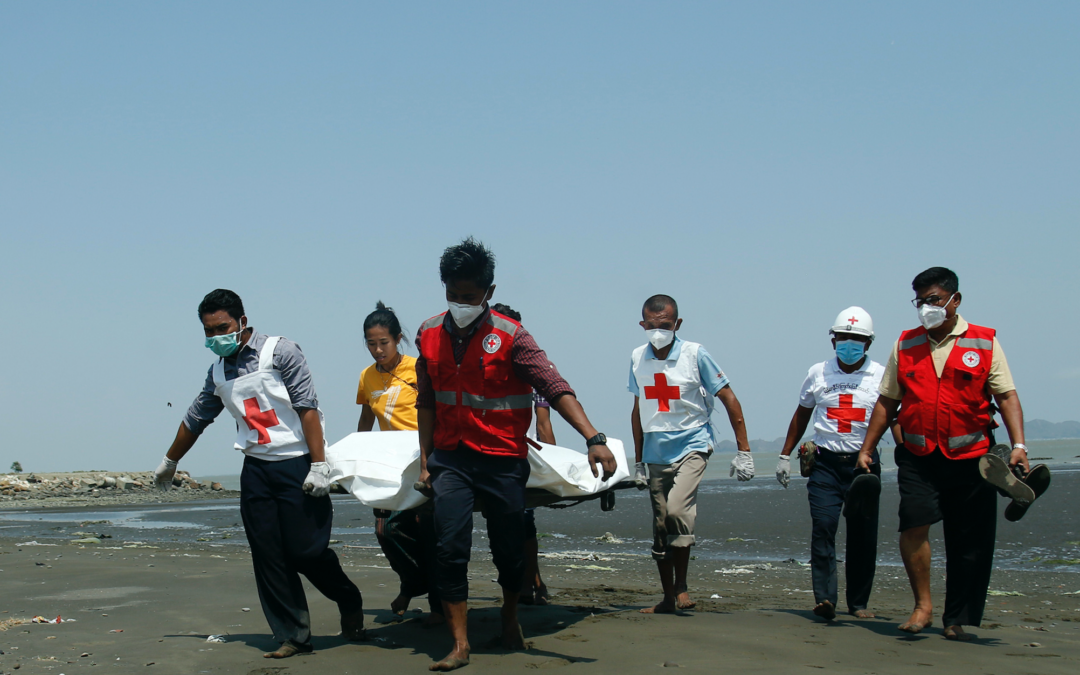
Both the Myanmar military and the AA must also ensure that the wounded and sick receive timely and adequate medical attention, without distinction. For this purpose, they must ensure the safe passage of medical personnel and vehicles, and the continued operation of medical facilities in conflict areas.
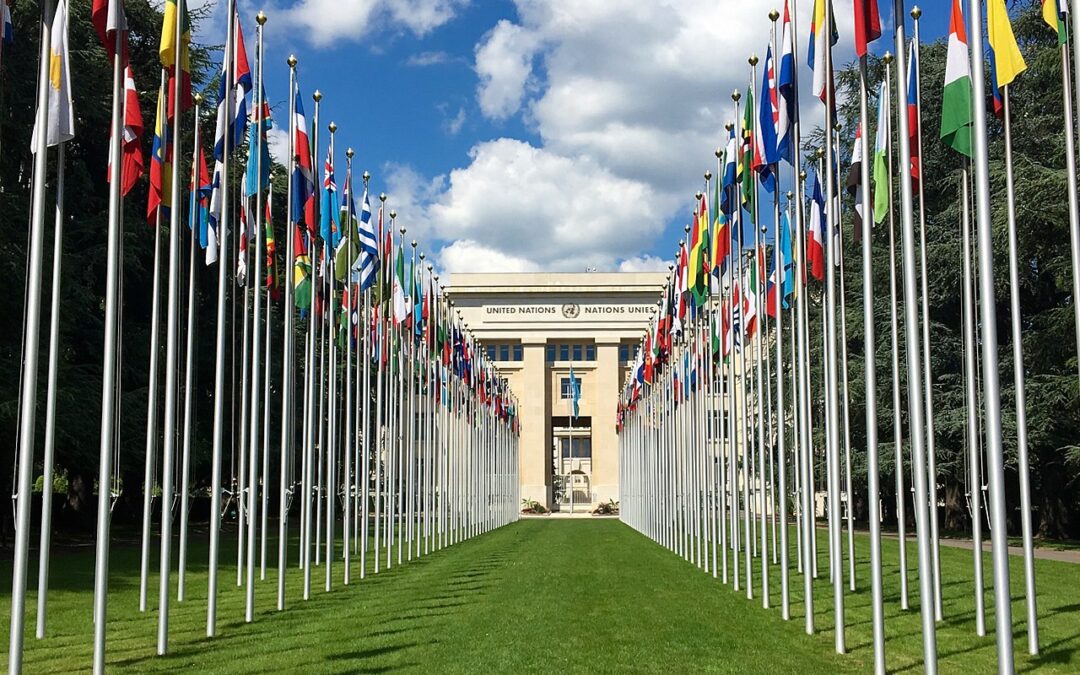
Medical vehicles bearing the UN logo have particular significance in this context. The logo signals to both groups that such a vehicle must not be attacked. Medical personnel must also be protected from physical risk and from the threat of prosecution based on their treating victims without regard to ethnic or political affiliation.
People need not be forced to choose between bombs and disease; they have the right to simultaneous protection from both. To avoid this situation, the UN secretary-general has called for a global ceasefire to enable everyone to focus on the “true fight of our lives”– COVID-19. In Myanmar, members of the diplomatic community, civil society and ethnic armed organisations have similarly called for the cessation of hostilities. Observing a ceasefire would enable all parties and the government to abide by its international law obligations.
As COVID-19 cases continue to increase in Myanmar, the pandemic has acutely underscored the importance of eroding man-made divisions like race and religion, and it has made clear the need to ensure access to healthcare and health information for all. If Myanmar needs a guide in its fight against COVID-19, it need look no further than what human rights law prescribes.
First published in Frontier Magazine on 2 October: https://www.frontiermyanmar.net/en/bombs-or-disease-the-false-choice-in-myanmars-conflict-areas/